
REVIEW: Charlie Chaplin Short Films

Have you ever shut off the volume on the TV because you were tired of listening to commercials, only to find that the show has sneakily come back on? Now you watch in silence and people are dancing about on the screen, mouths are moving, dogs are chasing postmen, and you don’t know a single thing that they are saying. But that’s the fun! You start creating your own dialogue and suddenly, a tense chase scene turns comic with every pun you fling about the room.

Silent films increase creativity, I’m sure of it! I definitely felt like my mind was more active than usual when I sat in the magical Michigan Theater watching a silent black and white Charlie Chaplin tumble and twirl his famous little bowler hat on the big screen.

Charlie Chaplin made the majority of his vaudeville films from 1920-1940, and is known widely as one of the most influential filmmakers of all time. He wrote, directed, produced, edited, starred in, and wrote the music for most of his films. He was a do-it-all kind of guy. His films were silly, inventive, full of plot twists and long-drawn out humorous scenes (think of those Family Guy moments when Brian and Stewie go back and forth for five minutes), just the kind of entertaining distraction people living through the Depression and World War 2 needed. But all of his films mostly serve as a response and encouragement to the condition of the people. His protagonists are mainly poor and are treated badly, but remain upbeat and kind, which was also just what I needed on a dreary cold winter day!

A very talented man on the vintage Barton Organ sat down and began to play Chaplin’s own accompanying score as the lights went down. At first, it was very strange to see the actors’ mouths moving without knowing what they were saying. It was like I was watching a poorly-timed Anime movie, but even worse, an Anime movie that had forgotten to put the sound in altogether! There were hardly any slides of “dialogue” – where the films cuts away from the action and includes a line of dialogue directing the audience how to interpret a certain scene. Without many clues, we were forced to pay attention to the mood invoked by the organ music. At times of suspense, it rushed along with anticipation. In dreamy moments or love scenes, the organ might play a variation of the Wedding Song. It’s amazing how the brain soon adapts to missing elements of everyday life (talking), and normalizes a new way of enjoying life.

For that hour and a half, I didn’t miss talking at all. In fact, I was quite pleased to create my own story to match what I saw before me. I watched the other movie-goers and wondered if their stories were similar to mine. But I realized that it didn’t matter. And anyways, I wouldn’t dare break the silence to ask them! Here we were sharing a public space, but experiencing very different movies in our head. It was the first time it hit me: that films are intrinsically private journeys. Private journeys that Charlie Chaplin believed the world should go on together.

REVIEW: Jose Miguel Sokoloff (Penny Stamps Speaker)

Jose Miguel Sokoloff is many things; first and foremost, however, he is an advertiser who loves his home country of Colombia.

For roughly an hour, we experienced a condensed version of Colombia’s history and its war with the guerrilla movement. Beginning with the Cold War, Sokoloff laid the groundwork of the guerrillas’ ideological foundation, followed by a gradual shift to an economical role after the fall of the Soviet Union.

The key to ending Colombia’s war with the guerrillas, he stressed, was realizing that the members were as much victims of the organization as the general populace.

We watched the growth of the advertising campaign against the guerrilla’s–from it’s missteps at the beginning to the enormous successes it has achieved in recent years. Always, the message remained the same: “Demobilization is the way out” / “desmovilización es la salida”

What struck me most was how successful Sokoloff and the nation of Colombia was with its advertising campaign, and its intersection of art and politics. Realizing that genuine testimonies were more important than professional actors, the campaign would always “speak to the human” in an effort to convey the message that the war would eventually end anyway.

The government concentrated on Christmas and family, because that was when the members were most vulnerable. Soldiers decorated trees in the jungle with Christmas lights. Glowing balls with heartfelt messages floated down the waterways that the guerrillas used for travel. The military sent soccer balls all over the country to remind the guerrillas what they were missing.

Most touching of all was a campaign involving mothers, in which they stated “Before being a guerrilla, you are my son” / “Antes de ser guerrillero, eres mi hijo”

Eres mi hijo

Overall I loved this talk. This was explicit proof that we don’t need extensive peace talks or military campaigns to dissolve the potency of a violent movement. Instead, this advertising campaign appealed to the hearts and humanity of the guerrillas in the jungle, and it worked.

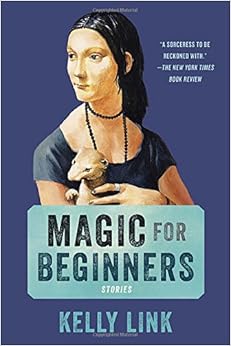
PREVIEW: Kelly Link Reading

Image Courtesy via Amazon.com

Welcome to the magical world of Kelly Link. Fantastically full of fantasy, light horror, and magical realism, Link writes short stories about haunted convenience stores, apocalyptic poker parties, zombies, marriage, superheroes, and witches in a way that is supremely unique, wacky, and wonderful. She has an original voice that you can hear LIVE this Friday at the Literati Bookstore!

What: Kelly Link Reading

Where: Literati Bookstore

When: Friday, February 20 at 7 pm

How Much?: Free!

P.S. If you have never read her stories I highly recommend them, and you can read one of the stories from her new collection, “Get in Trouble,” right over here!


REVIEW: Once

The problem with high expectations is that no matter the quality of the show you will leave disappointed if it does not live up to your exact expectations. This unfortunately was the case with Broadway in Detroit’s Once which possessed all of the key pieces to create an incredible show but fell short.

Broadway in Detroit has a history of bring exceptional shows to the area. Combined with the elegance of the Fisher Theatre and professionalism of the ushers the experience leads one to believe they paid a lot more for a ticket than they did. Unlike a normal production where you are immediately led to your seats, we had the opportunity to wander on stage where a bar had been set up and cast members were playing their instruments. Standing on the stage of the Fisher Theatre, listening to talented musicians playing their hearts out and looking out at hundreds of seats packed with excited patrons caused my expectation to yet again rise.

Nominated in 2012 for 13 Tony awards and winning 10 including Best Musical, Lighting, Scenic Design and Orchestration, the musical itself was powerful. A beautiful set, perfectly timed lighting and great orchestration made me consciously realize that I should love this show but I didn’t. The first act, which has limited plot points, heavily relies on the acting of the Guy (Stuart Ward) and Girl (Dani de Waal) yet, much of the dialog came off as too rehearsed. The Girl, who must go from rejecting the Guy at the beginning of the show to falling in love with him in the second act, showed no emotional changes throughout the show until the moment before she admits that she loves him. Yes, her character is always serious because “I [she] am Czech” but her dialog felt thoughtless, that each line was said because it was her turn – not because she was in the moment as her character. The acting much improved in the second act when the plot began to move at a quicker pace.

Vocally, the cast was superior to many productions which I have seen. Additionally, the cast served as their own orchestra and the musicality of the numbers was beyond reproach. The first act finale Gold was exceptionally powerful as the performers performed choreography as they sang and played their instruments (including the cellist!). In the second act an a cappella version of Gold was performed with minimal movement starkly contrasting the movement of the first act finale. By staging the two performances of Gold in complete contrast the musical differences were highlighted as well as the emotional changes which had taken place between the two pieces.

This production had all of the pieces to create an incredible show. Whether is was because it was the last show of a run, the second show of the day or something completely unrelated to how tired the performers must have been, the acting felt contrived in the first act preventing me from connecting with the characters and from caring about them. I would highly recommend attending this show, from a technical standpoint alone it is worth attendance and the voices were perfectly cast for each and every role. However, I would advise against attending the second show of the day toward the end of the run – better to get the actors when they are fresh so the characters are real than rehearsed.

PREVIEW: Rotterdam Philharmonic Orchestra

Photo by Marco Borggreve

The Rotterdam Philharmonic Orchestra from the Netherlands is coming back to Ann Arbor for the first time in almost 40 years. Led by a 39-year-old conductor Yannick Nézet-Séguin, the Rotterdam Philharmonic Orchestra is bringing into life some excellent works from the late Romantic period by Maurice Ravel and Pyotr Ilyich Tchaikovsky. The orchestra is known for the energy in their performances, colorful variety of their sound, and their unique and bold choices in interpretations.

This is one of the rare chances to experience an internationally renowned orchestra performing top-notch repertoire — FOR FREE! Students, pick up the Passport to the Arts and redeem them at the League Ticket Office to get your free ticket. Can it get any better?

For more information about this performance, check out the UMS page here.

WHEN: Thursday, February 19, 2015 — 7:30pm

WHERE: Hill Auditorium

HOW MUCH: Student half-price tickets starting at $12, OR get the tickets for FREE using the Passport to the Arts or Bert’s Tickets program!

PREVIEW: Jose Miguel Sokoloff at the Michigan Theater

As part of the Michigan Theater’s Penny Stamps Speaker series, humanitarian and civil rights activist Jose Miguel Sokoloff will be coming to speak.

Where: Michigan Theater

When: Thursday, February 19 @ 5:10 PM

FREE TO THE PUBLIC

As the Michigan Theater states in their description, Sokoloff has led a wide campaign against the FARC guerrillas to demobilize in Colombia and end the war.

Even better, you can view a TED Talk, titled “How Christmas lights helped guerrillas put down their guns” to get a better idea of what you can look forward. In the process of advocating peace, he has won a slurry of awards and never stops working.

Additional Appearance at MOCAD: Friday, February 20th at 7 PM.