REVIEW: Good Kids

From the moment I heard about the performance, I knew it would be incredible. Whether its effects were to open eyes in the audience, to start conversations, or to inform the general public, this performance of Good Kids was absolute perfection.

On Thursday evening at 7:30, I entered the Arthur Miller Theatre on North Campus. From the moment I walked in, the energy was high! Music blasting, audience members chit-chatting, and a table for the Expect Respect campaign was lively with volunteers and plenty of available information.

The lights dimmed and your stereotypical high school students filed onto the stage. There was a group of football players, a clique of catty girls, and various other essential members to the student body. But an important addition to the cast, was the girl sitting in the wheelchair on the side of the stage. She played an important role, not only as a narrator of the story, but also as a catalyst in the operation of opening up the public’s eyes about the Steubenville Rape Case of 2011.

A little background information: Good Kids is a play written by Naomi Iizuka, which is a sort of reenactment of a case of rape that occurred a summers back in a small town in Ohio. This town showered praise on their football team, but what would they do when criticisms fall upon them after a night of drunken tweets, photos, video, and sexual assault. This piece focuses on the role that technology and social media played in the case, how quickly words spread, and the stereotypes that people hold for women.

The scenes changed quickly and smoothly, from introductions to the member of each group down to the party scene at Amber’s house.

Amber was the head of the catty clique, and with parents absent for a weekend, she knew she had opportunity to throw a party. She invited some football players and friends, but her number one rule was this- no randoms. But Kylie, the new girl in Mustang country, brought her cousin Chloe and a friend from a school across the river. The party, filled with drinking and dancing, quickly transitioned from a fun environment to a dangerous situation. The football players left the party with Chloe, who was soon unconscious, and took her to a house where they sexually assaulted her without consent. On top of this act, they took pictures and video, along with live tweeting.

This play addressed, along with many other issues, the language used against women. What is a man called when he enjoys casual sex? A man. But what is a woman called? A slut. Good Kids dove into language that our generation uses daily to describe each other.

While the scenes progressed, showing all the possibilities of he said/she said game that went on for years in the Steubenville case, the theatre was charged with real, raw emotion. Everything from the emotional struggle and confusion to the trials and tribulations that the victim faced at school and on all mediums of social media. Also while infiltrating the scenes with the occasional aside from the narrator, this play provided the perspectives of parents, school officials, other students, and the victim. This was key in allowing the audience to understand the entire situation. The part of the performance that really broke me down was when the victim, Chloe, was kneeling on stage, head in hands, while audio from the video of her rape played over the sound system (the audio was not actually pulled from the real video, but the cast recorded their own audio based on quotes from Twitter and the video posted to YouTube).

With fantastic lighting and even some choreographed dancing, the cast and crew really pulled through an amazing performance. Completely eye-opening and chilling. I was left speechless by the incredible performance by the cast. The scenery was simple, yet sufficient. And the script itself was flawless.

After the performance, the director, Gillian Eaton, offered a “talk back” for the audience and cast. This “talk back” gave the audience an opportunity to ask student performers and volunteers from the Sexual Assault Prevention and Awareness Center (SAPAC) questions about the play and sexual assault. The students and volunteers were extremely patient through many questions that were filled with emotion and curiosity. But my personal favorite quote on consent from the talk back was from Blair Prince, who played the role of Daphne (Chloe’s friend):

“My silence is not permission. My smile is not permission. My permission is permission.”

As said earlier, I absolutely loved this performance. The passion that the actors and actresses put into this show was unbelievable. I would highly recommend attending one of the remaining performances of Good Kids and staying for the talk back Q&A session.

Preview: Good Kids


Good Kids, a play by Naomi Ilzuka, retells the horrors of the Steubenville Rape Case, which took place in Summer 2011. This is a real, raw account of the happenings of high school party gone wrong, and how social media can play a huge role in rumors, evidence, and conviction.

Come check out Good Kids at the Arthur Miller Theatre on:

Thursday, October 9 at 7:30 pm

Friday, October 10 at 8pm

Saturday, October 11 at 8pm

Sunday, October 12 at 2pm

General admission tickets are $28, or you can purchase tickets with your student ID for only $10.

Join the School of Music, Theater, and Dance for a chilling performance that is bound to leave you speechless. Information sessions on sexual assault and safety will be available after each performance.

Preview: Cabaraet – for it is indeed life, old chum

What: Cabaret

Where: Lydia Mendelssohn Theatre

When: Oct. 9-19 at various times

How Much: Student tickets: $10 — General Admission: $22 – $28

images

Cabaret is a musical set in Weimar era Berlin Germany as the Nazis were coming to power. The plot focuses on Cliff, an American novelist, and Sally Boules a performer at the infamous Kit Kat Klub. The story develops both inside the club and in the city of Berlin as Sally and Cliff develop a love affair during this tumultuous period of wild sex, creativity and the rise of the Third Reich.

The Michigan School of Music, Theater and Dance has a truly amazing group of students in its Musical Theater department. The challenges presented by this show reach into the historical and the physical. Cabaret is a musical with a large dose of darkness and social significance, which not all performers are frequently required to interact with.

Cabaret has won multiple Tony awards over the years and is currently on Broadway.

Cabaret is based on Christopher Isherwood’s collection: ‘The Berlin Stories.’

For more information visit the University of Michigan School of Music, Dance and Theater Website.

PREVIEW: Odesza @ The Blind Pig

WHOA MUSIC!

Odesza is an electronic music group. Is it EDM you ask? Not quite. While they do have bangin’ tunes in their catalogue, Odesza’s brand of electronic music is more chill and you too can experience it: odesza.com

When: Wednesday, October 8 @ 9 PM

Where: Ann Arbor’s The Blind Pig

Cost: A $15 cover gets you access not only to Odesza, but TWO other groups

Caveat: As of this past weekend tickets are SOLD OUT online.

Since ticket availability is slimmer than an Apple iPhone release, you can join me in line waiting to get in so we can have the best Wednesday night experience since the Wolverines were a good football team.

Until then, check out one of their music videos and stay cool:

My Friend Never Die


Review: Marilyn Horne Masterclass

On Friday afternoon, Ms. Marilyn Horne presented a masterclass as a part of the Jesse Norman Masterclass series. A master of her craft, she worked with four immensely talented students earning their Master of Music or Doctorate of Musical Arts in Vocal Performance.

Master classes typically follow a standardized routine. Each student is given a set amount of time to work with the instructor (typically 15, 20 or 30 minutes) in which they sing through a song or aria in its entirety and then work through specific sections with the instructor.

While the masterclass followed the set routine, there was nothing ordinary about this masterclass. Held in Stamps auditorium, attendance was extremely high including the entire Vocal Performance department, SMTD faculty, and numerous members of the public. Arriving 15 minutes early I still faced a limited choice of seats, but decided to sit in the very first row a few feet away from where Ms. Horne would sit, rather than climb the stairs to the back half of the auditorium where seating was still available.

After a brief introduction by Professor Stephen West, Professor Martin Katz spoke about his 40 year collaboration with Marilyn Horne and welcomed her to the stage. With assistance from Professor Katz, Ms. Horne took her seat downstage stage left to a thunderous standing ovation.

Addressing the audience Marilyn Horne offered a simple disclaimer before the beginning of the class, stating that “this is all I know” and that if a voice professor should take issue with any of the comments she made that she would be unable to comment further.

The first singer of the evening was Katherine Calcamiggo singing Abscheulicher!…Komm, Hoffnung from Beethoven’s Fidelio. Fidelio was Beethoven’s only opera and is notoriously difficult for singers. Abscheulicher!…Komm, Hoffnung is one aria which is considered by many a true test of a soprano. This was a test which Katherine Calcamiggo passed. With great stamina, Ms. Calcamiggo filled the room with her sound and provided beautiful contrasting colors throughout the aria while showing her technical prowess. Following Ms. Calcmiggo’s performance of the aria, Ms. Horne began work on specific sections of the piece sighting a need for a quicker, consistently steady breath and reminding the audience to “get your buns in order” (squeezing your gluteus maximus) when running out of air to get a few extra beats of supported tone.

Anthony LaFrinier sang Pace non trovo from Ertes Sonett von Petrarca by Lizst. He gave a strong musical performance, but lacked the resonance to fill the hall and his time with Marilyn Horne was spent trying to find a good, bright, resonant sound which originally only appeared in his high register. To find this brighter sound he was disallowed from using his chin and jaw to form and manipulate the sound. Instead of relying on the “resonators” located behind the cheek bones Mr. LaFrinier used the chin to support the sound as well as intense air pressure, and pushing from the chest. With greater support from the lower diaphragm the low notes began to have the same beautiful resonance which his top notes so easily obtained.

The surprise of the evening followed Ashley Dixon’s performance of Meybeer’s Nobles seigneurs, salut! from Les Huguenots. Marilyn Horne sat in her chair beaming throughout the performance, mouthing “great” with arms raised in applause after the aria’s conclusion. Stating that she had nothing to say about that performance technically, dramatically or musically Ashley Dixon received no coaching for her aria from Marilyn Horne and was excused almost immediately. However, she was quickly called back for one comment: that her low cut, red dress (while completely tasteful) was probably more appropriate for when she sings Carmen and not when she sings a pants role (a role in which a mezzo soprano sings the part historically sung by male castrati and so is dressed up as a man).

Sarah Coit finished the program with a fabulous rendition of Una voce poco fa from Rossini’s Il barbiere di Sigviglia. Having performed Rosina in the university’s fall 2013 production of the opera, Sarah Coit was extremely comfortable with aria and the character which she was portraying. Marilyn Horne focused on bringing the youthfulness of the character into the sound which Ms. Coit produced, reducing the heavy power on the low notes which is appropriate in much of the repertoire but not when portraying a 15 year old girl.

The masterclass concluded with a brief Question and Answer session in which Ms. Horne stressed the importance of fluency in the languages which one sings. Additionally, Ms. Horne told stories about her time on Sesame Street, voicing Carmen Jones in the hit film and was even asked by a student “What is the most embarrassing story you have about Professor Katz?”

Following the masterclass students rushed to get photographs and autographs from Marilyn Horne, knowing the importance of her career and the knowledge which she had shared with us that afternoon.

REVIEW: The Maze Runner (Finally)

I know this review comes weeks after the initial preview, and that you may have already seen or at least read about the movie. However, let me remind you that you most certainly did not see it this past Saturday night like I did.

Anyway, The Maze Runner lives up to its expectations as one of the many young adult dystopian movies that manages to sprint ahead of the pack. When you get down to it, the entire setting of the dilapidated, mysterious future under investigation is so formulaic its laughable. No matter what happens, you know the protagonist will gradually unearth more clues until the final confrontation that reveals all.

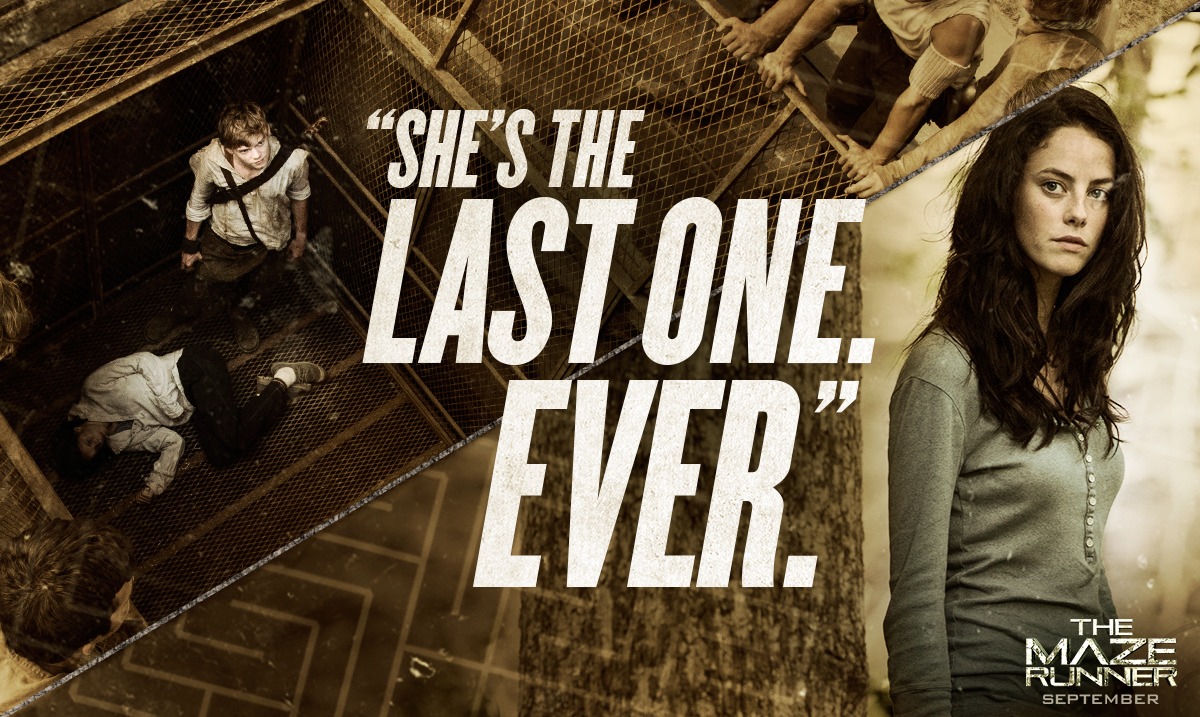
Luckily for the human race, we are easily entertained. Even better, the Maze Runner’s twists and turns (literally) provide no shortage of excitement. Set in a futuristic world, a group of young boys make a living for themselves trapped in the middle of a monolithic stone maze. Each night the maze closes to keep out the deadly mechanical “grievers” that patrol the walls outside. One day, a boy named Thomas arrives via a elevator shaft, and his entrance changes everything.

While I never understand why the human test subjects/tributes/athletes in these movies have to be young people, they add a certain youth to the film that simply doesn’t exist in similar action films such as Guardians of the Galaxy or X-Men. Many of the stunts these actors pull off are actually believable because they are young and limber. And trust me, there is much jumping and ducking and rolling in the maze.

It felt as though the filmmakers tried to make up for the (almost) all-male cast by making it more diverse. Although the main character is still white, there is a delightful melting pot of races to be had. My only caveat was that I did not see any hispanics in the film. Come on Hollywood! I don’t mention this out of simply being progressive, but it is distracting to see so many dystopian movies containing swathes of white faces.

One of the best parts about the film is the set design. Since the entirety of the film occurs in the maze, you can tell that the filmmakers went to great lengths to give character to the environment. As the film progresses we come to know the inner sanctum as the young boys do; we call it a home and share their view of the maze as the hostile outside. The maze itself, changing each night with ponderous groans, was a character itself. It stood in for the mysterious group controlling it, and sent forth the frightening “Grievers” from within. This is not a horror movie, but I was startling at several points.

Overall, The Maze Runner, is not a shining example of a dystopian movie, nor a coming of age film, but it’s a worthy view all the same. At the very least, you’ll have to catch it if you want to see the sequels.

Provider of some much-needed x chromosomes