PREVIEW: Aida Cuevas with Mariachi Aztlán

What: a mariachi concert performed by Aida Cuevas, award-winning traditional mariachi singer and recipient of a Grammy (2018) and a Latin Grammy (2010), supported by Mariachi Aztlán, nationally recognized mariachi band from the University of Texas Rio Grande Valley

When: Friday, November 4, 8:00pm

Where: Hill Auditorium

Tickets: free for students with a Passport to the Arts voucher, available at Residence Hall Community Centers, the Pierpont Commons Info Desk, Trotter Multicultural Center, and the Office of New Student Programs in the SAB; otherwise, student tickets are $20 each

Aida Cuevas with Mariachi Aztlán is sure to be a lively performance, showcasing both the richness of traditional mariachi and of Cuevas’s powerful voice. Cuevas last visited the University of Michigan in the fall of 2018, the same year she broke barriers as the first woman to win a Grammy Award for Best Regional Mexican Music Album in the male-dominated field of Mexican ranchera. Known as the “Queen of Ranchera,” the artist is known for her vocal range and impeccable falsetto, drawing comparisons to powerhouse vocalists like Aretha Franklin. The audience atmosphere at Hill Auditorium tomorrow evening should also be festive, with audiences often singing and dancing along in their seats. Consider grabbing a Passport to the Arts and spending Friday evening enjoying this unique cultural experience.

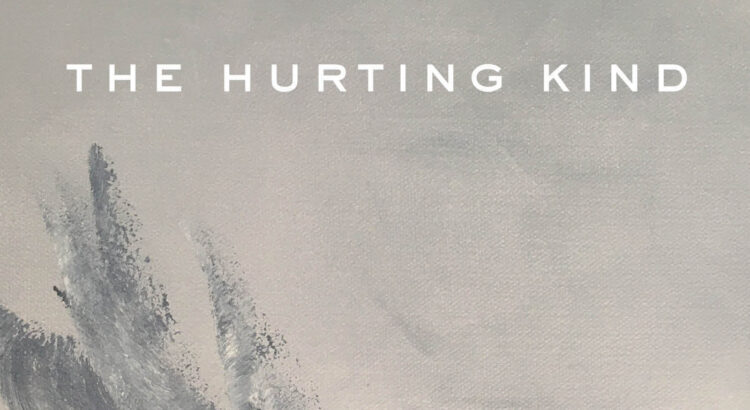
REVIEW: The Hurting Kind By Ada Limón


Poetry is for people who see the human in the inhuman. Poets can look at a wheelbarrow and see a meaning beyond hauling dirt and bricks. They see the memories, the origin of such an object, and something deeper that I can’t name. The Hurting Kind by Ada Limon is a prime example of this phenomenon.

As peak reading season approaches with rainy, cool days and changing leaves, I headed to the Ann Arbor District Library. Poetry drew me towards it because I knew the books tended to be short and sweet and mid semester I needed the satisfaction of completing something. The title, The Hurting Kind, seemed like the perfect mix of melancholy and deep that fits poetry so well and the author has gathered some acclaim at least from the short blurb that I read. 

However, I must admit I’ve never read a poetry book before. I found myself speeding through the book at my normal speed. It seemed wrong. After years of spending an entire class period on a poem and sometimes two classes, I felt like I shouldn’t just be flipping through the pages to reach the end. The more I read, the more I realized that the gift of a poetry book is that you’re able to pick the poems that resonate with you. You don’t have to tread the ones with top shelf names. 

The book is sectioned into the seasons with Spring as the start and Winter as the end. Each one has a subtle different feeling even if the season isn’t explicitly mentioned in the poem. My favorite poems come from spring. One of which is the Good Story. In the Good Story, Limon notices how she loved to hear the bad stories about the rough times her grandfather went through. However, once the days became bad, even the stories of overcoming were no comfort. She craved the stories about human kindness. She mentions one about her grandfather. After a breakup, her grandfather gave her a small pizza and watched her eat it in small pieces until she stopped crying. In the end, she decides that “maybe she was just hungry.”

The hope and familial connection drew me to feel something with this poem which may show my lack of poetry experience. Later in the book, Ada mentions the cliche of grandparent poems. Yet, she calls out her grandmother right after in the namesake poem the Hurting Kind. I think this shows a true sense of voice and the fearlessness to say something that may have been said before but that should continue to be said. Overall, I would recommend the Hurting Kind because it would not be the kind of book to hurt to read.

REVIEW: 6th Annual Multicultural Yardshow

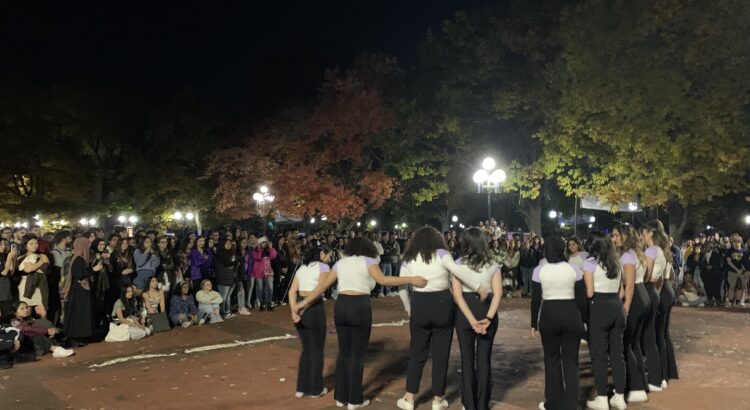
It was unbelievable how much fun the Yardshow was. The event had one of the largest crowds I’ve ever seen at The Diag, and people at the back even huddled onto lampposts to get a better look. Before the show started, it was heartwarming to see the organizations already introducing themselves to each other and cheering each other on; of course, the cheers for each other grew even louder during the actual performances! Sometimes, it even became hard to hear the music over the screams and clapping.

It was clear how much pride each brother and sister had too: the members wore matching outfits representing their organization; their introductions were empowering; and their performance included dance moves significant to their history and representation. Some also included demonstrations of their values before dancing. Members of the organization who weren’t performing would chant from the crowd too, creating an even more immersive experience for the audience.

Because each group was so distinct from one another, the energy and attention didn’t die down despite the long acts (some performances even went up to 10 minutes). One of my favorites was a group that only had four students dancing. They exhibited so much charisma and earned lots of cheering for their simple yet exciting moves, and because of their small numbers, it made each dancer that much more memorable.

I also want to give a massive shoutout to Sigma Lambda Beta International Fraternity Inc. for hosting the event and giving an amazing last performance to end the night. They collaborated with another sorority and even gave some lucky audience members flowers!

I’m already looking forward to the 7th Annual Multicultural Yardshow to see what else the Multicultural Greek Organizations have in store for us.

REVIEW: Perfect Blue

Content Warning: mentions of rape and sexual assault


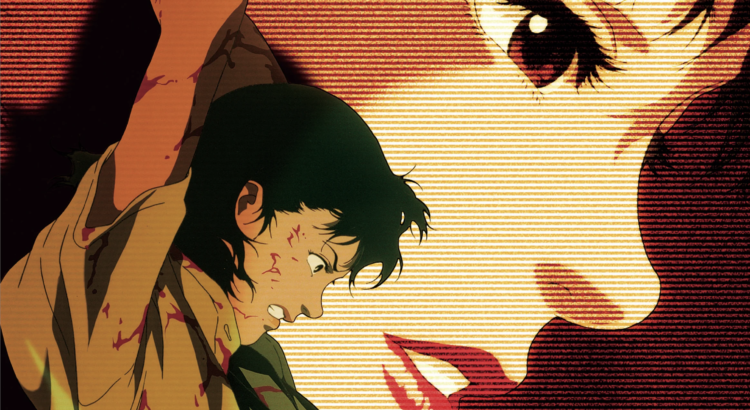
Perfect Blue is an anime that follows Mima, a young woman who leaves her pop trio to launch her acting career. As Mima is forced to shed her “good girl” image through disturbing scripts and marketing moves, she is increasingly harassed by fans, and ultimately begins to lose her grip on reality. The film explores these themes of the unreasonable expectations of fame, stalking and parasocial relationships, and the exploitation of young breakthrough actresses through the lens of an unreliable narrator.


As the film progresses, the narrative becomes less and less clear; timelines are muddied, certain scenes are repeated back to back with slight but key differences, and once hallucinations interrupt the film’s established unreality, nothing can be taken as fact. There could be very long pieces written that theorize what truly happens in the film versus what Mima hallucinates, but I believe the point of the film is to show the extreme to which Mima is pushed by showrunners, her management agency, and the public. The film utilizes its nonlinear sequence of events effectively to highlight the twisted nature of the entertainment industry, the horrors new actresses are put through in order to be taken seriously, and how Mima’s own agency and identity spiral out of her control.


That being said, the graphic nature of the film must be called into question. For context, Mima’s managers begin to question if her becoming an actress was worth leaving her music career as she is only booking small roles with very short lines. Then, one day, she is presented with a huge breakout moment that will surely get her recognition for her acting abilities – via a rape scene. Mima accepts the role, but the staging of the scene is so upsetting that even characters in the film comment on its nature. They are not allowed to film in an actual club “due to what they’re shooting,” and it is later suggested that the filming of the scene was so traumatic that Mima feels as if the event actually happened to her. Of course, this is a perfect example of how many new actresses are treated, and it is clear what kind of toll this can take on someone forced to perform such a scene. 


However, what is questionable is the execution of this criticism. The rape scene is very long and Mima’s distress is very visible and very audible – it is very, very disturbing and overwhelming. And when the scene is compared to the way violence is handled in the film – a serial killer’s kills are primarily offscreen, though gore and fight sequences are shown – the rape scene feels extreme. There is almost an obsession in media with building suspense by hiding and revealing what happens rather than showing the effects of trauma, and building character. And in Perfect Blue, it is clear the focus was meant to showcase Mima’s deteriorating mental state and need of support, but there are ways to handle such subjects with more care – perhaps the way Never Sometimes Rarely Always suggests what may have happened to its protagonist but focuses on her denial into the beginning of her healing process, and the near impossibility of her ability to receive proper care. Even Last Night In Soho – which I thought lacked a certain depth needed to say something beyond “men can be bad” – shows the before and after, the glamor and idealization of fame that leads to a change in character and behavior, but it never shows an event in such graphic detail that Perfect Blue does. Even one of the most recent episodes of House of the Dragon shows a huge improvement in the treatment of such topics from the original Game of Thrones series to the current series – a rape is not shown, the word is never said aloud. All that we see is sympathy for the victim, but the bleak reality that she must keep the event to herself as she is of a lesser status than the perpetrator and is therefore subject to more scrutiny, and a mother and victim’s disappointment in her own son and perpetrator. 


My criticism of the film is not that the film should have had a happy ending for Mina or that it should have sugar coated the horrors of what happens to her and many actresses, but that in order to take a stance criticizing the treatment of newcomers to the entertainment industry, a piece of media does not have to treat its characters the same way. To handle such topics more gently and with the understanding that an audience can imply what has happened shows more expertise in portraying this subject on screen. Trauma is not needed to establish backstory, especially at the expense of character development, not does it need to be explicitly spelled out in order to be effective. 

REVIEW: Conduct Us

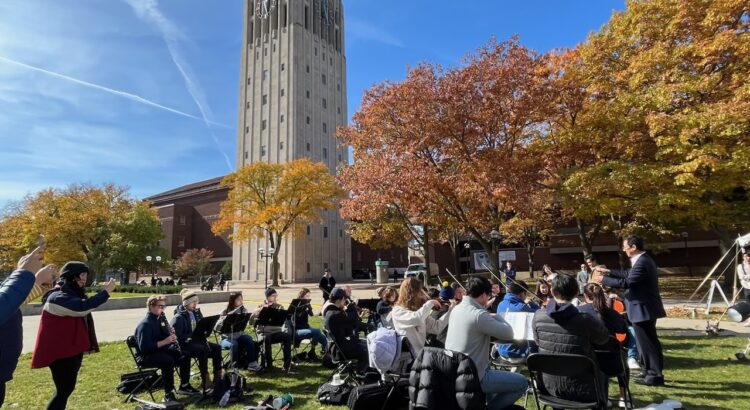
Even though mornings are always rough, especially on Fridays, attending Conduct Us made waking up worth it. Contrary to what I assumed in my preview, the weather was very warm: suitable for the festive and relaxed atmosphere at the event. Warm cider and donuts were provided too, so I even got free breakfast with the free live music (not to mention the free “Ono. Oh, Yes!” stickers)! I’m sure it was a very welcoming sight for the students heading to and leaving the MLB as well. Surprisingly, though, most of the audience was actually adults: most likely because it was a Friday morning.

Out of the many song choices, I recall hearing the Carmen Suites and In the Hall of the Mountain King the most. To those not well-versed in classical music, these titles may sound very unfamiliar, but trust me that if you look it up you’ll definitely recognize the tunes. Although I myself didn’t get to conduct, if I had the opportunity to I would have chosen In the Hall of the Mountain King too for its fun and exhilarating melody (in addition to The Victors of course). It’s a piece that starts quiet and slow like you’re sneaking inside the halls of a castle before rapidly speeding up when the king spots you! It was a lot of fun to listen to the giggles of the conductor and musicians accompanied by the sight of the conductor aggressively waving the baton (which at Conduct us, was a clothespin).

One of my favorite performances had two friends take upon the challenge of conducting the Michigan Pops Orchestra as a duo. It was very creative and inspiring to see people so interested in participating and enjoying the event: it really emphasized the point that the event is simply to create good vibes. It’s hard not to say, though, that Ono’s conducting was the highlight. Saving the best for last, the event ended with The Victors. To be honest, it was funny to watch him be flustered about conducting. It was also very endearing that afterwards the cellists invited him to play their part on The Victors, which unfortunately Ono declined. I’m sure we’ll see him play the cello one day though (he does actually play cello and pretty well too).

If you didn’t have the opportunity to attend this Conduct Us or want to attend once more, there will be another one coming up soon. Unfortunately, I don’t think Santa will be coming to town again. You can also support the Pops Orchestra at their end of semester concerts!

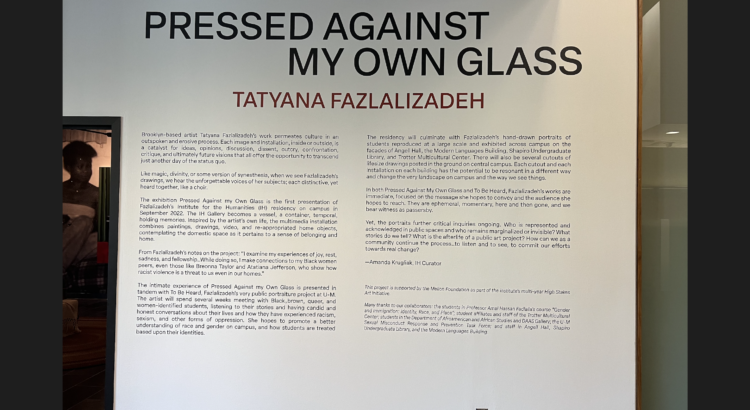
REVIEW: Pressed Against My Own Glass


Entering the exhibit felt like walking into a home. In the doorway, I paused and thought, should I take my shoes off? 

I walked in to look at the first painting, and backed up a little seeing how big it was. Am I allowed to stand on this carpet? I wondered. Knowing the reappropriated furniture had originally come from the artist’s own home, and being used to the etiquette of museums, Pressed Against My Own Glass was refreshing in its way of inviting you in to interact with the art. 

The first painting stares at you with a piercing gaze that scrutinizes you and feels alive. Looking into your soul without so much as a raised eyebrow or any tell of effort being put into making up their expression, makes the gaze all the more powerful and unnerving. So much that I forgot to photograph her. The subject is in an intimate space in the portrait, wearing just a shirt and no pants, sitting in an unmade bed. But I’m the one who feels stripped bare.

This theme of intimacy continued to bear itself through the rest of the room. There are diary entries on the wall on the same side as the door. Right away, you step into exclusive, individual territory. Anyone could have seen the murals, whether they wanted to or not, but those who have come to the exhibit have come by choice. Tatyana rewards and welcomes that. This sets the tone for the rest of the exhibit. 

To put your journal pages, scanned, then blown up on a wall is incredibly brave, I thought.

There were entries about accomplishments, revelations, longings, growing. I shared sentiments with all of them, but the final one I read in the bottom right corner is a moment I feel most women are familiar with. The chastising, the incredulity at our own selves, our own hearts. I’ve had the same feelings over feeling so much about a silly little man, so much that I write about them, and now it’s tucked in the pages here for anyone to read, forever. 

The cracked lampshade, the laminate album of rusted ink photographs; I was really coming into a home. How she could lay down something so personal in a public space, give it up for an exhibition, baffled me. I would want to keep those artifacts close, not letting them leave my bedroom bookshelf. Not even laying the photo album open on a table, only taking it out to indulge myself once a year or so. Tatyana’s courage to lay down so much of herself for others to view inspired me immensely to take more risks in my own art.


Something that especially delighted me was the writing. Since I was expecting pure visual art, I loved the poetry and journal entries and letters. Tatyana collages together a photo, mirror, sketch, earrings, and poetry on the second wall. I love the expression of the girl in the photograph because in its position of covering the poem’s body, her face says, I know you want to read this poem, but hahaha you can’t!

Following right after was the mirror where I fixed my headband. It surprised me to see myself while forgetting my existence, after a few minutes of just perusing through Tatyana’s world.

Just when I thought it couldn’t get more personal, I was brought to tears by Tatyana’s letter to her lifelong (lives long) friend who had passed away. It was while I was reading the letter that I ignored a call from my sister (probably exactly what Tatyana would have discouraged) because I was halfway through and wanted to see it to the end without interruption.

On the fourth wall, was a video projected over a large body of text. The audio included mellow and haunting hummings, the repeated chant of “I made / met peace up in my home,” and a woman in tears singing, “when I think of home, I think of a place where love overflows…”

The clips were calm moving stills. They displayed the motions within a home, like rolling over in bed, humming amidst housework. There were also home videos, facetime clips, a mother getting interviewed with a baby in her lap.

Beneath the projection, the piece reads, “despite the brutal reality of racial apartheid, of domination, one’s homeplace was the one site where one could freely confront the issue of humanization, where one could resist. Black women resisted by making homes where all black people could strive to be subjects, not objects, where we could be affirmed in our minds and hearts despite poverty, hardship, and deprivation, where we could restore to ourselves the dignity denied us on the outside in the public space of the world.” Put in context with the mural project, this exhibit demonstrated exactly that. The murals – all black and white, words bolded and illustrations blown up – were plastered high on buildings, yet, one could pass them without a glance. They resided in the outside world, where the weather’s starting to get colder, people are starting to rush, no time to take their time. The exhibit on the other hand, was lively with personality, colorful, secluded. A distinct sense of home: the oil paintings, personal artifacts, private words and stories. This is how it looks to see the full picture (even if we only uncover a small sense of a part of that person), while I understood the murals as how minorities are often perceived from the outside, paid attention to by onlookers: unsmiling, blunt, general statements, all grouped together. This makes spaces outside of the domestic household hard to feel truly like that of home, a sense of ease and comfort, “a small bit of earth where one rests.” Tatyana addresses this later in the passage: “An effective means of white subjugation of black people globally has been the perpetual construction of economic and social structures that deprive many folks of the means to make a homeplace.” The art was deeply personal and held many sentiments of loneliness, loss, and anguish, and yet, it definitely felt like a place of stillness, of silence, where one could “return for renewal and self-recovery, where we can heal our wounds and become whole.”