REVIEW: Groove Robs the Louvre

I admire Groove’s creativity.

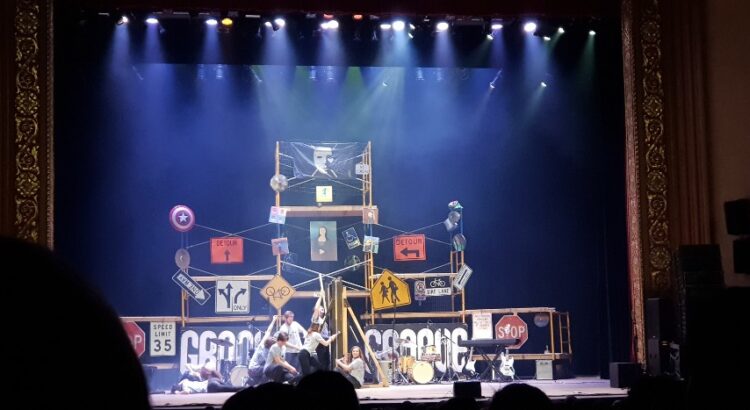
On the night that the Groove declared that they will rob the Louvre(!), the Michigan theater where the viewers would be the witness this exciting heist was filled up with the crowd. The performance was highly enjoyable because, fundamentally, the performances sounded so good! Groove is a student organization known to create amazing beats out of untraditional percussion instruments such as trash cans, plastic buckets, or anything they can beat! It was amazing how the Groove used different percussion that did not sound the same – each has a different pitch, so instead of the sounds crumbling altogether, they came together to create an exciting harmony.

Yeah, everyone knows that Groove sounds amazing, but I was wondering from my prior experience from watching their shows consisting of short performances focused solely on sounds about how they will link diverse percussion performances into a 2-hour show with theme and storyline. As always, Groove’s creativity was way ahead of me. The general storyline was that Groove had decided to rob the Louvre as a bonding activity, and each performance represented what happened during the planning of the heist, the incident they had on France, and how they finally went through all the challenges and stole Monariza. As for the story, short dialogues were inserted between shows while the stage settings were being changed. This was a smart, strategic choice not only because it prevented the audience from being bored during the pause but also because it overcame the percussion performance’s difficulty to convey the story due to the lack of lyrics in the music.

The show was well structured: as the story unfolded, the scope of their performance became wider as well. The performance started with purely percussion sounds – the ones we would expect from a typical groove performance(wait, groove performance is never typical!). Also, the performance offered interesting visual scenes while the percussion was being played – my personal favorite was where they were making music in a kitchen scene where the icebox was used as the main beat while other small kitchen utensils and cooking process, including the popping of the egg as the highlight, were added on top of it. Both visually humorous and sonically exciting, this scene was truly enjoyable. Then the wider range of performances joined on top of the beat, such as dancing or the display of talents of the members including receiving a jelly thrown across the stage by the mouth. Then, the range of instruments widened to include strings and horns, returning to percussion performance in the end. This not only showed how talented each individual of Groove is but also proved that Groove’s ability to coordinate music is not bounded to percussion.

Alas, I almost forgot to mention the incredible stage design! Stage made out of iron bars that had fake Monariza on it definitely highlighted the ‘Louvre’ part while going so well with the exciting, raw vibe of Groove’s music. In all, I really appreciated the pure creativity that Groove had enchanted us with during the two-hour show.

REVIEW: Parable of the Sower

Parable of the Sower… Where do I start?

I believe this was the first opera I’ve ever seen. And I was not disappointed. I laughed, cried, and even had the privilege to sing along. After the show, my friend Anna described Parable of the Sower as the best play she’d ever seen in her life. “I was tearing up basically the entire time… the music was consuming. It was so so fantastic,” she remarked. 

The opera is based on the post-apocalyptic novel written by Octavia E. Butler, written by Toshi Reagon and Bernice Johnson Reagon. Despite being published in 1993, the story is set in 2024, eerily close to this year. Already, Butler starts to draw parallels. The play deals with a Christian-esque group in a world that faces environmental degradation on a grand, terrifying scale. The church members essentially live in Noah’s ark – their walled city is safe, while the outside world is gonna end. The Reverend – the main character’s father – is the only one who is allowed to leave the walls and see the city.

Up on the balcony, people chat as the clock ticks down to 4pm. There is a person onstage, already in character; the audience is left unsure of whether the show has already started or not. The lights don’t go down, the cast strolls in, unannounced, and the start just sort of happens.

Opening the play, Toshi Reagon tells us that Butler “burned [Lauren] with hyper empathy.” An element that I missed – until my fantasy worldbuilding class’ post-opera discussion – were Lauren’s magical powers. She feels others’ pain, and there are subtle cues – like a flash of purple when her brother stabs his hand with a pencil to get her attention, or her falling down as other people get shot – that several of my classmates pointed out.  “If I can feel your pain, do I know you better, if I can fly in your joy?” Lauren asks.

The first scene is all auditory: two news channels chirp out overwhelming news, lapping over each other, in a volume-too-loud, ear-assaulting amalgam. This launches into a song, where the talents crooned at different directions of the audience, “What you gon’ do?” Even though I sat all the way up on the balcony, it felt like they were staring, arch-eyebrowed, right at us, and I felt a pang in my stomach. “The world’s on fire, you can’t hide.” The line between fiction and reality blurred once more.

In their situation: a “dystopian America wracked by the violence brought on by unrelenting greed and systemic injustice” (UMS blog), it all boils down to us versus them. There exists a religious dispute between Lauren and her father, the reverend, exploring the scale of beliefs ranging from God is good, God is change, to God have mercy. Lauren devises her own truth while others present the fixed truth that most of her family is invested in. She believes in the need to embrace change and do something different, because it’s only a matter of time before their safety crumbles down. “There’s a new world coming, everything gon’ be turning over,” Lauren sings. While others sing back, “do you really think the world gon’ end?”

I enjoyed how the cast encouraged audience interaction. I didn’t feel shy about bobbing my head, or tapping a foot. When a person in the audience clapped at the words being exchanged onstage, Toshi stopped mid-speech to say, “Hey, I won’t stop you.” Many times, a few people would let out whoops that soon launched the whole audience into applause. The actors had such a commanding presence; they were able to start the theater into a clap, with ease. They also played with breaking the fourth wall. “Octavia Butler is not playing with us,” Toshi remarked, after the first act. She directly asked the audience to naturally join into the chorus of the song – “Don’t let your baby go, don’t let your baby go to Olivar – ” and it was really beautiful to hear the audience participating. Everyone in that large room – those onstage and those spectating – felt more connected. I could feel them sowing the seeds of community with these little moments. 

Every person onstage flaunted their flawless vocals, and the opera doesn’t feature one person too heavily; it feels like each character gets their own moment in the spotlight. I especially loved the electric guitar riffs, or when the guitarist would back a singer’s vocals, perfectly in sync with their inflections.

In the song with the chorus, “Are we supposed to live like this?”, the strings are beautiful and psychedelic; warpy, wonky. I appreciated how this broke my expectation of what an opera had to be: very classical, prim, and proper, with a soprano hitting notes that could break glass. 

The songs that struck me the most were Lauren’s “Has anybody seen my father?” a heartbreaking, repeated chorus where her voice gradually breaks with each repetition, and the more mellow, emotional solo by Lauren’s mom. Both had such intimate lyrics that the theater flooded with it. It felt too heavy to move, or in any way disrupt this moment. I’ll admit that tears bubbled from my eyes, and I stiffly let them run, not even lifting a hand to break the mood.

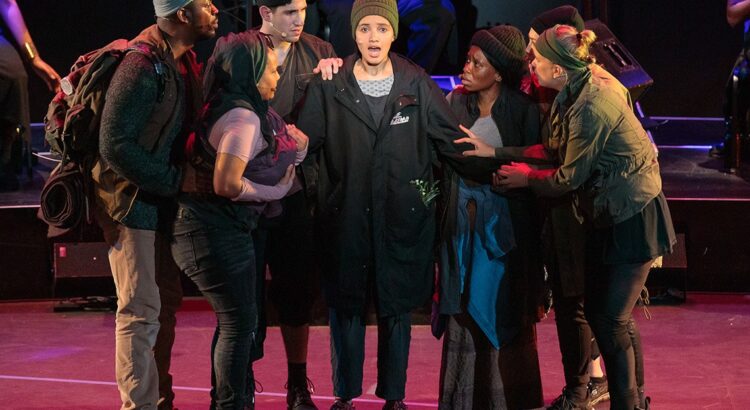
True to an opera, the second act made me fall asleep. This isn’t to say that the show fell off, or that I was the only one slightly sleep-deprived. While the first half of the show had lights that never dimmed, the lighting was all of a sudden pitch-black dark, spotlights lightly glazing the characters as they entered the hellscape outside, complete with dangerous people and violent criminal elements. Because of the lighting, I couldn’t help feeling that maybe my ensuing drowsiness was purposeful, intentional. When I woke up, I realized we’d all been asleep while the characters were still fighting for their lives – belting through, by far, the most grueling song – through this continuous struggle outside of the wall. But for me, it all kind of turned to background noise, in the dark. As I took care not to wake up on my neighbor’s shoulder, UMS was playing with genre. At the end of the story, the troupe stands clustered together, in a haunting formation. Smoke floats over their heads, like angels, as they stand in ruin. After resting for a long while, the electric started back up, with gusto, and served as a wake-up alarm as multiple neighbors startled awake.

What I saw when I woke up

To finish, every seat in the house was in standing ovation. I was in awe of the amount of talent in the room, trying to digest it all. On the walk back, Toshi’s closing words circled through my head: “We have to fall away from the limitations billionaires have put on us. It will only happen if you give up the lives they have assigned us.” My friend Isabelle pointed out the liminality of how parables are passed – to my point about sleeping, there is a presence through absence. “Their words are gonna fall on people, stick with some, take hold, grow, and spread.” That is the power of the parable.

Read more about the performance here: https://ums.org/performance/parable-of-the-sower/

PREVIEW: FestiFools

The Festive, Foolish puppet festival is coming back to Ann Arbor after a two-year quarantine!

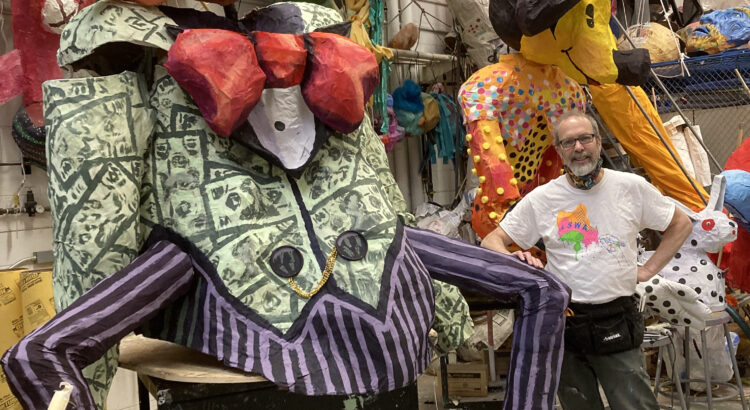
It’ll be on Sunday, April 3rd, from 4 pm to 5 pm on State Street – South University Avenue to William Street (Please refer to the map for more information!). This event is led by Mark Tucker, the founder of the FestiFools, and the puppets are created by students at the University of Michigan Lloyd Scholars for Writing and the Arts, a Michigan Learning Community focused on enhancing creativity by practicing arts and creative writing. I personally had the privilege of taking a peek at the puppets from prior events at Alice Lloyd Hall, and they are fantastic! I can’t wait to see them come to life on the streets. It’s not only the puppets – Street performers including students from the University of Michigan and outside U of M will join to add more fun! Please see this link for more info, this link for the official recap for Festifools 2019, and come out to play this Sunday!

PREVIEW: Turning Red

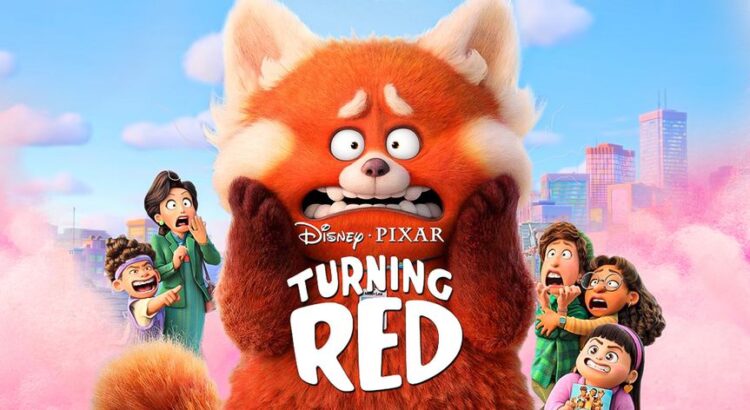
Turning Red is a new Pixar movie available to watch on Disney+! The movie was released on March 11th, and features a Chinese Canadian 13-year old named Mei Lee. The film explores the tension between the chaos of adolescence and being a dutiful daughter. Themes of individualism versus family values seem apparent, a struggle many second-gen children of immigrants can speak to. 

So far, I’ve heard mixed opinions about the film. After the trailer came out, there were a few letterboxd reviews that expressed elements of the trailer that rubbed them the wrong way. Specifically, some expressed disappointment with the film’s ancestral magic trope, which may arguably reinforce outdated views of Chinese people. Mei’s illustration also looks somewhat white, and once she gains her ability to turn into a red panda, her hair also turns red, which some expressed, erases any asian features that were there in the first place. This transformation coinciding with her gaining confidence was an aspect some felt uncomfortable with.

However, despite hearing negative reactions, I’m going to go into the film with an open mind. As someone who has a protective, overbearing mom, (like the protagonist) I feel like I’ll be able to relate to this film. I really enjoyed Domee Shi’s short film, Bao, which made her the first woman to direct a short film for Pixar, so when I heard that she’s coming out with a movie, I was super hyped. It’s great to see representation of both women and AAPI creators at Pixar, so I can’t wait to watch this film!

REVIEW: 26th Annual Exhibition of Art by Michigan Prisoners

This diverse exhibition is definitely worth checking out.

Themed art exhibition makes you form prior expectations before you visit the place. The exhibition of Art by Michigan Prisoners made me expect a heavy exhibition with a lot of social messages, life in prison, and emotions. This turned out to be a prejudice: the exhibition was full of diverse artworks using various mediums and exploring different themes and topics. This proved my prejudice to put their current location over who they were as an artist. As if the exhibition already expected people like me to have this prejudice, the exhibition emphasized and invited the viewer to see the people behind the artwork. The visitor could write on the guest book which will go straight to the artist. Also, a computer was placed so that the visitor could search the artist’s art statement. Every artwork is marked with a price that the artist had decided on and the visitor could purchase artwork on the spot.

Here are a few of the artwork that showed well the themes shared by some artworks. I chose them not because they were better than the others but because these are the ones that I spent more time viewing.

‘Living the Dream’, John Riley
‘Popsicle Stick Chess 2.0’, Ryan G
Left: ‘Identity’, Johnetta Sullivan                  Right: ”An Old Memory (from before worst decisions & mistake)”, L. Wheeler


Quite a few artworks showed the relationship between real or imagined spaces and the artist: it could be their dream houses like Joh Riley’s ‘Living the Dream’, or a scene from their memory. Some directly addressed their current state as being imprisoned: imagining freedom or reunion with their family. There were also portraits that seemed to be of the person that the artist know. Also, I was amazed to find out that wooden popsicle sticks could create amazing artwork-some of artwork had created highly detailed sculptures with popsicles sticks, like ‘Popsicle Stick Chess 2.0’ by Ryan G.

Another factor why I was aware of the artist behind the artwork more in this exhibition compared to other ones is because of the knowledge that the majority of the artists were not trained in art. This made me focus more on why the artist would have chosen this medium and topic as the focus of their art. If the artist is a professional artist, I think they will choose something that is closer to their professional identity as the topic of the art. However, if the artist is a non-occupational artist who produces limited drawings, then you start to link the meaning of that specific piece with the life of the artist, drawing from a broader area than just personal identity.

The exhibition continues until April 5th. If you can’t visit the Duderstadt center before that date, you can see the artwork online here.

PREVIEW: Oh, the Places Pops Goes!

On April 2nd, 7 pm, Michigan Pops Orchestra, the U of M’s student-run, student-directed orchestra, will present “Oh, the Places Pops Goes!” in the Michigan Theater. The program includes  Arturo Márquez’s Danzón No. 2, Michael Giacchino’s UP, Yokota and Kondo’s Super Mario Galaxy, and John Williams’s E.T.

I’ve been to Pops Orchestra’s last movie-themed concert, and it was such a cute event. Pops Orchestra entertained the audience with humorous movies they have filmed themselves to accompany the music, and the music they chose were the ones that both classic-lovers and non-classic lovers could enjoy. Above all that, it was a local and heart-warming event comprised of Orchestra members and their family and friends. I’m expecting that this concert will also carry a similar warmth, so I’m excited about it.

Students with Passport to the Arts can get free entry! More information about where to find the Passport to the Arts can be found here.

More information about the event can be found here.