REVIEW: ‘Fiddler on the Roof’ In Concert

This was, for me, my return to in-person theater, and I am extremely pleased to say it was an exceptional welcome back. I wasn’t entirely sure what to expect when I arrived at Hill Auditorium. I bumped into a friend of mine who I didn’t know worked there and we expressed our excitement to see the show. My seat was on the mezzanine, and I began to try to deduce what the show would be like as I found my seat.

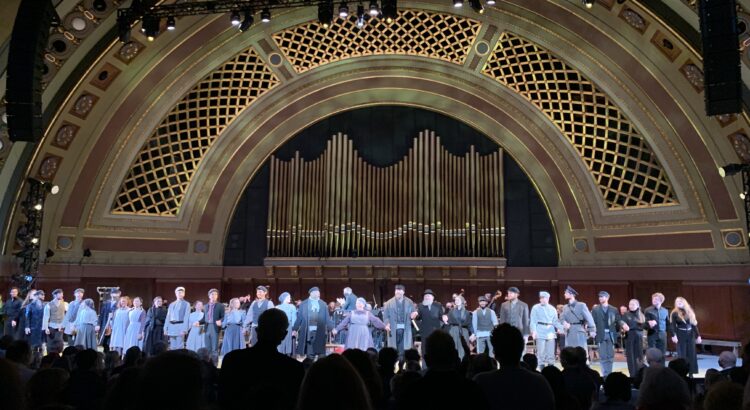
Hill had set out its extended stage, and had placed a few props here and there, mostly wooden crates, planks, and chairs. Tevye’s cart sat on the far side of the stage from me, the most recognizable prop from the musical. Behind the extended stage sat the Grand Rapids Symphony, the musicians were warming up, some slowly trickling in and finding their seats to join the rest of the cacophonous tuning session that precedes a performance. Then, one by one, the actors took stage. Their entrance wasn’t grand, hardly even noticed by the rest of the theater, and they simply took a seat on stage, waiting for the performance to begin. Finally, the lights lowered, a UMS representative introduced the show and offered thanks to the donors who made the production possible. They left the stage, and the Symphony began. A Fiddler started the show off with a remarkable solo, highlighting the skill of the Symphony and offering a wonderful instrumental introduction to the show. At this point, I still didn’t know what “lightly staged” meant. What followed was surprising, but entirely welcome in my opinion.

It turns out that “lightly staged” means that the actors would be operating with a very limited set. Instead of any structures or backgrounds, the actors performed directly in front of the symphony. The entirety of the musical was performed, every line, every conversation, every dance number. The dance numbers blew me away. The students who performed were amazing! They commanded the stage and the symphony faded away as I watched their performances. In fact, there were a number of times that I found myself just watching the musical, barely noticing that the Grand Rapids Symphony was sitting right behind the actors. There was nothing lost from the lack of a set, and in fact, during the more instrumental sections, it was really nice to be able to see the musicians directly.

The performance reinvigorated my interest in music and in the theater. I may be a bit more susceptible to that particular kind of pull toward artistic performances, but I would encourage anyone who is thinking about going to a performance to go! You won’t be disappointed. UMS has made a commitment to making their patrons feel safe and comfortable, and the enjoyment of seeing a performance is definitely worth the time.
REVIEW: Fiddler on the Roof in Concert

Confession: I had never seen Fiddler on the Roof prior to attending what UMS called a “lightly-staged concert performance” of the iconic Broadway-musical-made film over the weekend. 

However, I quickly wished I did–the production was so clearly made with a communal love and passion that I felt overwhelmed by the sheer amount of easter eggs and small artistic decisions that I felt I was missing out on. Even from a newcomer’s perspective, I found the story to be easily relatable, the music heart-pumping and familiar, and the actors and dancers to be absolutely phenomenal.

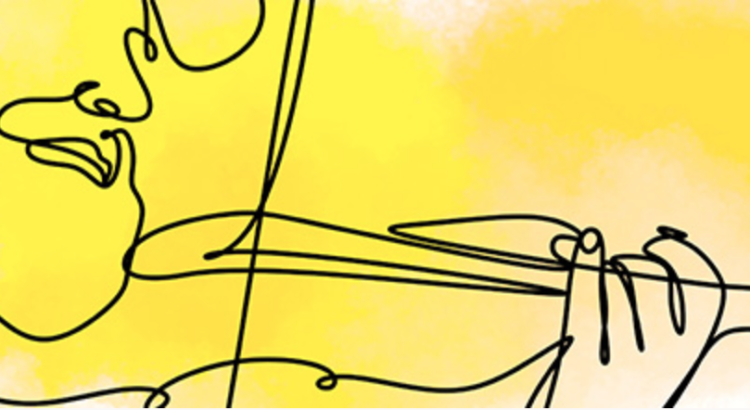
As a violinist, I was immediately drawn in by the opening scene: a solo violinist leisurely traveling across the stage, a single dancer with outstretched arms following along with disjunct flowy movements, the Grand Rapids Symphony Orchestra nestled comfortably in the background. John Williams’ opening cadenza is plucky, sweet, and edgy, with an almost improvised quality. The violinist played it with the practiced ease of both a street performer and virtuoso, leaning into the music’s gratuitous slides and stringy texture.

Additionally, it was a pleasure to see SMTD students share the stage with Broadway singers Chuck Cooper and Loretta Ables Sayre. Ella Olesen, Kate Cummings, and Kelly Lomonte as Tzeitel, Hodel, and Chava were charming and relatable as we got to watch them grow as characters. Chuck Cooper/Tevye’s interactions with his daughters were precious and sincere, while other times he easily commanded the stage with his character’s charisma and humorous asides. Furthermore, Diego Rodriguez and Christopher Tamayo as Motel Kamzoil and Perchik gave memorable performances as we were prompted to celebrate and sympathize with them throughout the story.

A highlight of the show I didn’t anticipate was the dancing. Only working with the sliver of stage available in front of the orchestra, the dancers launched themselves in tight spins and sharp, electrifying moves. A particular moment that stood out to me was the bottle dance during the wedding scene where the dancers linked arms and slid forward on their knees in giant, synchronized lunges whilst balancing bottles on their hats. It was ridiculously exciting. 

A beautiful collaboration between UM students and decorated professionals, Fiddler on the Roof in Concert was the production I didn’t know I needed to see. After this, I definitely plan to keep my eye out for future student theater productions!

REVIEW: ANTIGONE

Recreating a classic comes with benefits and costs. You get to explore the precious parts that made the art classic, and yet, this implies the challenge to live up to the original arts and numerous former creations that interpreted the original piece in different styles. Performing Antigone in the 21st century after the original version was written more than 2000 years ago shares the same questions. The audience (a lot of them, presumably) know that Antigone is going to die (Apologies for the spoiler if you did not have the chance to encounter the original story yet) and they are keener on seeing how the production team had called the old heritage to life in their own creative way instead of knowing what’s going to happen to the characters. Antigone performed by the U of M Department of Theater & Drama had clear stances on what it inherited and recreated. I must disclose in advance that this was my only experience of seeing modern recreation of Antigone, so my review lacks any insights from comparison from other works.
The performers managed to bring back the emotions and awe the ancient Greeks felt. All actors placed heavy emphasis on the emotions they were experiencing, the universal emotions like fear, anger, doubt, and sadness. Played with the vigor of young actors, the fear of the oppressor has of the disobedience of the oppressed and the dignity of denouncement were powerfully demonstrated on stage. They also managed to bring more complicated forms of emotional resonance with the ancient Greeks-the rapid change of voice of Tiresias, very impressively done, combined with a sudden change in the color of the lighting to an abnormal red reminded the fear and awe the ancient people had for prophecies, and the dramatic movement of choruses reproduced the grandeur that was a myth was treated with. Energetic yet honoring the old story, the team had done a great job in making the old story still relevant.
The ‘new’ that the production team wanted to add to the project was very clear. It was clearly stated at the very start of the performance. Even before Antigone entered the stage, the chorus marched holding the pictures of women. I was not familiar with who they were, but I could guess from the grave manner that the march was done that they were being honored. To consider the theme of Antigone, my guess is that the women in the picture were the ones who fought for civil rights against oppression. Another thing to notice was that a good proportion of the people in the picture were people of color. The performance was expanding the story and the value celebrated in it outside the fiction from ancient times: they were stating that people, like Antigone, live up to their dignity, and thus we should honor them; the challenge and questions Antigone and other characters faced lived on, and suggest that that’s why we should bring this into awareness in this time in the theater.
One minor regret was that there were parts where it was hard to comprehend what the actors were singing. I think it was due to the combined effect of speaking in ancient styles and echo colliding with each other due to the location of my seat under the Mezzanine floor. Still, this was a well-created performance with details I couldn’t address here due to length but made the old story trendy again.

REVIEW: Dogfight

I was seriously impressed that this was a student production.

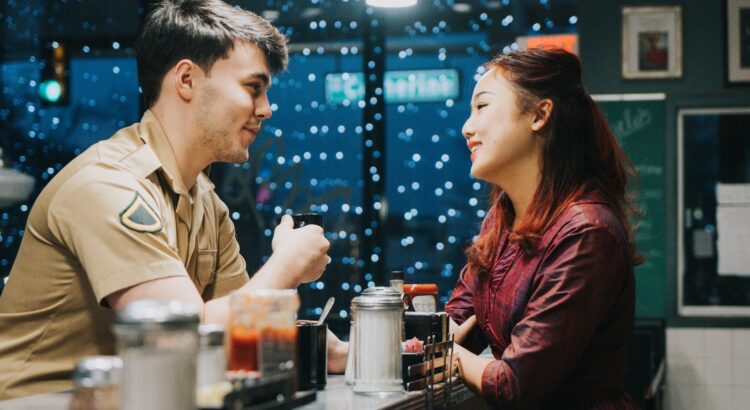
Produced by the basement arts, a student theater organization here at the University of Michigan, dogfight told a story of a young US marine who fell in love with a waitress who he had invited to a party with a bad intention. Although the theme of war inevitably cast a shadow of tragedy over the story, the production team did not permit the gloominess to eat up the vibrant energy of student actors and the production team. There were so many precious moments of humor that made the show so enjoyable, like in the scene where Rose, the girl who the main character, Eddie, asks out for a date, show him how capable she is of speaking foul languages after she was annoyed because Eddie swore too much.

The first compliment I would like to give is about the music composed for this performance. They were not only good to hear but cleverly constructed to fit the story. The number where this stood out most was a scene of a date night where Eddie asked Rose out after apologizing to her. They sang a song together about their feelings while they are wandering the streets. The characters’ emotions wouldn’t have been ripe enough to sing a full love sonnet. Eddie had done wrong to Rose and Rose was angry at him a while ago, so the romantic lyrics would have been too much. Here, the composers did an interesting twist that the characters would express their feelings with the humming of ‘Bum Bum Bum’, a playful but hopeful tune that explains the excited but uncertain emotional state of the two characters. Nicely done.
This song was performed by the two main characters, but a lot of other songs involved the whole ensemble. The tone of the dance was cheerful to reflect the dauntless marine boys who were too young to face the fear of the war, and the performers nailed this psych with bold movements and occasional humorous scenes. I would also like to shout out to the light designers as well. There were many scenes in the play where the performers had to be in a separate space but are visible at the same time. Lights were used in such cases to create the boundaries between spaces, which I found very creative. There was also a scene where the marines sang about America before they went to war. Red, blue and white lights were flashed on each group as the ensemble formed three groups that faced different directions This is still fresh in my mind as I write this review.

Although the story itself is a familiar one that has a male character and a female character falling over each other unexpectedly, the production design, the vigor of performers, and exciting music transformed the common story into a unique production. I look forward to seeing what surprise the basement arts will have for the university community.


*Featured photo from the Michigan Daily, photo by Jack Zeile

REVIEW: Antigone

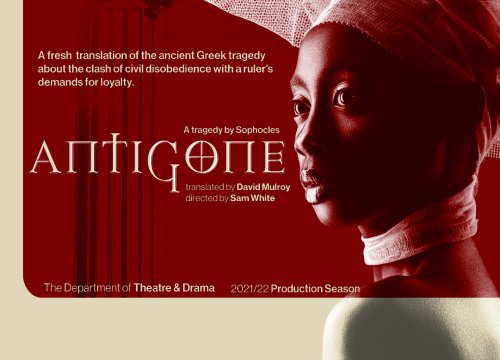
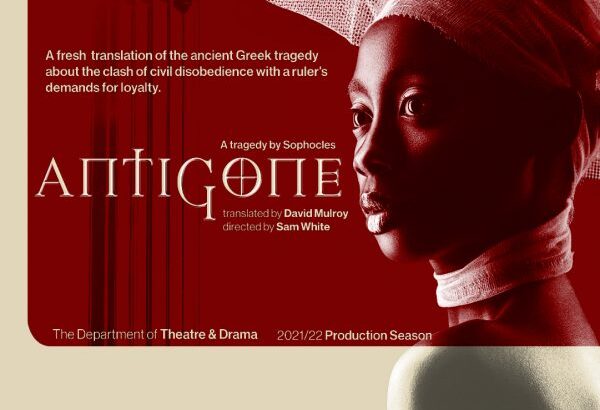
I had the pleasure of seeing the Department of Theatre & Drama’s Antigone this Thursday. While written by Sophocles in 441 BCE, Antigone has themes that can relate to today, delving into death, grief, and control. 

Antigone is the story of Antigone’s rebellion against Creon, the new king of Thebes, who forbids Polyneices (Antigone’s brother, who died in battle) to be buried. Antigone commits civil disobedience by honoring her brother’s body before the gods, but she is punished by Creon who sees her act as a disobedience against him, the country, and… masculinity.

The cast brought life, passion, and sometimes humor to the roles. The chorus was beautifully-costumed, a task headed by SMTD production students. The choreography was imaginative and modern, well juxtaposed with the classical setting of the play. There were striking and dynamic individual performances by named characters at every turn, but a constant throughout the play was the impressive effort of the chorus, moving in coordination, many times speaking in unison. 

A story of action motivated by grief is somewhat fitting for our current times, as we continue to navigate the pandemic and what it has left in its wake. Antigone defies cruel laws and the threat of death to bury her brother, which she sees as right in the eyes of the gods. Her act sends out a ripple effect, long after her tragic punishment.

Antigone is playing at the Lydia Mendelssohn Theatre February 17-20. Get tickets here.

REVIEW: Layl (Night)

The dance! The dance, the dance, the dance, the dance.
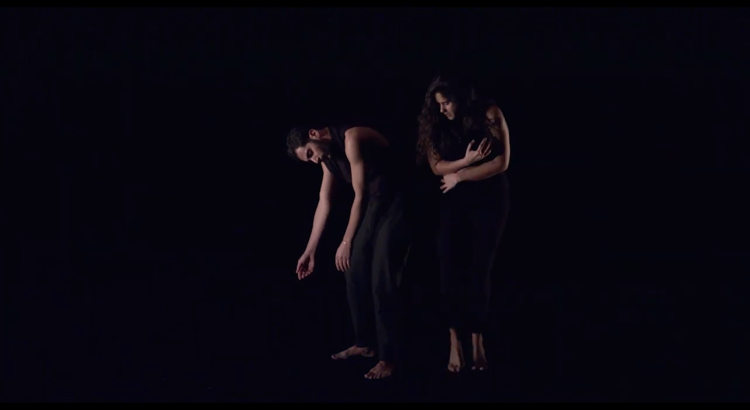
With only 5 performers on stage, simple props, withheld words, and dim lights, the performance told a beautiful tale of love and separation. Beautiful was the right word. The performance talked about tragedy but in such a beautiful way.

This performance was different from the shows that capture people’s attention by giving accessive stimuli. 5 people filled the stage from the start to finish. They were wearing black clothes and no stage props used exuberant colors. This made a really grave and chic look to the performance by emphasizing every movement of people on stage, their flesh as the only glowing and colored thing moving on stage in the dark. The show started with a female performer with a powerful voice singing what this performance will be about. Quoted, it was “a show about the fatal struggle of lovers struck by distance and parting its dancers are lovers who have refused to let separation dry their tears”, and the song proceeded to state that the show is about the “victims of love” who “died of longing”, “died crucified”, “were slaughtered”, “committed suicide”, and other forms of horrible deaths. Then it was said that in love, there is “desire and disease, there are the seeds and the bubbles of a pool in rain, there is the stability of one who is anchored, there is agitation and turmoil”, and so on.

As can be seen even from these short quotes, the rush of poetic and sincere images was poured at the very start. It was a very clever way to start the show because it not only immediately seized my and the audience’s attention to the show but also managed to give guidance to the audience on how to interpret what’s going to happen on stage. This was especially necessary considering that the main communication of the performance that followed was mainly nonverbal and symbolic as it consisted of movements and music. This introduction was accompanied by two dancers who were jumping while they were thrusting their arms and legs. Bizarre and exuberant, this almost reminded me of a person possessed by a powerful external force. Although I cannot mention every detail, these kinds of simple but powerful motions were commonalities of movement throughout the show, capturing the audience not with flashy movements but with exceptional pauses, limited movements, and perfect resonance with the music. After the show, a short Q&A was followed with the enthusiasm with the audience. Questions were mainly focused on the cultural background of the choreographer and the performance and all of them were based on appreciation for the show.

The part that really stood out to me was how the show broke the barriers distinguishing the musicians and dancers as can be seen in lots of performances. In this show, musicians dropped their instruments and fluidly joined as dancers, or the musicians would lie down on the floor while dancers danced around and above them. This made me take in music and movement as a whole. Also, every instrument being laid on the floor while the lights and the steel structure where they hang coming down to create the image of the war, demise, or ruin was highly impressive. It was misbalanced but aesthetically very complete.

My only regret was that the English subtitle was provided for partial scenes. The show was performed in Arabic. I could tell that the language was an important part of the show because the producer chose to have the performer singing throughout the performance while keeping everything else concise, so I felt that I was not getting the full aspect of the show when I couldn’t understand the lyrics. Also, the lyrics were really beautiful in themselves so it would have been so beautiful to savor the words simultaneously with the dance.

In all, this performance, going over the language barrier, was truly beautiful, mystic yet powerful, just as its title entails. I’ll definitely look forward to seeing more production from the choreographer, Ali Chahrour.