
REVIEW: Drive My Car

Warning: Slight spoilers for the film’s exposition

Just yesterday, a few of my classmates and I went to see the premiere of Drive My Car (2021) in the State Theater. The Japanese film was directed by Ryusuke Hamaguchi and based on the short story of the same name by Haruki Murakami, whose works have been bestsellers within and outside of Japan. 

I went into the film expecting a touching or tragic romance, the exposition of the film began to hint at the latter when the main character Yūsuke Kafuku (Hidetoshi Nishijima) walks in on his wife Oto Kafuku (Reika Kirishima), in the throes of passion with a young actor that she works with. I expected a dramatic confrontation between the husband and wife, but Yūsuke’s response to the incident is passive, as he simply walks away before Oto or the actor sees him. 

Despite the cheating, their love appears genuine, as both of them are drawn together by the art of storytelling; he is a stage actor, and she is a writer for television dramas. However, the movie takes its turn from the romance as Oto soon passes, and Yūsuke fails to gain closure in regards to the relationship with his wife.

The second act begins when Yūsuke is hired a driver, the young Misaki Watari (Tôko Miura), when he takes a job to be a director for a stage play of Uncle Vanya. Their relationship starts with indifference towards each other yet progresses each time he requests Misaki to play the recording of his wife reciting lines from the play for him to practice with. Misaki has past grievances of her own and together she and Yūsuke help each other find closure with each of their dead family’s strange behaviors.

At first, Yūsuke did not want anyone other than him to drive his car, but he soon grows comfortable with Misaki’s driving and it is as if he has finally let go of that independent passivity that held him back from confronting his wife. This allows Misaki to reveal her trials of being raised by the abusive mother who she let die during a mudslide that collapsed her house. The comradery that the two find together is wonderfully developed without the need for overt displays as they simply build their trust in each other with each facet of information they release.

Being three hours long, the movie’s pacing is quite slow. The exposition itself took almost an hour to set up. However, if you have the patience and want to watch a film that touches your heart with a unique friendship, make sure to catch Drive My Car at the State Theater.
REVIEW: Schwarze Adler (Black Eagles)

Last Friday the German Department hosted a free curated screening of the 2021 independent documentary film “Schwarze Adler” (translated from German: “Black Eagles”). The space they held it in at North Quad was great – it was huge, with floor-to-ceiling windows spanning the length of one wall, whiteboards and cushy chairs spanning the other, and a big blank wall up front to project the film onto. The physically-distanced chairs they’d set up in the room were fairly packed with people coming for the event.

Watching this documentary was a pretty emotional experience for me (which is why it took me so long to write this review!).

Steffi Jones, former defender for the national team

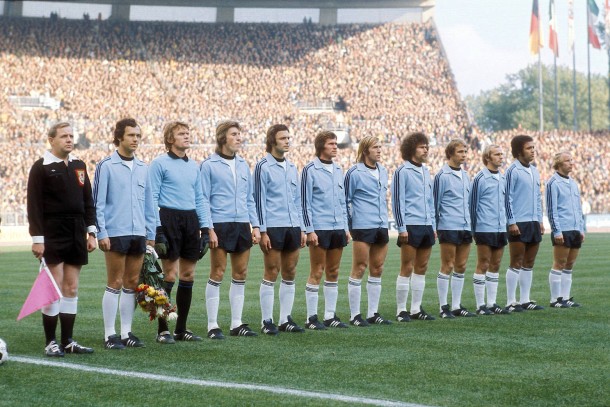
Seeing footage in 2021 of fans at a soccer game doing the Hitler salute will do something to your psyche. I’m privileged — some people don’t have the choice of whether to turn away from the screen, because they live through this every day. Imagine being a player on a professional sports team where the only difference between you and your teammates is that your skin is a shade darker. You’re trying to focus on the game you’ve trained for for most of your life when you suddenly hear 1000s of fans in the stands surrounding you, most of which are from your own country where you were born and raised, yelling at you to go back where you came from. That’s an experience that was recounted by every single German soccer player interviewed in this documentary.

The way fans treat athletes is something worth having a whole discussion on. Cheering for your favorite players and booing when the other team scores is all good fun. But when that morphs into jeering, chanting hateful racial slurs, and hurling insults at players, that’s when it becomes absolutely cruel. Michigan football games are not immune to this behavior. We put athletes on pedestals, but they are not made of titanium, they’re made of flesh and blood! They’re humans just like us and when fans dehumanize them, they deprive them of so much: joy from being on the field, joy from being with their teammates, and the focus they need to stay in the game.

Gerald Asamoah, former forward

Many of the players in the documentary talked about how hearing those shouts of “go back to your country” and “kick out the negro” would affect their playing, and they thought about it for the whole rest of the game. At one point one of the players, Gerald Asamoah said he had “never seen such hate anywhere else before.” One of his fellow teammates of color left Germany to play for Ghana because of the experience. Another player, after being subjected to it for half a game, picked up a small red crate on the sidelines and threw it down in a fit of anger. His teammates said nothing to him — the referee just handed him a yellow card. Another recounted how sad it made him when he saw that not only were the parents chanting slurs, but their small children were too.

Almost all of the players also made connections between the way they were treated to Germany’s dark history. “How can you show this behavior when we have seen exactly where it leads?” I think the same could be said of racism in our country. The U.S. has an equally dark history, it’s just that it’s usually glossed over in our history textbooks.

When the credits began to roll, I was feeling kind of hopeless and defeated. I know that’s not the right response to world issues, but I couldn’t help it. But then one of the professors from the German department got up to say a few words.
Here’s what she said, paraphrased:
“Don’t be disheartened. These thoughts of racism have accrued over centuries and it will take time to undo them. Martin Luther King Jr. was only assassinated 52 years ago so really we’re just at the beginning of the work to undo it. And don’t feel bad if you are not the one who goes out and marches and shows up in a big way. The small acts matter to. Every act of kindness, and every act that does something to acknowledge the humanity in others matters.”

So go out and show up in a small or in a big way this week, and know that we have a long way to go but every act matters.

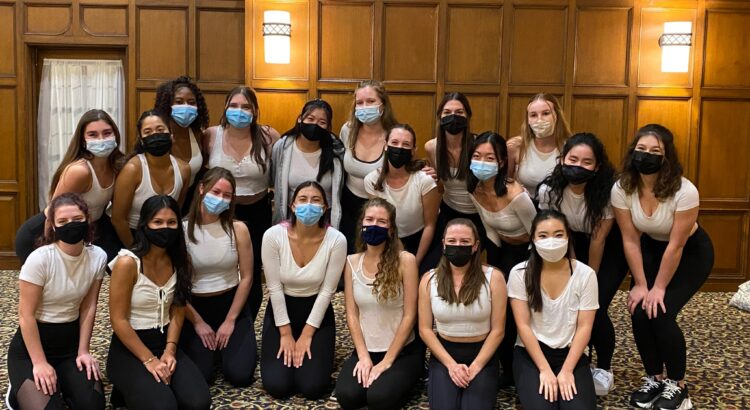
PREVIEW: Resurgence: We’re Bringing Sexy Back by Pure Dance

I don’t typically frequent dance events, but with a name like “Resurgence: We’re Bringing Sexy Back,” I had to check this one out. 

Pure Dance is a student-run organization at the University of Michigan that welcomes dancers with a broad range of backgrounds. They will be hosting their annual showcase this Sunday, featuring member-choreographed dances and guest performances from an exciting mix of a capella, instrumental, and other dance groups.

Although I have long buried my childhood ballerina days, I am excited to see some of my friends perform on stage. Additionally, I look forward to getting to know some of the other performance groups on campus. While Pure Dance is known for doing contemporary and jazz dance styles, I have also been told to look out for ballet, hip hop, and K-pop!

Come support Pure Dance on Sunday, January 23rd at 6:00 pm at the Lydia Mendelssohn Theater! Free tickets are available through this month’s Passport to the Arts.

Event info: myumi.ch/488My

REVIEW: Tiny Objects, Big Stories

Where do you go first in a museum?

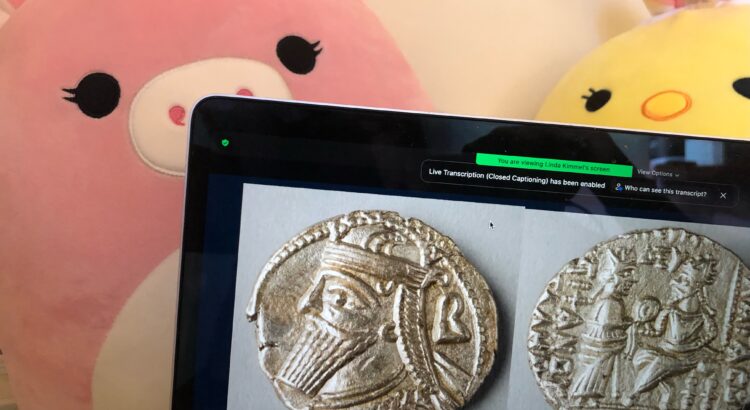
This was the question behind the “Tiny Objects, Big Stories” virtual tour at the Kelsey Museum of Archaeology. I hadn’t given the question much thought until now. I realized that in all the hours I have spent wandering museum exhibits, I always began with the largest pieces, expansive paintings and statues. Naturally, these are the first things to catch my eye.

However, there’s a whole other collection of artifacts that are often overlooked. These include smaller tablets, amulets and coins that are typically protected behind glass walls. The “Tiny Objects, Big Stories” tour brings a magnifying glass to these artifacts to offer a closer look. The tour zooms in on amulets, scarabs, seals, coins and other tiny figurines and their respective histories.

I was particularly interested in the different amulets and scarabs. With detailed engravings, these amulets and scarabs were symbols of protection. Some protected one’s health and luck while others focused on navigating the afterlife. The heart scarab, for example, was inscribed with the Book of Dead spell to offer “protection of the deceased’s heart during the judgment in the afterlife.” This small scarab had a lengthy inscription of the spell that would have been difficult to spot during your average museum visit. This sparked an appreciation for the skilled craftsmanship and detail put into such artifacts. It made me wonder what spells may be hidden behind a scarab the size of my thumb.

I began to consider my own tiny objects and the stories they hold, such as an old Snapple bottle cap with a fun fact or an engraved ballpoint pen. They may not be as cool as the artifacts at the museum, but they have a lot significance in spite of their size. It just takes a bit more thought and effort to recognize these pieces.

This virtual tour allowed me to get in all the beautiful details of such tiny artifacts. The Kelsey Museum of Archaeology will continue to host such virtual tours for anyone who is interested! It is a great way to stay safe and follow along from the comfort of your home (or squishmallows). Moreover, the Zoom interface creates a close-knit space where tour guides and guests can share comments and questions easily. The museum also hosts other in-person and virtual events you can find here.


PREVIEW: The Shining

On January 21st, Michigan Theater offers a very special and spine-chilling event: a one-time late-night screening of The Shining. When it comes to psychological thrillers, no film will have your heart racing like this cult classic.

Loosely based on a real setting, the 1980 film follows a family that moves into the snowy mountains to act as caretakers for a seasonally empty hotel. Without much to keep them busy, the family encounters an array of sinister forces, falling victim to the darkness of the hotel’s history; from psychic powers to hallucinations to isolation-induced insanity, the horrors accumulate as the winter progresses.

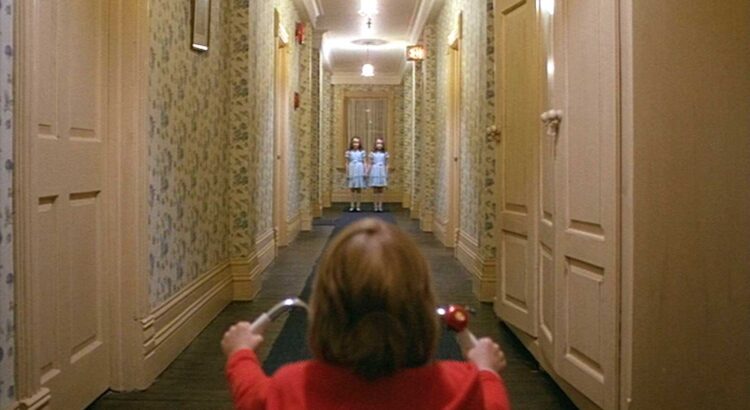
The film has gained a large following since its release, bits and pieces of it permeating pop culture. From the quote “Here’s Johnny!” to the image of two ghostly-looking girls standing in an empty hallway, each moment of The Shining offers a memorable piece of artistry that stands the test of time. Everything is intentional; after watching this film a handful of times, I still notice delicately placed details with each watch— and the electrifying acting (or was it even acting?) of Shelley Duvall and Jack Nicholson will never fail to keep me on the edge of my seat.

Experiencing a cult classic and visual masterpiece on the big screen is a rare opportunity that can’t be passed up. The lavish interior of Michigan Theater slightly parallels the elegant atmosphere of the film’s infamous hotel, adding another dimension to the immersive experience. If you enjoy horror, snowy days, big hotels, and human villains who convey demonic evil, you’ll love seeing The Shining at Michigan Theater. Grab a couple of friends and spend your Friday night celebrating an old gem.

PREVIEW: Schwarze Adler (Black Eagles)

Tomorrow afternoon, you could kick off the weekend as I usually do — plant yourself down at the library and glue your eyeballs to your laptop screen for two hours.

ALTERNATELY, you could plant yourself down in a comfy chair in the neat North Quad collaborative space and glue your eyeballs to a different screen to live and learn through the experiences of Black players on the German national soccer team.

UM’s German department is hosting a curated screening of the 2021 documentary film “Schwarze Adler” or “Black Eagles” tomorrow from 2-4PM in North Quad 2435. https://events.umich.edu/event/90023

“The documentary lets black players of the German national soccer team tell their personal stories for the first time. What road did they take and what obstacles did they have to overcome before they got to where we cheer for them?”

As we head into a weekend of events celebrating the life and legacy of Dr. Martin Luther King Jr, I strongly encourage you to make time to reflect on the values that drove his and countless other lesser-mentioned civil rights leaders to fight inequities in their community, and how you are upholding those values.

I think we can all agree that working and living as an athlete is extremely challenging. There are a heap of pressures riding on these people’s backs: the internal drive to win, press and media attention, and the demands of your coach and teammates. It’s stressful at all levels, from high school to the NCAA to the pro leagues.

Those pressures are multiplied for athletes of color, who are often dehumanized. In the U.S. today, Black athletes are dogged by stereotypes that chalk their talent up to “inherent physical ability” rather than the actual years of hard training and practice they put into the game. They have to deal with antiquated competition restrictions that center the needs of their white counterparts (Exhibit A: https://www.nytimes.com/2021/07/14/style/olympics-soul-cap-ban-swimming.html), and then are shamed for using their platforms to protest their unjust treatment or prioritizing their mental health (ex: Colin Kaepernick, Naomi Osaka). Here’s an interesting history of Black athletes at our very own university: https://heritage.umich.edu/stories/lonely-as-hell/.

Now move the map to Germany. The personal stories of these players will likely be entirely different, and yet…similar in some fundamental ways to what we see in our country. What I think will be invaluable about this film is that the soccer players will be telling their own stories directly to the camera — no filtering or watering down included. This will be a thought-provoking way to get out of the U.S-centric perspective bubble I live in.

I hope to see some of you there!