
REVIEW: Prisons and Politics in America Exhibit

Tucked away in a corner of Hatcher North’s first floor is the Audubon room, named for the extremely rare volume of naturalist James Audubon’s “Birds of America” paintings that it houses. From now until March 24, it also houses the Prisons and Politics in America exhibition curated by Julie Herrada.

“Prisons and Politics in America: An Exhibit of Art, Poetry, Letters and Prison Resistance from 1890 to Today,” examines the political reasons for why people are imprisoned: for speaking out, for writing, for violating repressive laws, framed because of their color or politics, for stealing from the rich, for refusing the military draft, for whistleblowing, for attempting to overthrow the government, for standing up for a belief, or for walking over a forbidden line.

The items focus on maintaining one’s humanity behind bars, promoting political causes, and offering solidarity in support of prisoners.


The exhibit was pretty small, with a total of 39 items, but I thought it was a fitting size. The items on display were well-chosen and represented a variety of time periods, activist movements, and prison injustices. I learned a great deal by walking around and slowly taking each artifact in, reading the thoughtfully-written blurb about each.

“San Quentin Days: Poems of a Prison” by Anonymous

There were all sorts of artifacts: from protest pinback buttons to FBI Wanted posters to comics to a recipe for DIY prison ice cream. The most moving parts of the exhibit for me were the sections displaying prison writing: poetry, letters, memoirs, books. Writing is one of the most powerful tools of expression that a prisoner has, and also is one of the only ways they have to connect to the outside world. Some of the items in the collection were extremely rare and among only a few surviving copies around the world. Writing is hard enough in a comfortable space – can you imagine how difficult it must be to write from prison?

I had forgotten how far back the history of protest and activism goes. Every time a new movement starts , to me it can feel like a whole new isolated effort, which is a huge sign of my privilege. There are many who are not given the chance to forget the history to which movements are attached to because those issues affect them every single day. Rarely is there an injustice so new that there were no ancestors who had to fight it in their time too.


Free John Now! Poster, 1971

The exhibit sparked some thoughts for me on how activism has changed over the past century and how it has stayed the same. The language in some of the items in the exhibit was very similar to the language I see in protest posters printed today. Strong language, fueled by a sense of justice. Images of chains and bondage and upright fists underneath calls to action like “FREE [X]” and “STOP [Y].”

Attica. Poster, [197?]
The greatest difference I see is because of something that modern-day activists have that the past did not: digital technology. I am amazed at the materials people used in the past — postcards, buttons, flyers — that had to be distributed by hand and on foot. Imagine if the leaders of the 1919 labor strikes in Detroit had access to a computer at the library where they could open up a Microsoft Publisher document, put together a graphic and slap it on Facebook or Instagram for free. It has been said often in the Information Age, but I’ll say it again: our modern-day ability to disseminate information so quickly and widely is borderline magic.

Free Gary Tyler Poster, [197?]
I will say that I would have arranged the exhibit a little differently. The arrangement of artifacts seemed to maximize how much I had to walk. I also would have also liked it if items that were part of the same “movement” or at least from the same time period in history were placed close together to make the exhibit feel more cohesive. The decision to put this exhibit in the Audubon room strikes me as a bit strange, given that James Audubon was known to oppose the abolition of slavery and argued that black and indigenous people were inferior. Many of the incarcerated people mentioned in this exhibit were of black or indigenous origin and were jailed by blatantly racist judicial systems on little to no evidence, a term labeled “legal lynching”. A small acknowledgement of the fact that their stories are right now sharing the same space with the legacy of a proslavery individual would have been thoughtful.

If you’re ever studying in Hatcher, I highly recommend slipping away for a bit to check out this exhibit in the Audubon Room on the first floor. It is well worth the visit and I guarantee you’ll learn something new!

REVIEW: Don’t Look Up

Filmmaker Adam Mckay ditches all subtlety in Don’t Look Up, weaponizing comedic satire to lunge straight for the throat of his target— which is, seemingly, almost everyone with media power. Don’t Look Up follows the story of two astronomers, played by Leonardo Dicaprio and Jennifer Lawrence, who discover a deadly comet speeding straight toward Earth and desperately attempt to convince the world of the event’s urgency. Facing the insurmountable obstacles of political corruption, corporate greed, and the happy-go-lucky culture of the celebrity world, the two struggle to make sense of the media’s ignorance as inevitable death approaches.

Don’t Look Up has an impressive range of talents under its belt, demanding the attention of anyone who previews it. Meryl Streep, Timothée Chalamet, Cate Blanchett, Jonah Hill, and Ariana Grande, to name just a few, bring to life an array of caricatures. Bubbly talk show hosts, self-absorbed celebrities, and money-hungry politicians take turns looking science in its fiery, unyielding eyes and denying it outright, engaging in nonstop arguments with the only two voices of reason— and somehow always coming out unscathed.


The film is fast-paced and blood-boiling, ensuring that you want to tear your hair out and scream at Meryl Streep’s uncharacteristically smug face for the entire 138-minute runtime. The dialogue teeters between over-the-top ludicrosity and sobering realism; it clearly points fingers at real-life media personalities and politicians that exhibit similar attitudes and refuses to water down their ignorance. Some scenes lean too much into the caricatures and come off as corny, but the premise remains intact and believable. The plausibility of the “comet” situation and media reaction mirrors the harrowing reality we live in; as an obvious allegory for the accelerating climate crisis, Don’t Look Up reminds us of exactly how and why the environment is heading towards total decay and which systemic problems are to blame.


Rotten Tomatoes gives the film a rotten and pitying 55%. To be fair, Mckay’s Don’t Look Up lacks nuance and bold ideas, instead infusing what we already know with a sense of existential dread and powerful anger. The comedic route is also a less effective form of delivery than a more serious satire that could delve even deeper into its criticisms. However, my agreement with the critics’ ratings ends there; as designed for a mass audience, rather than an audience of knowledgeable film enthusiasts, Don’t Look Up is a perfectly accessible and entertaining vessel for an urgent message. Grim comedy and familiar faces make the plotline easier to digest, easing the anxiety of the catastrophe. Overall, Don’t Look Up is not intended to be an innovative cultural masterpiece, and that’s okay. At its best, it is a sobering and well-scripted analysis of the twisted hierarchy of power that we live in, given credibility by its parallels to reality and a star-studded cast. At its worst, its comedy detracts from its effectiveness and the film leaves us feeling hopeless.


Don’t Look Up pleads for the world to listen to its vindication of America as we know it, and I believe it should be listened to. Packed with enough cynical cleverness and lively dialogue to keep you on your toes for the whole two and a half hours, it’s undoubtedly a worthy watch. Grab some popcorn and a few friends and check it out exclusively on Netflix.

REVIEW: Cowboy Bebop: The Movie

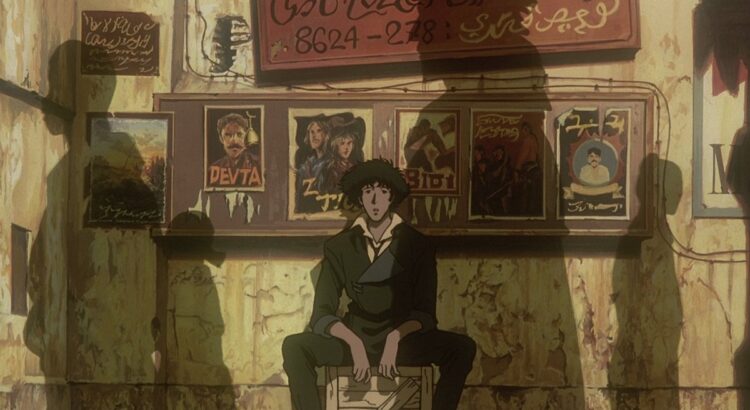
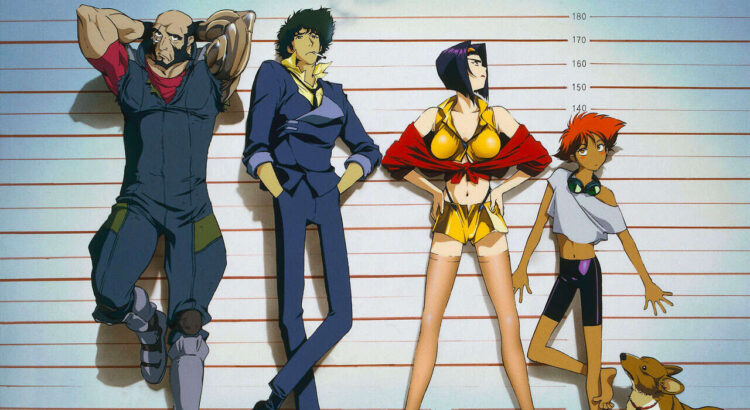
Cowboy Bebop: The Movie follows the crew of bounty hunters aboard the Bebop as they chase after a biological terrorist who intends to wipe out the human population of Mars with an unknown pathogen. The film takes place between episodes 22 and 23 of the original anime series, and was released three years after the original series’ conclusion. 

I have never seen the original Cowboy Bebop series, but I still very much enjoyed the film and felt like I was keeping up with the story, characters, and world. The film throws you right into the world without much exposition, but I prefer that a film won’t drag out an introduction. There were some moments where I was unsure if I was missing some context or if I was just a little confused about the storyline, but nothing was too big of an obstacle in my overall comprehension of the film. The film does not rely heavily on the lore of the original series, which allows new audiences to enjoy the film alongside long-time fans. 

I was most impressed by the film’s soundtrack, art, and action. Yoko Kanno, the original series’ composer, returned to score the film and perform the soundtrack with her band. The soundtrack elevated the atmosphere of the film, whether it was upbeat rock instrumentals in action sequences or subtle, more moody music as the crew chases after the bounty. 

As for the art, I thought the backgrounds were particularly worth noting – they were all incredibly detailed and drawn from interesting perspectives and angles. I liked the use of bold but less-saturated, almost matte colors. I also really enjoyed the character designs, specifically for Spike and Ed. I found Spike’s ridiculous height to be amusing, especially in the montages of him walking through crowds. I think his design is very clever, with his long and lanky stature contrasted with his suave and easy going demeanor. On the other hand, I loved Ed’s ridiculous way of moving around – the way she flails her limbs and entire body around while moving can be likened to a wet noodle. I loved how the animation showcased both that Ed is a child and a genius – for example, there is a scene where she is hacking into a database to retrieve crucial information for Spike as sea creatures swim across the screen and attack the windows that pop up. 

The action sequences are perhaps the most impressive, not only because of the accompanying score but of the moves the characters use in their fighting styles. None of it is overly gorey, but there is just enough gore that you recognize how brutal the fights are. I’ve found that in recent action or superhero films, there is a lot of mindless fighting and shooting at faceless and nameless CGI antagonists, but the action in Cowboy Bebop feels more believable – you can better understand what it would be like for Spike to slam your face into a handrail than if he was shooting at you while flying through the sky on alien spacecraft.

Though Cowboy Bebop isn’t the genre I typically gravitate towards, I had a very enjoyable time watching it. I am interested in exploring the series, but for the time being I thought the film did an excellent job of introducing me to the world of the series.

REVIEW: Licorice Pizza

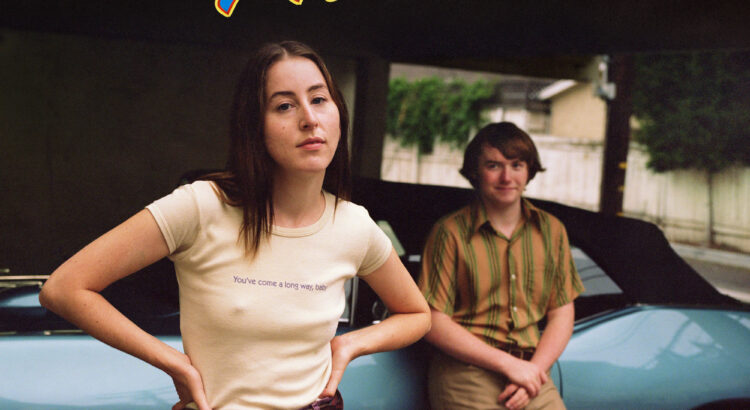
In all whopping 134 minutes of this film, neither the word “Licorice” nor the word “Pizza” made an appearance. According to the movie’s Wikipedia page, the name comes from “a former chain of record shops in southern California.” I’m convinced that in reality they had no idea what to name it and chose something random, which is fine by me. “Licorice Pizza” is much more memorable than “134 minutes of vignettes strung together concerning the messy lives of two messy young people in Encino, CA in the 1970s to the tune of some BANGIN’ David Bowie tunes.”

This movie was hilarious. Pure comedy, but it wasn’t the in-your-face kind. I could not stop grinning throughout the entire thing. It was just so nostalgic.

Let’s start with the good:

Many coming of age films are bittersweet for me because they make me feel like I haven’t lived enough life. On-screen teens often go on wild romps through their towns, make messy and theatrical mistakes, and lie side by side underneath the stars talking about life. I never went on wild adventures or made many sparkling memories in high school. Those movies have me leaving the theater feeling a little bit of regret, like I’ve missed out on something in my life.

This movie, conversely, made me feel like there’s a lot of life left to live and a lot of new things to learn – and I can’t wait to live and learn. It made me feel like a main character. After the first conversation between the protagonists, I felt as though I had known the characters my entire life. I could relate to so many of the feelings and emotions and beliefs underneath their actions. The camera angles, the story, and the dialogue all create this perspective in the movie that invites the audience to experience all the messiness and stupid decisions WITH the characters with empathy, rather than looking down at them with ridicule. We bemoan messiness in our own lives but then love to see it played out on the screen, which makes sense. No one likes watching a movie about perfect people without flaws. That’s why the Mr. Rogers documentary is only 95 minutes long.

The visuals were stunning and so warm. The 35 mm film made an extremely noticeable difference and it felt like I was transported back in time. And the actors looked like REAL PEOPLE. They had blemishes on their faces! In the gorgeous closeups, you could notice their slightly crooked teeth! It was glorious!

Now for my critiques:

The ending of the movie felt rushed and left me feeling unsatisfied with where the characters’ development left off. I would say the ending is the weakest part of the screenplay.

There’s a 10-year age gap between the main characters. They discuss this in the movie but don’t outright condemn it. I don’t really understand the need for such a large gap to the movie’s plot, and it’s something that made me uncomfortable.

There’s a weird few scenes where a white man does an impression of a Japanese woman’s accent for comedic purposes. They were not that funny and could’ve been completely cut out of the film with absolutely no difference! So they should’ve been cut out! That’s my 2 cents about the matter.

Overall, I would recommend anyone go see this movie for the dreamy 70s CA filmography, well-written characters, and fantastic soundtrack. The film is not without its flaws, but I would say the enjoyable parts outweigh them.

PREVIEW: Cowboy Bebop

As part of the Michigan Theater’s Late Nights Series, Cowboy Bebop: The Movie is playing tomorrow at 10pm. The film, alternatively known as Cowboy Bebop: Knockin’ on Heaven’s Door, is set between two episodes of the 1998 anime series, though it was released in 2001 after the completion of the series. The film follows Spike Spiegel and his crew of bounty hunters as their spaceship, Bebop, land on Mars in 2071 chasing after an ex-military officer turned biological terrorist. 

Several staff members of the original series returned to work on the film, including director Shinichiro Watanabe, writer Keiko Nobumoto, character designer/animation director Toshihiro Kawamoto, composer Yoko Kanno, as well as the voice actors. The film received some mixed but generally positive reviews from critics when it premiered, with the most praise for the score. It is interesting to compare the reception to the film compared to the recent Netflix live-action series, which was helmed by different creators but did bring back Yoko Kanno. As someone who has not watched the original series, it seems that there is generally more encouragement to watch the film instead of the live-action series in order to watch a continuation of the original that actually preserves its spirit and quality. 

Tickets are on sale for Cowboy Bebop: The Movie on Friday, Jan. 7 at 10pm!

REVIEW: Beach House – Once Twice Melody

The music of the American duo Beach House is a vessel for dramatic and cinematic feelings; anything but simple, the deeply layered synthesizers and breathy vocals of the band create a soundscape so dreamlike and meditative that listening nearly becomes an out-of-body experience. Often labeled as “dream pop”, a genre combining pop melodies with dense effects and experimentation reminiscent of 90s shoegaze, Beach House’s distinct psychedelic sound has achieved incredible commercial success. The enchanting melancholia of “Space Song” earned the track 300 million streams on Spotify. In 2022, they return to the world of music with a highly anticipated eighth studio album, Once Twice Melody.

The album is divided into four chapters–– or discs–– which are released periodically. The second chapter was released on December 8th, and the upcoming two chapters are set to be released by February. Judging by the half of the album that is already available, containing stellar tracks such as the surreal title track “Once Twice Melody”, the album is set to be one of Beach House’s best–– both conceptually and production-wise. The introduction of each track is reminiscent of a film score set in space; layered strings and experimental glimmering sounds evoke an atmosphere rich in color, existentialism, and a deep longing for the past. The vague and breathy lyrics, when decipherable, suggest deep retrospection and romantic tragedy. The lyrics of “Pink Funeral” on Disc 1 mirror the poetic artistry of the sound itself:


“Once was a fairy tale
Then it all went to hell
Swans on a starry lake
Hearts that were made to break
Tears through a white lace veil”


From the relatability of lost love in “Runaway” to the inevitable end of whirlwind fling in “New Romance”, Beach House balances their experimental sound with accessible themes and messages. Their most powerful messages, however, are found less in the lyrics than in the outros and instrumentals; marked by the slow build of reverberating sparkling melodies and fuzzy echoes, the sound of Beach House only seems fitting for observing the uncompromising mysteries of space and embracing the beauty of the unknown. The theme of love paired with the dark magical ambiance creates a stark contrast; while singing about the fallibility of humanity, the music explores a celestial landscape that transcends human matters.

Whether pondering the paradoxes of existence or lingering on a failed love story, Beach House’s ethereal release Once Twice Melody has a track to accompany your introspection. The excitement has just begun–– fans of the first two discs can eagerly await the second half of the album, offering a slower process of enjoying the art form. The first two discs of the EP are currently available on Spotify, Apple Music, and other streaming platforms.

Just one day after the planned release of the last disc, Beach House comes to Detroit to perform at the Royal Oak Theatre. Get tickets while you can to enjoy the music in person on February 19th–– or, if Once Twice Melody speaks to you, consider exploring the rest of Beach House’s discography.