REVIEW: Madison Cunningham w/ S.G. Goodman at The Ark

Something I learned about myself the night I went to see Madison Cunningham at The Ark on the last night of her U.S. tour is that it takes exactly a year without concerts for me to completely forget how live music works.

When special guest S.G. Goodman, a folk singer from Kentucky, and her band began the opening performance, I thought: “Wow, Madison is AMAZING!” It was an interesting blend of indie rock and country, with lyrics about the South. Then she introduced herself after her first song and I did the biggest mental facepalm. “I’m legally obligated to say my name at least seven times while I’m up here,” she said dryly, to laughter from the audience. S.G. has a voice that I can only describe as pure emotion. It’s raspy and bright and clear all at the same time.

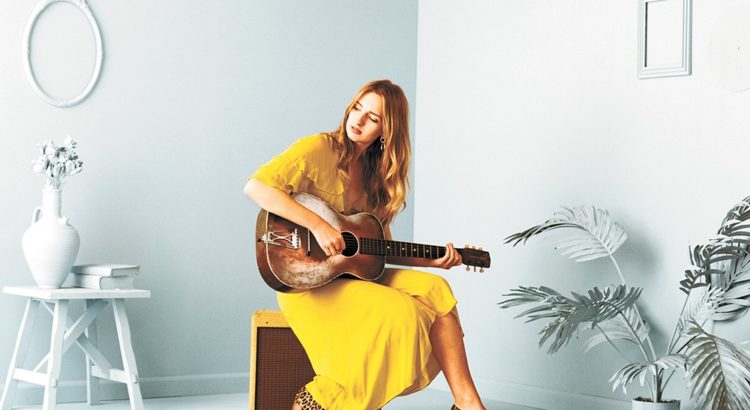
The minute Madison Cunningham stepped on stage, my conscious brain screamed: “STEVIE NICKS!!” She could have walked straight out of a photograph of Nicks from the 70s, dripping in a flowing black outfit with blonde hair cascading down her shoulders. Madison’s voice has been compared to Nicks’, and she has also cited Joni Mitchell and Bob Dylan as some of her key influences. I could not tell you what genre Madison Cunningham’s music belongs in because there seemed to be no style that this woman couldn’t sing. Her songs jumped from folksy to funky to sad and slow, each one drawing from the sound of a new place: Los Angeles surf rock, French cafe jams, North African island rhythms. Her music was full of the most amazing guitar riffs at the most perfect places – which is doubly impressive considering that she does both lead guitar and lead vocals. There’s one riff I vividly remember where I almost jumped out of my seat at the chills I got from how perfectly it hit my ears. She fully commanded the guitar, the microphone, and the entire stage all at once – and made it look effortless to boot. There were multiple times where I was so stunned after a song that I forgot to clap.


At one point S.G. joined Madison on stage for a duet. Their voices melded together beautifully for an ode to Madison’s grandmother, who passed away last year. It reminded me what a blessing it was for me to even be sitting there in person, smiling underneath my face mask, being able to feel the beat of the drums reverberate through the floors under my feet for the first time in so long. I walked out of The Ark thinking of the words Madison herself said on stage: ““I don’t ever want to take live music for granted again.”

If you’d like an introduction to the creative world of Madison Cunningham’s music, you’re in luck because I’ve put together a little sampler for you in the form of this playlist with some of my favorites. Have a listen during your next lunch break!

 

REVIEW: Expedition Reef

What. A. Fantastic Show.

Do you like planetariums? Even if you don’t like planetariums this is a show you ought to check out. Expedition Reef is a new planetarium show at the Natural History Museum in Ann Arbor and it is a-ma-zing.

Expedition Reef is a 30-minute long film of sorts that takes viewers on a journey through the different coral reefs in our oceans, how they form, how they are dying etc. While the film is educational it is not boring in the least. The film is absolutely gorgeous: the realistic underwater animation shows these rainforests of the ocean to you as if you were a scuba diver. Seeing the ocean stretched out on a whole planetarium is breathtaking, to say the least. It is an immersive experience and the visuals are top-notch. It is described as an oceanic safari and it really is that diverse and fun.

Even the educational material about coral reefs is super well done. In fact, my favorite part of the film was when we are shown how reefs reproduce (they do it by expelling spores in the water which I know because I saw this awesome film). During the scene, spores fill the 180 degree screen and it is akin to watching thousands of lanterns being sent to the sky. So gorgeous! I wished this show was longer than just 30 minutes.

After this, we were given a 15 minute guided tour of our universe. A graduate student in astronomy showed us our planet’s location in the solar system, our solar system’s location in the galaxy, our galaxy’s location in the universe, and so on. The tour explained a lot of things like exoplanets, interstellar space, and more (I finally understood why Pluto was kicked out from the planet committee of our solar system). Even though we saw a lot in a short time, the presentation on the screen made it very easy to follow and also to conceptualize distances in space.

After the show ends, the viewers exit through a gallery to a science museum! It had a vast array of hands-on activities, interactive information, and really fun, elaborate nature displays.

Going to see a planetarium show with a friend followed by a museum visit as you all point to different exhibits, take pictures of a raccoon eating peanut butter will be a wholesome, serotonin-filled way to spend the weekend. The planetarium is still offering tickets for shows that you can buy at the museum for just 8 dollars. Since it is so close to home (basically in the center of the city) there is no reason for you to not go explore what all our world-renowned museums have to offer.


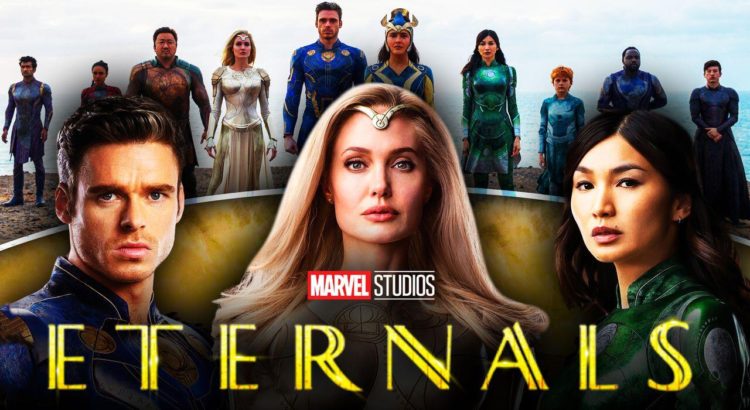
REVIEW: Eternals

Well, despite the critics attempts to “splat”  Eternals as a movie not worth watching, I have to say that I respectfully disagree with their professional opinion. And as I suspected, most of the audiences that have seen Eternals agree with me. As of now, the audience score on the Rotten Tomatoes review site is at 81%, a stellar percentage rate for any movie.

Granted, Eternals isn’t without its flaws, but they’re largely insignificant in the grand scheme of things. To begin, the story started off a little weak, speckled with subpar acting and action sequences; action sequences that would have been impressive opportunities for the cosmic powered eternals to display their abilities. But the amount of super powered punches and energy blasts it took to take down a couple measly Deviant monsters brought about the impression that the Eternals really weren’t all that powerful. To make matters worse, the eternals seemed to be “showing off” their powers, seemingly self satisfied with their performance despite the fact that some poor child’s father got eaten because they showed up late.

Despite that unfortunate beginning, the movie progressed on very well. Despite such a large cast of characters, there was a surprising amount of time spent developing them as individuals. This was something I was very appreciative of due to the fact that it can be fairly easy for movies with large casts to ignore  the individual development of characters that is needed for the audience to truly care about film and it’s progress. If you don’t care about the characters, it’s hard to care about anything happening on screen. And I definitely cared about these characters. In fact, it’s safe to say that I was close to crying at one point.

I think the strongest aspect of Eternals was the casts chemistry. The relationships and friendships that evolved with these characters were unique and very real to watch. And the diversity that was shown through this film was amazing!

If you haven’t watched the film already, I’d truly advise it! Take the critics reviews with a grain of salt. Eternals might follow certain expected MCU film consistencies (which isn’t necessarily a bad thing by any means), but it also holds a uniqueness all its own.

Also, the after credit scenes caused quite a lot of screaming in the audience, so now you have even more reason to go. But don’t worry! I won’t spoil it for you. No doubt the internet already spoiled it for you.

REVIEW: Ashnikko at the Fillmore Detroit

If you’re on TikTok, chances are you’ve heard one of Ashnikko’s songs at least once. A queen of Internet virality, Ashnikko has a repertoire of music that is brash, unapologetic, and laced with “fantasy and chaos.” Unsurprisingly, I simply had to see her perform her haunted alt-pop rap live on stage, and check that she was real.

So of course, I went to see Ashnikko at the Fillmore in Detroit this Thursday. 19-year-old YouTube songwriter Chloe Moriondo opened, playing a cute and catchy set that set up the main concert perfectly.

Ashnikko’s characteristic long electric blue locks (which are, apparently, all real) were the first thing I was shocked to witness live and in front of my eyes. Next, her down-to-a-science evil laugh—how does one contain so much childish glee and dark undertone into a single giggle?

My friends and I thoroughly enjoyed the entrancing Harajuku and Halloween-y graphics as stage backgrounds that were equally quirky in aesthetic as her music.

As for the crowd surrounding me, I don’t think I’ve ever seen so many people with colorful hair in the same room together. Even I came dressed in my fishnets and funkiest jewelry, knowing it was the perfect chance to do so: the weirdest was welcome, and even expected. Ashnikko’s style and music scream of protest against the norm, in many forms: the heteropatriarchy, fashion, sexual norms, “manners,” and the music industry. I was reminded, standing in the buzzing crowd, that music is oftentimes much more than just music. It has the ability to be a movement, a feeling, or a way to bring vastly different people together through something shared.

When Ashnikko’s most popular songs started playing, there were few people in the audience who weren’t singing or bopping along. Being at a concert collectively screaming to angry breakup beats like “Deal With It” and “L8r Boi” (inspired by Avril Lavingne’s 2002 “Sk8r Boi”) and slinky queer anthems like “Slumber Party” was cathartic, if nothing else. I left feeling energized, confident, and little bit different than before.

PREVIEW: LAST NIGHT IN SOHO

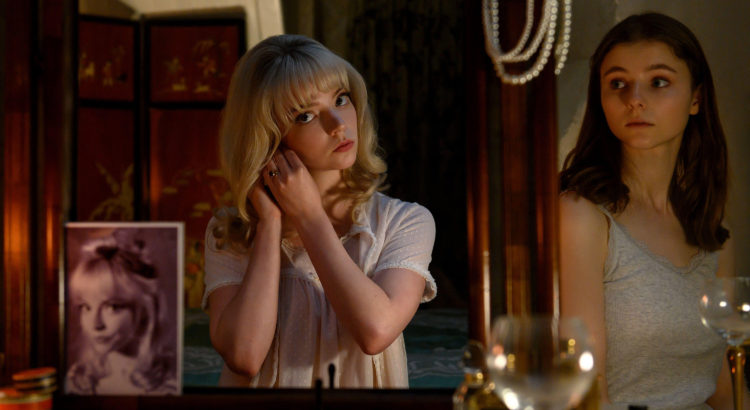
Last Night in Soho is the new film from director Edgar Wright (Scott Pilgrim vs. The World, Baby Driver). The film stars The Queen’s Gambit actress Anya Taylor-Joy and Jojo Rabbit actress Thomasin McKenzie. McKenzie plays an aspiring fashion designer who is somehow able to shift between time periods, where she encounters Taylor-Joy’s character, an aspiring singer in the sixties. This is Wright’s first psychological horror film, as this ability to time travel is intertwined with something more sinister. 

I am looking forward to seeing how Wright will tackle this psychological horror genre. The trailers are populated by impressive visuals, with neon lighting and shots where the two actresses will switch spots midway through a sequence. I have seen some behind the scenes footage of McKenzie and Taylor-Joy running on and off camera to replace each other, and I’m excited to see all of these technical aspects be translated on screen. As for Wright’s past work, I very much preferred Scott Pilgrim over Baby Driver, but this can be attributed to the fact I prefer the comedy-based-on-graphic-novel genre over the straight action of Baby Driver. I think my preferences for Wright’s work depend largely on the genre he is tackling at the time because I did appreciate his style coming through in Baby Driver even though I did not love the story. I have reasonably high hopes for Last Night in Soho, but I’m most excited to see the two actresses and another example of Wright’s style. 

Last Night in Soho is now playing at the State Theater.

REVIEW: The French Dispatch

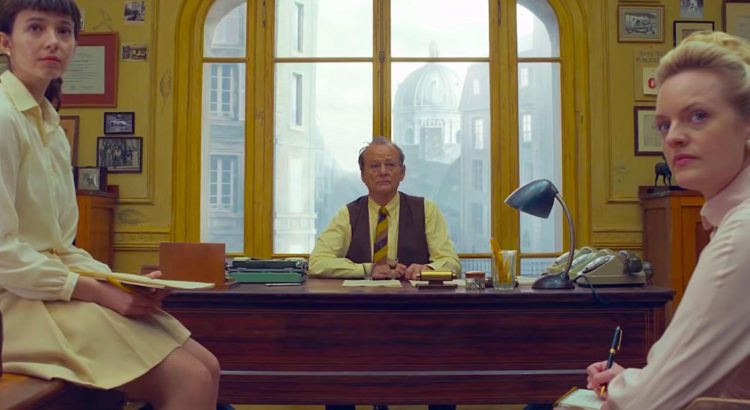
The French Dispatch is a display of director Wes Anderson’s uninhibited ambition, manifesting itself in a whirlwind of drama and colorful characters. The film does not stick to a single narrative but rather tells three stories in long segments. Each story is a vignette written by a journalist for The French Dispatch, an international outpost of an American newspaper that operates in a dreary French town by the name of Ennui-sur-Blasé. Everything is mundane— even the name of the fictional town translates to “boredom-on-apathy”— except for the dedicated journalists, the invigorating stories they release to the world, and the eccentric people involved in the stories. Thus the typical Anderson irony begins. This film is, at its core, a celebration of journalists and a love letter to all things literary and artistic. It is an Anderson classic: upbeat, artistic, and a bit pretentious, but its unfamiliar structure makes it feel fresh.

Each scene is rich with deadpan humor, rarely outright saying a joke but implying it in every corner of the frame. The juxtaposition of the still-faced, sharp-tongued characters and their chaotic predicaments against the colorful backdrop feels unnatural, as is the constant narration that overlays the stories, but they both add to the unique nostalgia of the film. Rather than experiencing the stories myself, I am being guided through them like a picture book. The visuals add to the book-like atmosphere— black-and-white scenes, entirely animated scenes, and experimental lighting exaggerate the easily-missed emotions. The world is symmetrical, well-color-coordinated, and moving in synchronicity, just as a storybook world should. Wes Anderson’s films stick with me for this reason— not because they are believable in the slightest but because they revive a childlike amusement. The unrealistic twists and turns in each segment are comical and effortlessly engaging. However, the sentimentality of his films is usually amplified by emotional depth. This is where The French Dispatch falters. The three-story structure and quick pace refuse to allow us to get attached to one character for too long or watch the slow development of relationships. I gravitated toward the recognizable faces and quirky personalities (such as the mustache-wearing and disheveled teenage rebel played by Timothée Chalamet) but the characters disappear shortly after they serve their purpose.

The French Dispatch manages to be a sensory feast on top of an exciting tangle of stories but the combination is nearly exhausting. From the hard-to-catch humor to the drastic time jumps, I attempted to absorb everything yet desperately needed to let my senses rest. It is also overwhelming in its organization, as the stories have no connection besides the journalists publishing them, so the film is difficult to process as a sum of all its parts. The French Dispatch is not a casual watch if you want to enjoy all its beauty; it requires patience, energy, and an attention span, and an estimated two or three watches.

As a sum of its visuals, script, and diverse storylines, each element of The French Dispatch is crafted in a way that maximizes Anderson’s quirky innocence and childlike fun. Anderson may have been trying to emphasize too much of his signature style in one film, resulting in entertainment so constant that it is almost nauseating. The French Dispatch is an exhilarating masterpiece but it is a masterpiece that needs to be prepared for.