PREVIEW: Titane

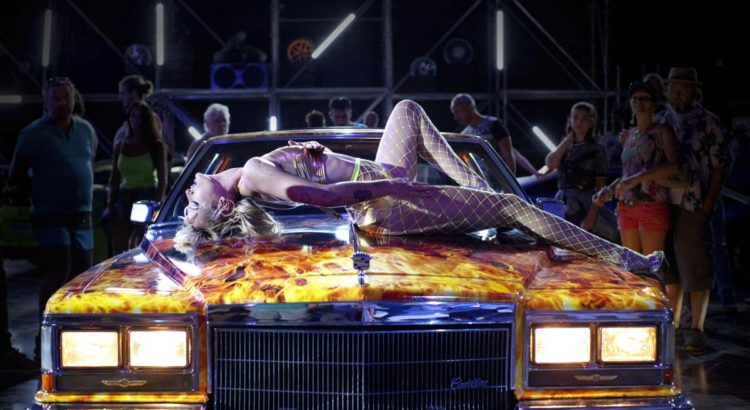
Titane, the most recent recipient of the Palme d’Or, has been declared by the BBC to be “the most shocking film of 2021.” The film follows an unconventional love story and a series of unsolved crimes, and falls under the horror genre – but specifically body horror. Titane is a French film by director Julia Ducournau (director of Raw), with the title’s English translation being “titanium.”

I’ve heard this film described as “kind of gross” which makes me a little nervous, but I am curious about how tasteful the film’s gratuitous nature is. The film’s description on several websites is accompanied by a blurb about how titanium is biocompatible and therefore often used in prosthetics, and I think I know what kind of body horror that would involve. I am simply not a fan of doctor montages and surgery scenes in films, but there is something about watching such a shocking and possibly controversial film that is a little exciting to me. Wish me luck!

Titane opens on Friday at the State Theater. 

REVIEW: University Philharmonic Orchestra

What a night!

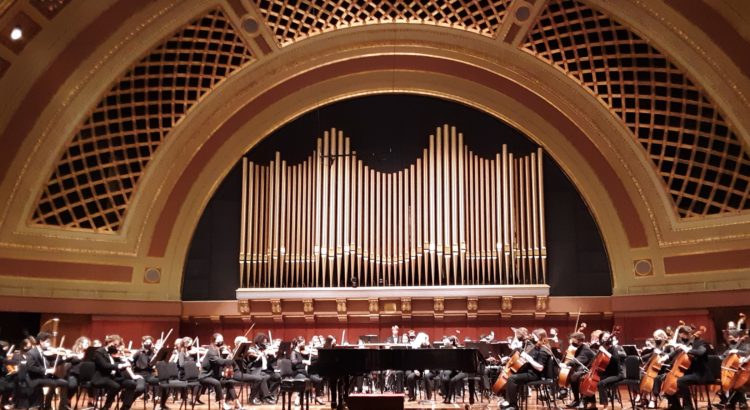
This was my first orchestra concert  experience since coming to the University of Michigan and I’m happy to say that I was not disappointed! Walking into Hill auditorium, I couldn’t help but be amazed at how beautiful the space was; the rows upon rows of red cushioned seats, the decorative work running across the ceiling, and  the massive organ glimmering beneath the lights along the back wall of the stage. I made sure to get to the auditorium early in order to get a good seat and I could tell as soon as I sat down that the acoustics in this space would be amazing. A stifled sneeze from someone on stage would be able to be heard as clear in the nosebleed sections as it would be in the front row.

The concert started out strong, opening with an excitingly fast paced rendition of Chad “Sir Wick” Hughes’  Visions of Renaissance. This piece was a whirlwind of sound from start to finish and Adrian Slywotzky conducted beautifully. But, what truly blew my mind was the second piece of the concert which was  Piano Concerto no. 1 in F-Sharp Minor, op. 1 by Sergei Rachmaninov. The piece was split into three movements and the star of these movements was Pianist, Sua Lee. Lee is a master pianist, having received multiple awards for her incredible talent on the ivory, the most recent being the 2021 Concerto Competition. I’ve never seen fingers move so fast across a piano as hers did that night. Lee shone on that stage while the orchestra provided a supporting role behind her. It was a beautiful call and response relationship that flowed and ebbed with a multitude of emotion. It was clear to  see how involved Lee was in the music. With every intake of breath, every fluid movement of her finger across the keys, the graceful way she leaned into the piano; she was mesmerizing to watch. The emotions she called to the stage ebbed into the audience as well, we were all captivated by her performance. As such, Lee received a standing ovation from the audience.

As wonderful as the concerto was however, I have to say that my favorite piece of the night was Symphony no. 6 in F Major, op. 68 by Beethoven. This was mostly due to the fact that I’m a big fan of the Disney film Fantasia which is a Disney classic and a must watch film if you haven’t seen it. Fantasia is made up of entire stories animated to some of the greatest classical music of all time. And Symphony no. 6 just happens to make up one of my favorite moments of Fantasia. I was able to relive the film live as I listened to the orchestra and I have to say, the orchestra was so superb that if I closed my eyes, I could almost believe I was listening to a recording of a professional group.

It was amazing to be able to witness such a talented orchestra!

REVIEW: Phoebe Bridgers “Punisher” Tour

When there’s a severe thunderstorm warning in Detroit, you’d naturally want to stay inside. But when there’s a severe thunderstorm warning in Detroit and Phoebe Bridgers is scheduled to perform, outside, at the same time…  you’d naturally ask yourself: ‘what’s a little rain?’ and get into that car anyway. 

At least, that’s what I did Tuesday night when I made the 45 minute drive from Ann Arbor to Detroit and watched some very ominous clouds roll in with me. By the time I reached the Aretha Franklin Amphitheater, a gorgeous outdoor venue nestled into the banks of the Detroit River, I’d almost convinced myself the storm would pass us. It was breezy and bright, and hundreds of people stood in line to show their tickets, almost like a Michigan game day, if Michigan fans wore skeleton suits instead of maize. 

“Oh, good, it’s covered,” my friend said when we were finally in, gesturing to the billowing white canopy above us. But the cover was no match for the rain. We turned to watch the opening electro-pop band, MUNA, for about half a song, until the storm began.

In what felt like an instant, lightning began to pepper the sky behind the stage, illuminating the river below. Then, the downpour began. The crowd screamed, and MUNA left the stage, replaced by the crew as they rushed to throw tarps on the equipment. Through the rain I realized: Bridgers had taken the stage too, tarp in hand. We cheered until she left with the crew, and that was the last we saw of her until two hours later when the sky finally cleared. 

While we waited, the storm raged on the river, soaking us in spite of the canopy. The crowd screamed at each lighting sighting, which meant we were pretty much screaming the whole time. Finally, the tell-tale beat of “ I Gotta Feeling” pumped through the loudspeakers, signaling the start of a Phoebe Bridgers show. Then, Bridgers and her band were on stage, suited up in their classic skeleton jumpsuits, and the intro to “Motion Sickness,” from Stranger in the Alps, overtook the Black Eyed Peas.  

On stage, Bridgers was a vision. While lighting still flashed behind her, she looked completely in-control, as if she herself was commanding the storm. Her soft, honest style of singing was even more powerful in person than on the recording as she transitioned into the lull of “Garden Song,” and we hummed along. “Kyoto,” on the other hand, sent the crowd into an uproar; a jarring change from her more melancholy music, its upbeat tune and catchy chorus was a highlight of the night. 

Personally, I was most touched by “Punisher” and “Moon Song.” “Punisher” details Bridgers’ adoration for one of her biggest musical influences- the late indie-rock legend Elliot Smith, who died in 2003. “What if I told you I feel like I know you, but we never met?” Bridgers laments in the song’s chorus, and as we sang along, I could tell many in the audience felt as connected to Bridgers through her music as she did to Smith. 

“Moon Song,” was ethereal, as lighting continued to flash in the background, and the crowd swayed along. A marriage proposal during “Savior Complex” stands out as another highlight;  Bridgers was beside herself with amusement and glee. 

“I Know the End” was, of course, reserved for last, and it was a spectacular finish. It crescendoed into an overwhelming burst of energy and sound, as Bridgers expertly shredded on her electric guitar, and even kissed her bass guitarist. When the crashing drums settled down, she ran off stage, but returned for a brief encore- a cover of Bo Burnam’s “That Funny Feeling.” 

In my home in Ann Arbor that night, I put on “Punisher” before I fell asleep. And I’ve put it on every day since. “Everyone knows you’re the way to my heart,” Bridgers wrote about Smith, and how touched you can be by a stranger’s music. After that concert, I know how she feels

PREVIEW: University Philharmonic Orchestra

Being a past music student myself, I couldn’t be more excited to attend an orchestra concert again. The University Philharmonic Orchestra is made up of freshman students looking to expand their ensemble experience, playing some of the most well known works ever created. They’re led by Adrian Slywotzky who is a lecturer of conducting. He’s won multiple competitions for his craft, most recently the 2017 Audite International Conducting Competition in Poland. I’m excited to see how Slywotzky leads his students during this performance.

Another thing that I’m particularly interested in is seeing  the connections between members of the orchestra. Being a violinist for nine years, I’m well aware of how lost someone can become in the emotions of the music being performed. At times, a whole orchestra can be tied together in those emotions. It’s a type of energy that isn’t easy to explain, but even the audience can begin to experience it as the mindscapes of the musicians are transferred into the crowd through each note ringing throughout the auditorium.

The program for this particular performance is made up of three pieces, all from differing eras of music which will be especially intriguing for the audience:

Visions of a Renaissance by Chad  “Sir Wick” Hughs

Piano Concerto No. 1 by Sergei Rachmaninoff

Symphony No. 6 by Ludwig van Beethoven

The concert itself is entirely free and will be held in the Hill Auditorium at 8:00 pm, September 22nd.

REVIEW: Shang-Chi and the Legend of the Ten Rings

Marvel Studios started off strong at the beginning of 2021 with WandaVision, but quickly lost steam with Falcon and the Winter Soldier, Loki, and Black Widow. However, it seems that Marvel is picking up the pace again.

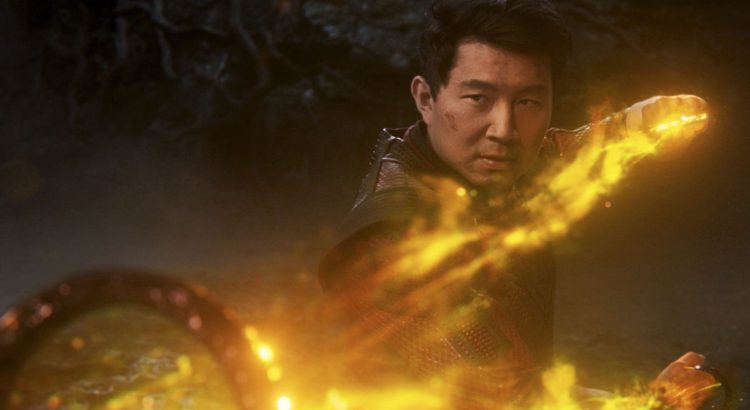
Out of the newer MCU solo origin stories, I would rank Shang-Chi above most. I would consider Shang-Chi above Doctor Strange; both films closely follow Marvel’s cookie-cutter formula, however Doctor Strange feels more like a copy-and-paste of Iron Man (rich genius is humbled through injury and learns to keep moving and channel their pain into a newfound ability). Doctor Strange does have the upper hand on visual effects, but Shang-Chi does not always feel like an MCU movie – it’s refreshing.

Perhaps the strongest element of Shang-Chi is its action sequences. The use of well-choreographed martial arts makes the film a thrilling watch, even with the knowledge that all MCU films end with a massive CGI battle scene. I prefer these close combat fight scenes because I find myself zoning out when watching hordes of CGI aliens run across the screen. I am all for the suspension of disbelief, especially in Marvel films, but I still feel a massive disconnect the more fantastical things get. Shang-Chi does fight masses of nameless villains, but he confronts smaller groups of antagonists, making the combat feel tighter and making the audience feel closer to the action. Furthermore, location adds a new dimension to the film’s action, specifically to an early fight sequence on a moving bus, which is synced so perfectly with the score. You realize that Shang-Chi is just some guy who happens to be really good at martial arts, and you are inclined to root for him. 

The side characters are also worth noting. Awkwafina plays an Awkwafina character, contrasted with Shang-Chi’s sister, Xu Xialing, who is arguably the same character as Evangeline Lilly’s Hope van Dyne in Ant-Man (the underestimated daughter who was never allowed to fight when she was young and has become hardened because her family who was never there for her). Nevertheless, it is clear that both Shang-Chi and Xialing have a lot of potential for future MCU projects, though it is slightly disappointing that they were not fully developed in their own film. However, the standouts are the parents, played by Tony Leung and Fala Chen. Tony Leung’s character, Wenwu, is a re-writing of his racist comic book counterpart as a character who is driven by human and more relatable motives, and is not the embodiment of yellow peril. And Ying Li is not simply a mother – she stands her ground and makes decisions for herself. She possesses a kind of grace that makes her presence known throughout the entire film.

Ultimately, Marvel knows how to make movies that will perform well at the box office. Perhaps it would have been too revolutionary for the MCU’s first East-Asian-led film to omit the CGI-Fest at the end in favor of diving deeper into its central character dynamic, but I am happy that Marvel believed in this film’s success.

PREVIEW: Phoebe Bridgers Punisher Tour

Since the release of her debut album Stranger in the Alps in 2017, indie rocker Phoebe Bridgers has charted a quick path to critical success. For her subsequent project, Bridgers collaborated with Conor Oberst, a singer-songwriter best known for fronting rock band Bright Eyes. The pair called themselves Better Oblivion Community Center, and in 2019, released an album together by the same name to generally positive reviews. By the next year, however, it became clear that Stranger and Better Oblivion were just a taste of what Bridgers had to offer. In 2020, she came out swinging with her second solo album; the shockingly candid confessional, titled Punisher, solidified her as a name to watch in music for years to come.

Personally, I’ve been loosely following Bridgers’ career since 2017, when I saw her open for Conor Oberst in Milwaukee. When she took the stage that night, I had never heard her name, but I remember being captivated by her shock of white blond hair against her black clothes and the way she commanded the crowd as she sang. But, that was a tiny theater in Milwaukee; tomorrow, she’s playing the Aretha Franklin Amphitheatre in Detroit. I’m interested to see if she’ll be able to enthrall the audience the way she did four years ago in that little room, but if the success of Punisher is any indication, I’m fairly positive she will.

The Punisher tour will be in Detroit tomorrow, September 14, at 8PM. As of this posting, lawn tickets are still available through Bridgers’ website: phoebefuckingbridgers.com. Masks are required and all attendees must provide proof of vaccination.