
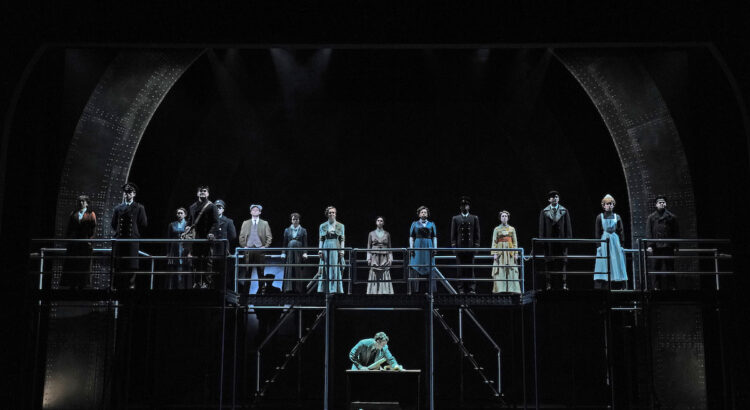
Photos are provided by Peter Smith Photography
From April 17-20 at the Power Center for the Performing Arts, the School of Music, Theatre & Dance gave a hauntingly beautiful performance of Titanic: The Musical. Alongside Twelfth Night, which was performed earlier in the school year, this production was among my favorite shows of the year and served as a powerful conclusion to the 2024-2025 SMTD season. Everything from the dancing, singing, and acting under the direction of André Garner was exceptionally impressive and truly highlighted the tragedy of the Titanic through compelling storytelling.
Though the movie and musical premiered at similar times, the plot of the musical has no connection to the film. Instead, the stage production is based on a book by Peter Stone, with music and lyrics composed by Maury Yeston. Unlike the movie, which focuses on just a few protagonists, the musical captures the story of an entire ensemble of characters, each with unique personalities and socioeconomic backgrounds. The show does an amazing job showcasing the different passengers’ dreams and motivations for boarding the ship. One aspect of the plot I loved was that, despite their differences, many characters share a common thread: a deep love or devotion for another person. This made me feel more connected to the characters and intensified the emotional weight of the story.

There’s so much to praise about this production—the set design consisted of dark metal frames that created an industrial aesthetic contrasting sharply with the grandeur described by the passengers. I also appreciated the thoughtful use of accents, including British, Irish, and American, which reinforced the historical context and helped clarify class distinctions for the audience.
The key characters that stood out to me were Thomas Andrews, the ship’s builder; Captain Edward J. Smith, a veteran captain who planned for the Titanic to be his final voyage; J. Bruce Ismay, the wealthy villain behind the tragedy; Isidor and Ida Straus, an elderly couple whose loyalty and enduring romance were unforgettable; and Frederick Barrett, a poor yet charismatic worker in the boiler room.
What stood out to me about Andrews (played by Sutton Kaylor), Captain Smith (played by Landon Wouters), and Ismay (played by Drew Perez Harris) was how their character dynamics were shaped by class and power struggles, and how the tension between just these three characters became the driving force behind the tragedy. Their interactions emphasized how the ambition and greed of a few individuals in power can lead to negligence and disaster. This is most powerfully captured in the number “The Blame,” which musically illustrates their anger, helplessness, and unwillingness to take responsibility.
In contrast, what moved me most about Isidor and Ida Straus was how their love transcended the panic and despair of the situation. Their duet in Act II, “Still,” beautifully expressed their unwavering commitment to one another and served as a powerful symbol of selflessness and hope in the face of death.
The number with the most striking choreography was “Barrett’s Song,” in which Barrett (played by Jason Mulay Koch) sings about a letter to his beloved, whom he left behind to work aboard the ship. The staging of this number featured the boiler room workers performing a physically demanding dance, incorporating flips, extended ballet spins, and synchronized movements that mirrored the intensity and labor of their environment. It was both graceful and raw, and it heightened my excitement for the rest of the musical numbers.
However, what left the deepest impression on me was the final number in Act II, “Finale.” In this solemn closing, the survivors deliver spoken lines that recount real historical facts about the Titanic—including the dreadful imagery of victims’ bodies found among the icebergs and their screams echoing in the darkness, details I never could have imagined. The blend of emotional narration and chilling facts made the conclusion both gut-wrenching and unforgettable, leaving me with a heavy heart as I exited the Power Center.

Overall, this heart-wrenching story and visually stunning production was genuinely awe-inspiring. I will always remember the bittersweet beauty of this musical—its fantastic choreography, breathtaking vocals, and vivid retelling of one of the most infamous tragedies in history. It’s a story that highlights both the devastating consequences of human pride and the enduring power of love, making it an emotionally complex and unforgettable theatrical experience.


