REVIEW: As Long as the Lemon Trees Grow – The Play

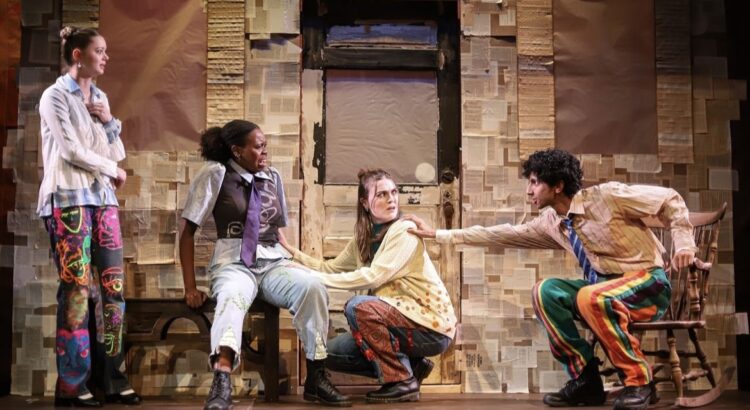
On December 6th, at 5 PM, the Ford Collaboratory in the Mardigian Library became a portal to war-torn Syria through the powerful stage adaptation of Zoulfa Katouh’s As Long as the Lemon Trees Grow. The story, which follows Salama Kassab’s heartbreaking journey through the Syrian civil war, was beautifully translated into a theatrical experience

The play centered on Salama (played by Leila Haddad in a standout performance), a former pharmacy student turned volunteer medic. Leila captureed Salama’s internal struggle with raw, unflinching authenticity. Her portrayal of guilt, hope, and despair—especially in moments of silence—felt like a masterclass in restraint. Haddad’s ability to convey emotion, especially in the quieter, more introspective moments, was mesmerizing.

Image Courtesy: Leila Ghaznavi

However, where the play truly shone was in its staging. Director Amira Shafiq, President of the Theater club, created an intimate, immersive experience that makes the audience feel as though they’re walking alongside Salama in the ruins of Homs. The use of minimalist sets striked a balance between realism and surrealism. The lighting design deserved special mention, with its stark contrasts between the warm glow of past memories and the cold, unforgiving present.

One of the play’s most intriguing choices was the personification of Khawf, Salama’s manifestation of fear. Actor Omar Darwish gave Khawf a chilling yet oddly sympathetic presence. His interactions with Salama—at times antagonistic, at times comforting—perfectly captured the inner turmoil of living through unimaginable horrors. These scenes, while impactful, occasionally slowed the pacing slightly, but they were essential in depicting her mental and emotional state.

The dialogue, much of it drawn directly from the book, was both poetic and raw, though some lines feel better suited to the page than the stage. While some of Salama’s reflections felt a bit expository when spoken aloud, they still carried the emotional weight of her journey.

“Perhaps this could have been remedied with more physical storytelling or additional silences to let the weight of the words sink in,” added Alexis Mohammed, a student at the University of Michigan Dearborn.

The supporting cast also delivered heartfelt performances. Yasmin Agha brought warmth and strength to the role of Layla, Salama’s pregnant best friend, though her limited stage time left her arc feeling somewhat underexplored. Karim Al-Rashed, as Salama’s brother Sami, offered moments of levity and hope, with his final scene leaving the audience in stunned silence.

One of the play’s most powerful moments was the climactic hospital scene. The chaos of wounded civilians flooding in, enhanced by overlapping shouts, frantic movement, and a pulsing soundscape, left both Salama and the audience breathless. It was a visceral reminder of the relentless toll of war.

That said, the play did struggle to capture some of the novel’s nuance, especially in depicting Salama’s quieter moments of healing and growth. The ending, while emotionally charged, felt slightly rushed, leaving the audience including myself, yearning for a deeper exploration of Salama’s transformation.

As Long as the Lemon Trees Grow is a story that demands to be told, and this stage adaptation did justice to its poignant message. With stellar performances, innovative staging, and a deeply personal tone, the December 6th performance was more than a play—it was a call to bear witness, to empathize, and to remember.
REVIEW: “touch” by Ericka Lopez

In most art exhibitions, there’s one rule that should never be broken: don’t touch the art. But visitors to Ericka Lopez’s “touch” at the Institute for the Humanities are not just allowed, but encouraged, to break this taboo.

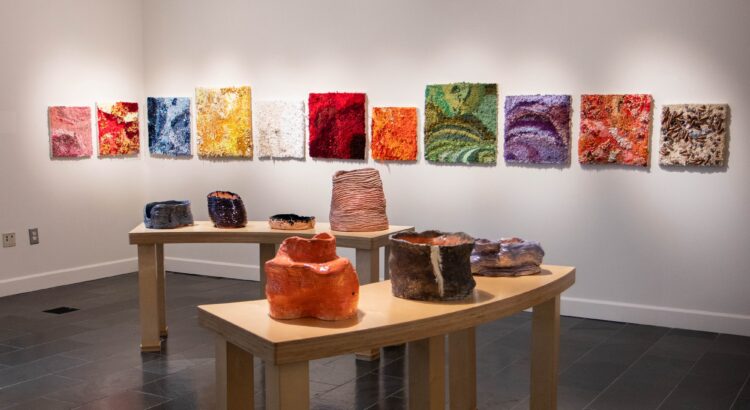
Ericka Lopez is a blind artist who works primarily through touch, and uses her memories of color from before she completely lost her vision to inform her color choices. Her exhibition consists of a mix of textile, ceramic and assemblage works, all of which viewers are “invited to gently touch.” Across the multitude of media, there are many textures to explore.

The punch-rug textile squares, in a rainbow of marbled colors, are shaggy and soft—but sometimes punctuated by beads and buttons, or a particularly scratchy type of yarn. The coil-built ceramic vessels are warped and bent into organic forms, appearing so flexible that I was almost surprised by how solid they felt under my fingers. And the assemblage works, sewn together out of everything from keys to spools of thread to fuzzy balls of yarn, were a surprising mix of textures. Sometimes, running my hand across a collection of beads would create delightful moments of sound as well, contributing to the truly multi-sensory experience.

Details of pieces from Ericka Lopez’s “touch.” Photos by reviewer.

Closing my eyes and exploring the works with only my hands was a lesson in just how nuanced my sense of touch could be. I learned from the textiles that there were many more different kinds of “soft” than I knew how to describe, and from the ceramics that a glossy glaze feels completely different from a matte one.

In her exhibition statement, curator Amanda Krugliak writes that “As visitors to the gallery become active participants, there is the opportunity for deeper human connection beyond surfaces.” It is one thing to be merely a viewer of an artwork, and another to touch it, to rub your fingers through loops of yarn or dangling beads. When my touch shifted an arrangement of keys on one of the assemblage works, I realized that it would be ever-so-slightly different for the next person to enter the gallery. The opportunity to participate in an exhibition in this way, and to be connected to the artwork in the same way that the artist was as she created it, is a rare and precious one.

The exhibition contains multiple features to make Lopez’s artwork accessible to blind and low vision visitors, including braille labels on the walls beside the pieces and QR codes leading to visual descriptions of the artwork. (There are no labels printed in plain text—sighted viewers will have to pick up a paper exhibition catalog just outside the gallery in order to read information about the pieces.) All exhibition materials are also available in both Spanish and English.

While the colors and textures may be visually stunning, pictures don’t do this exhibition justice. Ericka Lopez’s diverse and captivating body of work is best seen—and felt—in person.

“touch” is on view at the Institute for the Humanities Gallery until December 13th. Detailed information about accessibility can be found here.

REVIEW: Plano

November 16 | 7:00 pm | Newman Studio


It seems director Natalie Tell found the question of time most interesting in her multilayered senior thesis, Plano. What really is now? What is later?  Earlier? Suddenly? And where do our lives fit into a structured system of a concept that refuses to be contained? These questions were presented in her attuned director’s note in the program, but I found that more prominent themes of identity and male-induced panic rose to the surface onstage.

Plano lets us loose in a semi-mythical Texas in the home (or rather, on the porch) of three sisters, Anne (Maya McEntrye), Genevieve (Hannah Long), and Isabel (Audrey Andrews). They are haunted by strange physical things (like slugs, ribbons, ghosts) that all seem to tie back to the patriarchal influences of their unexplored past. Each sister has a different quandary with the primary man in her life: Anne quickly marries John (Joaquin Consuelos) after finding out she is pregnant, but he seems to be with her for the green card; Anne, is married to her less-than-superb husband, Steve (the hilariously erratic Rohan Maletira); and young Isabel finds herself in a relationship with God, but grapples with the presence of looming spirits.

The play establishes a fantastic “handshake” with the audience right out of the gate. The lights come up, and the sisters are having a fiery sharp conversation, darting through time when a character decides, “It’s later.” We discover John (whose real name is Juan) is gay and gallivants off to Plano (a seemingly mystical, metaphorical place) leaving Anne alone with her thoughts. Isabel is afflicted by two Faceless Ghosts who dwell uncomfortably near when she’s alone. When Genevieve and Steve ultimately divorce due to his infidelity, he splits in two (and eventually three) haunting Genevieve’s home and mind.

“A third Steve is making music in the garage. He won’t leave. And the other two Steves are really proud of him.” says Genevieve.


The eclectic universe Ms. Tell crafted was completely alive: props emerged seamlessly, Faceless Ghosts wandered around pre-show, and a bowl of hummus came out of the wall! The curse manifested itself in ways other than through the character’s words, it surrounded them. Ms. Tell’s creative design choices made the script’s (by the poignant Will Arbery) insistent metaphors in the script all the more playful.


The Faceless Ghosts pre-show.

Arbery’s book contains rich ramblings, which develop deep and relatable characters, blending humor with the uncanny. The play between reality and surrealism is intricate but such charming performances kept me fully engaged in attempting to unravel the timeline. The three sisters are distinct characters to me, each carrying a strange sense of familiarity. The clarity could stem from Arbery’s vocal inspiration from his seven sisters whom he grew up with in Dallas, Texas (a short distance from Plano, Texas).


Ms. McEntrye, Long, and Andrews are filled with endurance and are constantly thrilling. They relentlessly search for their identities while navigating life and facing the challenges of hegemonic authority from previously trusted men. Ms. Long’s performance was a personal favorite of mine, showcasing her quick wit and unveiled compassion. While their male counterparts can be mundanely loathsome in the world of Plano, the performances by Mr. Consuelos and Mr. Maletira were quirky and deliberate.

Though Ms. Tell’s director’s note emphasized her exploration of time in Plano, I found the most moving aspects of it were its relationship with the women fighting it. It’s difficult to truly grasp the metaphysical concept of time in this piece, as it (seemingly) is not linear, but it was effortless to feel for the strong women’s journey of discovery. To Ms. Tell’s point, time is something we’re always aware of, and these characters certainly are too.

“We’re a tiny part of a tiny thing that never ends…” Anne says.


Plano runs November 15-16 in the Newman Studio. Images thanks to @umichdesignandproduction on Instagram.

REVIEW: The Apprentice

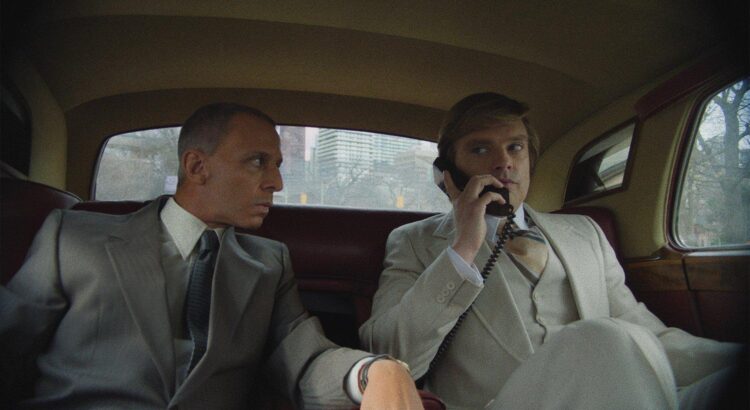
Roy Cohn is a malicious vulture on screen: he flicks his tongue over his lips, piercing eyes bulging out of the sides of his face, head bobbing as he sizes up his prey. His philosophy can be summed up as “play the man not the ball,” and he backs up that worldview with a hidden backroom filled with incriminating tapes he uses to blackmail the necessary judge, politician, or prosecutor. In “The Apprentice,” we see how he turned a young, ambitious Donald Trump into the former president America knows today.

Director Ali Abbasi’s fantastic Donald Trump origin story is shepherded by the acting chops of its two stars: Jeremy Strong, tragic figure of  “Succession,” as Roy Cohn, and Sebastian Stan, squared-jawed Marvel hero, as Donald Trump. When the two meet in an exclusive NYC club in the 1970s – Cohn already an established lawyer and Trump a real estate upstart looking to impress his draconian father – thus begins a relationship that will last decades. Trump is struggling with a lawsuit alleging anti-black discrimination against his tenants. Cohn, the shrew political operator, makes his problem go away. Perhaps he sees something in the young man desperate to make a name for himself. Perhaps he simply likes having the tall, blonde, handsome – as he says, “thoroughbred” – Trump around. Either way, the apprentice is born. 

Aside from the first meeting scene, which sets the stage, the plot zooms through key points in the Trump timeline. He’s buying the decrepit Commodore hotel! He’s fighting for a tax break from anti-corruption mayor Ed Koch! He’s being interviewed on TV! He’s buying casinos! He went bankrupt! He’s back again! Roger Stone is convincing him to run for office under the slogan “Make America Great Again”….well, we know how that ends up. 

Many Americans are only familiar with the third act of Trump’s story. “The Apprentice” introduces us to the first and second. The plot is certainly entertaining enough to captive audiences for its two-hour runtime. But the emotional core of the movie is the relationship between Cohn and Trump, played to perfection by both actors, and its evolution as Trump goes from apprentice to master of the universe. Trump’s intoxication with Cohn – who journalist Wayne Barrett described as having “the presence of Satan” – is plenty juicy. But Trump’s surpassing of Cohn, even betrayal of Cohn as Trump gains power, is much more poignant. 

Alongside actors Strong and Stan is an incredibly talented supporting cast. Fred Trump (Martin Donovan) is as terrifying as he is bushy-eyebrowed. Fred Trump Jr. (Charlie Carrick), Trump’s older brother who died young from alcoholism, should have his own movie. The best in the bunch is perhaps Maria Bakalova as Trump’s first wife Ivana, the Czechoslovakia-born powerhouse, who is a capable interior designer as well as socialite to the New York City elite. This hardworking drive would eventually lead to her divorce, with Trump, jealous of people seeing his wife as his business equal, leaving Ivana for his mistress. 

Obviously (at least in my opinion), Abbasi’s releasing of the movie just 25 days before the election is a political move. Trump’s campaign manager duly responded, calling the movie “garbage” and “malicious defamation” that “sensationalizes lies” about Trump. I certainly do not believe “The Apprentice” will sway any Trump voters to the other side. In fact, the movie will most likely contribute to his cult of personality. Who is this businessman, this charlatan, this leader of men, this future president, this bumbling idiot. To whom did we vest the most power in, perhaps, the entire world. Who is The Donald? Do we want to find out?