Benzaiten, also known as Benten in a simplified form, is the Japanese buddhist goddess associated with many things. She is the goddess of the arts, speech, learning, wealth, and feminine beauty, often pictured with a Japanese version of a lyre, or other musical instruments. She is also considered a goddess of the sea. She reminds me of Aphrodite, the Greek goddess of love and beauty, who also has an association with the sea. This leads me to wonder why these two things have been combined together in worship of female deities and if there are others across the world that fit this mold?
“Du bist immer dann am besten wenns dir eigentlich egal ist.” (“You’re always your best when you don’t really care.”)
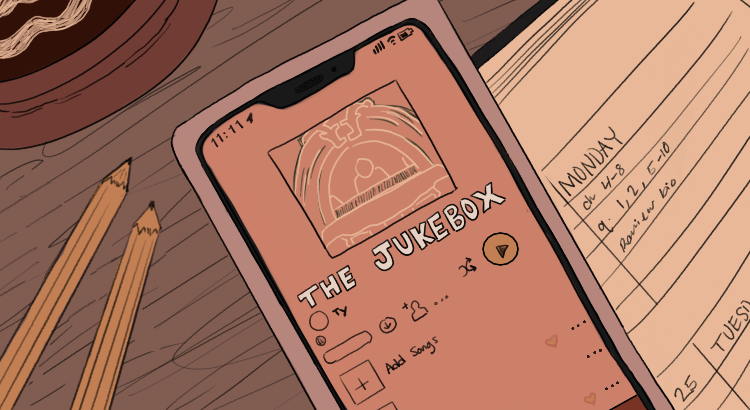
Believe it or not, I’ve yet to write a Song Scribbles blog based on one of my favorite bands – but German band Die Ärzte (“the doctors”) finally makes an appearance on today’s blog! I’ve been listening to their song “Lied vom Scheitern” (“Song of Failure”) on repeat these past few weeks, and even though I don’t know much German, I’ve read the translated lyrics countless times and always see myself in them.
“Du bist immer dann am besten wenn du einfach ganz normal bist.” (“You’re always your best when you’re just normal.”)
Being surrounded by so many impressive, busy, talented people at college is so inspiring. Sometimes, though, especially on busy weeks like these, it can also be exhausting. Last week’s blog focused on my feelings of doing “enough.” I can confidently say that I am overwhelmed with the amount of things I am doing, and I know I have a lot on my plate. Why do I sometimes feel guilty about being overwhelmed? Why am I comparing myself to what I see others doing without knowing their story? What is “enough” anyway?
“Du bist immer dann am besten, du musst das nicht austesten nicht noch mal.” (You’re always your best, you don’t have to test it again.”)
I am always my best when I’m doing what I love. I’m always my best when I’m trying my hardest. Even when my best on a given day isn’t my best of all time, I’m still the best I can be in that given scenario, and I’m learning to accept that striving for perfection is simply setting myself up for disappointment. Whether I’m doing “enough” or “my best” doesn’t depend on what I see or hear others doing. What is “my best” is up to me to decide, and I am deciding to show myself compassion and love and understanding, working toward a better me every day. I am doing enough, and I am enough, and I don’t have to test it again.
“Dein Spiegelbild ist anderen egal.” (“Your reflection in the mirror doesn’t matter to others.”)
If you’ve been reading since the start of the arc, thanks for sticking around! This will be the final part.
It continues in a commanding murmur. “So what do you expect of me?”
The blank black eyes bore into him. He wants to walk back further — run, anywhere away from here. But he remains in his spot, locked by invisible chains.
“I expect you to help my mother.”
“And that is what I will do.”
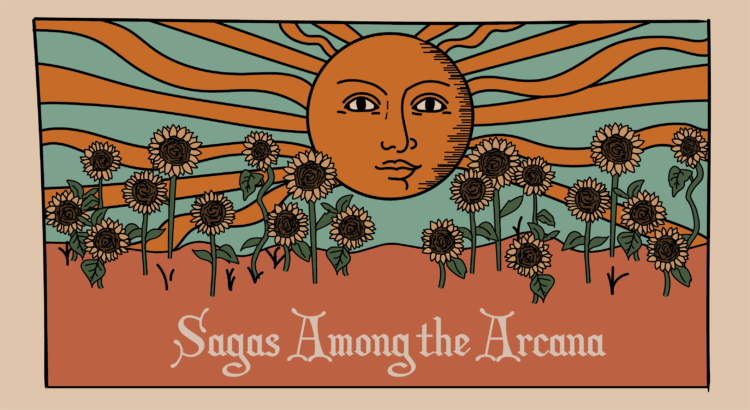
The Ten of Cups is drawn — family, similarities, peace
When the doctor first came, Robert had noticed dark skies blanketed with grey clouds. The grounds were already damp from a previous downfall and he worried that they’d soon become so wet that he’d drown if he dared to step out.
Now, it has yet to flood, and Robert wishes it would so he could drown.
Has he done something wrong in letting this strange “doctor” in? He can’t bear to look at what it’s doing to his mother — he doesn’t want to know. And he may never know because everything is silent. Is that creature doing anything at all?
“How much do you want her to live?”
The crow-creature’s voice startles him.
“What do you mean?”
“How much do you care about her?”
Robert shifts his weight between his feet.
“She’s my mom.”
“I know — but how much do you care?”
He immediately turns around. Its hands are pressing around his mother’s face and upper body.
“Why do you need to know that? What are you going to do to her?”
He steps forward. The creature’s hand is on her chest —
Her un-breathing chest.
. . .
Shit.
This is not what she wanted to happen. Her movement across the woman’s chest becomes frantic. Amina didn’t do anything to the woman. Sure, she never intended to cure her, but she never meant to harm her either — how is she already dead?
“What did you do to her?!”
. . .
The guy — her “client” — screeches frantically, embarrassingly. She would have laughed if she didn’t realize how deep of shit she was in. Luckily, he doesn’t notice her hyperventilating through her ridiculous mask.
“What did you do.”
This time his tone is low. Something crawls up Amina’s spine.
He whips his head around to face her and she feels the tables turning. His eyes have darkened and his eyebrows have scrunched in pure hatred. No longer does he look like the pathetic, skittish boy that she found at the front door. No longer does he appear gullible to her tricks — and that’s a dangerous thing.
Finally, Amina begins to feel dangerous herself.
. . .
The Ten of Cups
“I’ve given her peace.”
Robert stares hard at the expressionless mask. He hates it so much, with all its lies about the plague and helping his mother. For the first time, Robert begins to wonder about the ugly creature that lies beneath the mask.
So he lunges —
— and then he’s lunged at, and then they’re both tumbling through the sharp glass and out into the open world where the clouds begin to clear —
— and onto the damp ground, they make wet with their blood.
Most of you are likely no stranger to Ada Limón. She was named 24th poet laureate of the United States back in July, becoming the first Latina to do so. I decided to talk about her here (despite her popularity) because her poems provide a respite from the cold weather we’ll be facing soon—critics have often described them so:
“Limón’s poems are like fires: charring the page, but leaving a smoke that remains past the close of the book.” (The Millions)
“A poet whose verse exudes warmth and compassion” (Los Angeles Review of Books)
The intensity and directness of Limón’s poetry resonates with me. There’s no shortage of rich imagery in her work, yet I never lose sight of her poem’s core message.
As I begin a new chapter here in Ann Arbor, identity and relationships have been on my mind a lot. The poems I’ve felt closest to recently are the ones handling those subjects.
Her poems are best digested in the larger context of their collection, so do check them out if you feel inspired to do so. All the poems featured in this post come from her book “Bright Dead Things”, a finalist for the National Book Award and the National Book Critics Circle Award. The collection centers around Limón’s move from New York City to Kentucky for her love of a man—and the rewilding that came along with it. The racehorses, open fields, metal, and the moon to make us feel like we’re out there with her, all while exploring themes of death, identity, and how we carry on through loss.
Despite the wide Kentucky acreage, some part of Limón feels trapped. She drowns her “happily unaccounted for” self along with the joys of a bustling life in Brooklyn:
After that, when the water would act weird,
spurt, or gurgle, I’d imagine a body, a woman, a me
just years ago, freely single, happily unaccounted for,
at the lowest curve of the water tower.
Yes, and over and over,
I’d press her limbs down with a long pole
until she was still.
These lines (from The Last Move) so accurately illustrate the sacrifices we make for love and how opposing desires exist at the same time. In a world where so much is shoehorned into binary categories, Ada Limón allows all of her feelings, thoughts, and ideas to coexist at once.
Limón’s poems always feel as if they’re approaching the brink, like there’s tension hovering above the surface. She so effortlessly captures what is, to me, the essence of the human experience.






 Most of you are likely no stranger to Ada Limón. She was named 24th poet laureate of the United States back in July, becoming the first Latina to do so. I decided to talk about her here (despite her popularity) because her poems provide a respite from the cold weather we’ll be facing soon—critics have often described them so:
 Her poems are best digested in the larger context of their collection, so do check them out if you feel inspired to do so. All the poems featured in this post come from her book “Bright Dead Things”, a finalist for the National Book Award and the National Book Critics Circle Award. The collection centers around Limón’s move from New York City to Kentucky for her love of a man—and the rewilding that came along with it. The racehorses, open fields, metal, and the moon to make us feel like we’re out there with her, all while exploring themes of death, identity, and how we carry on through loss.

