
REVIEW: Benjamin Britten’s War Requiem

Commissioned by the Coventry Cathedral Festival for the 1962 re-consecration of the Coventry Cathedral, which was destroyed by Nazi bombings during World War II, Benjamin Britten’s War Requiem is a truly haunting piece. Undoubtedly his masterpiece, it combines the Latin liturgy of the Mass for the Dead, sung by soprano and the chorus, and children’s chorus, with the English language war poems of Wilfred Owen, sung by tenor and baritone. The piece was performed this past Saturday by the Ann Arbor Symphony, UMS Choral Union, and Ann Arbor Youth Choral, under the baton of Mr. Scott Hanoian.

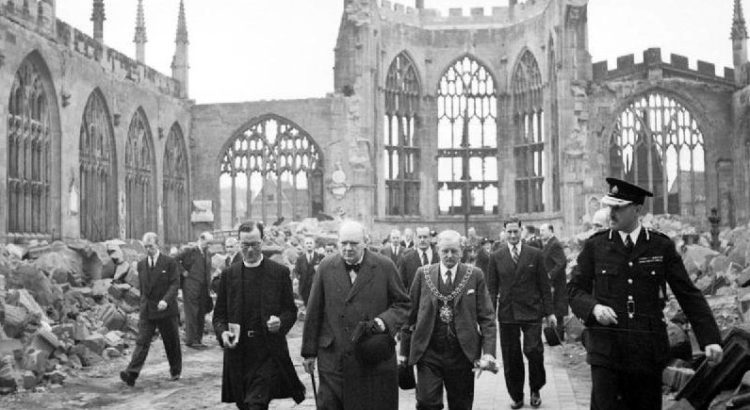
The work is chilling from the beginning, and it opens with the tolling of chimes and the chorus quietly chanting “Requiem.” The music is simultaneously very much in the 20th-century style, while also clearly drawing from and referencing much earlier works, and it similarly blends modern poetry with centuries-old liturgy. In some ways, this parallels the old and new cathedrals – the old cathedral was built in the 14th and 15th centuries, and the decision to rebuild it was made the morning after its destruction at the hands of the Luftwaffe.

Shortly after the destruction, the cathedral stonemason, Jock Forbes, noticed that two of the charred medieval roof timbers had fallen in the shape of a cross. He set them up in the ruins where they were later placed on an altar of rubble with the moving words ‘Father Forgive’ inscribed on the Sanctuary wall. Another cross was fashioned from three medieval nails by local priest, the Revd Arthur Wales. The Cross of Nails has become the symbol of Coventry’s ministry of reconciliation.

Her Majesty the Queen laid the foundation stone on 23 March 1956 and the building was consecrated on 25 May 1962, in her presence. The ruins remain hallowed ground and together the two create one living Cathedral.

Source: http://www.coventrycathedral.org.uk/wpsite/our-history/

The Ann Arbor Youth Chorale, which sang the part of the children’s chorus, was seated in the balcony, which was a decision that I thought added to the drama of the piece. The Youth Chorale only sings four times in entire eighty-minute work, and because I couldn’t see them from my seat, their entrances were (almost, if it were not for the translations in the program) unexpected. Furthermore, their position above and away from the rest of the performers and the audience gave a feeling of otherworldliness and innocence.

Also strategically positioned on stage was Ms. Tatiana Pavlovskaya, soprano. Rather than being at the front of the stage with Mr. Anthony Dean Griffey, tenor, and Mr. Stephen Powell, baritone, Ms. Pavlovskaya stood in the midst of the orchestra. I think that this probably enhanced the blend between her exquisite voice and the orchestra, and it also was a fascinating artistic decision – in her black gown, she faded into the background of the orchestra, rather than stand out as a soloist.

The cathedral today, old alongside new.

I did appreciate that the words of all parts, as well as the translations of the Latin liturgy, were included in the program so that the audience could follow along for the duration of the work. Simple efforts such as this greatly increase the piece’s accessibility, since most audience members are not fluent in Latin, and sometimes even the words of English pieces are sung too quickly to digest.

At the conclusion of Benjamin Britten’s War Requiem, the audience sat in weighted silence for a lengthy period, which I think is a testament to the piece’s lasting impact.
PREVIEW: The How and the Why

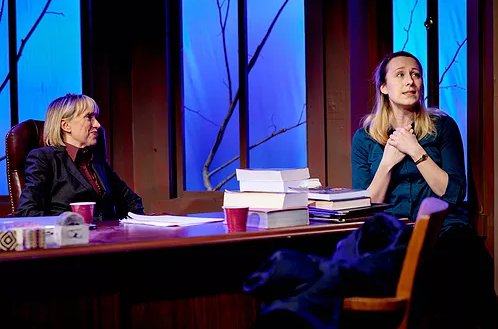
Theatre Nova’s latest show, The How and the Why, is another play with its roots in science. I’ve seen two similar ones over the last year, and I’ve been favorably impressed by both. One of those, incidentally, was the last show of Theatre Nova’s I saw, Constellations, which was beautifully done and makes me incredibly excited to see another of their shows. The How and the Why is about evolutionary biology – my favorite scientific subject to read and learn about – and has as its main characters a mother and daughter who are both renowned evolutionary biologists. Add to this the fact that the daughter proposes a new theory of female sexuality, and this play might just be everything I’m looking for in a literary work.

The How and the Why runs through February 24. Tickets are $22 each (or if you have a financial limitation, pay-what-you-need tickets are available at the door). More information about Theatre Nova and the play can be found here.

REVIEW: Shoplifters

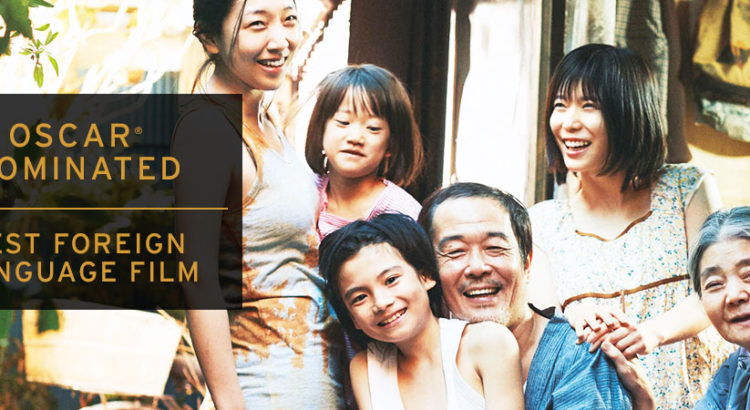
I don’t know much about Japanese film and what I do know relates mostly to the world of anime, reminding me of my frightening brush with Spirited Away as a child. So, when I went into the cinema to see Shoplifters, I wasn’t quite sure what to expect. Over the summer, I facilitated English conversation circles through the English Language Institute on campus and found myself talking about foreign film quite a bit. During one conversation with a Japanese graduate student we talked about the difference between American and Japanese film styles. As he pointed out, American movies are often centered around entertainment which they can do with the budgets to support CGI, international sets, and large casts. However, Japanese film, as he described it, is lower budget and often focuses on human relationships. Shoplifters was a prime example of this account.
Shoplifters follows the complicated relationships of this hodge-podge Japanese family and their struggles to survive. As the film unfolded, I learned more about each of the characters and what brought them to this family. This small apartment of misfits was brought together by circumstances often stronger than blood. The complexity of these relationships and the circumstances that brought the family together gave each complexity and depth, however, it also made the story a bit difficult to follow. Between the characters’ many overlapping histories and the barrier of language translation I struggled to ascertain the histories of each character without a little help from a film buff friend. I left the theater questioning the exact nature of the grandmother’s relationship to Aki or the main couple. And who had the couple buried in the past?
Despite these questions and minor confusions, I was still able to fully enjoy the complexity of their interactions and relationships. One of the most enjoyable aspects of the film was the way in which the film slowly unraveled, revealing another aspect of the backstory while simultaneously moving the plot forward. The movie was just a bit long and slow for an American viewer that has seen her fair share of rom-coms and Marvel sequels. However, I still found the film incredibly enjoyable and look forward to seeing how it does once Oscar Sunday comes around.

Image courtesy of the Michigan Theater

REVIEW: Broadway Our Way

Bravo Bravo Bravo! Congratulations to the School of Musical Theatre for putting on this fantastic show. It was so original, unique, talented, and incredible that I went back on Sunday to see it a second time. To sum up this performance it is classic Broadway songs performed in the american musical styles of gospel, jazz, pop, and rhythmic blues. The students got to work with the composer Michael McElroy himself, which explains why it was so good.

I was surprised when what looked like 50 students walked onto the stage to perform the first song “Answer Me” from The Bands Visit. Most Broadway songs are sung by one or a couple of people. Also, the instruments accompanying the singers consisted of one guitarist, one bassist, one pianist, one cellist, and a percussionist, not a full orchestra by any means. I was curious if having so many people sing the Broadway songs would make the music lose it’s Broadway character and the meaning originally intended by the original composer. This did happen with a lot of the songs, but new character and new meaning was put back into the songs with the re-composition, and the students did a great job adding their own flair to every song.  Most of the songs performed throughout the night featured closer to 20 students, which is still a lot for the Broadway songs they were performing.

I most enjoyed the songs where all the students were on stage, I felt these songs were the most powerful. Every song performed was great, but some stood out. “Answer Me” was sung with a hushed whisper sound, but the crescendos were perfect and the buildup ignited what felt like a flame inside of me. “Luck Be A Lady” was performed by a small group of six guys, and was one of my favorites of the night. The harmonizing in the song was stellar, there was a big range of high to low, and the song still accentuated every individual singer’s voice. The two guys who had short solos during this song killed it with their high voices. They weren’t singing in falsetto, but it was still a higher pitch than I could ever achieve. “Silver Lining” was sung wonderfully by a group of five and was the only song to feature a guitar solo, which is important to me as a guitarist. “Defying Gravity” was the strongest song. It wasn’t just loud, it was powerful and got me feeling excited. “You Will be found” was the most gospely song. The girls and guys seemed to face off with two back to back songs, “Love to Me” performed by the guys and “Journey To The Past” performed by the girls. I think the girls did a better job.

There was no stories, props, or scripts, but this didn’t mean it wasn’t a very visual performance. All the students were wearing different outfits and there were choreographed dances. The best dance was during “A Whole New World”this was a ton of fun to watch. There were so many different personalities on stage. Some students were singing with a giant smile while others furrowed their eyebrows. Some students did a lot of acting while they sang with strong facial movements, while others just seemed to sing with a straight face.

Genuinely awesome performance.


REVIEW: Wang QingSong Beijing/Detroit

This art exhibit focuses on an image taken by artist Wang QingSong called The Bloodstained Shirt (2018). It also shows the process Wang went through to create this image. This image is a remake of the famous drawing The Bloodstained Shirt (1959). You can see this exhibit in UMMA until May.
The message of the artwork relates to communities that have been dispossessed. Detroit is a city that has been plagued by gentrification, especially with the New Detroit movement. Physical gentrification is taking place as high rents shove disadvantaged natural residents out of their homes. At the same time cultural gentrification is taking place because of idiopathic empathy. New ventures and businesses are stealing the stories of the Detroit residents by labelling themselves and their businesses as resilient and making a come back from struggle. This is a facade that is denying the voices of the actual victims of Detroit. One person’s opportunity is often another person’s eviction. The New Detroit movement needs to recognize that they are not saving Detroit, they are taking it over it. Bringing privilege into Detroit and forcing out vulnerable people is not fixing the problem. Art exhibits like this promote collaboration instead of gentrification and hopefully will encourage the people of Detroit to rewrite their own cities history.
This artwork captures gentrification by showing neglected ruins of Detroit. It relates it to similar struggles and issues happening in China by impersonating the drawing The Bloodstained Shirt (1959). This photo has been banned in China!
The photo features the artist himself and many Detroit locals. I know some Michigan students and other people involved with the University participated as models for the photo. Shout out to anyone on campus who was involved.
In addition to the photo The Bloodstained Shirt (2018) , I included other photos featured in the exhibit: the clothes Wang QingSong was wearing in the photograph, the bloodstained shirt that is held up in the photograph, some photos of the making of the photograph and the volunteers involved, and lastly words and Chinese expressions that are on the windows of the exhibit. There is also a video of the making of this image playing in the exhibit room.
There are probably a hundred different phrases, I chose to include a couple of my favorites. Most of the Chinese phrases have English translations above them, but some do not. I am not sure why he did for some and not others, but I recommend going with a Chinese friend who can translate some of the phrases that are not in English.

REVIEW: Jazz + Chocolate

It’s official, there is no better combination than jazz and chocolate. It was the Valentine’s Day date to rule them all with Josef Deas’ jazz trio playing classics while chowing down on Zingermann’s triple chocolate cake. The Josef Deas Trio is composed of upright bass, drum set, and trumpet playing pieces by Coltrane and all your favorite classic jazz artists. This was a pleasant surprise for me as more modern jazz is truly a hit-or-miss in my mind. Sorry mom and dad, but I really hate the “smooth jazz” and “watercolors” music channels you made me listen to growing up. The real highlight was the drummer tapping out a complex rhythm with one hand and a different one with the other. He drove the trio through highs and lows. At one point in the performance he started increasing the tempo, over the course of the piece he pushed the trio faster and faster leaving me to wonder if they were ever going to slow down. The bass and trumpet kept in time not missing a single beat. Halfway through the night, our the trio turned into a quartet with the addition of an alto sax. I don’t know the saxophonist’s name but I’ve seen him many times playing sax in a tuxedo outside the Potbelly on State and Liberty. It felt like a special treat to see the busker with such a passion for his craft show up for the performance.
Adding to the general ambiance of the night was an interesting crowd. There were couples slightly dressed up and clearly there to celebrate the holiday, but there were also others just there like it was any other Thursday night. In one corner I watched two women pull out all sorts of pink and red flowers and glittery items as they started to construct what I imagined to be gift bags for a weekend Galentine’s Day party. Meanwhile, the middle-aged couple at the table next to us was friendly and chatty throughout the night. By the end of the show the husband was nodding off at the table as his wife lovingly gazed on and laughed with us at his inability to keep eyes open. My favorite audience member was a little girl probably no older than 3 or 4. She came ambling into the room with her dad trailing along, excited to watch the performance. Her dad informed us that she loves music and just had to watch. I imagine that little girl has a bright musical future ahead of her as I know very few infants with such an appreciation for the jazz classics.