PREVIEW: Westbound Situation Album Release @ the Ark

This Monday, November 4th, Westbound Situation will be releasing their debut album titled “Pilot” at the Ark. The group defines themselves as a “chambergrass” ensemble, blending jazz, classical, bluegrass and other folk music. The quartet, comprised of Grant Flick, fiddle, Matt Davis, banjo, Zach Brown, cello, and Jacob Warren, bass, mixes composition and improvisation seamlessly into their entirely memorized arrangements. Their music spans multiple genres and is fun to listen to especially since the group is mainly composed of current UofM students and alums. Whether it is new compositions or arrangements of existing tunes, Westbound has a special way of drawing the audience into the music, and I am excited to hear their new work. 


Details: 

Nov 04, 8:00 PM

The Ark, 316 S Main St, Ann Arbor, MI 48104, USA

Tickets are 15$. 

https://theark.org/shows-events/2019/nov/04/westbound-situation

PREVIEW: Ann Arbor Symphony – Liszt & Tchaikovsky

On Saturday, November 2 at 8pm, the Ann Arbor Symphony will be presenting a concert at the Michigan Theater. While the headline pieces on the program are Lizst’s Piano Concerto No. 2 and Tchaikovsky’s Symphony No. 5, I’m actually most excited for Wang Jie’s Symphonic Overture on “America the Beautiful. On their website, the A2SO invites audience members to “soar through the Rocky Mountains to the Garden of Gods and atop Pikes Peak” in this piece. It combines a “majestic fugue which traces the silhouette of this prominent peak with faint echos of the familiar patriotic song written atop the same mountain.”  While there aren’t any mountains to visit in Ann Arbor, musical evocations of them might be the next best thing!

This event is on the Passport to the Arts, so pick up a voucher for a free ticket on the night of the concert! Alternatively, tickets can be purchased online on the A2SO’s website.

PREVIEW: Mark Webster Reading Series

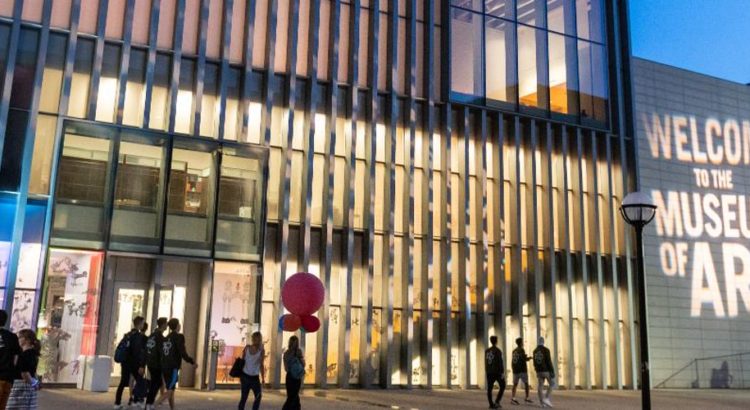
The Mark Webster Reading Series, hosted in partnership by the University of Michigan Museum of Art (UMMA), is a free event open to the public which brings in authors to read their works in a relaxing environment. Each reading consists of two MFA students; one of fiction and one of poetry. This week readers are Annesha Sengupta and Bryan Byrdlong. I am excited to hear the works of these two and hopefully see lots of you there! If you’re too worn out after Halloween to attend, worry not, the Mark Webster Reading Series has many more readings planned for the future, which can all be found on the UMMA website linked below. I know I’ll be going to as many as I can, and I hope you do too!

https://www.umma.umich.edu/events?tid=31

PREVIEW: Jojo Rabbit

The newest film by Taika Waititi, this movie focuses on the life of a young German boy who thinks he is a true Nazi until he figures out that his mother is hiding a Jewish girl in his attic. I am interested to see what Waititi does with the subject, however I am very wary of a comedic film about Nazi Germany. In today’s political climate, there are a lot of parallels to that time, and I think this film will definitely help spark and facilitate conversation about our own current situation. I have been a huge fan of Taika Waititi’s work in the past, and I am excited to see the direction he decides to take and his own acting in this movie.

The movie is playing at the State Theater at 7:20 tomorrow (Thursday Oct. 31), and Friday (Nov. 1) at 4:00, 4:45, 7:20, and 9:35.

State Theater Website: https://www.michtheater.org/show/jojo-rabbit/

A trailer for anyone who is interested: https://www.youtube.com/watch?v=tL4McUzXfFI


PREVIEW: Artist Spotlight: Ordinary Elephant

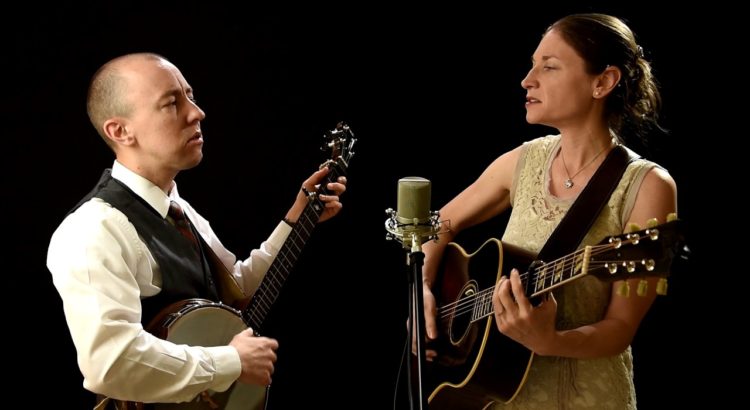
This upcoming Tuesday, October 29th, you can catch me at The Ark as they hold an Artist Spotlight for Ordinary Elephant, winner of the Artist of the Year Award at the International Folk Music Awards in 2017. I have only recently discovered this folk duo, yet I’m very excited to enter into this musical space with them. From my listening on Spotify I found their music to be thoughtful and charming with the swells of an autumn chill.

The doors of The Ark open at 7:30, and the show starts at 8:00; while this event is free to the public, it will accept non-perishable food items to go towards Food Gatherers!

REVIEW: Cappella Pratensis – Missa Maria zart

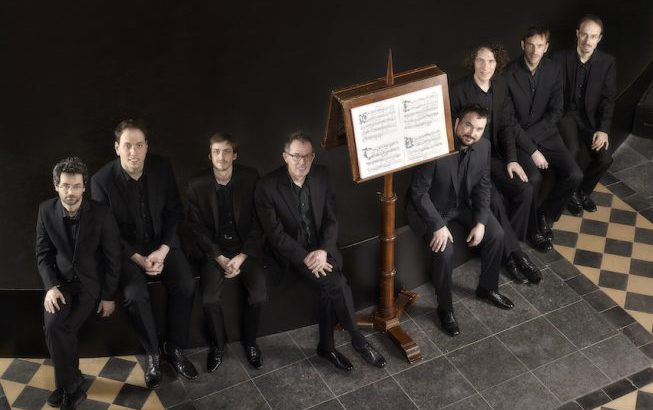
Cappella Pratensis’s performance of Missa Maria zart was an excellent opportunity to experience Renaissance-style polyphony – which may sound foreign to our ears – live. Despite its significant differences from the music of today, the Dutch-based ensemble deftly showed that such music can be both accessible and enjoyable.

At over an hour long, Missa Maria zart is one of the longest, most complex Mass settings (compositions putting the text of the Catholic Mass to music) known. Running throughout the entire mass is the same underlying melody, known as a cantus firmus, and the entire piece is consequently known as a cantus firmus Mass. In the case of Missa Maria Zart, the cantus firmus is a German melody called Maria zart, or “Sweet Mary.” The performer’s comments during the pre-concert lecture, as well as the program notes, helped audience members to gain a greater understanding of the music and its complexities. Additionally, the text of the entire mass, as well as the English translations, were printed in the program, which allowed listeners to follow along. The Mass’s music was an experience in itself: in the echoey acoustics of St. Andrew’s Episcopal Church, the resonant harmonies and interplay of the voices rung throughout the space. Despite the piece’s extraordinary length, I found myself engaged throughout its entirety.

Outside of the music, I was impressed by several other aspects of Cappella Pratensis’s performance. For one thing, it is a physical feat to sing almost continuously, without water or an intermission, for over an hour. Secondly, it was fascinating how other (non-musical) types of art were incorporated into early music making, including Cappella Pratensis’s historically informed performance. I enjoyed the opportunity to look at their partbooks, both their modern reproduction of Missa Maria zart, and their facsimiles of original chant melodies, up close. It’s crazy that the musicians of Cappella Pratensis can read four parts from the markings on the page. Called mensural notation, it looks vaguely like modern musical notation, but it’s not obvious how to read it. Also, I enjoy doing calligraphy when I have spare time, and aesthetically, the partbooks were works of art. The beauty of the lettering and flourishes around the notation are very different from modern musical notation, in which the parts exist with the primary utilitarian purpose of readability. Even their sturdy music stand, which was constructed of solid wood, featured intricate carvings on its sides.

In conclusion, I am glad to have had the opportunity to experience Jacob Obrecht’s expansive Mass setting, Missa Maria zart, in live performance.