PREVIEW: Sounds from the East to West

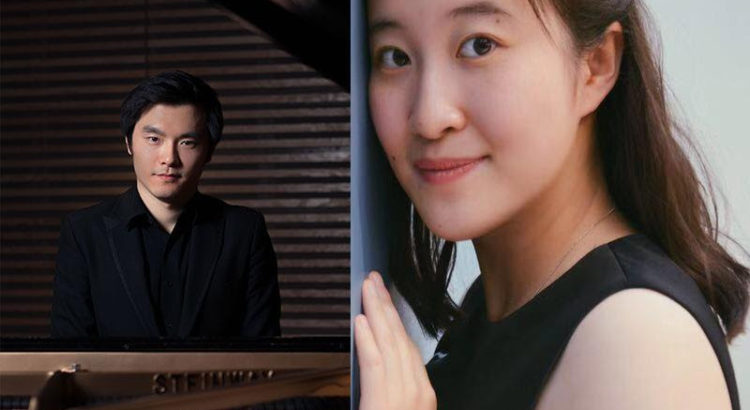
This is a Chinese piano concert featuring Oliver Jia & Jiyuan Grace Zhang. It is Saturday, Mach 30, 2019 from 12:30 – 2 pm at the Britton Recital Hall in E.V. Moore Building. FREE concert, so definitely check it out. Also, this piano concert will be very different from what you are used to hearing because the songs all have an East influence, hence the name of the concert. This concert is guaranteed to relieve your stress.

Oliver Jia is a music professor at The University of Texas Rio Grand Valley, with degrees from Yale, Julliard and U of M.
Jiyuan Grace Zhang is a U of M graduate.
These are the songs they will be playing:
Man Jiang Hong – Prelude (2002), composed by Chu Wang-Hua
Jasmine Flower Fantasia (2003), composed by Chu Wang-Hua
Liu Tianhua Impromptus (1998), composed by Cui Shi Guang
Longing for my love (1991), composed by Dan Zhao-Yi
Pi Huang (1995), composed by Zhang Zhao
(Intermission)
Yellow River Concerto, composed by Xian Xianghai

REVIEW: Triptych (Eyes of One on Another)

On Friday and Saturday night, Ann Arbor had the privilege of experiencing a radical new work, the culmination of a massive collaboration drawing on the talents of composer Bryce Dessner and vocal ensemble Roomful of Teeth, to theatrically mount the photography of the late and highly influential 20th century photographer Robert Mapplethorpe. “Mapplethorpe produced images that simultaneously challenged and adhered to classical aesthetic standards: stylized compositions of male and female nudes, delicate flower still lives, and studio portraits of artists and celebrities.” Using original music coming from 10 voices and a chamber orchestra, projected poetry from a wide array of sources, including librettist Korde Arrington Tuttle and Mapplethorpe’s contemporaries, fluid staging, and excellent lighting design, the performance was unapologetically arresting and provocative.

“Triptych (Eye of One on Another)” explores the incredibly complicated web of emotions, relationships, and politics surrounding Mapplethorpe’s time, as his career had begun to take off in conjunction with his AIDS diagnosis in 1986 at the young age of 23. In navigating such a complicated and weighty chapter of American history, there was no singular emotional direction a work of this scope could portray, and composer Bryce Dessner fluidly swept us from the awe-inspiring cathedral, to the cold and calculating courtroom, to the intimate bedroom with a score that surged with electricity, sparkling clarity, and biting poignancy. Juxtaposed against huge projections of Mapplethorpe’s arrestingly beautiful and often disturbing photography, Dessner created a space for us to take in this controversial work, almost as if installing a very slow moving sidewalk for us to stand on while pensively moving through an art museum.

A vocal ensemble that is “dedicated to reimagining the expressive potential of the human voice, Roomful of Teeth showcased their signature, vast timbral palette alongside singers Alicia Hall Moran and Isaiah Robinson. Over the course of the 70-minute performance, they transported us through time and space singing with the lightness of the baroque era, Tuvan throat singing, yodeling, folk singing, and other extended techniques including overtone singing. The chamber orchestra was made up largely of U-M SMTD students and alumni, who were able to pack a punch just as powerfully as they laid down immersive droning textures for the singers explore.

The experience was similar to a vivid slideshow, a shimmering tapestry of sounds, striking images, and jarring poetry. The text (and its translations, when applicable) was projected onto the stage and served as a sort of “set” for the singers to inhabit. Scrims and curtains flew in and above the stage, sometimes shrouding the instrumentalists and singers in obscurity, and other times exposing them with a rudeness or glorification befitting of the particular musical moment, even leaving the entire backstage area exposed at times. The lighting design could be equally abrasive and in-your-face, but the more abstract light cues (an extremely bright, descending horizontal line) moved with a solemnity and assuredness that reminded me of Philip Glass’ opera “Einstein on the Beach.”

I found that “Triptych” was a work that demanded the full attention of the audience. It put hard-edged words, music, and images front and center for all to see, without apology. Personally, I experienced an amount of discomfort in not knowing what striking or difficult image would emerge next. I longed for justice and love for people of color and people belonging to the LGBTQ+ community, and I appreciated the opportunity to be immersed in this difficult but important narrative. Roomful of Teeth will continue to take “Triptych” all around the world in their upcoming season, encouraging us all to take a moment to stop and fix our eyes on one another.

Final bow.

REVIEW: Art in the Age of the Internet

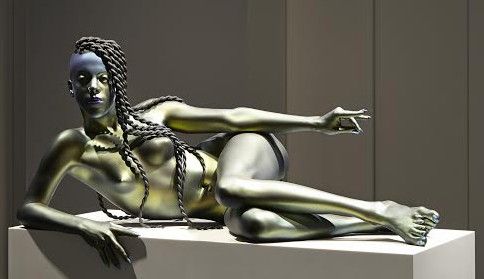
Walking into the UMMA’s Art in the Age of the Internet exhibit is an assault to the senses. Before you enter the gallery you can hear the art as a cacophony of deep booms, high pitched squeals, and slightly disturbing sounds weaving between them. This is the experience the curator wants you to have in this exhibit because the Internet is an assault to the senses. Everywhere you turn in this relatively small exhibit space there is bright and often disturbing art surrounding you. This exhibit is more than just a few dozen paintings or sculptures, it is an interactive experience which requires you to engage it. Some pieces engage you in very literal ways, requiring you to put on headphones to listen to videos, tracking your movements, or requiring you to interact with their piece to experience the art. The gallery was organized into sections with themes. One corner focused on surveillance and the dangers it holds. This section included a digital eye with an infrared sensor which followed you across the room. Another piece was a router in a thick plexiglass box which allowed you to browse the internet anonymously. Another section focused on video games. This portion of the exhibit showed the various applications of video games with one piece using old fashioned video games on multiple screens to create a landscape while another piece exhibited the simulation video games the military uses to train soldiers. My two favorite pieces were very different in nature. The first was a video which played in a dark room in the corner and was responsible for the thrumming bass that shook the room. This video featured a desktop screen with hundreds of different pages being pulled up featuring videos and images explaining the origin of the universe while a piece of music composed in conjunction with the piece played. The piece continuously returned to video footage of a man with taxidermy birds of various breeds and a woman drawing circles. The video was mesmerizing in a way that felt slightly off and even a bit disturbing. The other piece that I felt most drawn to was a 3-D printed sculpture of an artist whose work was featured alongside it. The sculpture featured an iridescent, greenish, female-presenting, naked person lounging on their side with long hair. On closer inspection, the figure was hiding male genitals behind a bent knee. The sculpture was meant to draw from the artists self-portrait which was featured in my preview. In this image the artist is painted a bright green with yellow box braids, kneeling on the ground. I still have many questions about these two pieces. I would highly suggest that any and everyone catch this exhibit before it leaves April 8th.

Image courtesy of Observer.com

REVIEW: The Power Family Program for Inuit Art: Tillirnanngittuq

A wise man once said, “Water Tribe” as he proudly flicked his wrists in a dramatic exit following his younger sister. This wise man was a young man named Sokka, from the Avatar: the Last Airbender. Now I know what you’re thinking — I promise, I’ll get to the actual exhibition in a second — what do fictional animated characters like Sokka and Katara and the “Water Tribe” have to do with Inuit art?

Before I answer this seemingly pointless question, let’s talk about the Tillirnanngittuq exhibition! First, a quote from the UMMA website:

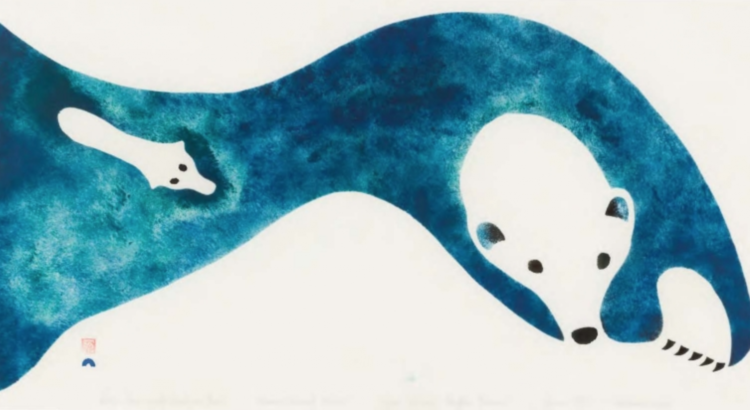
Tillirnanngittuq, pronounced “tid-ee-nang-ee-took,” means ‘unexpected’ in the Inuktitut language. Mame Jackson, curator for this exhibition explains: “Tillirnanngittuq refers to the astonishing outpouring of Inuit art since the 1950s—a truly amazing story! Neither the Inuit artists nor those who worked with them in the early years could have foreseen the worldwide acclaim Inuit art would achieve.”


The Power Family Program for Inuit Art: Tillirnanngittuq exhibition showcases 58 works of art from the collection of Philip and Kathy Power. Most of these works are from the 1950s and 60s—the earliest years in the development of carvings and prints by the Inuit of the Canadian Arctic. The entire Power Collection of Inuit Art, gifted to UMMA in 2018, includes more than 200 sculptures and prints.

Visitors will discover innovative stonecut and stencil prints, and exquisite stone, bone, and ivory sculptures of arctic animals based on the artists’ life experience as traditional hunters, attentive in their observation and understanding of the animals in their environment. Slightly abstracted, this art possesses great character and vitality, elegance of line and form. The artists illustrate not only reality from nature such as how polar animals move, but also inventive design choices as they multiply, overlap, and interweave natural forms.

I felt very honored and privileged to witness the beauty of Inuit art, learning about their cultural history through their carved ivory and stone, their etched drawings, and their deceptively “simple” prints. The guided tour and mini history lessons provided commentary and contextualized each piece, talking about the Inuit peoples’ works of art catering to a more globalized economy.

Among the intriguing Inuit things I’ve learned at the gallery, I learned their value of family, some of their past day-to-day practices and customs, such as the importance of sharing stories with one another and their deep connection with nature, coexisting and living together in harmony, and I learned that in times of industrialization, the Inuit have had to switch business practices, as their usual nomadic lifestyle and hunting methods were no longer sustainable in the fast-paced, industrialized world. According to the art historian and curator, one of the things the Inuit turned to as a solution, was their art.

Now, back to my original question: what do fictional animated characters like Sokka and Katara and the “Water Tribe” have to do with Inuit art?

For me, they have everything to do with it.

As a child, I was completely unaware of indigenous peoples and their cultures, with the exception of some minor obligatory history lessons in high school. I’ll admit, I was probably a bit luckier than others in my younger days, because my Michigan elementary school field trips often considered Native American history and culture, where my classmates and I were each given tiny stone arrowheads and cute little pamphlets to take home and share with our families. It was never anything I took seriously, I took everything for granted in my childhood. But then, I started watching Avatar: the Last Airbender.

Now, forgive me for fangirl-ing, but this kids’ animated TV show continues to exist as an absolutely incredible, sophisticated, enlightening, and alarmingly impactful story to me! I’ll spare you the excruciating details, but it handles the multifaceted ideas of ethnicity and indigenous peoples, in tandem with the benefits and drawbacks of colonization and industrialization, discussing crucial topics related to the environment, spirituality, morality, and pacifism in times of war and hardship. It’s definitely a timeless classic for my generation, and for little kid me, it was a pretty big game-changer, without me even realizing it.

Now, as a (somewhat) full-fledged adult, I’m aggressively cognizant of anything to do with marginalized ethnic groups, the “colonizers” and the “colonized,” and basically anything to do with that often rocky relationship. It’s important to understand that these people exist, and representation in this day and age is unbelievably crucial to raise awareness and bring our attention to their history and culture.

Avatar: the Last Airbender might have used the world of fiction to send positive and powerful messages, but the creators themselves admitted to drawing inspiration from the Inuit for the Water Tribe people. As a child, being exposed to people who looked Inuit, even if they were calling themselves “Water Tribe” in the show, ultimately had a lasting effect on me. To be completely honest, I was excited to see the Tillirnanngittuq exhibition partly because of my fondness for the “Water Tribe.” That somehow, what I saw in the exhibition was related to my childhood fascination with the Avatar world and the four nations, particularly the “Water Tribe” and their arctic homes. And I think this just goes to show, the younger and more impressionable audiences, need to be exposed to different cultures and people. It’s extremely important, not only for the sake of diversity but for everyone to understand that the world doesn’t revolve around a singular group of people.

My history classes, K-12 and now at U-M, has taught me that the way history is shaped, the “world” really feels American and Euro-centric. I massively appreciate the Tillirnanngittuq exhibition at the UMMA because it is an opportunity not just to appreciate Inuit art, but ultimately to learn about Inuit history and culture in a society that has long disregarded and erased the cultural histories of these indigenous peoples.

Did I use this post as an excuse to fangirl about Avatar: the Last Airbender? Maybe. Did I use this post to rant about post-colonialism and the importance of racial/ethnic diversity representation in media? I sure hope so. Did I learn anything about the actual Inuit people in writing about the Tillirnanngittuq exhibition itself? Definitely. And am I about to tell you to go see the Tillirnanngittuq exhibition while it’s still at the UMMA? Absolutely.

The Tillirnanngittuq exhibition will be there until October 6, 2019. I hope that everyone will make the effort to go see the beautiful and inspiring Inuit art and learn about their history and culture. I hope that instead of focusing on traditional European paintings and Asian Buddhist statues, everyone will take a look at Inuit ivory and stone carvings, etchings, and prints and walk away knowing that there are so many marginalized groups out there that deserve recognition, representation, and most importantly, respect.

PREVIEW: Captain Marvel

This is going to be a tad dramatic, but I believe in the lens of a cultural analysis of one of the top grossing media empires in the world, kind of important to note.

Two of my favorite characters from the Marvel Cinematic Universe is Captain America and Thor. Human golden retrievers that took a sharp departure from the grim and grit of the anti-hero. I like my movie bad boys, but there is something kind of lovely to see hope and abashed kindness portrayed in a complex, nuanced way.

But it took Marvel a couple of jabs to get them right— Steve Rogers had a middling first movie, followed by a fun but one-note appearance in the first Avengers movies. But The Winter Soldier completely changed everything for Steve, respecting his good heart, acknowledging a changing world, insisting that the past was just as flawed, and that his PTSD is fundamental to his character.

It took until Thor: Raganrok, Chris Hemsworth’s third solo movie and sixth appearance as the character, to cement Thor’s likability, complexity, and heroism. Thor is wonderful and I love him— but we were all late to the game.

Steve and Thor’s status as white men allowed them a couple of misses. Marvel was okay with middling movies, Marvel knew they needed to establish their big heroes, Marvel was okay with an alright box office.

It’s pretty eyebrow raising how long it took for the usually very strategic company to get to a female-centric film. Black Widow was the logical step but was avoided for…reasons. (Now she is getting her own movie and honestly, as much as I like Natasha Romanoff, I think her character arc kind of doesn’t call for it anymore in the grander scheme of the universe.)

So Marvel built themselves this huge anticipation for Captain Marvel. It’s a moment, a change in the field. The last Avengers movies implies that she will swoop in as a major player. And while I adored the Infinity War cliffhanger for our next Captain, Marvel threw themselves into a terrifying situation they created.

Or maybe they could never avoid it.

Sometimes the intense bad-faith backlash to anyone who isn’t your typical lead crawls underneath your skin and just dies there, leaving you with a bad feeling for the rest of your day/week/month. It’s not a “log-off Twitter” type of deal. This is what women (and especially Black women and women of color) face. What happened to Kelly Marie Tran and Leslie Jones makes my heart hurt.

I believe a part of this angered wave is Brie Larson’s own political views. She is devoted to the cause of intersectional feminism and allyship.

You know the critics I am talking about, so I am not going to get into it.

I haven’t seen the movie yet. That’s why this is a preview. I’m going to watch it and I am going to try to expel this all from my already over-hyped brain while I watch it. I might not even like it, and that’s my right. But I don’t think it discounts Brie Larson, the cast/crew, the idea of a female leading production, and the idea of women just existing. It’s just a movie.

Captain Marvel is about an alien soldier who finds herself in an intergalactic battle. Confronted with memories of a past life on Earth, she teams up with familiar faces to end a war. Captain Marvel is particularly exciting, as she was hinted to arrive in a big way at the end of Avengers: Infinity War. You can watch it at State Theater and other theaters near you.

REVIEW: Philharmonia Orchestra – Esa-Pekka Salonen

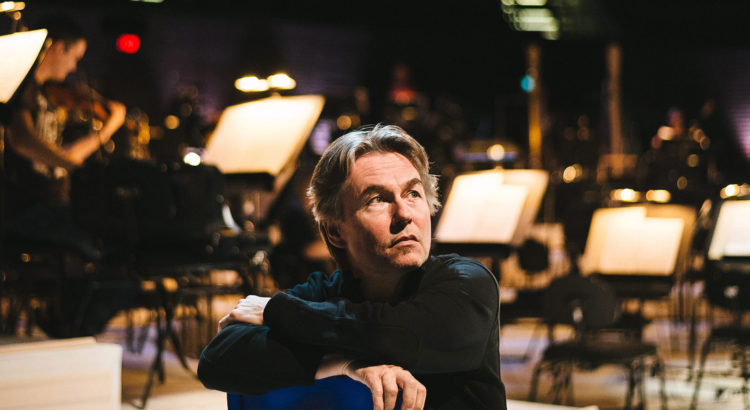
As a former cellist, I know when I’m listening to music composed by someone who understands the instrument. Esa-Pekka Salonen understands cello. The Ann Arbor Philharmonia Orchestra’s performance of Salonen’s Cello Concerto Tuesday night was marvelous. I knew that it must be a fine piece of music after learning that it was partially commissioned by the Chicago Symphony Orchestra and premiered by Yo-Yo Ma, but this was more than I could have ever expected. The piece was riveting, keeping me at the edge of my seat for at least half of the concerto. My view of Truls Mork, the featured cellist, was obstructed by several heads but I craned my head to keep eyes on him and his dark wood cello the whole time. In Salonen’s program remarks on his composition he mentions the desire to push the cellist to their physical and mental limits while performing this piece. I think that it did more. By the end of the third movement, I felt like I had been reading a complex article for class or doing mental gymnastics.
Salonen’s concerto truly pushed music to its boundaries. The program notes describe the first two movements well. Salonen describes the first movement as an amorphous cloud up in space and it truly felt that way. I struggled to get into this movement as it did not carry an easily followable melody, which I tend to prefer in music. However, the second movement took my breath away. He described this movement as a majestic meteor making its way through space and that is exactly what I saw in my mind’s eye. The piece utilized such a variety of textures and special effects. Mork strummed, plucked, and bowed his way through double stops and harmonics. At one point I became confused, knowing that I heard music being played by the solo cello but his actions not aligning with the music I heard. It later became obvious that the performance utilized a recording device on the solo cello and looped certain sound effects and melodies throughout different parts of the concerto. When the piece ended I found myself motionless and there may have even been a few tears in my eyes. I saw several people in the audience ahead of me get up and leave the auditorium and, honestly, I couldn’t blame them. I could understand going to a performance just to hear that piece performed live.
Luckily the orchestra took quite some time to rearrange during the intermission, giving me time to process the concerto. When Stravinsky’s Firebird finally began, I found myself a bit underwhelmed. Stravinsky was known for being a revolutionary of his time. When Rite of Spring premiered there were riots in the streets. However, compared to Salonen’s modern day masterpiece, it felt tame and classical. Firebird was a the perfect way to come down from the exhilaration of the cello concerto and allowed me to digest it to a deeper extent while enjoying the music of another time.

Picture courtesy of LA Phil website.