PREVIEW: Stories Never Told

This Friday I will be going to the multimedia exhibition Stories Never Told: Yemen’s Crises & Renaissance. This exhibit will be making its second stop in Ann Arbor with its first being at the Arab American National Museum in Dearborn Thursday evening. After this pilot, the exhibit will hit the road traveling to other parts of Michigan, the United States, and further. The exhibit is a mix of various mediums of art including visual, film, poetry, writings, and more centering around the Yemeni Crisis through the eyes of Yemeni citizens and the Yemeni diaspora. Stories Never Told is put together by Hanan Ali Yahya, a Yemeni-American social entrepreneur. Yemen has undergone a long and terrible conflict resulting in widespread famine and a refugee crisis. This conflict and the suffering of the Yemeni people has gone unnoticed by much of the international community despite international involvement such as Saudi Arabia bombing civilians with U.S. weaponry. Through this exhibit, the Yemeni community and diaspora are able to express their experiences with art and the written word and gain a voice in the communities that it reaches.

Image courtesy of the Global Islamic Studies Center.

REVIEW: Green Book

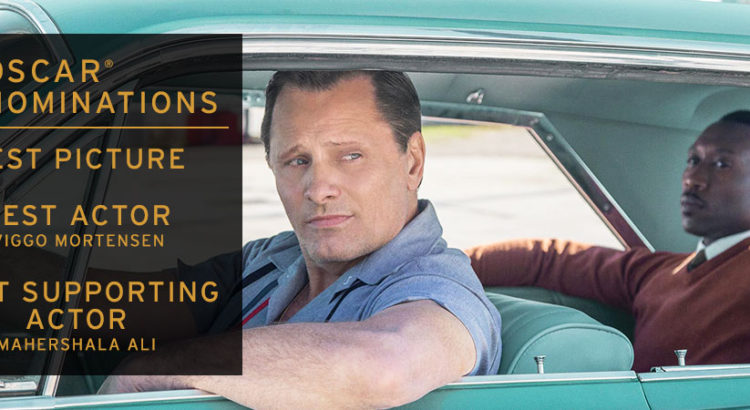
Green Book was a good movie. I laughed multiple times, felt emotionally connected with the characters, and left feeling uplifted. However, Green Book was a film made for the early 2010s that just cannot find its place in 2019. I went into the theater on a Tuesday night after Green Book has been showing at the State for over three months expecting to have the place to myself, but it was almost full. People are still flocking to see this movie and it is a strong contester in several fields for the Oscar’s coming up this weekend. So what do I have against this well-loved film?
After conversations over the past few years have sprung up about representation of minorities on the big screen we have seen more movies with minority casts and those movies are being better represented by the top awards shows. Three of the movies nominated for best picture at the Oscar’s focus largely on Black characters and issues (Green Book, BlackkKlansmen, and Black Panther) which is surely a move in the right direction. However, Green Book is the least progressive of these three films. What makes BlackkKlansmen and Black Panther such important, compelling films is their feature of Black main characters, focusing on empowering tales, made by Black directors and screenwriters. These are all the ways in which Green Book is lacking. In Green Book the main character is a white man (hence Viggo Mortenson’s nomination for best actor and Mahershala Ali’s nomination for best supporting actor), the Black character is used as a vessel to humanize the main, white character, and the film was both directed and written by, you got it, more white men. Green Book is not about sharing the story of a fantastic, highly-educated, queer, Black, virtuoso pianist who fought the barriers of his time; Green Book is about another white man from the 1960’s and how he moved past his biases. To make things worse, Dr. Don Shirley’s family have come out saying that Green Book falsely represents his life and the nature of his relationship with his driver. The movie makes Tony Vallelonga into a hero, playing into the white audience’s white savior complex and their desire to feel a bit less problematic in today’s world.
The film industry will not make progress toward being a more inclusive and representative space until it learns that representation means much more than the presence of minorities; representation means featuring minorities as complex, main characters in stories told by their peers. When we see more of these films represented in the top awards shows the academy can finally say that they are truly representing the American audience in a way that is not tokenizing. The Oscar’s should be recognizing the amazing films that are paving the way for American cinema. If Beale Street Could Talk is a perfect example of a gorgeous film that features an almost entirely Black cast, is based on a book written by a Black man, was directed and adapted for the screen by a Black man, and represents race relations of the 1960’s in a nuanced way. Another film that was snubbed by the Oscar’s this year is Sorry to Bother You. This movie was unique and compelling, quickly formed a cult following, and easily should have earned a nomination for best original screenplay.
While I enjoyed Green Book, I simply cannot say it was a great or progressive film and I will be highly disappointed if it wins best picture at the Oscar’s this Sunday. The American audience is ready for good movies that empower minorities, we saw that when Black Panther shredded box office records last spring. Now, it is Hollywood’s job to make sure we get movies that can stand up to that legacy. Personally, I would love to see a movie that showed Dr. Shirley’s path to becoming a world-renowned pianist and delved into the complex nature of being a queer black man in 1960’s.

Image courtesy of the State Theater.

PREVIEW: The How and the Why

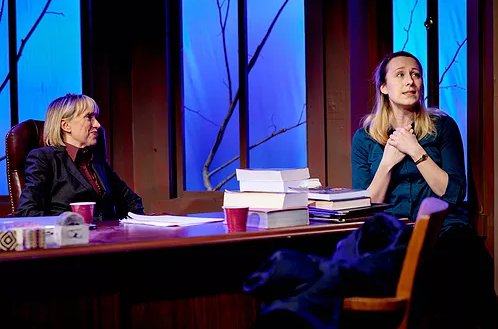
Theatre Nova’s latest show, The How and the Why, is another play with its roots in science. I’ve seen two similar ones over the last year, and I’ve been favorably impressed by both. One of those, incidentally, was the last show of Theatre Nova’s I saw, Constellations, which was beautifully done and makes me incredibly excited to see another of their shows. The How and the Why is about evolutionary biology – my favorite scientific subject to read and learn about – and has as its main characters a mother and daughter who are both renowned evolutionary biologists. Add to this the fact that the daughter proposes a new theory of female sexuality, and this play might just be everything I’m looking for in a literary work.

The How and the Why runs through February 24. Tickets are $22 each (or if you have a financial limitation, pay-what-you-need tickets are available at the door). More information about Theatre Nova and the play can be found here.

REVIEW: Shoplifters

I don’t know much about Japanese film and what I do know relates mostly to the world of anime, reminding me of my frightening brush with Spirited Away as a child. So, when I went into the cinema to see Shoplifters, I wasn’t quite sure what to expect. Over the summer, I facilitated English conversation circles through the English Language Institute on campus and found myself talking about foreign film quite a bit. During one conversation with a Japanese graduate student we talked about the difference between American and Japanese film styles. As he pointed out, American movies are often centered around entertainment which they can do with the budgets to support CGI, international sets, and large casts. However, Japanese film, as he described it, is lower budget and often focuses on human relationships. Shoplifters was a prime example of this account.
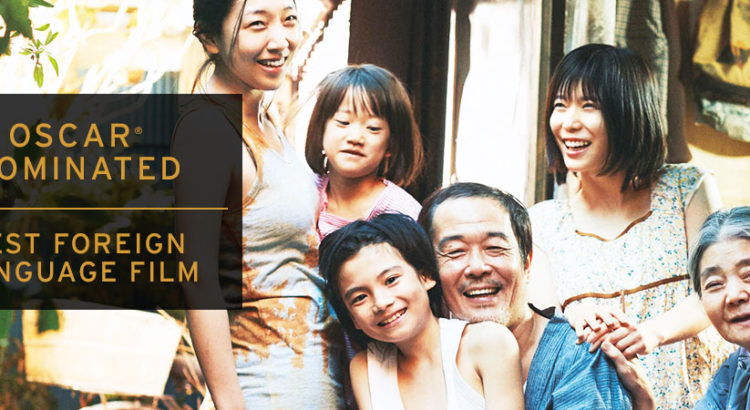
Shoplifters follows the complicated relationships of this hodge-podge Japanese family and their struggles to survive. As the film unfolded, I learned more about each of the characters and what brought them to this family. This small apartment of misfits was brought together by circumstances often stronger than blood. The complexity of these relationships and the circumstances that brought the family together gave each complexity and depth, however, it also made the story a bit difficult to follow. Between the characters’ many overlapping histories and the barrier of language translation I struggled to ascertain the histories of each character without a little help from a film buff friend. I left the theater questioning the exact nature of the grandmother’s relationship to Aki or the main couple. And who had the couple buried in the past?
Despite these questions and minor confusions, I was still able to fully enjoy the complexity of their interactions and relationships. One of the most enjoyable aspects of the film was the way in which the film slowly unraveled, revealing another aspect of the backstory while simultaneously moving the plot forward. The movie was just a bit long and slow for an American viewer that has seen her fair share of rom-coms and Marvel sequels. However, I still found the film incredibly enjoyable and look forward to seeing how it does once Oscar Sunday comes around.

Image courtesy of the Michigan Theater

REVIEW: Broadway Our Way

Bravo Bravo Bravo! Congratulations to the School of Musical Theatre for putting on this fantastic show. It was so original, unique, talented, and incredible that I went back on Sunday to see it a second time. To sum up this performance it is classic Broadway songs performed in the american musical styles of gospel, jazz, pop, and rhythmic blues. The students got to work with the composer Michael McElroy himself, which explains why it was so good.

I was surprised when what looked like 50 students walked onto the stage to perform the first song “Answer Me” from The Bands Visit. Most Broadway songs are sung by one or a couple of people. Also, the instruments accompanying the singers consisted of one guitarist, one bassist, one pianist, one cellist, and a percussionist, not a full orchestra by any means. I was curious if having so many people sing the Broadway songs would make the music lose it’s Broadway character and the meaning originally intended by the original composer. This did happen with a lot of the songs, but new character and new meaning was put back into the songs with the re-composition, and the students did a great job adding their own flair to every song.  Most of the songs performed throughout the night featured closer to 20 students, which is still a lot for the Broadway songs they were performing.

I most enjoyed the songs where all the students were on stage, I felt these songs were the most powerful. Every song performed was great, but some stood out. “Answer Me” was sung with a hushed whisper sound, but the crescendos were perfect and the buildup ignited what felt like a flame inside of me. “Luck Be A Lady” was performed by a small group of six guys, and was one of my favorites of the night. The harmonizing in the song was stellar, there was a big range of high to low, and the song still accentuated every individual singer’s voice. The two guys who had short solos during this song killed it with their high voices. They weren’t singing in falsetto, but it was still a higher pitch than I could ever achieve. “Silver Lining” was sung wonderfully by a group of five and was the only song to feature a guitar solo, which is important to me as a guitarist. “Defying Gravity” was the strongest song. It wasn’t just loud, it was powerful and got me feeling excited. “You Will be found” was the most gospely song. The girls and guys seemed to face off with two back to back songs, “Love to Me” performed by the guys and “Journey To The Past” performed by the girls. I think the girls did a better job.

There was no stories, props, or scripts, but this didn’t mean it wasn’t a very visual performance. All the students were wearing different outfits and there were choreographed dances. The best dance was during “A Whole New World”this was a ton of fun to watch. There were so many different personalities on stage. Some students were singing with a giant smile while others furrowed their eyebrows. Some students did a lot of acting while they sang with strong facial movements, while others just seemed to sing with a straight face.

Genuinely awesome performance.

 

REVIEW: Wang QingSong Beijing/Detroit

This art exhibit focuses on an image taken by artist Wang QingSong called The Bloodstained Shirt (2018). It also shows the process Wang went through to create this image. This image is a remake of the famous drawing The Bloodstained Shirt (1959). You can see this exhibit in UMMA until May.
The message of the artwork relates to communities that have been dispossessed. Detroit is a city that has been plagued by gentrification, especially with the New Detroit movement. Physical gentrification is taking place as high rents shove disadvantaged natural residents out of their homes. At the same time cultural gentrification is taking place because of idiopathic empathy. New ventures and businesses are stealing the stories of the Detroit residents by labelling themselves and their businesses as resilient and making a come back from struggle. This is a facade that is denying the voices of the actual victims of Detroit. One person’s opportunity is often another person’s eviction. The New Detroit movement needs to recognize that they are not saving Detroit, they are taking it over it. Bringing privilege into Detroit and forcing out vulnerable people is not fixing the problem. Art exhibits like this promote collaboration instead of gentrification and hopefully will encourage the people of Detroit to rewrite their own cities history.
This artwork captures gentrification by showing neglected ruins of Detroit. It relates it to similar struggles and issues happening in China by impersonating the drawing The Bloodstained Shirt (1959). This photo has been banned in China!
The photo features the artist himself and many Detroit locals. I know some Michigan students and other people involved with the University participated as models for the photo. Shout out to anyone on campus who was involved.
In addition to the photo The Bloodstained Shirt (2018) , I included other photos featured in the exhibit: the clothes Wang QingSong was wearing in the photograph, the bloodstained shirt that is held up in the photograph, some photos of the making of the photograph and the volunteers involved, and lastly words and Chinese expressions that are on the windows of the exhibit. There is also a video of the making of this image playing in the exhibit room.
There are probably a hundred different phrases, I chose to include a couple of my favorites. Most of the Chinese phrases have English translations above them, but some do not. I am not sure why he did for some and not others, but I recommend going with a Chinese friend who can translate some of the phrases that are not in English.