REVIEW: Survivors Saving Survivors: Photographing the Ukrainian Refugee Experience in Poland

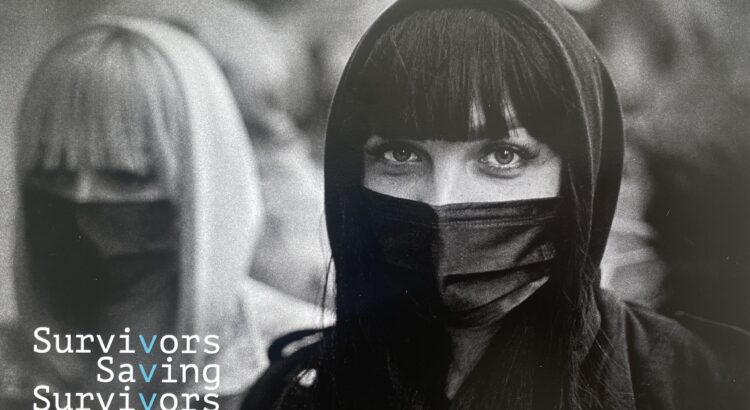
Chuck Fishman’s recent exhibition of work, titled Survivors Saving Survivors: Photographing the Ukrainian Refugee Experience in Poland, is a portrait of love and not war. Fishman is incredibly talented at capturing this; his portfolio is full of waving public figures and energetic jazz musicians, exposing the subtle attitudes and tender moments behind distinct lifestyles rather than the suffering that plagues so much of the world. His work has been featured on the cover of many magazines like Time and Life, earning him a reputation as a recognizable and exceptional photographer.

This series of photographs was taken in mid-2022 in Poland, particularly in and around the JCC Krakow— the Jewish Community Center of Krakow in Poland, which provided endless support and resources to the influx of Ukrainians in the city— food, dinners, events, beds, et cetera. Because there was no wall reading to introduce the context of the exhibition, I gathered information about JCC Krakow’s central role in this crisis by reading the plaques beside the pictures. That is how I pieced together the meaning of Survivors Saving Survivors— Fishman is referencing the historical suffering of the Jewish community in Poland and their empathetic support for another group in crisis.

The portraits themselves weren’t very telling about the context of the situation, but they are intricately emotional; one image shows a mother with a tired expression gently comforting her children while they wait their turn outside the JCC distribution center, and another depicts heartwarming smiles between Ukrainians at a community dinner. Each moment is tender, disconnected from the chaos, but still subtly pulled by it— children playing joyfully in a too-empty playground and smiles dampened by a dissociative gaze. Every image frozen in time, although captured in an age of war and instability, represents the indomitability of the human spirit. Chuck Fishman doesn’t attempt to draw distinct lines between the Jewish and Ukrainian communities but rather depicts them as one entity in mutual solidarity— existing together through a shared experience and drive to repair.

The gallery space itself is small, just a single room with art on all 4 walls. It was manageable, though, allowing me to linger on each image longer rather than feeling rushed through it, especially taking in the differences between the photographs. All subjects were different, and locations were different too, meaning the context of one image didn’t necessarily carry over into another. This complex and human-focused approach to photojournalism is refreshing because it does not paint survivors of war as mere subjects of pity— instead, they are multi-faceted, ordinary people, attempting to build some semblance of normal life under strange circumstances. Strange is what Fishman seems to be getting at, yet in a more optimistic than pessimistic way. It is strange, he seems to be saying, that people will persist through anything, and especially persist with each other. It’s a beautiful strangeness.

The exhibition is running through the end of April! It is showing on the fifth floor of Weiser Hall in room 547. It’s right next to the Central Campus Transit Center, free, and open to the public, so make sure to stop by and see some talented work before the end of the semester!




PREVIEW: Michigan Pops Orchestra Concert “A Night at the Popscars”

As we approach the end of the semester, the time for the Michigan Pops Orchestra’s concert approaches too! This semester’s theme is “A Night at the Popscars,” meaning they’ve selected a variety of music that’s related to Oscar and other award-winning films.

Many pieces they have selected are teased on their poster (the featured image above) which can be found around campus and on their Instagram @michiganpops. It looks like Howl’s Moving Castle, Star Wars, and West Side Story will be featured, with Howl’s being my most anticipated one!

I’m wondering how the Pops members will have done justice to the Oscar-winning films with their own directing and acting. I’m sure they won’t disappoint though, and I’m looking forward to which movies they’ve chosen to recreate (Star Wars probably being the most likely one).

The concert is at 7:00 PM at the Michigan Theater on Saturday, April 8th. Tickets can be bought online, at the ticket office, and sometimes at Mason Hall, or you can even get a free ticket with a passport of the arts!

PREVIEW: Cocaine Bear

Cocaine Bear is a film notorious for its origin: the true story of a bear having found and eaten cocaine. I personally don’t know much about the movie or how much of it is based on true events, but my friends have been very excited to watch it for its goofy nature.

The genre of Cocaine Bear is thriller and comedy, and it’s a relatively short movie (or at least what I felt was short: 95 minutes). I tend to stay away from both of these genres because I don’t have the confidence to watch thriller movies and lack interest in watching comedies (in theaters at least), so I’m curious about how I’ll feel about this film in terms of quality, history, and personality.

The movie is soon to stop showing, so either check it out yourself or wait to see if it’s worth based on others’ or my review!

PREVIEW: L’immensità

The Italian Film Festival in Ann Arbor is an incredible way to become acquainted with Italian film, an underrepresented yet incredibly poignant field. It is a way for film students to venture out of American-made films, a way for Italian students to practice their language in a colloquial setting, and a way for anyone to experience beauty in a different language and culture. 

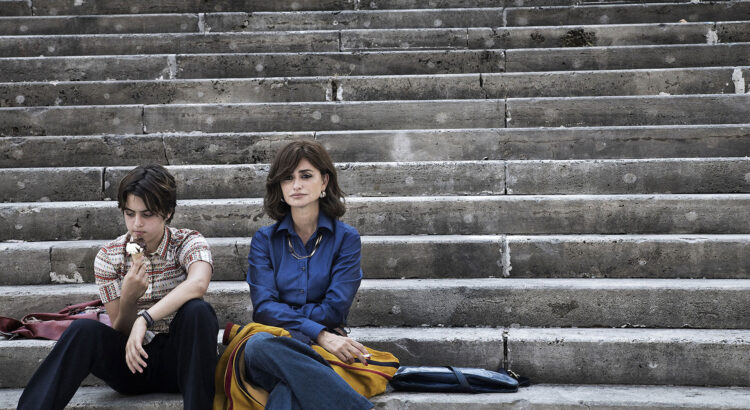
L’immensità by Emanuele Crialese is an emotional movie dissecting a failing relationship. Clara and Felice, an Italian couple in the 1970s, have fallen out of love, but are forced to stay in the relationship because of extenuating circumstances. As their children witness their parents’ failing marriage, viewers are treated to a spectacle of love, loss, and childhood woes. 

This film festival only comes once a year, so sign up while you can!

Where

  • L’immensità by Emanuele Crialese will play at Lorch Hall – Askwith Auditorium at 7:30 pm on Saturday, April 8th. 
  • Nevia by Nunzia de Stefano will play at Lorch Hall – Askwith Auditorium at 5:00 pm on Saturday, April 8th. 

Tickets are free, making this an accessible event for all students, faculty, or anyone else interested in watching beautiful Italian films. 

REVIEW: Everybody

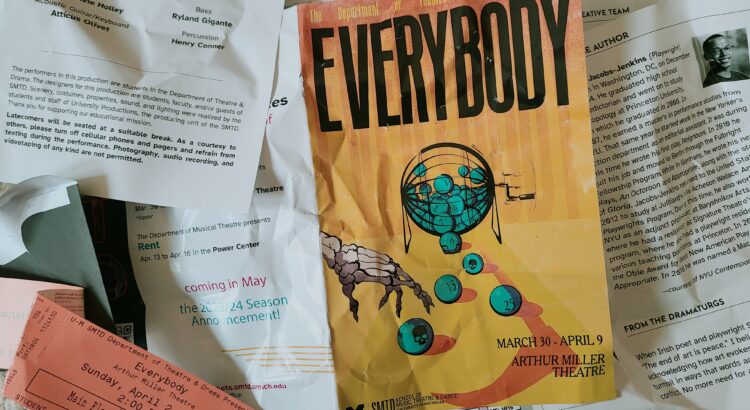
2:00pm • Sunday, April 2, 2023 • Arthur Miller Theater

Everybody was a very strange experience. The play is based on the 15th-century play Everyman, a morality tale which uses allegorical characters such as Death, Everyman, Fellowship, Kinship, and Good Deeds, to explain how one attains Christian salvation. This adaptation, written in 2017 by Branden Jacobs-Jenkins, modernizes the story into a more inclusive, interfaith exploration of morality, death, and afterlife. Jacobs-Jenkins points out similarities with Buddhist philosophy in the story’s moral framework, and builds upon those similarities by questioning reality and emphasizing points such as Everybody’s attachments to the material world and the self. He also makes the play more interactive, using a lottery at the beginning that determines which actors will play which characters, and opening the play with several of the actors hidden among the audience.

I appreciated how the affordances of the physical space of the Arthur Miller Theater, the elements of audience participation, and the blending of the cast with the audience added to the surreal tone of the play. I wasn’t entirely sure when the performance had actually started, because the “ushers” spent a long scene in the beginning explaining the theater etiquette and executing the lottery. These elements made the play feel personal and “real,” which made the more surreal scenes even more jarring. For example, immediately after bantering cheerfully with the audience and explaining the reasoning behind the play, the ushers became conduits for the voice of God, speaking simultaneously and doing simple, mildly disturbing partner gymnastics while a distorted, echoing recording played over their voices.

By chance, two different cast members sat next to me over the course of the performance. The first was there when I entered the auditorium, noisily interacting with (who I later realized were) other cast members in the audience. The second actor played the role of a random child, which meant that midway through the performance a person in a puffy Alice-in-Wonderland-looking dress entered quietly, plopped down next to me, and rummaged around in her pocket for a Fruit Roll-Up. She put one end in her mouth and unrolled the whole thing into her lap, slowly sucking the strip into her mouth. It was weird, and I was uncomfortable. I felt this brief sense of relief when I realized she was an actor, but also sort of guilty. What if those actors had just been people being people? A more critical awareness of my own “othering” tendencies was an unexpected result of the performance.

I appreciated the weirdness with which SMTD executed this production of Everybody, and I wish the audience had been a little fuller, although it was a Sunday matinee performance. The cast did a great job, and I look forward to hopefully seeing them in some other productions during the next few semesters.

REVIEW: 17th Annual Multicultural Greek Exhibition

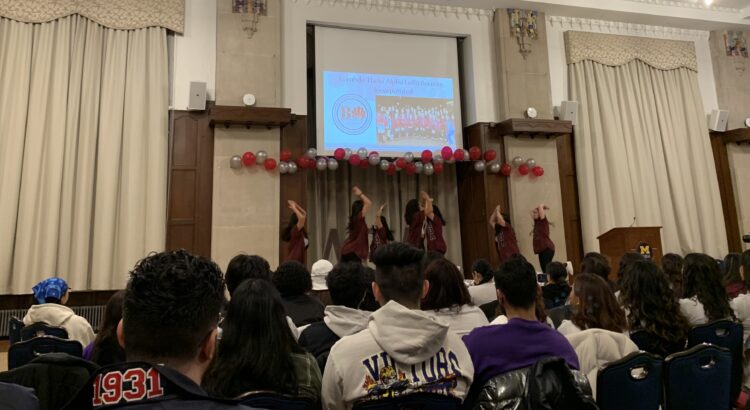
*The image above features Lambda Theta Alpha Latin Sorority, Incorporated; sorry I didn’t have a good seat to take a picture from :,)*

I saw many familiar organizations from the Yardshow last semester at the Multicultural Greek Exhibition (MGX) on Saturday. Since this event was in a smaller and more private venue, I think I got to know more about the community; one art form I really appreciated seeing again is called a ‘salute’. It’s a tradition unique to many Latino-Greek organizations and is performed in a line formation. They described it as being different from a step or stroll, which are more dance-like, and compared it to a form of poetry expressed through both recitation and movement honoring past accomplishments and cultural history.

Saluting can be startling when seeing it for the first time due to its intense nature, and I hadn’t heard of it before last Saturday; when I first saw it at the Yardshow I didn’t even know that some of the performances I was watching were called a salute. I’m sure many others haven’t heard or seen a salute before either because of how integrated it is in Greek (specifically Latino-Greek) culture and there aren’t many opportunities to see them. I highly recommend it though, because it’s truly a special experience.

It’s impossible for me to capture the salutes I saw only in words, but in my best attempt to describe it the members were SO powerful with their facial expressions, had amazing coordination, showed unbreakable unity, and expressed passionate language. You truly see a whole other side to someone who is performing a salute. Their hard work is so impressive.

I did enjoy the other groups too! I’ve only been attending more serious dance-focused events recently, as in the performers and centered around dance performance, and coming to this event reminded me of how much fun it is for the audience AND the performers when they’re not even ‘dancers’.

While I don’t want to compare, I did prefer the Yardshow more, largely due to the location. Since it was indoors and in a smaller room, there wasn’t much awareness or accessibility to the general public that the event was happening. This meant that the amount and kind of audience were limited and the view I had of the stage wasn’t very good.

Still, it was a fun time and I’m glad I went! Shoutout to all the organizations that performed, especially Lambda Theta Alpha Latin Sorority, Incorporated for organizing it and doing such a good job hosting.