REVIEW: JESUS REVOLUTION

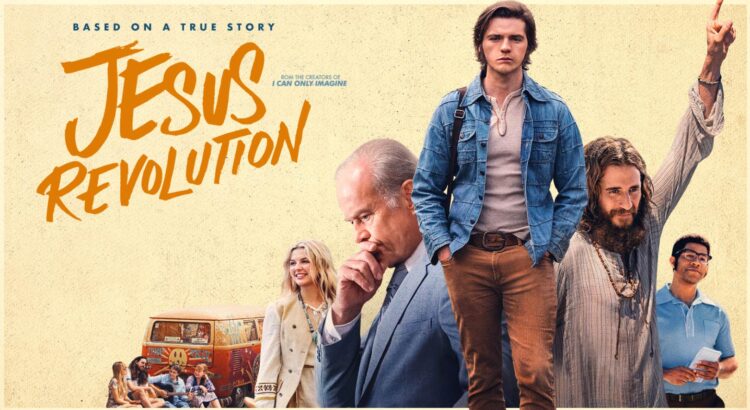
The Jesus Revolution film is based on one of the greatest religious awakenings in American history. It began in California during the 1960’s and quickly spread across the globe, embracing the counter culture of the youth at the time and combining it with the message of Christianity. I was familiar with the rise of Hippie culture and their advocation for nonviolence; the call  for “making love, not war”, but I had no idea that the movement had married itself into Christianity.

Obviously, this film is centered around the message of Christianity, however, it doesn’t shy away of representing the Christian faith in its many forms; some more ugly that others. This was an aspect of the film that I greatly appreciated.  Religion is a complex, faceted entity, where one individuals wrong may be another’s right and this film portrayed this very well.

Jesus Revolution follows a young man by the name of Greg Laurie on a journey through his youth. It explores the ups and downs of adolescence as Greg tries to find “truth”, in other words, what’s real, what will stay, and where he can find belonging. He ends up finding this belonging in Calvary Church, though he soon realizes that this new found home is far from perfect.

Throughout the film there is a reoccurring presence of a character by the name of Josiah; a New York Times journalist who chronicles the Jesus Revolution  as it spreads throughout California and beyond. In reality, there was an article published in the New York Times. I was curious as to what the article spoke about in regards to the movement and have copied a section of the article down below as well as the hyperlink to the full reading for anyone who’s curious. I found it to be a very energetic and entertaining read.

I’d recommend  Jesus Revolution to anyone who is curious about the merge of Hippie culture and Christianity, or anyone who’s curious about religion in general.


“The Jesus revolution rejects not only the material values of conventional America but the prevailing wisdom of American theology. Success often means an impersonal and despiritualized life that increasingly finds release in sexploration, status, alcohol and conspicuous consumption. Christianity — or at least the brand of it preached in prestige seminaries, pulpits and church offices over recent decades — has emphasized an immanent God of nature and social movement, not the new movement’s transcendental, personal God who comes to earth in the person of Jesus, in the lives of individuals, in miracles (see box, page 60). The Jesus revolution, in short, is one that denies the virtues of the Secular City and heaps scorn on the message that God was ever dead.”

https://content.time.com/time/subscriber/article/0,33009,905202-1,00.html

 

REVIEW: Ann Arbor Symphony Orchestra – Dvorak Symphony No. 7

Despite having performed at the Michigan Theater several times as part of the Michigan Pops Orchestra, last Saturday was the first time I experienced the stage as an audience member. It is truly a gem on campus–the shining gilded walls, rich carpets, and warm lighting never fail to transport you to a different world. Plus, where else can you hop over to your nearby movie theater to see your local symphony orchestra play live?

On Saturday, March 18th, I had the pleasure of hearing the Ann Arbor Symphony Orchestra perform with violinist and International Tchaikovsky Competition medalist Kyung Sun Lee. Initially drawn in by the promise of Prokofiev’s Violin Concerto No. 2, I was also awarded lovely performances of Dvorak’s Symphony No. 7 and Debussy’s “Prelude to the Afternoon of a Faun”.

The concert opened with “Prelude to the Afternoon of a Faun”, featuring a solo meandering flute that is later joined by mellow horns and shimmery harp runs. Strings provide a soft, dreamy foundation for the woodwind melody to unwind and give the impression of a rolling, natural landscape. The ensemble did a wonderful job of melding sounds together into a cohesive form despite the fluid nature of the piece.

Following Debussy was the highly anticipated Prokofiev Violin Concerto No. 2, performed by Kyung Sun Lee. Lee’s sound was distinctly dark and rich, even through bright double stops and etude-like passages at the beginning of the concerto. The concert program mentioned that she plays a Guanerius violin, which was interesting to evaluate the sound quality live. I could go on and on about why I love this concerto, but here I will specifically highlight the second movement. The delicate violin solo is extremely exposed, both in terms of being octaves above the orchestra bed of lilting triplets and by having a different rhythmic feeling. Lee’s interpretation was a touch faster than what I was used to, but beautiful nonetheless. Because of the awkward rhythmic timing involved, entrances and exits are extremely difficult to place–I felt like the orchestra could have spent a little more time nailing these down with the soloist.

Concluding the concert was Dvorak’s Symphony No. 7. Juicy, triumphant, and distinctly Czech, this work was a pleasure to behold. Even as a somewhat regular classical concert-goer, I have difficulty digesting entire symphonies. However, the parts that definitely grabbed my attention were the second (Poco Adagio) and fourth (Finale Allegro) movements. The Poco Adagio features a rich string melody that gets passed off to the warm brass, while the Finale Allegro is a dark and explosive conclusion to the work.

Overall, I had a wonderful time listening to the Ann Arbor Symphony Orchestra. Looking forward, I hope to keep an eye out for the rest of the season to catch any interesting performances coming up!

REVIEW: A Chorus Line

8:00pm • Friday, March 17, 2023 • Power Center

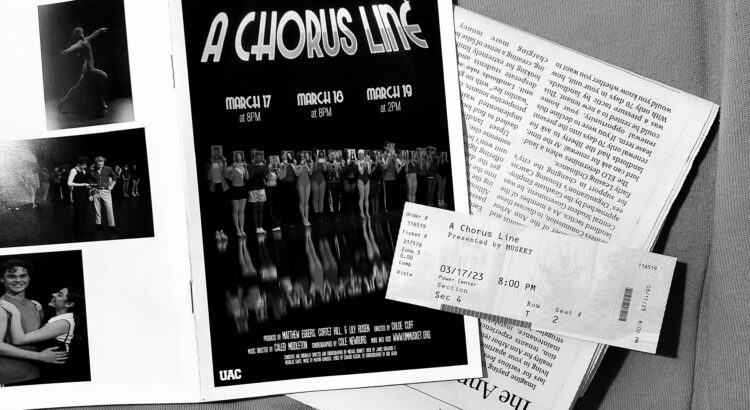
MUSKET’s A Chorus Line blew me away! I can’t imagine a more perfect first time seeing the show. In particular I need to shout out Mariangeli Collado (Diana) and Catie Leonard (Cassie) for their incredible solos, “Nothing” and “The Music and the Mirror.” Collado’s voice is spectacular, and I hope I’ll get the chance to see her in a couple more performances while she’s studying here. As for Leonard, I couldn’t imagine how exhausting the intense combination of dance and song in “The Music and the Mirror” must be, but she appeared to leap and twirl effortlessly across the stage, gracefully transitioning between movement and music. I’d also like to shout out Nicholas Alexander Wilkinson II (Richie) for his ridiculously impressive dancing abilities, practically flying off the stage throughout the performance.

I’m not always great at reviewing dance performances because I’ve never been a dancer. I explain it to friends as trying to analyze an essay in a language I don’t understand. However, even to my untrained eyes, I could appreciate the precise synchronization of this cast. The actors seemed to move as one unit (like a chorus line, I suppose), a cohesive entity even in the scenes where each character was wrapped up in their own story. In the beginning scenes, I thought about how messing up a dance in exactly the right way must almost take more skill than executing it perfectly, because you need to know what you’re “supposed” to be doing as well as how to screw it up properly.

I saw MUSKET’s Fall 2022 production of Little Shop of Horrors, which was a lot of fun, but I appreciated how A Chorus Line played to a different set of strengths. This production was sleeker, perhaps because its set and costuming were more minimal. Whereas LSoH played up MUSKET’s set design and drew on the group’s wacky side, A Chorus Line was subtle, highlighting the student organization’s ability to execute a highly technical production. The quality of the performance was indistinguishable from any UMS or SMTD event I’ve seen yet, and surpassed quite a few. Walking home from the show, I was just struck again by the luck of being a nobody sociology student at the number-one school for musical theater in the country.

If you have the chance to see the final performance of A Chorus Line tomorrow (Sunday, March 3) at 2:00pm, I urge you to do so! It’s only $7 for students, and when else are you going to have the opportunity to see a show like this for $7? I mean, really. MUSKET deserves all of our standing ovations for this one, and I can’t wait to see what they create next year.

PREVIEW: A Chorus Line

What: a classic musical that doesn’t need much introduction, produced by MUSKET

When: 

  • March 17, 2023 8:00PM
  • March 18, 2023 8:00PM
  • March 19, 2023 2:00PM

Where: Power Center

Tickets: $7 for students, $13 regular

A Chorus Line is a bucket list musical, and since I have seen MUSKET’s excellent work first-hand, I have high expectations for this performance. For those who are unfamiliar, A Chorus Line was originally produced in 1975, and features seventeen Broadway dancers auditioning for spots on a chorus line, while exploring the personal histories and motivations of each dancer. The musical has won 9 Tony awards and a Pulitzer Prize, and remains the 7th longest-running Broadway show ever. If you have a free evening this weekend, I highly encourage you to take advantage of this affordable, accessible opportunity to see one of the greatest Broadway musicals of all time, performed by one of our strongest student production organizations.

For me, A Chorus Line at the University of Michigan also marks the beginning of the student production season! I realize that there have probably been plays going on all semester I didn’t know about, but I look forward to the final shows of organizations like MUSKET, Rude Mechanicals, and In the Round at the end of the semester. I encourage folks to take a look at other musicals and plays coming up in the final few weeks of school. It’s such an easy way to enjoy art and relax amidst the stress!

PREVIEW: Ann Arbor Symphony Orchestra – Dvorak Symphony No. 7

This Saturday, March 18th, grab a seat at The Michigan Theater to hear A²SO’s take on Dvorak’s highly acclaimed Symphony No. 7 and Debussy’s charming “Prelude to the Afternoon of a Faun”. Additionally, violinist and International Tchaikovsky Competition medalist Kyung Sun Lee will be joining the orchestra to perform Prokofiev’s Violin Concerto No. 2. 

To be honest, nothing makes me feel more old than being able to look at a concert program and have a strong reaction to what pieces are included. However, when I saw Dvorak, Debussy, and Prokofiev all together on the Ann Arbor Symphony Orchestra’s next program, I got very excited. It seemed *just my cup of tea*–as the concert-going grannies might say. 

I expect this particular combination of pieces to create a really lovely soundscape–Dvorak’s dreamy Czech melodies along with Debussy’s distinct impressionist sound will provide the perfect stress-relieving break in the midst of exams. On top of that, Prokofiev’s Violin Concerto No. 2 is among my favorite pieces of all time. While on the more conservative, melodically-rich side of Prokofiev’s work, the concerto is a patchwork of heartwrenching melodies and darker, turbulent passages.

Ticket information: https://a2so.com/event-directory/dvorak-7/?utm_source=sendinblue&utm_campaign=Bookers%20%20Dvorak%207%20%20Symphony%20Snaps&utm_medium=email


REVIEW: 65

Jurassic Park, look out! You’ve got some competition with this new dinosaur sci-fi thriller!

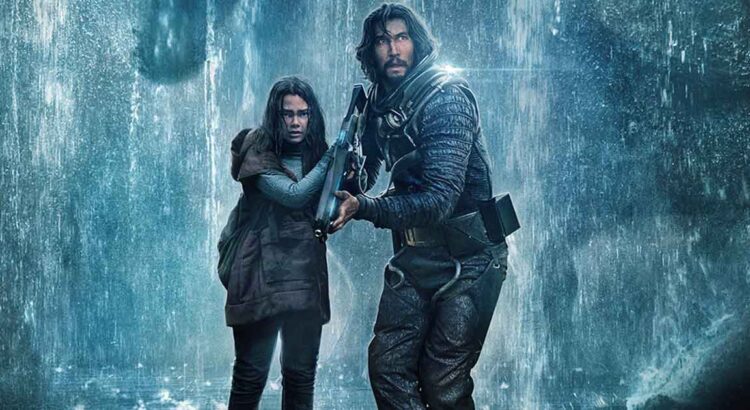
All joking aside, I was very impressed with this film. I felt that the premise was very clever in that the directors were introducing us to a world that we are all very familiar and not familiar with at the same time; our planet Earth, 65 million years ago. The main character of this film, Mills (played by Adam Driver), is a humanoid pilot whose ship is shot down by an uncharted asteroid field, which ultimately becomes the main villain of this story as  Mills unfortunately crashed on earth a few days before the dinosaurs met their doom in a blaze of fire, ash, and darkness.

What’s great about this film is not just the character development between Mills and Koa (a young passenger on board his ship played by Ariana Greenblatt), the CGI, or the story line. All of these elements were fantastic, but the real star was the music score of this film. With Chris Bacon at the helm as well as Danny Elfman and Gad Emile Zeitune, this score brought forth all the must haves of a good thriller. Now, I have to admit, it’s not that hard to scare me. I jump quite easily and I’ve only watched one horror film in my life. 65 is NOT a horror film, it’s a sci-fi thriller, and yet I must have been jump scared at least fifteen times during the movie. I’ve never been so exhausted from going to the theater. The way that the music score was constructed was just masterful at building up anticipation and then releasing it at the most unexpected times. I’ve noticed that thrillers sometimes have a tendency to rely on the music score too much, so much so that the tremoring of an orchestra is all you can focus on during a scene as you watch a character breath heavily and wide-eyed for what seems like eternity until the scare finally happens. 65 is not one of those films. The music is a valuable aid, but not the main focal point. The characters, scenery, and music work in harmony to create these suspenseful moments. You aren’t waiting for a scare, the scare takes you by surprise.

65 is a very well done film and I’d recommend it to anyone who’s a fan of dinosaurs, wholesome father-daughter relationships, or a good old jump scare!