On January 21st, Michigan Theater offers a very special and spine-chilling event: a one-time late-night screening of The Shining. When it comes to psychological thrillers, no film will have your heart racing like this cult classic.
Loosely based on a real setting, the 1980 film follows a family that moves into the snowy mountains to act as caretakers for a seasonally empty hotel. Without much to keep them busy, the family encounters an array of sinister forces, falling victim to the darkness of the hotel’s history; from psychic powers to hallucinations to isolation-induced insanity, the horrors accumulate as the winter progresses.
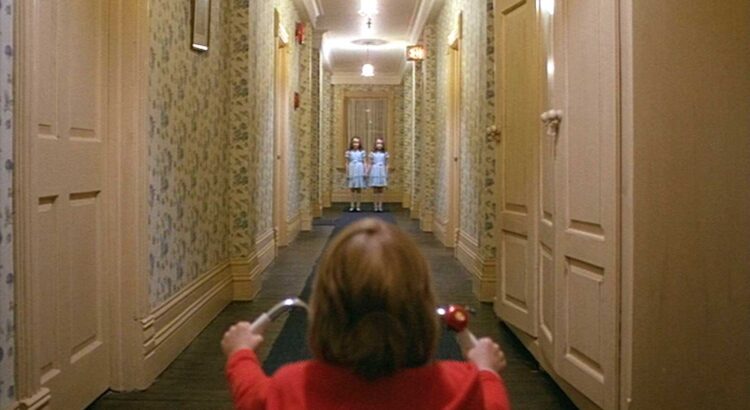
The film has gained a large following since its release, bits and pieces of it permeating pop culture. From the quote “Here’s Johnny!” to the image of two ghostly-looking girls standing in an empty hallway, each moment of The Shining offers a memorable piece of artistry that stands the test of time. Everything is intentional; after watching this film a handful of times, I still notice delicately placed details with each watch— and the electrifying acting (or was it even acting?) of Shelley Duvall and Jack Nicholson will never fail to keep me on the edge of my seat.
Experiencing a cult classic and visual masterpiece on the big screen is a rare opportunity that can’t be passed up. The lavish interior of Michigan Theater slightly parallels the elegant atmosphere of the film’s infamous hotel, adding another dimension to the immersive experience. If you enjoy horror, snowy days, big hotels, and human villains who convey demonic evil, you’ll love seeing The Shining at Michigan Theater. Grab a couple of friends and spend your Friday night celebrating an old gem.
Tucked away in a corner of Hatcher North’s first floor is the Audubon room, named for the extremely rare volume of naturalist James Audubon’s “Birds of America” paintings that it houses. From now until March 24, it also houses the Prisons and Politics in America exhibition curated by Julie Herrada.
“Prisons and Politics in America: An Exhibit of Art, Poetry, Letters and Prison Resistance from 1890 to Today,” examines the political reasons for why people are imprisoned: for speaking out, for writing, for violating repressive laws, framed because of their color or politics, for stealing from the rich, for refusing the military draft, for whistleblowing, for attempting to overthrow the government, for standing up for a belief, or for walking over a forbidden line.
The items focus on maintaining one’s humanity behind bars, promoting political causes, and offering solidarity in support of prisoners.
The exhibit was pretty small, with a total of 39 items, but I thought it was a fitting size. The items on display were well-chosen and represented a variety of time periods, activist movements, and prison injustices. I learned a great deal by walking around and slowly taking each artifact in, reading the thoughtfully-written blurb about each.
“San Quentin Days: Poems of a Prison” by Anonymous
There were all sorts of artifacts: from protest pinback buttons to FBI Wanted posters to comics to a recipe for DIY prison ice cream. The most moving parts of the exhibit for me were the sections displaying prison writing: poetry, letters, memoirs, books. Writing is one of the most powerful tools of expression that a prisoner has, and also is one of the only ways they have to connect to the outside world. Some of the items in the collection were extremely rare and among only a few surviving copies around the world. Writing is hard enough in a comfortable space – can you imagine how difficult it must be to write from prison?
I had forgotten how far back the history of protest and activism goes. Every time a new movement starts , to me it can feel like a whole new isolated effort, which is a huge sign of my privilege. There are many who are not given the chance to forget the history to which movements are attached to because those issues affect them every single day. Rarely is there an injustice so new that there were no ancestors who had to fight it in their time too.
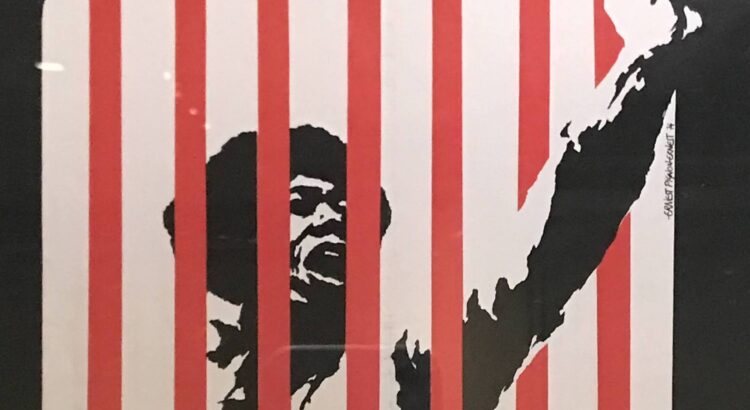
Free John Now! Poster, 1971
The exhibit sparked some thoughts for me on how activism has changed over the past century and how it has stayed the same. The language in some of the items in the exhibit was very similar to the language I see in protest posters printed today. Strong language, fueled by a sense of justice. Images of chains and bondage and upright fists underneath calls to action like “FREE [X]” and “STOP [Y].”
Attica. Poster, [197?]The greatest difference I see is because of something that modern-day activists have that the past did not: digital technology. I am amazed at the materials people used in the past — postcards, buttons, flyers — that had to be distributed by hand and on foot. Imagine if the leaders of the 1919 labor strikes in Detroit had access to a computer at the library where they could open up a Microsoft Publisher document, put together a graphic and slap it on Facebook or Instagram for free. It has been said often in the Information Age, but I’ll say it again: our modern-day ability to disseminate information so quickly and widely is borderline magic.
Free Gary Tyler Poster, [197?]I will say that I would have arranged the exhibit a little differently. The arrangement of artifacts seemed to maximize how much I had to walk. I also would have also liked it if items that were part of the same “movement” or at least from the same time period in history were placed close together to make the exhibit feel more cohesive. The decision to put this exhibit in the Audubon room strikes me as a bit strange, given that James Audubon was known to oppose the abolition of slavery and argued that black and indigenous people were inferior. Many of the incarcerated people mentioned in this exhibit were of black or indigenous origin and were jailed by blatantly racist judicial systems on little to no evidence, a term labeled “legal lynching”. A small acknowledgement of the fact that their stories are right now sharing the same space with the legacy of a proslavery individual would have been thoughtful.
If you’re ever studying in Hatcher, I highly recommend slipping away for a bit to check out this exhibit in the Audubon Room on the first floor. It is well worth the visit and I guarantee you’ll learn something new!
Cowboy Bebop: The Movie follows the crew of bounty hunters aboard the Bebop as they chase after a biological terrorist who intends to wipe out the human population of Mars with an unknown pathogen. The film takes place between episodes 22 and 23 of the original anime series, and was released three years after the original series’ conclusion.
I have never seen the original Cowboy Bebop series, but I still very much enjoyed the film and felt like I was keeping up with the story, characters, and world. The film throws you right into the world without much exposition, but I prefer that a film won’t drag out an introduction. There were some moments where I was unsure if I was missing some context or if I was just a little confused about the storyline, but nothing was too big of an obstacle in my overall comprehension of the film. The film does not rely heavily on the lore of the original series, which allows new audiences to enjoy the film alongside long-time fans.
I was most impressed by the film’s soundtrack, art, and action. Yoko Kanno, the original series’ composer, returned to score the film and perform the soundtrack with her band. The soundtrack elevated the atmosphere of the film, whether it was upbeat rock instrumentals in action sequences or subtle, more moody music as the crew chases after the bounty.
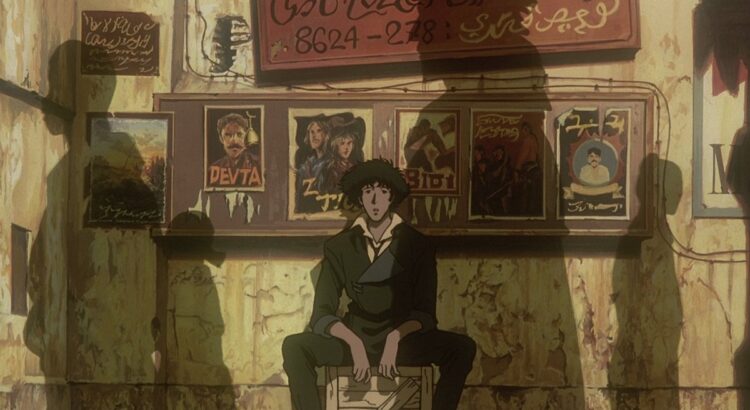
As for the art, I thought the backgrounds were particularly worth noting – they were all incredibly detailed and drawn from interesting perspectives and angles. I liked the use of bold but less-saturated, almost matte colors. I also really enjoyed the character designs, specifically for Spike and Ed. I found Spike’s ridiculous height to be amusing, especially in the montages of him walking through crowds. I think his design is very clever, with his long and lanky stature contrasted with his suave and easy going demeanor. On the other hand, I loved Ed’s ridiculous way of moving around – the way she flails her limbs and entire body around while moving can be likened to a wet noodle. I loved how the animation showcased both that Ed is a child and a genius – for example, there is a scene where she is hacking into a database to retrieve crucial information for Spike as sea creatures swim across the screen and attack the windows that pop up.
The action sequences are perhaps the most impressive, not only because of the accompanying score but of the moves the characters use in their fighting styles. None of it is overly gorey, but there is just enough gore that you recognize how brutal the fights are. I’ve found that in recent action or superhero films, there is a lot of mindless fighting and shooting at faceless and nameless CGI antagonists, but the action in Cowboy Bebop feels more believable – you can better understand what it would be like for Spike to slam your face into a handrail than if he was shooting at you while flying through the sky on alien spacecraft.
Though Cowboy Bebop isn’t the genre I typically gravitate towards, I had a very enjoyable time watching it. I am interested in exploring the series, but for the time being I thought the film did an excellent job of introducing me to the world of the series.
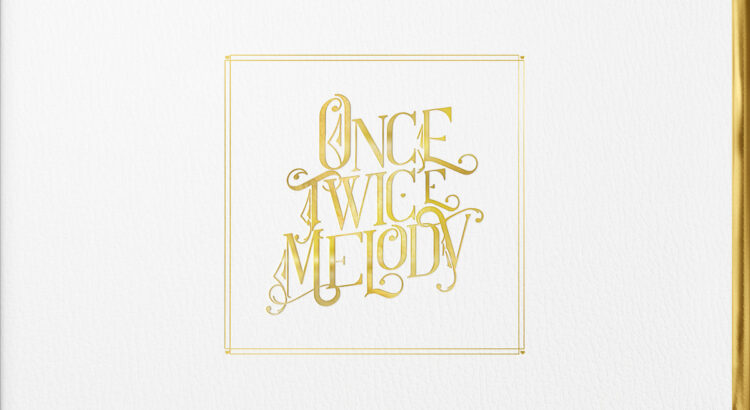
The music of the American duo Beach House is a vessel for dramatic and cinematic feelings; anything but simple, the deeply layered synthesizers and breathy vocals of the band create a soundscape so dreamlike and meditative that listening nearly becomes an out-of-body experience. Often labeled as “dream pop”, a genre combining pop melodies with dense effects and experimentation reminiscent of 90s shoegaze, Beach House’s distinct psychedelic sound has achieved incredible commercial success. The enchanting melancholia of “Space Song” earned the track 300 million streams on Spotify. In 2022, they return to the world of music with a highly anticipated eighth studio album, Once Twice Melody.
The album is divided into four chapters–– or discs–– which are released periodically. The second chapter was released on December 8th, and the upcoming two chapters are set to be released by February. Judging by the half of the album that is already available, containing stellar tracks such as the surreal title track “Once Twice Melody”, the album is set to be one of Beach House’s best–– both conceptually and production-wise. The introduction of each track is reminiscent of a film score set in space; layered strings and experimental glimmering sounds evoke an atmosphere rich in color, existentialism, and a deep longing for the past. The vague and breathy lyrics, when decipherable, suggest deep retrospection and romantic tragedy. The lyrics of “Pink Funeral” on Disc 1 mirror the poetic artistry of the sound itself:
“Once was a fairy tale
Then it all went to hell
Swans on a starry lake
Hearts that were made to break
Tears through a white lace veil”
From the relatability of lost love in “Runaway” to the inevitable end of whirlwind fling in “New Romance”, Beach House balances their experimental sound with accessible themes and messages. Their most powerful messages, however, are found less in the lyrics than in the outros and instrumentals; marked by the slow build of reverberating sparkling melodies and fuzzy echoes, the sound of Beach House only seems fitting for observing the uncompromising mysteries of space and embracing the beauty of the unknown. The theme of love paired with the dark magical ambiance creates a stark contrast; while singing about the fallibility of humanity, the music explores a celestial landscape that transcends human matters.
Whether pondering the paradoxes of existence or lingering on a failed love story, Beach House’s ethereal release Once Twice Melody has a track to accompany your introspection. The excitement has just begun–– fans of the first two discs can eagerly await the second half of the album, offering a slower process of enjoying the art form. The first two discs of the EP are currently available on Spotify, Apple Music, and other streaming platforms.
Just one day after the planned release of the last disc, Beach House comes to Detroit to perform at the Royal Oak Theatre. Get tickets while you can to enjoy the music in person on February 19th–– or, if Once Twice Melody speaks to you, consider exploring the rest of Beach House’s discography.
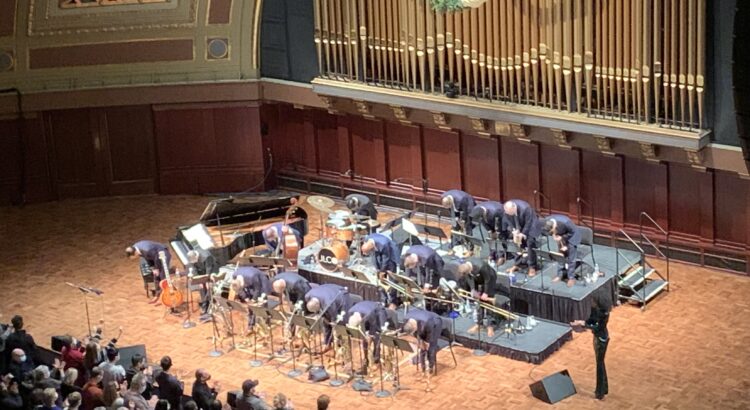
Coming back from Thanksgiving break to a snowy campus was made all the better with a performance by Wynton Marsalis and the Jazz at Lincoln Center Orchestra. The audience’s excitement and energy was palpable as they waited for the talented musicians to begin. Marsalis and the JLCO warmed up with some Christmas classics like “Here Comes Santa Claus” and “Jingle Bells”. The big band interpretation of these holiday classics was fantastic and really got the audience into the holiday spirit. Marsalis made for a charming host, as he shared anecdotes he’s collected over the years as he introduced each song on the set list. With each song, various members of the Jazz at Lincoln Center Orchestra were able to play solos with dazzling skill, only to be met by a very enthusiastic audience.
The band was also accompanied by Alita Moses, jazz vocalist, for a few songs. Her incredible voice played in perfectly as the band played “Mary Had a Baby”, a more spiritual song. Moses was a wonderful addition to the night, and her stunning voice remained a highlight of the entire performance. The night ended with thunderous applause as the band played “Go Tell it on the Mountain” with high energy.
One of the reasons why the performance was so memorable was in fact the crowd at Hill Auditorium that night. For many, this was the first time attending an in-person concert since the beginning of COVID, and the festive music was reflected in the tone of the crowd. It was amazing to see a jazz legend perform on my college campus, and I was all the more ready to celebrate the holidays afterwards!
While watching this show I kept thinking of what words to use to describe how awesome this is.
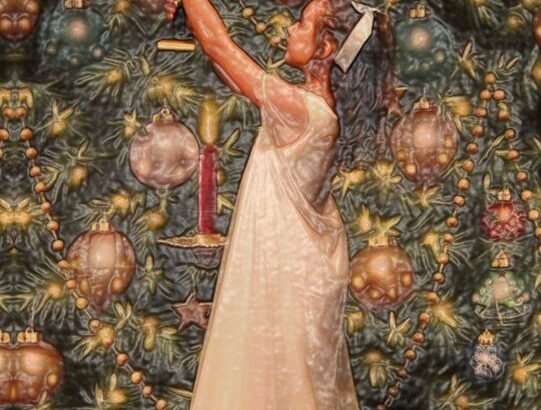
The Short and Suite Nutcracker by the Randazzo Dance company was a dance show featuring different dance styles. It had ballet, jazz, tap dancing, and more. For the tap-dancing, and some jazz performances there was live music which added a cherry on top. The kaleidoscope of genres kept the show refreshing and fun. I am not exaggerating when I say there were no dull moments.
All the dancers performed extremely well. There were dancers as young as, I might say, 5 years old to the oldest being seniors in high school. It was such a joy and privilege to watch all these young performers. It was wonderful to see them flaunt their skills and months of hard work. Despite the sheer number of performers, dance genres, set changes, etc. the show went smoothly. Thereby showing how well organized it was and how much practice the performers had done.
No part of this show was left unpolished. The costumes were simply gorgeous. They had been designed to really shine on stage and make every child look like a professional. The choice of music was tasteful and never boring. The lighting was well done as well as all the fun props and backgrounds.
In the second half of the show, the dances became more festive. There was a plot following the dances and it was a lot of fun. The dancers performed acrobatics, played with giant soft toys, did costume changes, and much more. It was a lively time. Their holiday energy was infectious and the pacing of the dances made the ending really extravagant and over the top in the best way possible.
I am glad I got to see all these extremely talented performers. No praises are enough for them. I know I will be on the lookout for any showcases from the Randazzo dance company!