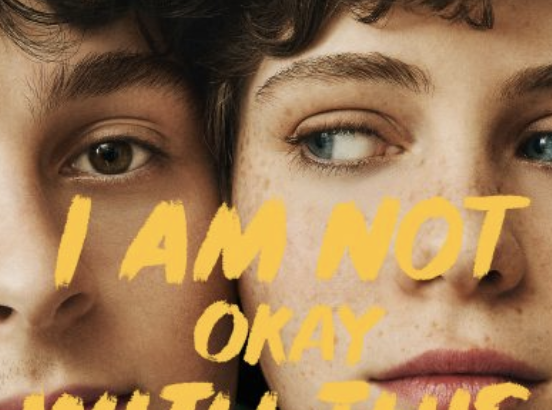
REVIEW: I Am Not Okay With This

Despite a general acceptance of non-heterosexuality in modern media and society, queer characters are often placed in plots that are only focused on their ~journey of self-discovery~ or in supporting roles that stereotype and tokenize them. So often, they are reduced to their sexuality, communicating to the audience that this is the only part of their identity worth mentioning. Surely, it’s important to feature queer characters in media, but every story can’t only be about their struggles with unaccepting parents/religion/schoolmates/colleagues/whatever. We normalize queerness by incorporating it in media in a wide variety of ways. 

So I was overjoyed to find that this series has a queer star who spends some time recognizing her sexuality, but is primarily preoccupied with a full storyline about her new mind powers and their possible connection to her late father.

Based on Charles Forsman’s comic of the same name, the series honors the original work, often taking sections of text into the script verbatim. I’d say that the writers could have taken some more liberty with dialogue, which could be lacking in originality sometimes. The media move from comic to television necessitates this; while comics with a minimalist art style depend on fast-paced conversation between characters to drive the story, live action dialogue is generally less important. Makers of television are freer to insert some more artistry in angles, lighting, wardrobe, delivery and content of lines. 

A lot of talented people worked on the series: people responsible for Stranger Things and The End of the F***ing World, actors who starred in the updated version of IT. But if I know anything about logical principles, I know that past performance is not indicative of future results. I Am Not Okay With This is an unfortunate piece of evidence for that rule.

Along with the lacking dialogue, there were too many illusions to late 20th century pop culture, like The Breakfast Club-esque episode and the constant Carrie references. While I understand the the entire plot is literally another reboot of that classic Stephen King story, they could have strayed a little farther, style-wise. The spring fling dress is even similar to the one Sissy Spacek wears in the original movie, pale pink satin with spaghetti straps. She does the whole walking home from the dance in the middle of the road covered in blood thing, and she doesn’t add to it. If you’re going to pull so directly from classic works, you need to do something that differentiates it from the original, pushing it farther, bringing into modern times so it can be understood within current social politics.

It’s sad when the arc of creativity starts to decline for previously awed artists. This feels like the desperate reaction to writer’s block that should’ve been given some more time to simmer. Still, most folks are wont to continuously seek out media that gives them the same kind of satisfaction as they’ve experienced in the past. So, at this psychological level, the series does a great job. Though that feels like some kind of exploitation, it fills a demand. I’m not sure I’d call it art, though.
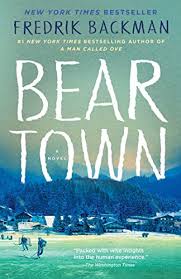
 

REVIEW: Beartown

Content warning: The book discussed centers around an instance of rape.

There are books that you read, then forget. And there are books that stay with you.

Beartown is one of the latter. This beautifully written book follows several residents of a hockey-crazed Swedish small town. It’s the kind of town that’s been ravaged by big businesses swooping into nearby towns. “You can’t live in this town,” they say. “You can only survive it.”

The town’s only source of pride is its hockey teams, which have faded in relevance over the years — except this year, when the junior team is good enough to make the semifinals thanks to a team built around a star player, Kevin, and a supporting cast that complements him well. But then Kevin rapes the GM’s daughter after the semifinal, and everyone in town is affected.

Beartown’s catalytic event doesn’t happen until nearly halfway through the 400-page book. This made it a bit hard to get into at first — but it was well worth it at the end, when the painstaking development of all the book’s main characters made it nearly impossible to put the book down. Every character is nuanced, and author Fredrik Backman wrote them in such a way that nearly every action is understandable, even if clearly not justified.

Backman’s writing is lyrical and full of ruminations on the meaning of hockey, family, life and loyalty. The natural flow of the writing is even more impressive considering the book is a translation from its original Swedish. Beartown also distinguishes itself from most sports books in that Backman clearly knows and loves hockey. The descriptions of the games read like they were written by a sports writer, and Backman also clearly understands the meaning of sports — and the way they can both bring people together and tear them apart.

Some books that deal with sexual misconduct come off as preachy; others are too dismissive. Beartown was neither. Backman handled the subject with empathy for the victim while also exploring the actions of those around her, both good and bad, and the forces pushing them to act certain ways. Hockey is the backdrop to all of this; in a place where the hockey team is one of the few sources of hope in Beartown and the junior team’s coaches have always stressed that the team comes before all else. That makes the fallout particularly devastating. In a town where hockey is everything, its citizens are forced to grapple with the dark side of both the game and human nature itself.

I love sports. But I’ve also seen the ways the same culture that makes them so appealing can also turn toxic, the way sports are sometimes used as an excuse to enable the horrific. In that way, Beartown was both timely and realistic. The events of Beartown are fictional, but they feel like they could happen — have happened — in so many different places.

The ending of Beartown was unpredictable and affecting. (I’ll admit I cried.) Few things in the book are as simple as they seem, and that extends to the ending. Beartown is dark, but it is ultimately hopeful. It was a poetic and poignant read that I wanted to keep reading after it was over. I know I won’t stop thinking about it anytime soon.

REVIEW: The Spell Book for New Witches: Essential Spells to Change Your Life

I should preface this review with the universal acknowledgement that just like the weird side of YouTube that many quarantined individuals may find themselves stumbling into, there exists an equally bizarre side of Amazon – and this book hardly scratches its surface. While on a similar downwards trajectory across Amazon’s vast niche book collection, I came across a plethora of modern witchcraft guides, including Ambrosia Hawthorn’s The Spell Book for New Witches: Essential Spells to Change Your Life.

For someone with no prior witchcraft knowledge besides having happened across a handful of Vox witch documentaries, this book managed to clear up any confusing spellcasting terminology. A good quarter of the book is dedicated to understanding the art of spellcasting and educating the reader on spellcasting preparation, which rings true to its intended audience of ‘new witches’, or beginner practitioners. In Part I, Hawthorn clarifies commonly confused magic terminology, such as witchcraft versus Wicca, and even briefly delves into its ethical obligations, warning beginners of the Law of Threefold Return and knowing one’s place within cosmic law. Though I personally have no plans to sew poppets or charge clear quartz under the next full moon, I’m grateful for the author’s emphasis on exercising reason, caution, and stable-mindedness under all spellcasting circumstances.

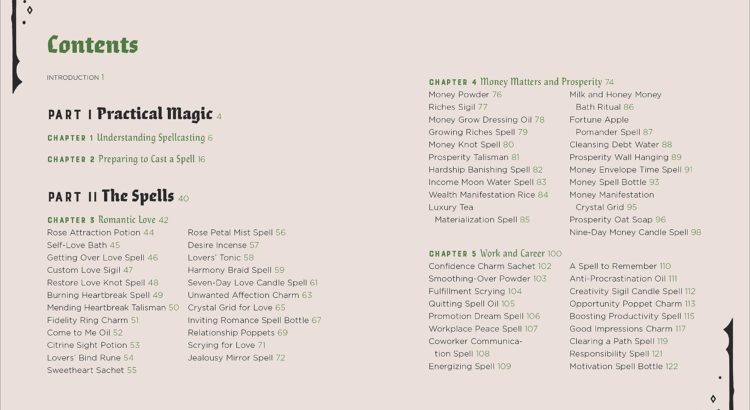
Hawthorn divvies Part II of the spell book, the spells and their recipes, into seven categories of use: ‘Romantic Love’, ‘Money Matters and Prosperity’, ‘Work and Career’, ‘Friends and Family’, ‘Health and Healing’, ‘Protection and Forgiveness’, and ‘Well-being, Success, and Abundance’. Though I expected witchcraft to require a number of obscure ingredients and esoteric performing instructions, Hawthorn’s spells stress the ‘practical’ in practical magic, with most spells requiring 10 or less ingredients and tools combined. While describing the core principles of witchcraft, which include celebrating your life and sexuality, Hawthorn explains that spellwork should be fueled mainly by “a respect for nature and the mystery of the universe”. She characterizes magic as existing all around us, therefore crystals and herbs should be drawn upon as secondary sources to harnessing our personal power and energies.

Hawthorn’s book promises a wide range of spells designed to suit your every need – whether that be finding a lost item, curing heartbreak, or designing a custom healing sigil. The performance rituals range from simply harnessing crystal energies to boiling herbs; many of the spells can double as quarantine-induced-boredom cures, as Hawthorn makes a point to include cookie recipes, soap, and other self-care spells. Some spells that might be particularly useful to unmotivated students such as myself include: ‘Money Manifestation Crystal Grid’, ‘Wealth Manifestation Rice’, ‘Acceptance Talisman Spell’, and ‘Anti-Procrastination Oil’.


PREVIEW: Tous Les Jours

Available to Stream on Amazon Prime is Nicholas Mullin’s masterpiece of a documentary, Tous Les Jours. This intimate portrait of Newfoundland artist Jean Claude Roy follows his daily activity as a landscape visionary. As he gathers his paints and sets off to seize each day, we are led into a beautiful landscape of color that is Jean Claude Roy’s world.

Receiving praise from various film festivals, this documentary will transport you into the life of a true artist.

REVIEW: Tiger King: Murder, Mayhem and Madness

If you are looking to watch something equal parts entertaining, crazy, and just plain ridiculous, well Tiger King is absolutely for you. This show had me saying “What the…” probably every 5 minutes, and it kept me absolutely hooked until the very end. I could not believe these were real people, and that these were real problems that they had while running some of the most exotic and crazy private zoos in the US.

As I am sure you must have watched this show already, (and if you haven’t, what are you waiting for?? Seriously!), you know that the story has a totally unexpected ending, which you may or may not agree with. But here are some fun facts that I learned as a result of this show going viral. First, they are re-opening the case of the disappearance of Carol Baskin’s first husband. Second, the creators of this show actually meant to trace the underground world of the snake trade, but just stumbled upon the man in the first scene who had a tiger in a cage in the back of his truck and decided to change their show’s trajectory. And third, which I think is the most crazy, is that the filmmakers were actually filming as the whole story unfolded, and were following the trials and sueings in live time, so they could not have predicted how the show was going to end either!

My favorite part about this mini-series was definitely all of the crazy characters. I could not believe how ridiculous some of them were, from the girl who continued to work at the zoo after her arm was bitten off by a tiger (and went back after only 5 days in the hospital!) to the man who willingly admitted, on camera, that he had been asked and had agreed to assassinate one of the zoo owners’ rivals. I could not believe some of the side stories and anecdotes they were telling with an absolutely straight face, and I was aghast at some of the goings-on at these zoos that was not good for the animals or the people working there. However it is amazing the kind of power that several of the zoo owners seemed to hold over their employees that just kept them working there even though it sounded like an absolute madhouse or sounded like there was no way it could be enjoyable.

Despite all of the human drama, the tigers were absolutely beautiful and majestic. I especially loved the shots of the little ones, who were so cute just scampering around and being played with by the people on screen. I was amazed at how calm some of the zoo workers were around these giant beasts which sometimes were much larger than their handlers. I also loved all of the other animals featured, including lions, elephants, apes, and monkeys.

While I would not recommend this show to anyone who is an absolute animal lover, because there is some very sad animal abuse, I would say this was one of the most intriguing shows I have watched in a while. And now that the show has been released, even more fantastic and wild information is being uncovered about the people who star in it and their lives now. So its like the tv show never ends, which is both a little scary and very exciting to follow!

PREVIEW: The Southern Book Club’s Guide to Slaying Vampires

This new book comes from Grady Hendrix, an author who knows how to write a good horror novel. The Southern Book Club’s Guide to Slaying Vampires is his new supernatural thriller that will be released on April 7th. As someone who loves breezy romance novels, and sometimes a good light-hearted mystery, I’m excited to experience the terrifying world Hendrix will create for the main character, Patricia: a Southern housewife who is part of a book club of fellow mothers dedicated to true-crime and suspense novels. When an attractive new man moves to town, children start disappearing and other weird things start happening. Naturally, Patricia launches into an investigation of her own, and could end up mixed up in the world of vampires.

This novel is described as “Fried Green Tomatoes and Steel Magnolias meet Dracula”. It’s available for pre-order on Amazon (hard-cover or Kindle edition), and will be on sale online at Barnes and Nobles, Bookshop, and Zeebra Books.