REVIEW: Cheer

Attending a high school that didn’t have its own sports teams, my concept of cheerleaders mostly came from what I saw on TV. White, pretty, mean. They cheered to make themselves popular or to date football players.

The recent Netflix miniseries “Cheer” flips all those stereotypes on their heads.

“Cheer” follows the real-life cheerleading team at Navarro College, a community college in rural Texas. The show’s arc juxtaposes two common sports movie tropes that aren’t normally seen together — the dominant juggernaut with a deep-seated desire to win and the scrappy, diverse underdogs who play above their means. The opening makes it clear that Navarro is a dominant force in the world of cheerleading and that their driven coach, Monica, will accept nothing less than another national title.

But these aren’t your typical teen sitcom cheerleaders. Many of Navarro’s cheerleaders are minorities or from low-income backgrounds. For some of them, cheerleading is literally all they have, and it’s that — the undeniably human stories of these athletes overcoming what life has thrown at them to come together and create something bigger than themselves — that makes the most compelling part of the show.

This show is not always pretty. Monica’s tactics occasionally border on abusive. There are a lot of injuries, and many of them are not handled properly. (It’s unclear if this is due to lack of adequate athletic medicine resources, negligence from coaches or both.) This is the dark underbelly of many sports, and “Cheer” presents it right alongside the feel-good narratives and lets you decide for yourself what you think. That was one of the more fascinating aspects of the show for me, especially as someone who is frequently around sports.

The show centers primarily on five protagonists — Lexi, Morgan, LaDarius, Jerry and Gabi — as they prepare for nationals with their team. All five are easy to root for. They all had different hopes and dreams and as the show reached its conclusion, I found myself cheering for them all to find success in their own ways. Throughout the documentary, you see a lot of footage from practice and information on how Navarro’s routine is coming, but you also get to hear the backstory of these five and see the impact that being part of the team has had in their lives.

I found out two episodes into “Cheer” that Navarro is one of only two teams in its division. Trinity Valley, the school it mentions as Navarro’s biggest rival, is in fact its only rival. The miniseries conceals this fact, but somehow it didn’t bother me as much as I thought it would. As the series went on, I found myself wondering more what would happen to each of the main team members rather than whether Navarro would win its championship. For that reason, I appreciated that “Cheer” doesn’t end with Navarro’s nationals performance. Instead, it goes on to show what happened to everyone after they walked off the stage — and not everything wraps up in a neat little bow.

“Cheer” is sports documentary meets sports movie, a David and Goliath story at the same time. Not everything is as glitzy and glamorous as the cheerleaders I saw on TV as a kid. And those things are what make the show so compelling.
REVIEW: Star Wars The Rise of Skywalker

A few days ago in a galaxy far far away, Disney released the 9th installment of the Star Wars sequel trilogy, The Rise of Skywalker, on Disney Plus. After receiving lots of backlash that stemmed from the questionable decisions Rian Johnson made while directing the 8th movie, Disney decided to bring JJ Abrams back in to see if he could salvage what was shaping up to be another failed spin-off series. I think he tried his best, but at the end of the day there was only so much he could do given what had already happened in the newest trilogy. The Rise of Skywalker continues to build on the “force dyad” connection that Kylo Ren and Rey share, including a few more discussions through the force as seen in the 8th movie (but without shirtless Adam Driver this time). This connection was one of the few parts of the 8th movie that was actually interesting in my opinion. As is expected in any JJ Abrams film, the movie also had some of the best action in the entire Star Wars series, featuring thrilling lightsaber battles, epic spacecraft fights, and force lightning. Abrams also did a great job of limiting the roles of annoying characters like Finn and Rose. At first I liked Finn, but after watching the 7th and 8th movies, I started to realize that his character only ever runs and yells. Once I realized that, anytime he did either or both of those things (which was a lot), I couldn’t help but cringe. Rose is an unnecessary character and I’m really not sure why Rian Johnson created her. While these aspects contributed positively to the movie and made it somewhat enjoyable, in my opinion, they were far outweighed by the negatives that accompanied them. While JJ did a good job of limiting Finn’s role, he still left him in enough scenes to have an annoying storyline. While falling through a pit of space quicksand (?) he tells Rey that he needs to tell her something important and then proceeds to never tell her even though they bring it up multiple times later on in the movie. After they fall through the quicksand, they happen to find a dagger with an inscription that tells them where to find the “Sith Wayfinder”. I really dislike the fact that they just luck into the exact information they are looking for. The 6th Star Wars starts with a well thought out plan that Luke and company execute to perfection to save Han. The use of planning as opposed to luck is one of the reasons that the original trilogy is better than all of the prequels and sequels, in my opinion. Another missed opportunity for an impactful moment came with Chewbacca’s fake death. I love Chewy as a character, but in this new sequel series, he is not important . However, because of his role in the earlier films, killing him off would have been a really powerful moment that I think would have been amazing. There were other choices that I didn’t like (such as Rey being a Palpatine, the kiss with Kylo, etc.), but they weren’t as offensive as the ones I discussed above. Overall, I felt like this movie wasn’t as bad as The Last Jedi, but was worse than The Force Awakens. In the grand scheme of Star Wars, I would rank it below the entire original trilogy, the 7th movie, and the 3rd prequel. Hopefully, when Disney tries its next spin off from this universe, a fresh set of characters will inspire them to create some better content.

REVIEW: The Last Black Man in San Francisco

Available through Amazon Prime Video, I recommend, for the audience’s consideration, Joe Talbot’s directorial masterpiece, The Last Black Man in San Francisco. This gem of a picture places itself in definitive rank with some of the greater films in Studio A24’s arsenal, with a portrayal of hope like that of The Disaster Artist, a restrained desperation to live well like While We’re Young, an awe-filled richness of color palette like that of The Florida Project, and the pain of family brokenness in a fashion similar to Mid90s. The trailer alone accurately represents the craftsmanship poured into this project, with cinematographically-sharp imagery, a speechless array of colors, and a somber yet familiar loyalty to the legacy of San Francisco.

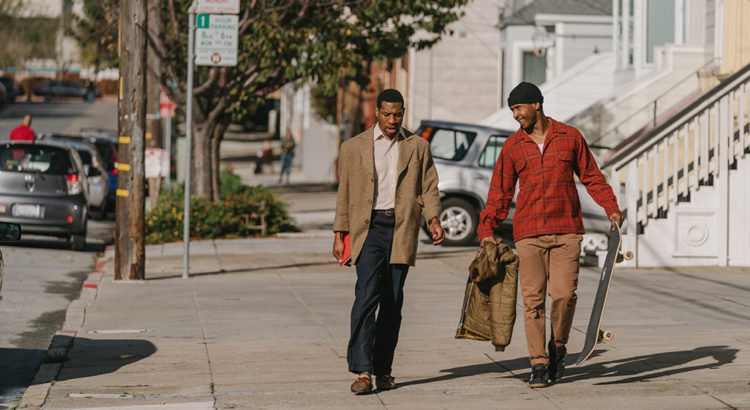
This film centers around two friends, Jimmie and Montgomery, in the wake of this city’s gentrification. Montgomery is a poet working to better his craft, and Jimmie Fails dreams of repossessing a Victorian Mansion once built by his grandfather. Jimmie possesses an assured and quiet vibrancy, while Montgomery is of a sweeter, more analytical spirit; however, the ties that bind these two comrades are their individual and collective hopes for the future. A heart-warming feature of this film is the childlike nature of these two characters, and their graspings towards the good and the beautiful, as those who have seemingly lost a piece of their boyhoods due to homelessness, parentless-ness, or a lack of belonging. A movement of this film represents Jimmie and Montgomery as they struggle with being outcasts from the local group of black males who are portrayed as emotionally-aloof and hyper-masculine. Jimmie and Montgomery do not only fail to feel at home in their family circles, but are ridiculed and excluded by their old friends who belong to this group.

Great tragedy strikes when Kofi, an old friend of Jimmie’s and member of this group, loses his life in a shootout while trying to prove that he is intimidating and worthy of esteem. This tragic loss of life is the implicit product of extreme social pressures against authenticity that are pushed by the leaders of this posse. This seems to call into question the necessity and healthiness of friendships that don’t encourage you to be authentic. From this death, you see several posse members develop into a willingness to express vulnerability and heartbreak over the loss of their friend. This, and more, seems to critique the superficial standards for contemporary friendship, and also acts as a stark contrast to the brother-like, vulnerably-open relationship that is between Jimmie and Montgomery. These two are set apart from the crowd, because they dare to be authentic, and possess the courage that is to embrace suffering that inevitably is hand-in-hand with the raw joys of life.

This film is a burgeoning triumph, not only because it showcases the quietly-accompanying pain that is often present in our day-to-day lives, but paints a picture of the beauty in the mundane, simple hopes for one’s future. The viewer will be in great company as they resonate with the vein-ed question woven into this film: Who am I to be if there is nowhere to belong? Consistently throughout, this picture possesses a bravery in its storytelling as it fervently struggles to settle on a clear sense of “home.” What is home? Could it be the Victorian Mansion with a mysterious past, or simply a reassuring friend who offers companionship for the road ahead? The audience of this film will not only take pleasure in its craft and color, but will be convicted of the need for authenticity, alongside the encouragement that is a shared understanding in that they are not alone in feeling misplaced from time to time.

REVIEW: Talisk at the Ark

As Talisk’s performance began, their rich music charged into the audience of the Ark not unlike a great gush of water breaking past a dam. It is truly exciting to witness a band’s live set after hearing their recorded music, but Talisk presented a set that would blow anybody’s expectations out of the water. Their bright, booming entrance brilliantly set a high musical bar that instantly pulled me to the edge of my seat.

Each member of this group brings a specific and unique element that contributes to their overall quality: BBC Radio Scotland best summarized the stage presence and musical talent of Mohsen Amini when they called him a force of nature. With a speaking voice that sounds the way a rich, dark lager tastes, Amini’s concertina playing is the lifeblood of Talisk. Accompanying the concertina is the seemingly-effortless violin playing  from the sweetheart of Talisk, Haley Keenan, who possesses musical range and technical excellence. Lastly, guitar player Graeme Armstrong, newest member of Talisk, provides a strong and constant presence through his powerfully precise pickings and strummings.

Talisk’s musical set at the Ark was so sharply delivered and seamless that I often wondered if this performance had been pre-recorded. Not so! Through ever-so-slight onstage communication, Talisk took their audience through corridors of traditional acoustic folk music only to thrust them into great halls of pulsing Celtic rock. How enchanted I was by the genre barriers they crossed, and the ease at which they operated their respective foot pedals and switches that allowed them to pivot back and forth into various  musical modes.

I had the pleasure of chatting with the Talisk members after the show, and it really struck me how charming each member was.  It left me wishing that they had shared more stories during the set. Additional banter and camaraderie between the individual members during a performance would definitely round-out their collective stage presence. Alongside this, I believe that an attention-getting opener is well placed for a venue like the Ark, however, Talisk could have allowed themselves a bit more space and time to build their sound and reveal all of their musical tricks, lest they exhaust their audience’s excitement with no direction to expand.

Turnout for this event was unusually low, I believe, because of Ann Arbor’s social-distancing initiative to slow the spread of corona virus. This is a true shame, especially as Ann Arbor faces an artistic desert for the foreseeable future. With a musical set that was tightly synchronized and an off-the-hook ambiance, Talisk really blessed their audience with a warm and lively spirit that I truly hope carries over into our daily lives through these unique times to come.

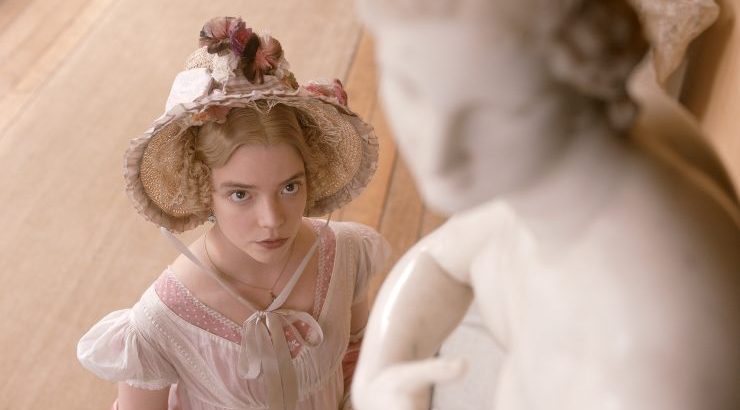
REVIEW: EMMA.

I’m a longtime fan of Jane Austen’s novel Emma. Did I secretly want it to be my favorite book because it has my name as the title? Yes. Did that lead me to read it when I was too young and couldn’t understand much of it? Uh huh. Have I finally gotten to the age where her storyline as an occasionally selfish and insensitive young woman resonates with me? Yep.

Let me start with how good a job I think Anya Taylor-Joy did as Emma. I grew up with the 1996 Gwyneth Paltrow version of Emma. Though as a 10, 12, 14-year old, I wouldn’t have told you I liked that movie from over the games on my first-gen iPod touch, between my parents on the couch, I have every second of it memorized. Paltrow completely is Emma in my mind. I worried that this would make it impossible for me to like Taylor-Joy in the movie. I worried for nothing.

I really appreciated how true to the character’s age she seemed. How young and my age. It made her fussiness more endearing and excusable. She wasn’t old enough for me to think she kept stubbornly messing up. I didn’t like as much how they portrayed Harriet’s youth, though. For the whole movie, I felt like she was putting on airs to seem younger and ditzier than I could quite believe. Yes, Harriet is supposed to be young and ditzy, but in this version, I was consistently a little uncomfortable with how undignified she was. I suppose she’s a hard character to nail…maybe it’s easier to concentrate on your cleverness as Emma than on your dippiness as Harriet. I can see how childishness is harder to fake than precociousness.

Comedy really set this version apart from the ’96 version. 2020 went much harder. Emma’s father, played by Bill Nighy, and Mr. Elton, played by Josh O’Connor, pulled most of the weight. I grew a little tired of Mr. Elton, but I loved Bill Nighy in this role–I’m so glad they got him! His tight-lipped, willowy kind of physical comedy always made me smile or laugh when he was on. I feel like it takes a special kind of actor to do very predictable, trite bits and still make everyone in the audience laugh, and it was never quiet in the theater when he was on screen.

I think it’s a hard thing to make Emma fans like a new version when they’ve liked others and feel close to the story. They succeeded with me. Now I want to try to speak for some people who didn’t know the story beforehand: they were not very clear about the nature of Mr. Knightley’s relationship with the family at the beginning (or anytime). In the novel, Austen explains that he is a neighbor-turned-close-family-friend who is 16 years older (yes) than Emma. The movie (and I extend this sin to the ’96 version, too, if I must) doesn’t give any of this context! He appears in the living room and everyone acts like friends.

For how long have they been friends? How old is Mr. Knightley? Has the father already thought of them together at all? More importantly:

Why hasn’t Emma see Mr. Knightley as a love interest earlier? It’s because she’s seen him only as a mentor her whole life, since childhood. Conversely, why hasn’t Mr. Knightley see her as a love interest earlier? Because she’s only just recently a woman and not a child. The movie never answers these.

Do I think the movie put a few more fingers in the comedy pot than it needed to? Yeah, I do. Do I think it should’ve worked harder to contextualize Emma’s and Mr. Knightley’s relationship? For sure. Did I enjoy this movie a lot? Yes. Should you go see it? Absolutely.

PREVIEW: sometimes something

The  Penny W. Stamps School of Art and Design will hold their 2020 MFA Thesis Exhibition, sometimes something, from March 13th – May 2nd at the Stamps Gallery at 201 South Division St in Ann Arbor.

sometimes something will showcase projects by Sally Clegg, Kim Karlsrud, Erin McKenna, and Abhishek Narula. The art projects feature themes such as social and urban ecosystems, privacy, self pleasure, creation, and our digital world.

I am excited to see the artistic works this cohort has created. The online exhibition preview features sneak-peak images from the projects, and each artist looks like they have created work that is both enticing and stimulating.

Coming out to support these graduate students in their MFA Thesis Exhibition is a perfect way to get out of the house and escape from the strange world we are currently experiencing!