REVIEW: Photography Exhibition: Images of Incarceration


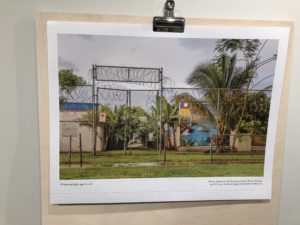
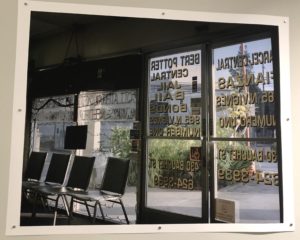
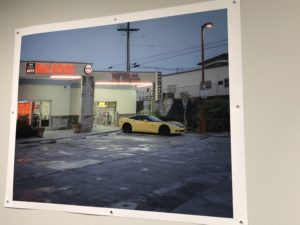
A little bit haunting, a whole lot confusing, maybe threatening. These pictures gave me the feeling of a kid from the Peanuts gang; kept from some secret like the unintelligible monotone of the adults’ voices. It was something special to be let in at all, but the opacity of the images’ meaning both disturbed and delighted me. The lighting–heavy flash going off in naturally-lit or dark indoor environments–put me back in time a bit. The images were reminiscent of the 1990s with their coldly fashionable earth tones: grays, browns, tans, beige.

The ones with captions seemed like they could have had a clearer intent. We have location and the number of inmates, but that’s about it in terms of context. I needed more from the literature if the artists wanted to include it at all. Mere numbers fail us in giving meaning to most things; I need more description of living conditions, maybe a hint at artifacts of the imprisoned life, the possessions they leave behind at the gate, art made by inmates, some little picture of influence they have on their surroundings and the lives of others.

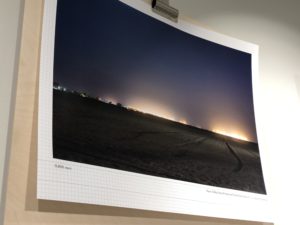
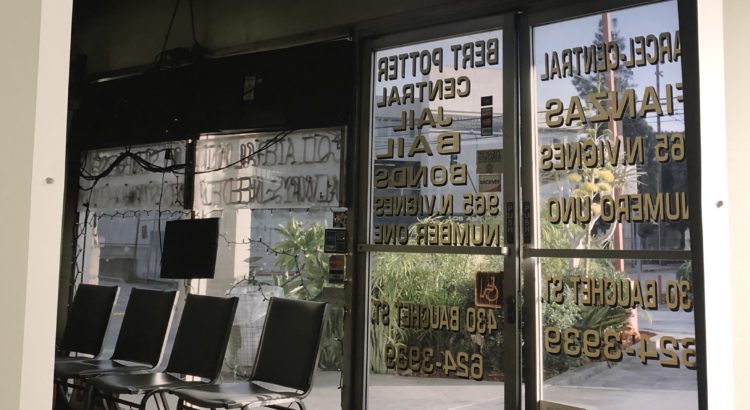
It was interesting that all the photos surrounding correctional facilities were taken from the outside (necessitated by strict no-photo policies, undoubtedly), often not including the buildings at all, but focusing on the surrounding landscape. Most of the others–bail bond shops, police gun shows–were taken from inside. Are we meant to feel a kinship with the law, or just deny ourselves a false connection with the incarcerated? To be outside is both a privilege and a curse: it grants us our continuing freedom while suffocating the possibility of real understanding.


Using such majestic landscapes was a unique artistic choice for me. Many incorporated deeply vibrant colors in the sky and greenery; there was a lot of sunshine and a calming, natural glow to them. Several could have been featured on a ritzy resort’s website. They’ve taken away the images of concrete blocks and barbed wire I would normally associate with prison and replaced them with a richer depiction. “There is beauty here!” they shout. There is no longer the usual isolation of a building from the land on which it sits; instead it becomes a part of something more complete. Exactly what that is, I’m not quite sure. There is no reference to the incarcerated housed within the walls we cannot see from our vantage point, save for a mention of how many there are. Personalization is negligible, nothing more than the city and state printed below the picture. If we are not meant to focus our thought on the prisoners, what else are we supposed to consider? Or is their absence itself the point? Thus the argument is unclear. I will definitely be going to the artist talks coming up, and I suggest you all do the same after perusing the gallery. Steph Foster will give an artist talk on Friday March 27, at 4:45 PM, and Ashley Hunt will give an artist talk on Tuesday March 31, at 4:30 PM.
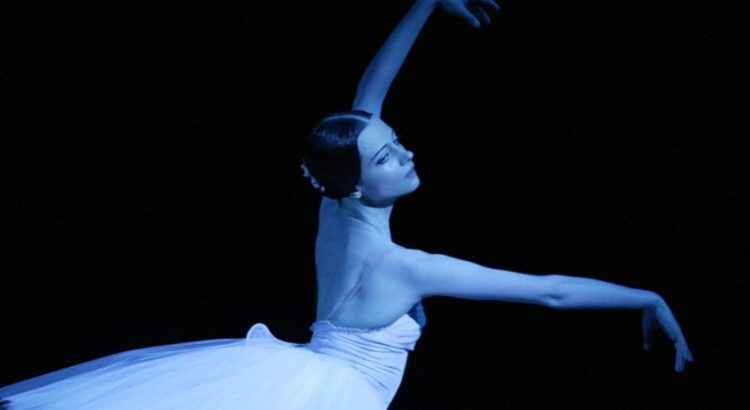
 

Preview: Bolshoi Theater Live: Giselle

This classic ballet is about a young peasant girl who loves to dance, but she dies of a broken heart after her lover betrays her. She is inducted into a clan of vengeful female spirits, who summon her from her grave. They try to force her lover to dance himself to death, but true love saves him. It also releases her from the spirits’ power, leaving her to rest in her grave in peace.

I am excited to watch this performance which requires not only incredibly skilled dancers, but is renown as a shining example of classic ballet. I have always enjoyed watching ballets, and I have not had the chance to watch one since I was a lot younger.

The show is playing Sunday, February 23 at 7:00 PM at the Michigan Theater.

Link to tickets: https://ums.org/performance/hd-broadcast-bolshoi-ballet-giselle/

PREVIEW: Don’t Let the Pigeon Drive the Bus!

Calling all children (and children at heart)! This Saturday at 3 pm, the Michigan Theater will present an exciting musical adaptation of the iconic children’s book, Don’t Let the Pigeon Drive the Bus!, written by the series’ creator Mo Willems himself. As a part of the Michigan Theater’s ‘Not Just for Kids’ Live Performing Arts Series presented by Toyota, this show promises an engaging mix of puppetry, pigeon song, and performing arts gold for the entire family.

For some context, Don’t Let the Pigeon Drive the Bus! is a humorously illustrated children’s book starring a pigeon who really, really wants to convince the reader to let them drive the bus. The book, Willems’ first of many, received the Caldecott Honor in addition to multiple picture book awards, including being among the “Top 100 Picture Books of All Time” in a 2012 poll by School Library Journal.

Tickets start at $20 each for general admission, with Meet & Greet tickets available at VIP prices.

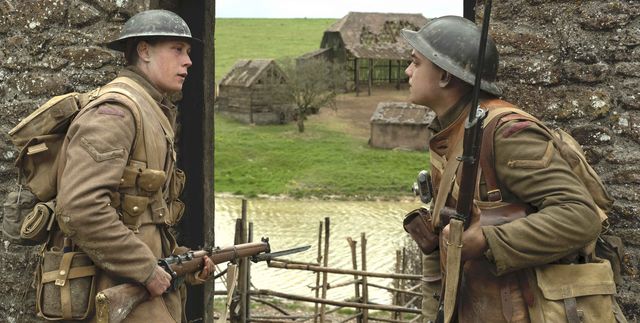
REVIEW: 1917

Y’all, I’m not a fan of blood. I’m not a fan of a lot of visible injury or edge-of-death scenes as a way to make me emotional. Should I not be going to war movies?

Maybe. I’ll look away at the very idea of injury, but the swelling music that’s in a lot of these movies? Heck. Yes.

Emma-violence-meter: 2/10, 10 being ridiculously violent. Much appreciated. Nothing ridiculously graphic, much more of that moving music. My favorite, yes favorite, use of violence was when the main character ran across the line of men running into battle and collided with the soldiers a bunch of times. He got thrown and rolled to get up as inelegantly and earnestly as my heart could take.

The soundtrack to that scene raised it to another level, too: a hero with all the orchestra but without the usual pomp and circumstance. His big moment was to run clumsily, not lead an army into battle. I will always be a fan of that kind of switch-up. He was friendless, misunderstood, unsupported, but doggedly persistent. What a great (underrepresented?) value in big movies!!!

I didn’t mean to skip right to the end of the movie in my review. Good reviewers maybe don’t do that? But the end was my favorite part.

To go backwards, I really like how it mostly followed two characters. It felt different from other war movies I’ve seen, which I think spent more time trying to get me to empathize with characters besides the main ones. From the get-go, there was no doubt that my loyalty belonged entirely to these two lazy, unremarkable, relatable guys, and these guys alone. They were the extent of my duty. The movie made a promise with me: love these lovable guys, and you will get what you need from me.

When the time for one of their sacrifices came, I was ready in some way. The movie had said, here is your job. We will break your heart and you will thank us. I heard. I asked only that it wouldn’t abuse me with intestines spilling out or a limb torn off, and it respected my wishes.

What made me even MORE tolerant of what blood-spilling there was was that they bucked the cliché of having wise last words at a certain fateful moment. They leaned into his childishness (I’m using ambiguous pronouns to protect any spoilers I can, because why not?). I loved that choice! Tragedy is tragedy. Death is tragedy. His wasted wisdom wasn’t going to make me sadder than his wasted life. He clung to his friend, asked him to talk him through dying, begged for reassurance that he could get to his brother, and cried from fear until he died. I was a puddle, no extreme shock about it. A sudden, “shock” death isn’t the only way to break a heart! Lots more to think about when he dies slowly after being kind to his attacker….

A little late, but re-tweet to all it won at the Oscars: Best Cinematography, Best Sound Mixing, and Best Visual Effects. Fine by me. Thanks for not scarring me and only making my heart squeeze appreciating persistence!


PREVIEW: Photography Exhibition: Images of Incarceration

Little spaces for viewing art are the best! Maybe being hidden, somewhat out of the way, tucked in a corner makes them a challenge to find, but stumbling upon is far better than being smacked in the face with a million advertisements.

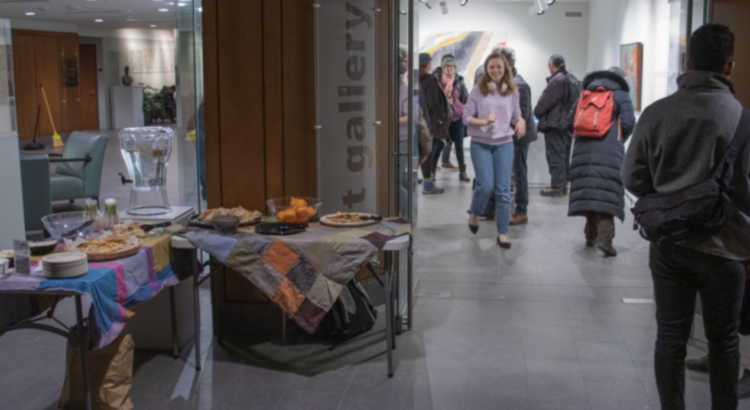
East Quadrangle’s Residential College Art Gallery is a perfect example of this. They humbly exist in a small, glass studio, the work always visible from the outside but only really observable from within. I invite you to step inside for its upcoming exhibit “Images of Incarceration.”

Ashley Hunt and Steph Foster’s photographical artwork depicting the realities of the legal system will be on display beginning this Friday. There is no admission; just come on down during the hours of 10AM-5PM weekdays from February 21st to April 9th.

REVIEW: Portrait of a Lady on Fire

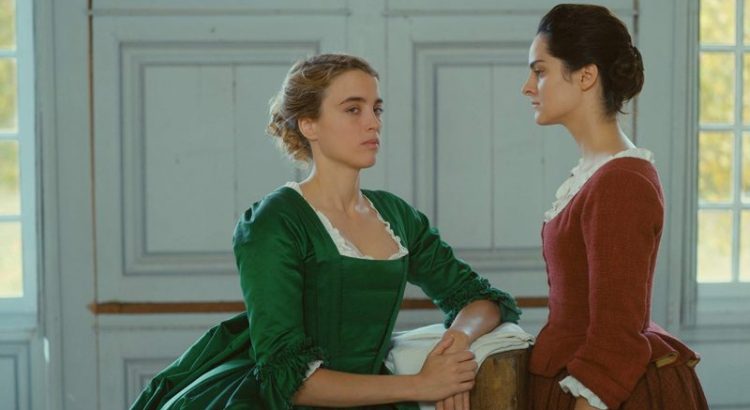
Portrait of a Lady on Fire was a great film. I think more than anything I enjoyed it because it felt so different. Yes, French painting and romance and a dramatic craggy coast suggest a formula, but the reality is that these elements served a higher purpose than simply a love story: they worked in tandem with a great script and thoughtful camera work to produce a surprisingly humorous and touching story not only of romance, but of women and (even as the word feels cliché) sisterhood.


Disclaimer: Though this is an LGBTQ+ story, I recognize that it still speaks to a specific privilege both socioeconomic and racial. There are blind spots in this story, as the understanding of the oppression of one group does not erase the class struggles and other racial inequities present. I still think that this film is worth enjoying, though, because it still speaks broadly to oppression/repression and historic positioning of non-heteronormative sexuality is important.


What most threw me off seeing this film (in a good way!) was the distinct voice of the director and the writing. This film did take itself seriously but at times allowed for some really refreshing comedic moments. These ranged from quippy dialogue to visually clever shots, always keeping me engaged and quite honestly adding a level of unpredictability to the tone. Entering a scene, you never really knew what its purpose was, which was really intriguing in what previously appeared to me to be a straightforward romance.


What was most touching about Portrait of a Lady on Fire is how, for a fair portion of the movie, the main characters are allowed to simply be happy. The audience watches as the two central figures are left to their own devices with the young maid of the house. What results is a really sweet portrait of feminine domesticity–not in terms of a gender role, but rather as a group of women living coexisting in a beautiful way. Of course, there are problems and arguments that arise, but really the three women function as a symbiotic family. Scenes of everyday life are permitted to breathe, taking their sweet time and creating in the viewer this unique feminine vision of harmony, wholly undramatic and wholly human.


I say feminine because the reality is that there are hardly any men acting in this film. It seems as though all the problems in the film, both societal and personal, stem from some unnamed man off screen. And I’m alright with that. I think it is a really interesting way, ultimately, to make a story about women and their real issues without having to explicitly involve the oppressors.


This film speaks to intense internal struggles while also highlighting the beauty and joy that can exist simultaneously with said struggles. I highly recommend it, especially if you’re an artist (those painting shots were gave me such vicarious joy as a painter without access to a studio). If anything, the film is worth it for a beautiful closing long take, one that will long remain in my mind.