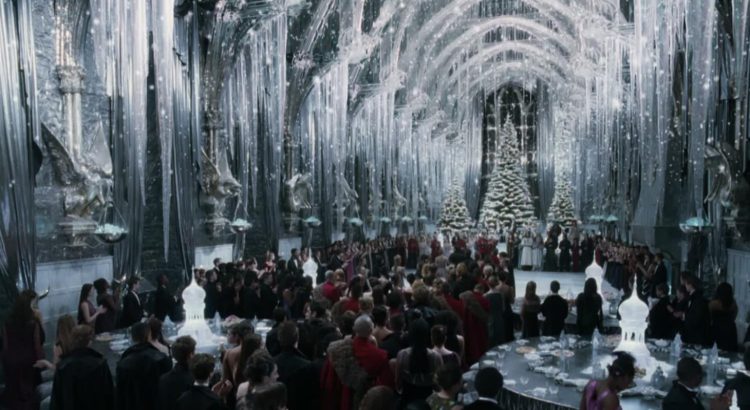
This esteemed, Harry Potter themed event is put on by our very own Quidditch team!
As you can probably surmise from the title, this event has become a beloved tradition that grows bigger and better every year. Harry Potter fans throughout campus flock to the Yule Ball to enjoy dancing, performances, and all other sorts of magical festivities that are part of the wizarding world; the most important, being fantastic food.
I for one, am absolutely ecstatic to be able to break out my dress robes and high heels to dance the night away with my fellow J.K Rowling fans!!
For just $12 in advance or $15 at the door, you can be a part of this magical night, February 1, starting at 7:15 at the Michigan Union Rogel Ballroom.
Bring friends, bring family! Just be sure to remember your Umich ID and wear something worthy of a ballroom. (This is a formal event)
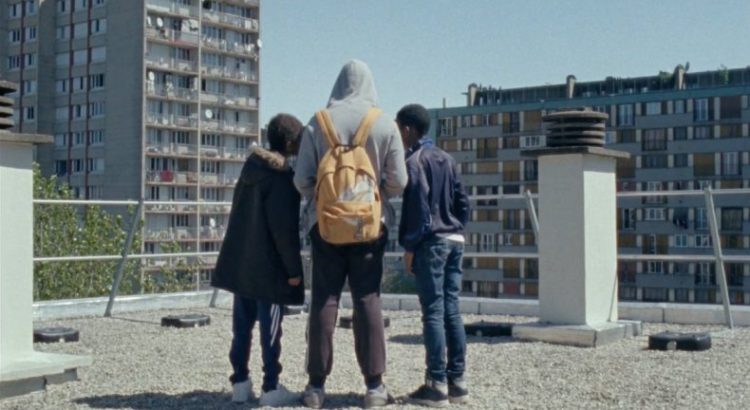
Les Misérables was one of my favorite films I’ve seen in the past few months. In describing the film and what I liked about it (at a hundred miles a minute) to my friend, she responded saying, “It’s really interesting that even Paris has these kinds of disparities and issues.” She was referring to police corruption and brutality and its role in lower income communities. This surprised me, but at the same time the American idea of Paris (and France in general) has always been a highly contrived product of the global imagination. So before I even go into the content of the film, straight out the gate I think it’s important that it is shown in the US. In a related way, it’s easy to apply our context of race relations to all media we encounter, but the construct of race is as highly pervasive as it is contextual.
Before I praise the film, I do want to address that it isn’t perfect. The narrative of police brutality given mostly from the perspective of the police team didn’t sit super well with me, though I did find the nuance behind (most) of the officers to be effective in illustrating the logic of power abuse. Ultimately, the community and after effects of the police force’s actions feel underrepresented as well. I think it’s important to be critical about the representation of power structures in media. My perspective is quite limited here and so I highly recommend consulting other reviews in constructing your takeaways from Les Misérables.
I thought the tension achieved in this film was both amazing and highly uncomfortable. The fact that the chronology of the story is condensed into two days in such a skillful way contributes to this. Throughout the movie, we come to understand the different hubs in the community’s network through a series of telling interactions. These confrontations alternate between severe escalation and de-escalation of tension, culminating in an electrifying conclusion. It all feels very quick, but at the same time, I left the theater feeling an acute sense of dislocation.
Don’t let the subtitles scare you; I thoroughly recommend this highly relevant film. I equally recommend being critical about it and using it as a catalyst for conversation and reflection.
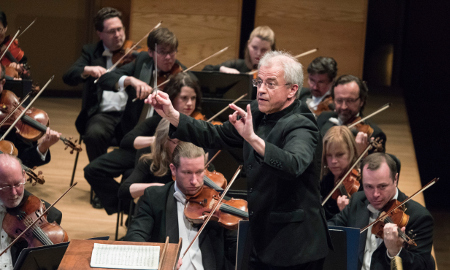
This last Saturday, the Minnesota Orchestra, led by Finnish conductor Osmo Vänskä, delivered a lovely and pulsed performance of some of Jean Sibelius’s most beloved works. This sprawling orchestra shone under the lights of the Hill and filled the auditorium with a melancholic music perfect for a January concert.
Making its UMS premiere was Sibelius’s 1990 work, “Snöfrid” (which translates to Snow Peace). A part of an unfinished opera by the late composer, Snöfrid is accompanied by a poem encompassing the love that Gunnar, a young warrior, has for a female spirit in the woods. This lovely piece was accompanied by the UMS Choral Union, and translated lyrics were provided for the audience members. This being said, the words and meanings of Snöfrid seemed to not fit the context when separated from its opera, and I would have preferred that we weren’t delivered the slightly disconcerting translation of Snöfrid’s poetic movements.
The true highlight of this concert was the performance of Sibelius’s “Concerto in d minor,” featuring the talented American-born Finnish violinist Elina Vähälä. Her presence was truly striking as she ventured onto center stage in her red performance dress, and to bear witness to her poised and polished playing was utterly captivating. It’s always a precious thing to see an artist truly tuned into their craft, as if the only one in the room.
Sibelius’s Symphony no. 5, played for the second half of the concert, led differently than the likes of his Concerto, and while the music seemingly had less predictable direction (melody-wise), there were swells of triumph and hone-ins of delicate moments.
This vein of music not only provides a lovely listening experience, but a lively visual demonstration of Osmo Vänskä’s unique European conducting style. The complexity of this music easily allows an audience member to find themselves being immersed into this crafted music. All things considered, this music of Sibelius has an unpredictable melodic direction, and often times I felt lost amidst the come-and-go musical ideas. However, as the work of Sibelius often cuts its own path, the sounds of Finnish musical heritage seemingly contrasts the more widely-known sound of Western classical music, such as the works of Mozart. This musical experience, ultimately, was an immersive and edifying time that deserves admiration and celebration.
Every dance show I’ve seen at Michigan has had its own flavor. In Pure Dance’s winter show, Callisto, there were many flavors spread throughout in a performance that was at times entertaining and at times lacked cohesion.
Pure performed eight dances and a finale, alternating between jazz and contemporary numbers with seven guest performers: a cappella group 58 Greene, contemporary company Ambiance, alternative percussion outfit Groove, jazz ensemble Blue Bop Jazz, hip-hop crew Flowdom, contemporary ballet company Salto and the ballroom dance club. All of the guest performances were good on their own, but there were too many of them for the number of dances Pure performed; it felt like the guests were onstage for a longer amount of time than the company itself. Blue Bop Jazz even opened the second half, taking the spotlight off the show’s supposed headliner.
Because of the abruptness of transitions between so many different types of performances, the show never really built up a rhythm. Still, it had its moments. I really enjoyed “Under Pressure” — set to the song by Queen and David Bowie — which Pure smartly placed toward the end of its program to ensure it was remembered. The choreography, by Libby Owen, was smart and went well with the music.
Overall, Pure’s contemporary pieces were stronger than the jazz ones, with “Under Pressure” as the exception. The jazz numbers seemed at times out of sync, but they got stronger as the show went on.
Pure did do some innovative things with lighting, staging and choreography. They frequently created a silhouette-like effect with the lighting, turning themselves into shadows dancing across a colorful backdrop. In the number “Elastic,” Pure walked out to flashing white lights, as if cameras were flashing as they strutted across the stage. They wore high-heeled boots, still managing to complete turn sequences. I appreciated the artistic risk they took in the piece, and it’s a risk that paid off. They also utilized lifts to good effect several times.
Overall, though, I wished I’d had time to truly settle in with Pure rather than seeing them constantly alternate with a litany of guest groups. In particular, Ambiance performed a contemporary number that I thought outshined the ones that came before and after.
Callisto had a lot of potential, and Pure Dance did a lot of cool and innovative things I haven’t seen in other student-run dance shows. However, the organization of the show ultimately undersold Pure’s talents and I wish I had been able to see more from them.
You put on the headphones, and they themselves seem significant: the wires connect but they constrict, you have to rely on the tinny sound for information but it blocks out your surroundings. The whole experience was full of these contradictions, to the point that I had to consciously stop myself from thinking through them in order to pay attention. There’s the white wall to my side, and though I can see the borders of it from where I sit I can’t see the other side, so it’s as good as infinite. A little light is coming from where I’ve offered up my arm to the artist, Basel Zaraa, and I’m tempted to look down and through to meet his eyes but I know that something will be broken if I do.
The felt-tip marker is brushing over the flesh on the inside of my forearm and my palm, and I hate how gently he’s holding my fingers down because already I’ve associated him with a Dublin Regulation fingerprint database employee. When I realize I’ve put myself in a position I am privileged to never experience, it’s jarring and it’s a feeling that’s creeping like sweat along my forehead.
I don’t feel any one thing completely after, except for quiet. Not quieted, not disquieted, not just not speaking and not just alone. Quiet is the only adjective I can give myself. I’m sad for what I don’t know and especially for why I don’t, the stupid luck that let me be born into stability and the politics that let others live out of backpacks. Travel is so often romanticized, but there is a difference between travel by choice and by circumstance (further reading: https://doi.org/10.1002/9780470670590.wbeog940).
So in about 15 minutes I’m in and out of another world, halfway a vagabond myself. I’m back and walking home and I feel homesick but mostly physically so, my eyes kind of glassy. It’s a little disappointing that I wasn’t physically transported, though of course that would be impossible. I’m still in Ann Arbor, Michigan walking down the street, and I have no reason to fear that I won’t be here tomorrow. There is a constant stream going through my head berating me for how little I know about the world, and it feels like an abuse to wear this tattoo on my arm like a costume.
But I can use that guilt he’s given me, to take learning into my own hands and to get politically involved. Where the law does not protect the safety of people worried for their lives, there is a problem, a violation of human rights. As election season is upon us, it is a perfect time to get involved and get the right people elected. With primaries right around the corner, the time for active research is now.
You can find out more about Tania El Khoury’s work on her website: https://taniaelkhoury.com/
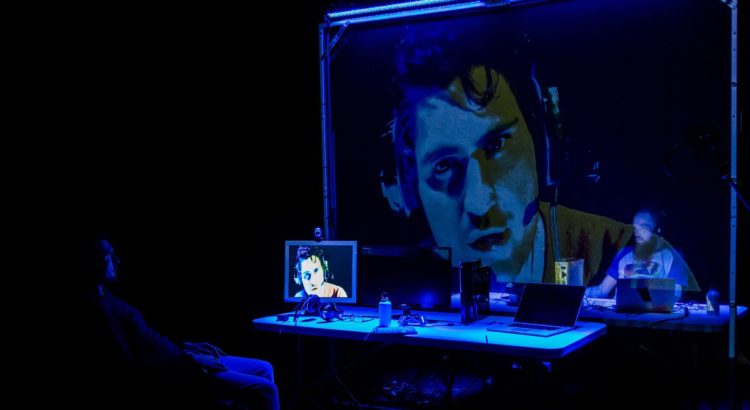
The Believers Are But Brothers was a theatrical experience I’m glad to have taken a part of. And I do feel as though I took part in it, as the show felt sort of like a conversation between performer Javaad Alipoor and the audience. The fact that a WhatsApp group of the audience was constantly ringing in my hands was also a pretty big part of this feeling.
And I know everyone wants to talk about what it means to have a communal theater experience via our phones and the interest of this choice is obvious. But I’m still going to talk about it too.
I’ve been to a handful of UMS and SMTD performances, and the age disparity has always been there. Can I say it’s surprising that the majority of attendees at these shows are much older? No, to be quite honest it’s hard to get student foot traffic to go anywhere if free food isn’t offered. I found this imbalance to be really clear during the show, though, and really intriguing. At the beginning of the show, a large group of older attendees leaned over to ask what everyone was doing on their phones–they didn’t have the app and throughout the show leaned to watch the conversation (I guess that’s the word for it?) on my phone or the person’s in front of them. I’m sure this experience was equally meaningful, though, as it most likely mirrored the disconnect they have towards the darker parts of the internet.
And that’s a lot of this show; Alipoor would describe internet phenomena that I’m sure was new to plenty of the audience, and then offer narratives of young men taking part in and affected by such concepts. I found the rhythm of the show to be really engaging, as it alternates between the unfolding of intense, affecting stories and more casual audience interaction.
This show feels like a piece of a puzzle. These concepts are monumental and I realized that there are so many connecting pieces and stories that I left The Believers Are But Brothers wanting to see more. I wanted to understand Alipoor’s more complete idea of this whirlwind of a decade (that is definitely kind of impossible to do, but I digress). Turns out, there is a sequel: Rich Kids: A History of Shopping Malls in Tehran,and ultimately Alipoor is making a trilogy. Here’s hoping that we have the chance to see his work again soon.