REVIEW: Miss Americana

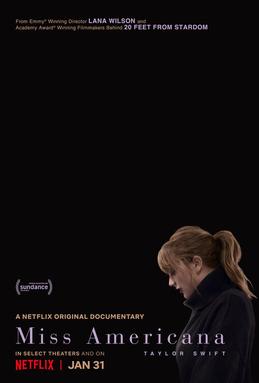
During a scene in her Netflix documentary “Miss Americana,” Taylor Swift ruminates on her impact on a generation of fans.

“There is an element to my fanbase that feels like we grew up together,” she says.

I have an inkling that I’m one of those fans she’s referring to. I’m not going to kid myself that Taylor Swift and I grew up together. She’s 10 years older than me; the two of us have always been in different stages of our lives. But as I watched “Miss Americana,” I couldn’t help but think that the two of us did go through a lot of similar things around the same time, and that the documentary — which focused on her experiences as an ambitious woman in a male-dominated world, struggling to find her voice — helped me understand not just her, but myself.

“Miss Americana” has obvious appeal for Swift fans, interspersing lots of concert footage as well as a behind-the-scenes look at the composition of her new album “Lover.” But the thing that sets it apart from a traditional concert film-slash-documentary is that it also speaks to those very same fans Swift references in the beginning, the girls who fell in love with her tales of young romance but are no longer so naïve. How do you navigate life as a good girl grown up, as a woman unsure what to do with her ambition?

That’s the question Swift answers in “Miss Americana.” The documentary focuses less on the development on Swift as an artist and more on her development as a person, making it simultaneously a fascinating look at a celebrity who has long been known for openness, a commentary on the state of ambitious women in American society and a roadmap for those very same fans who grew up with her.

In the beginning of the documentary, Swift shows us the journals she had as a kid. The scenery is very feminine; lots of pink and glitter. She tells us how she always wanted to be thought of as a good girl and always wanted to make people happy. Praise was the thing that drove her; as long as people liked her work, she had everything she needed. That worked when she was still a 20-year-old country darling, but as the documentary progresses, we see footage of her ongoing feud with Kanye West, a bout with disordered eating and media criticism — all while Swift felt like she had no one to turn to.

Like Swift, I approached my work in a male-dominated field — in this case, sports writing — as trying to please people. I glowed every time someone praised my work. I picked up extra work shifts when someone needed a person to cover. I did everything I thought people wanted, but it eventually backfired. I put so much pressure on myself to do everything right, and when things didn’t go my way, I did a lot of things I wasn’t proud of. There came a point in my life, just as there did in Swift’s, that I realized my reputation didn’t at all reflect the person I wanted to be.

The second part of the documentary explained how Swift powered through and took control of their own identity. I remember reading all the criticism of Swift as a “snake” when I was in high school and thinking that some of the criticism was valid. But I’d been a fan of hers longer than I had of anyone else, and I didn’t want to abandon that, either. In “Miss Americana,” Swift doesn’t shy from the criticism. She shows what she learned.

In one scene, Swift discusses her struggle with disordered eating — something I, too, struggled with in high school — and says she realized she’d rather be called fat than look sick. She takes us through the process of deciding to finally speak up about politics. As a woman in country music, she was told to avoid becoming like the Dixie Chicks. It wasn’t until 2018 that she realized that more important than her reputation was speaking out for the things she believed was right. She wasn’t the “good girl” anymore, and in a way, she was never going to be that. So why not use her platform for things she believed in? It was “frilly and spineless,” she said, to wish people happy pride month at her concerts but not speak out any further.

Swift also discusses her sexual assault trial and the dehumanizing feeling of the whole process. The documentary shows footage from one of Swift’s concerts, where she gets candid about what happened to her and acknowledges that she was one of the lucky ones, and that many others who didn’t have pictures and witnesses aren’t believed. She begins to use her platform to not just create her own image, but to speak out for others in similar situations, too.

“There’s this thing people say about celebrities, that they get frozen at the age they got famous, and that’s kinda what happened to me,” Swift says at the end of her documentary. Finally, she’s able to say that she’s not perfect and never was, that she knows there were times she was wrong. But the way she got through it was by allowing herself to grow up and learning to use her voice for good.

As I struggled to get past my own rough patch in my life, I thought about a lot of the same things. How do I acknowledge that I hurt people and moved on, even if they hurt me too? How do I use my voice correctly? How do I come to define my own identity as something more than just a woman in a male-dominated space. Watching “Miss Americana,” I saw someone else struggling with those same questions, and after I finished, I felt closer to being able to find the answers myself.

The experience of ambitious women in male-dominated fields is oft-discussed, but rarely shown so intimately as it is in “Miss Americana.” Going into the documentary, I expected a behind-the-scenes film that would be fun to watch as a fan, but what I got out of it was so much deeper.
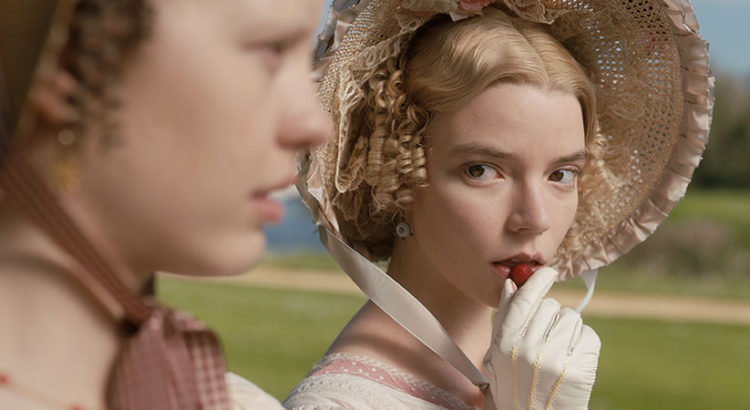
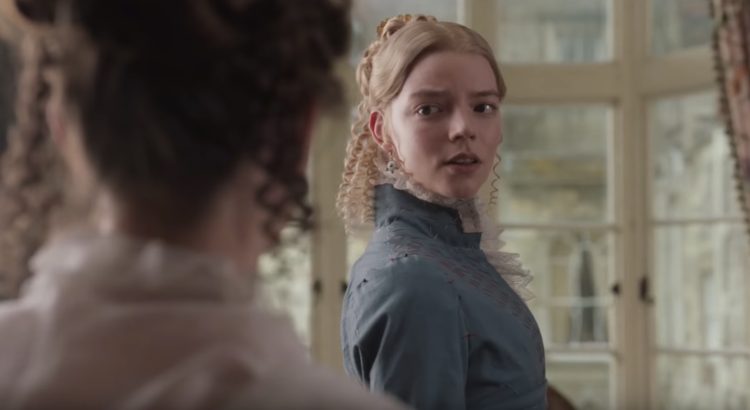
PREVIEW: EMMA.

EMMA. is playing for two more days at the Michigan Theater: Tuesday, March 9th and Wednesday, March 10th! Yes, it’s the umpteenth adaptation, but haven’t all the others been entertaining? I don’t see the streak should break. Jane Austen is STILL RELEVANT. (In the style of the movie title–they really made it all-caps and with a period.)

The story follows Emma, a rich, clever young woman who is learning to be a little less vain and a little more considerate. Emma gets herself involved in several love triangles, willfully misunderstands, and manipulates like there’s no tomorrow…relatably and lovably.

This newest adaptation has some big names attached to it, too: Anya Taylor-Joy from Split plays Emma and Tanya Reynolds and Connor Swindells from the Netflix Series Sex Education play Mrs. Elton and Mr. Martin. I love Sex Education, so I have high hopes for them. I haven’t seen Taylor-Joy in anything yet, but I have heard good reviews about her.

Tickets are available at https://www.michtheater.org/show/emma/.

REVIEW: Emma.

Autumn de Wilde’s Emma. offers a refreshingly whimsical and defiant, pastel-colored adaptation of Jane Austen’s classic romance-comedy novel. The quirky addition of punctuating the title itself complements the film’s mood and aesthetics perfectly, and reflects the protagonist’s emphatic and self-assured mannerisms. The film opens with an elegant quote and homage to Austen’s 1815 novel,

“Emma Woodhouse, handsome, clever, and rich… had lived nearly twenty-one years in the world with very little to distress or vex her.” – Jane Austen, 1815

Indeed, actress Anya Taylor-Joy portrays the titular character Emma Woodhouse every bit as ‘handsome, clever, and rich’ as she perceives herself to be. Taylor-Joy has perfected the detached and rational, yet keenly observant composure unique to Emma and other queen-bee characters, which she punctuates with a penetrating and cool stare that the viewer learns to associate with the plot’s twists, turns, and grievous misunderstandings. Unabashedly headstrong as Emma may be, the character has historically carried certain unlikeable qualities that set Emma apart from Austen’s other famous female protagonists – Emma is spoiled rich and prideful, and with that pride wholly conforms to her period’s class and status norms. Additionally, her stubborn convictions as a self-proclaimed neighborhood matchmaker are almost manipulative, especially when examined alongside the friendship she forms with the less-sophisticated, bumbling Harriet Smith. However, de Wilde’s adaptation and Taylor-Joy’s performance not only allow but also highlight these traditionally unfavorable traits, which is precisely what I find most charming about this film. Unlike its predecessors, Emma. does not attempt as much to reconcile Emma’s haughty, self-satisfied nature with ‘good-girl’ behavior; to the end, Emma’s pride remains undiluted, even as she receives her happy ending with Mr. Knightley. Taylor-Joy with Johnny Flynn, who plays Knightley in the movie.

Though de Wilde’s interpretation of Emma. is slightly modernized in terms of its unapologetic treatment of Emma, the storyline and costume elements remain true to the original narrative while introducing color and whimsy. The cinematography and visual aesthetics of Emma. are every bit as vivid and spirited as the female lead herself, and can be likened to a sugary and symmetrical Parisian macaron. De Wilde’s use of visual symmetry is consistent and strategic, most evidently when interweaving type into lush backgrounds and more subtly to emphasize Emma’s careful hold on her town’s social hierarchy. In later scenes, the visual symmetry is pushed to represent symmetries between characters such as Emma and Jane Fairfax, a multitalented, elegant woman of Emma’s same age. The dreamy and ornate filming locations, shot around England, further emphasize the lavish lives of the characters in Emma. and the comedic frivolity of their distresses.

If you’re seeking a wonderfully lighthearted, visually pleasing period film – I would highly recommend heading over to the Michigan Theater to watch Emma. You can find tickets here.

REVIEW: Film Screening: The River and The Wall

“Building a wall from sea to shining sea is the most expensive and least effective way to do border security.”

-Will Hurd, Republican Congressman of Texas

A politicized landscape can be both metaphorical and physical. We preoccupy ourselves with the issues, and the solid ground they concern disappears. But for all those who benefit from this space–wildlife, nature enthusiasts, fishers,–forgetting is impossible. The land is sacred, life-giving, the means for making a living. Politicians in faraway places decide what happens, unaffected by the cascading effects a complete wall would have on the life here.

Important populations which have historically struggled to survive are put at risk by Trump’s border wall. Black bears and mountain lions, just coming back from local near-extinction, will suffer geographic isolation, decreasing genetic diversity and weakening the populations’ ability to withstand disease or other destructors. The meandering nature of the Rio Grande and the unrelenting straight edge of the wall necessitates a wide swath of no man’s land by the river, unjustly punishing local landowners and workers. The US side will lack the river, along with its aesthetic, spiritual, and bodily supportive value.

It’s impossible not to draw a connection from this to Robert Moses’ tyrannical reconstruction of New York during the mid-20th century. Caring not for the residents of its “slums” (read: people of color, the impoverished, undesirable white ethnic groups), he cut straight through with expressways and less-than-affordable new public housing. Rich, dense communities were reduced to identical buildings cut off from the rest of the city. The cultural and physical landscape of their old home had completely changed. He, like the Trump administration, was detached from the people he affected, and in this he lacked the knowledge and empathy necessary to be a leader of that kind. 

The river is our equalizer between us and our neighbors. A source of life, a means of survival and emotional wellbeing. The alluvial river plains, fertilized by upwelling of rich sediments during floods, are extremely productive areas. Losing out on this agricultural resource would be disastrous for farmers and the communities they support.

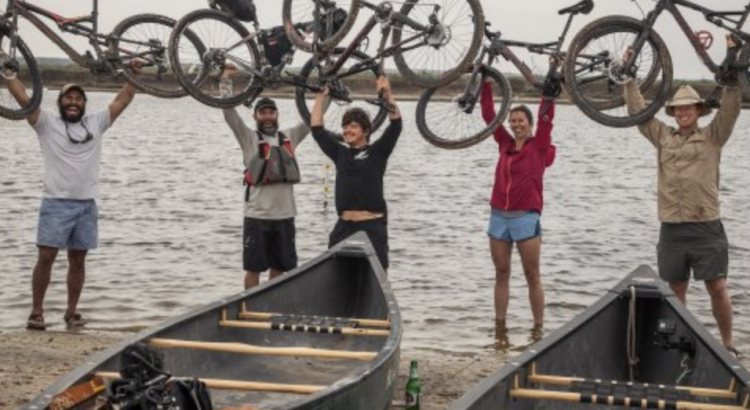
What bothered me about this documentary was the clearly elevated position on which its subjects stood. It really was not an accurate approximation of a migrant’s dangerous journey. They’re equipped with strong horses, expensive bikes and hiking gear, nice canoes. They are all young, in good health, physically strong. All the methods of transportation the five used (bikes, horses, canoes) are physically taxing. The film failed to bring up the unique dangers that elderly migrants face on their way, and also children, pregnant women, the ill. That side of the issue is an even darker facet, and it should be represented here.

Luckily, the film was able to balance the tragedy of our likely future with the joys of past and present. The cinematography was graceful and rugged at once, the environment lending itself to an exploration of the simultaneous existence of fear and awe. It seems to reflect a migrant’s experience because of that.

The ending was too idyllic for my taste, a little too naively hopeful. We see little direction for viewers to seize and act from. Emotion alone is not enough to argue against the political situation in which we find ourselves.

This website is a great resource for investigating what you can do.


REVIEW: 1917

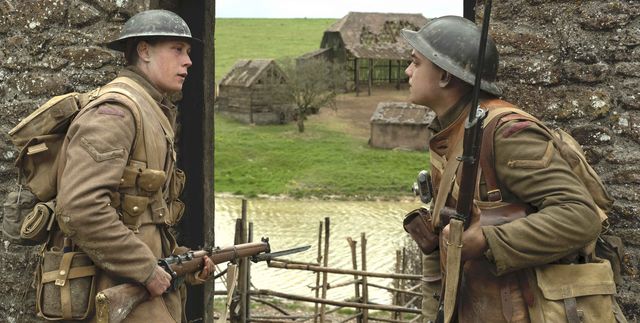
Y’all, I’m not a fan of blood. I’m not a fan of a lot of visible injury or edge-of-death scenes as a way to make me emotional. Should I not be going to war movies?

Maybe. I’ll look away at the very idea of injury, but the swelling music that’s in a lot of these movies? Heck. Yes.

Emma-violence-meter: 2/10, 10 being ridiculously violent. Much appreciated. Nothing ridiculously graphic, much more of that moving music. My favorite, yes favorite, use of violence was when the main character ran across the line of men running into battle and collided with the soldiers a bunch of times. He got thrown and rolled to get up as inelegantly and earnestly as my heart could take.

The soundtrack to that scene raised it to another level, too: a hero with all the orchestra but without the usual pomp and circumstance. His big moment was to run clumsily, not lead an army into battle. I will always be a fan of that kind of switch-up. He was friendless, misunderstood, unsupported, but doggedly persistent. What a great (underrepresented?) value in big movies!!!

I didn’t mean to skip right to the end of the movie in my review. Good reviewers maybe don’t do that? But the end was my favorite part.

To go backwards, I really like how it mostly followed two characters. It felt different from other war movies I’ve seen, which I think spent more time trying to get me to empathize with characters besides the main ones. From the get-go, there was no doubt that my loyalty belonged entirely to these two lazy, unremarkable, relatable guys, and these guys alone. They were the extent of my duty. The movie made a promise with me: love these lovable guys, and you will get what you need from me.

When the time for one of their sacrifices came, I was ready in some way. The movie had said, here is your job. We will break your heart and you will thank us. I heard. I asked only that it wouldn’t abuse me with intestines spilling out or a limb torn off, and it respected my wishes.

What made me even MORE tolerant of what blood-spilling there was was that they bucked the cliché of having wise last words at a certain fateful moment. They leaned into his childishness (I’m using ambiguous pronouns to protect any spoilers I can, because why not?). I loved that choice! Tragedy is tragedy. Death is tragedy. His wasted wisdom wasn’t going to make me sadder than his wasted life. He clung to his friend, asked him to talk him through dying, begged for reassurance that he could get to his brother, and cried from fear until he died. I was a puddle, no extreme shock about it. A sudden, “shock” death isn’t the only way to break a heart! Lots more to think about when he dies slowly after being kind to his attacker….

A little late, but re-tweet to all it won at the Oscars: Best Cinematography, Best Sound Mixing, and Best Visual Effects. Fine by me. Thanks for not scarring me and only making my heart squeeze appreciating persistence!


REVIEW: Portrait of a Lady on Fire

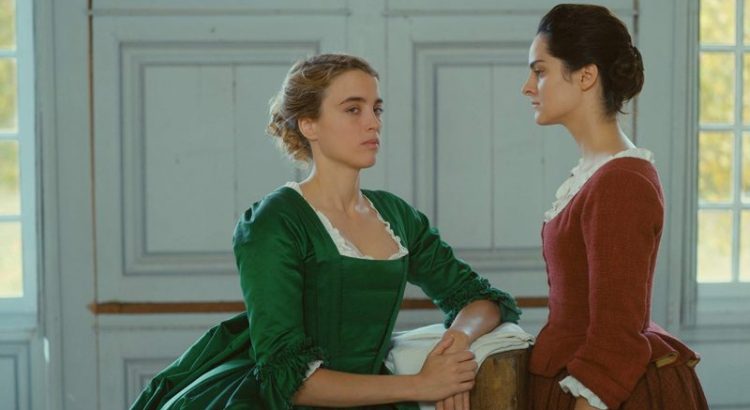
Portrait of a Lady on Fire was a great film. I think more than anything I enjoyed it because it felt so different. Yes, French painting and romance and a dramatic craggy coast suggest a formula, but the reality is that these elements served a higher purpose than simply a love story: they worked in tandem with a great script and thoughtful camera work to produce a surprisingly humorous and touching story not only of romance, but of women and (even as the word feels cliché) sisterhood.


Disclaimer: Though this is an LGBTQ+ story, I recognize that it still speaks to a specific privilege both socioeconomic and racial. There are blind spots in this story, as the understanding of the oppression of one group does not erase the class struggles and other racial inequities present. I still think that this film is worth enjoying, though, because it still speaks broadly to oppression/repression and historic positioning of non-heteronormative sexuality is important.


What most threw me off seeing this film (in a good way!) was the distinct voice of the director and the writing. This film did take itself seriously but at times allowed for some really refreshing comedic moments. These ranged from quippy dialogue to visually clever shots, always keeping me engaged and quite honestly adding a level of unpredictability to the tone. Entering a scene, you never really knew what its purpose was, which was really intriguing in what previously appeared to me to be a straightforward romance.


What was most touching about Portrait of a Lady on Fire is how, for a fair portion of the movie, the main characters are allowed to simply be happy. The audience watches as the two central figures are left to their own devices with the young maid of the house. What results is a really sweet portrait of feminine domesticity–not in terms of a gender role, but rather as a group of women living coexisting in a beautiful way. Of course, there are problems and arguments that arise, but really the three women function as a symbiotic family. Scenes of everyday life are permitted to breathe, taking their sweet time and creating in the viewer this unique feminine vision of harmony, wholly undramatic and wholly human.


I say feminine because the reality is that there are hardly any men acting in this film. It seems as though all the problems in the film, both societal and personal, stem from some unnamed man off screen. And I’m alright with that. I think it is a really interesting way, ultimately, to make a story about women and their real issues without having to explicitly involve the oppressors.


This film speaks to intense internal struggles while also highlighting the beauty and joy that can exist simultaneously with said struggles. I highly recommend it, especially if you’re an artist (those painting shots were gave me such vicarious joy as a painter without access to a studio). If anything, the film is worth it for a beautiful closing long take, one that will long remain in my mind.