PREVIEW: The River and The Wall

Free movie screenings truly are a gift to all, especially when they hit mid-week, the toughest time to get through. And with The River and The Wall, we’ll even learn a little something about the world.

The film follows the experience of five friends realizing just how impactful the in-progress U.S.-Mexico border wall truly is. It combines elements of philosophy, environmental science, politics, and human nature seamlessly, showing us exactly how interconnected such disciplines can be.

Head down tomorrow, Wednesday, February 19, 6 PM to the Gallery in Hatcher Graduate Library to watch with me. It isn’t confirmed, but there will likely be some snacks provided. Just in case, I’ll be bringing my favorite pretzels and some dark chocolate to enjoy.

REVIEW: Oscar Nominated Shorts – Live Action

I’ll be going through and leaving my thoughts on each of these, though I’d like to say that it is really a shame that “The Neighbors’ Window” won. It was truly the least important and most cliché short of all five. That said, seeing these shorts in a theater setting was really unique and enjoyable and way more immersive than I think possible at home when you’re dealing with short film.


“The Neighbors’ Window”
Marshall Curry

As previously stated, this short was definitely the weakest of the bunch. It had this whiny quality throughout, that specific privileged metropolitan 40-year-old why-did-I-have-kids whining that I am sick of trying to identify with. Of course, the point at the end is for these whiny people to realize how lucky they really are but overall I just felt like the point is no one can be happy. The whole cancer element as a way of introducing hardship into the 20-something couple’s life made me roll my eyes. The visuals of shaving one’s head and getting a hospice bed are just so on the nose I had to wonder if this was a satire.


“Nefta Football Club”
Yves Piat, Damien Megherbi
This is the short that I assumed would win. It was clever, well-paced, and actually made my theater laugh out loud. In contrast to the heavier themes in this category, this short felt like a lighter way to go about serious issues. I highly recommend seeing this one, as it is thoroughly enjoyable both on its surface and in terms of technical cinematography and performance.

“Saria”

Bryan Buckley, Matt Lefebvre
This short was definitely hard to watch. I appreciated this story being told, and the way the camera travels throughout the story was impressive at times. I do feel like there was something missing from this, though. Maybe it was because the setting was something I’ve never seen before or because the ending felt like such a binary evil (though it was, but it verged on cartoonish I might say?), but I felt myself hoping for more contextualization I suppose. It is an important piece of film to see though, especially for US audiences.

“Brotherhood”

Meryam Joobeur, Maria Gracia Turgeon
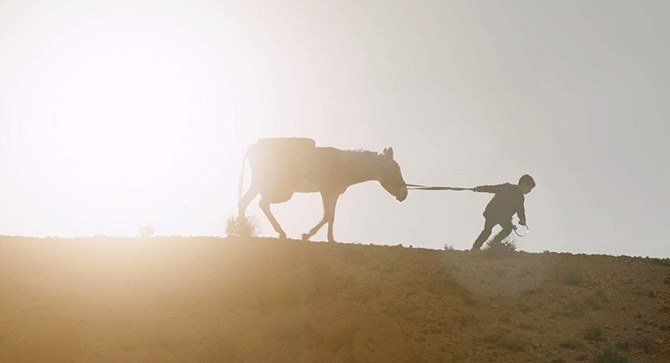
This short was the most intriguing to me of all of them. Centering on a family whose oldest son is returning from joining ISIS, this short was gritty and touching and made me feel like I was offered a window into a world far away from my own. I highly recommend it.

“A Sister”

Delphine Girard
Finally, this piece was a really strong contender for me as well. It was a study of suspense and solidarity, and was probably the most engrossing of all the shorts. The lighting choices and dialogue specifically made this short a memorable and altogether artistic experience. As a woman works with a emergency line operator, one feels both impending doom and an unrelenting hope at the same time, which makes for a stressful but thought-provoking experience.

REVIEW: The Song of Names


***Warning: This review contains spoilers for the movie (and book) The Song of Names

———————————————————————————————————————

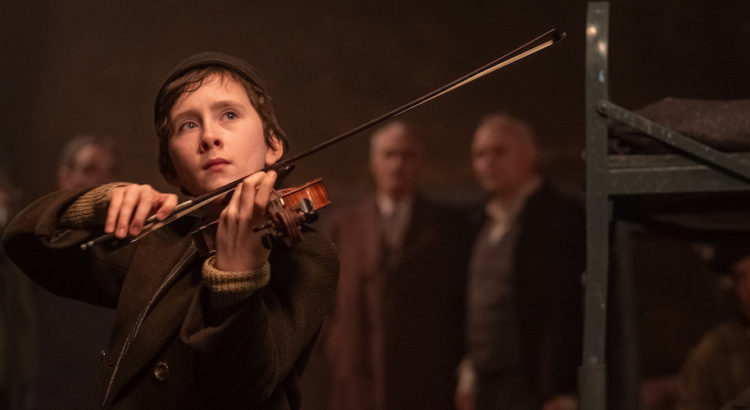
The film The Song of Names, which is directed by François Girard and is based on the novel of the same title by Norman Lebrecht, is part mystery and part historical drama. Centering on 56-year-old Martin’s (played by Tim Roth) search for his adopted brother, Dovidl (Clive Owen), the plot deftly intertwines present and past. There are frequent flashbacks to World War II-era London, chronicling young Dovidl’s rise as a violin prodigy (Jonah Hauer-King), and the bond shared by him and Martin (Gerran Howell), whom Dovidl affectionately calls Mottl. This relationship is shattered when Dovidl inexplicably vanishes hours before his much-anticipated violin debut. Hours turn into days turn into years turn into decades, and still there is no trace of Dovidl, nor an explanation of his disappearance.

Having recently finished Norman Lebrecht’s book, I found that the movie adaptation unfortunately compromised many of the novel’s nuances. In both the book and the movie, Martin begins searching for Dovidl when he witnesses a young violin player at a competition do something that can only be traced back to his adopted brother, whom he has not seen for decades. In the book, it is an aspect of the high school boy’s violin playing – it is described as “time stopping” rubato (rubato is a musical practice of momentarily speeding or slowing the tempo for expressive purposes) and Dovidl’s mastery of it was what made his playing sparkle. Though the young violinist’s use of it is not always tasteful or expertly controlled, for Martin it is an unmistakable piece of Dovidl’s musical DNA, only traceable back to his brother. However, in the movie, the tic that puts Martin on Dovidl’s path is his habit of bringing his rosin to his lips to kiss it before he begins to play. The high schooler at the competition also does this, “for good luck,” leading Martin to believe that this habit could only have come from Dovidl. Though on the surface this may seem like a minor detail, I felt that it diminished the sense of Dovidl’s singularity as a musician in the movie. On top of this, Dovidl and Martin’s childhood relationship is much tenser in the movie than in the book, and I felt like Dovidl’s character was also quite simplified in comparison. I certainly understand that details often must be omitted or condensed in order to fit a several-hundred-page book into a two-hour movie, as well as the fact that some things (such as Dovidl’s “time-stopping” rubato) might be rather difficult to portray on screen, but I couldn’t help but be a little disappointed by these changes. The biggest change, I will mention, between the book and the movie was the actual ending … but I won’t spoil the entirety of both in this review.

The overall plot of the movie, though at times slow, contained its fair share of moving scenes, including when movie-goers finally get to hear “The Song of Names.” Dovidl, who came from Poland to study violin in London, was originally only supposed to stay with Martin’s family until his father came back to get him. However, his entire family, which was Jewish, disappeared during the war, and Dovidl did not know where they were or if there was any hope of them being alive. The Song of Names is a sequence of the names of those who died at Treblinka, the death camp where Dovidl’s family was sent. Meticulously memorized by a group of survivors, it is from this song that Dovidl learns definitively that his entire family had perished. It is the most haunting scene of the movie.

Though The Song of Names has its flaws, I still enjoyed it as a movie. However, the discrepancies between the novel and its film adaptation have only strengthened my stubborn, near-universal refusal to see the movie before reading the book.

PREVIEW: Portrait of a Lady on Fire

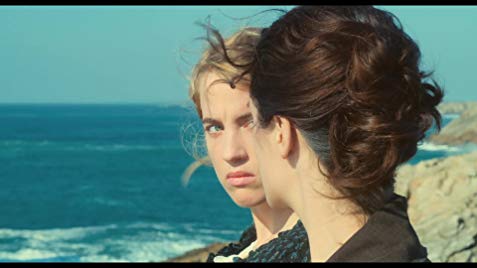
Portrait of a Lady on Fire is a film I have heard much about, despite its lack of attention in mainstream media and throughout the American awards season. Depicting the story of a portrait created in confidence, this French film features arresting cinematography and a look at an intense relationship between two women. This film has been nominated for everything from best actress to costume design to the Palme d’Or, and so there’s definitely something worth seeing here, even if it hasn’t been on many people’s radar.


Come out to the State tomorrow at 7 to see this surely fascinating film and support international cinema!

REVIEW: Oscar Nominated Shorts: Documentary

Not the most uplifting selection of shorts, but these five documentaries were certainly thoughtful and artistic.

They combined beauty with a quiet sadness in the background that came forward only in brief moments. We are offered such an intimate look into personal tragedies and journeys in

this group of films, and that doesn’t always feel completely right. In Life Overtakes Me especially, we observe several refugee children caught in the coma-like state of Resignation Syndrome; they are unaware at that moment of our watching them being taken care of like invalids. The cool, pretty sunlight comes through the window to highlight a delicate hand, the rising and falling of the chest filling with unconscious breath. Their parents are filmed almost as a performance of parenthood, having to ignore the cameras’s eye and the incredible pain of not knowing–their family’s refugee status, whether their child will regain consciousness, what would happen if they were deported. It feels like an intrusion, something I don’t deserve to see.

Walk Run Cha-Cha was the most light-hearted of the five, though it was also the only one that made me cry. Ageism, particularly with women, is strong in the film industry, so I was happy to see an older couple featured in a way that connected them to their bodies and to each other. Too often mature subjects are discounted in their sensuality and ability, instead cast aside as static figures who do not (implied: cannot)

offer anything but old-fashioned wisdom, always from a seated position. They have less 
agency than their younger counterparts, often in a position of needing someone to take care of them. In Hollywood’s eyes, life seems to end somewhere around 35, maybe 50 for men.This shows that as we age there is still plenty more room for learning, for joy, for romance.

St. Louis Superman was touching without letting the audience forget its reality of systematic, racially-charged violence. The incorporation of Franks’ young son King was simultaneously beautiful and heartbreaking (he learns so much so young: his father’s bravery, the effect that one’s drivenness can produce, the hypocrisy of institutions meant to protect, how deeply racism permeates those structures). His innocent eyes take in too much, and as we see him cling fiercely to his father, we’re forced to wonder whether his future will be painted more by cynicism or tenacity. 


In the Absence seemed the most abstract. We see almost no video of the passengers of the ferry, which makes sense as most of their phone recordings were destroyed as the ship sank. A large portion of the documentary featured the slowly tilting boat, a big beast of a structure, looking like a dying creature, maybe a whale. It brings to the mind a guilty kind of disgust; we’re meant to be second-hand mourners, but instead we see the government’s ineptitude and this huge, ugly thing taking its sweet time drowning hundreds trapped on board.

Finally is the documentary shorts winner: Learning to Skateboard in a Warzone (If You’re a Girl). The movie was a well-thought-out mix of history, interview, and politics, while getting closer to the heart through a close connection to a group of talented, spunky young girls. In a land that does not allow for any of the activities depicted in the film, it would have been more accurate to incorporate a touch more seriousness here, rather than depicting Skateistan as a magical safe haven. The point was empowerment and fighting for human rights, but these things can so easily be rosily shown, without the terror and violence involved in their capture.

If you haven’t seen these shorts, I’d recommend taking a pal down to your local theater, as it’s still playing for a few more days most places. This website will find a location near you that is showing them.


PREVIEW: Oscar Nominated Shorts – Live Action

In preparation for the Oscars this Sunday, I implore you all to head to the Michigan Theater and check out the often neglected category of shorts. The live action category offers strong contenders this year, coming from international backgrounds and touching on a variety of important subjects. I’m looking forward to my own first time previewing the shorts before the (inflated and problematic, but still undeniably enjoyable) Oscars.


What’s more is that admission to all the shorts is free with a Passport to the Arts Voucher through the 13th of February! No excuses!