REVIEW: Celebrasia

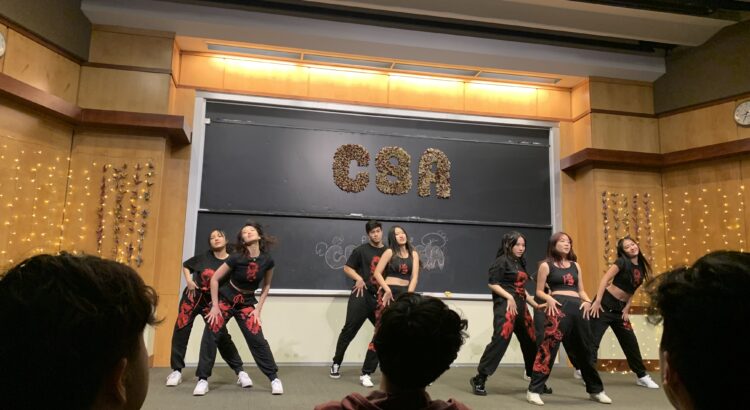
*The image above is rXn, CSA’s dance group*

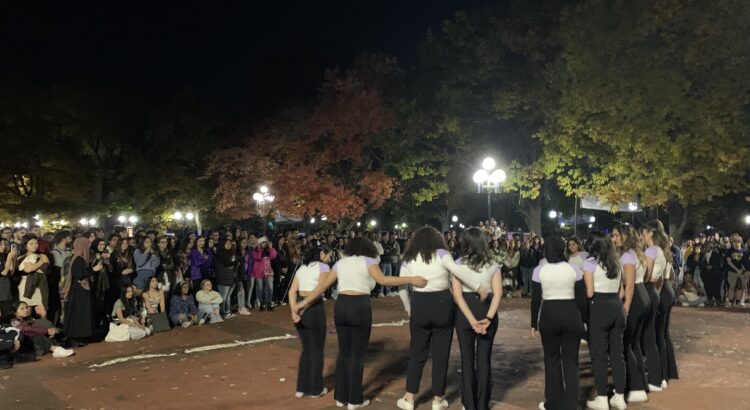
Celebrasia is definitely one of the events on campus with the best attendance turnout. The posting wall was flooded with people, truly resembling a night market, and people had already begun waiting in line thirty minutes before the performance. Unfortunately for those who didn’t come early, there weren’t enough seats (even for the performers); the aisles and back of the auditorium were flooded with people too, and they all stood for the entirety of the two-and-a-half-hour show. It was impressive how eager everybody was to watch the student organizations.

Having The Qingyun Chinese Music Ensemble perform first was a good decision; it established Celebrasia’s emphasis on cultural diversity by presenting various Chinese instruments such as the erhu and guzheng. It was also my first time hearing traditional Chinese music performed live; the sight and sounds of their ensemble were captivating with its heart-tugging melodies and gentle rhythms.

One of the most hyped-up performances was by DB3, the all-male K-pop dance group. It’s unsurprising how excited the audience was, as DB3 went hard on promoting their concept: ‘School Daze’. Each member wore a cute school uniform, and on their Instagram, they posted pictures of their group and all members too. 

In contrast, Moli, the female Chinese cultural dance group performed right after, and it was one of my favorite performances. They incorporated their clothing and fans into the dance as if they were extensions of their body and wore multiple outfits throughout their act. It was amazing how they managed to change clothes in such a short time and still keep the audience engaged throughout.

It’s understandable why popular songs and more powerful moves earn the most cheers, but this group stood out to me because of how different they were. While I was extremely excited watching all the hip-hop dances, I was most awe-inspired by Moli’s choreography.

Revolution, however, had a fantastic performance that successfully fused both culture and hip-hop. This group was also extremely memorable because the audience would collectively scream oooh and sigh aww. Unlike other performances, if one of the members stumbled it still added to the cheerful atmosphere in that way. It was so much fun because of that, and I would giggle at how in sync we were as an audience. Revolution is an extremely large group, but no member shined less than the others as our focus was on the Chinese Yo-Yos being tossed and twirled and caught in sync with the music. Their performances always showcase how strong their teamwork is and how much the members need to trust each other because many of the moves rely on one another to be successful. In small groups, that’s already hard, so Revolution is especially extraordinary.

I haven’t touched upon all of the groups that performed, but not because they were lesser in any way. If I did, then this review would probably be 2,000 words. As much as I’d love to do that, I don’t think it’d do justice to every group’s hard work and talent. That’s why it’s up to you, fellow reader, to go check out their performances yourselves! Especially for the groups I haven’t mentioned. If you’re interested in who did perform,

I want to give a special shout-out to those who worked through the technical difficulties at Celebrasia like Female Gayo and Seoul Juice. It showed their professionalism as performers, and they still killed it despite the additional challenges.

Celebrasia is genuinely one of the most special events on campus. If you missed it this time, don’t miss it next year!
REVIEW: Aida Cuevas with Mariachi Aztlán

8:00 pm • Friday, November 4, 2022 • Hill Auditorium

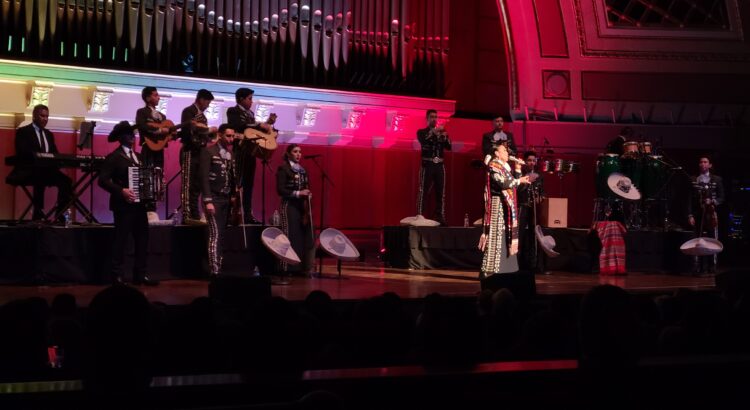
It struck me at some point during Friday’s performance that I was witnessing true mastery of an art form. Aida Cuevas and the musicians of Mariachi Aztlán–and their surprise guest, Valeria Cuevas, Aida’s daughter–demonstrated the kind of personality and confidence onstage that is only achieved by a lifetime of commitment to one’s craft. Aida in particular wowed me with her showmanship. Her banter with the audience felt warmly familiar, almost like they were all in on a little private joke. In a way, they were: conducted almost entirely in Spanish, the performance created a special celebratory bubble of Hispanic language and culture on a predominantly English-speaking, Euro-American campus. In an artistic environment that has historically been exclusive, Aida transformed Hill Auditorium into a space where Hispanics and Latinos were the insiders.

Little moments throughout the evening added to the mood of familiarity and celebration. Before the performance started, El Ballet Folklórico Estudiantil, a dance and mariachi company from Flint, performed a short set in the lower lobby, a space where audience and performers seemed to intermingle at one level, as one community. When I sat down in the auditorium, the couple sitting next to me made small talk for a moment, asking whether I spoke Spanish and suggesting that some 10% of the audience wouldn’t understand a word of the performance, but attended because they love how the music sounds. Later, in a particularly sweet moment, Cuevas wished a young audience member a happy birthday, having chatted with the teen’s mother via Facebook Messenger some time before the event.

The evening’s program took time to spotlight each performer, including the instrumentalists from Mariachi Aztlán. The improvised duet between the company’s pianist and percussionist especially has stayed with me–from my vantage-point on the main floor, I could see their hands flying across their respective instruments, exploring the synergy between their sounds. Near the middle of the performance, after Aida had left the stage to the band for their solos (and so she could complete a total costume change), her daughter, Valeria, entered in her mother’s place. Valeria’s voice balanced dynamically with her mother’s, adding richness to the program, especially their beautiful duet rendition of La Llorona.

Probably my favorite part of the evening was when Aida performed “El Pastor.” Aida’s voice is operatic in quality, and El Pastor exhibits her ability to deftly switch between vocal registers as well as her stunningly regular vibrato. She completed each of these challenging vocal maneuvers with ease; during the instrumental build-up to her vocal entrance, I even noticed as she jauntily tossed her microphone and caught it to reposition it in her hand.

If you didn’t make it to Friday night’s performance, I encourage you to take a look at the video attached below for a small sample of Aida Cuevas’s talent. One thing I know for sure is that should she return to Ann Arbor during my time here, I will be among the first in line for tickets.


PREVIEW: Celebrasia

Come to Mason Hall tomorrow night to celebrate CSA’s Celebrasia! In the beginning half of the event there will be a huge array of food stalls (like orange chicken y’all) provided by multiple student organizations all along the posting wall; in my opinion though, the food stalls are not the best part of Celebrasia. After all, we save the best for last: the free performances! It wouldn’t hurt to grab some munchies before the show though.

From 6:30-8, dances and live music will be provided by (in order):

Qingyun Chinese Music Ensemble (Co-ed traditional Chinese instruments orchestral group)

Blue Records (Live music)

DB3 (Male Kpop dance group)

Moli (Female Chinese cultural dance group)

Konnect (Co-ed Kpop dance group)

akDPhi (Multicultural Greek Sorority)

Flowdom (Co-ed hip-hop dance group)

VeryUs (Female hip-hop and cultural fusion dance group)

Revolution (Co-ed Chinese Yoyo team)

~Intermission~

Seoul Juice (Live music)

Kappa Phi Lambda (Multicultural Greek Sorority)

Female Gayo (Female Kpop dance group)

rXn (CSA’s hip-hop and cultural dance group)

Funktion (Male hip-hop dance group)

K-Motion (Female Kpop dance group)

Photonix (Co-ed glow-in-the-dark dance group)

I provided the descriptions above to give insight into what kind of event Celebrasia will be, but those few words doesn’t do each group justice. You’ve probably seen a good amount of these groups practicing alongside the posting wall these past couple weeks, all of them grinding for Celebrasia. Their practices are multiple days a week and hours long at a time even though their sets are usually max 10 minutes, so I’m super excited to see how their hard work pays off in their performances tomorrow night. Actually, a couple of these groups aren’t even formal dance clubs, but I’m sure they’ll be amazing too.

If you’re interested in Kpop, dance (hip-hop and cultural), live music, and experiencing a cultural event, come to Celebrasia tomorrow night November 6th from 5-9 pm at Mason Hall!

PREVIEW: Aida Cuevas with Mariachi Aztlán

What: a mariachi concert performed by Aida Cuevas, award-winning traditional mariachi singer and recipient of a Grammy (2018) and a Latin Grammy (2010), supported by Mariachi Aztlán, nationally recognized mariachi band from the University of Texas Rio Grande Valley

When: Friday, November 4, 8:00pm

Where: Hill Auditorium

Tickets: free for students with a Passport to the Arts voucher, available at Residence Hall Community Centers, the Pierpont Commons Info Desk, Trotter Multicultural Center, and the Office of New Student Programs in the SAB; otherwise, student tickets are $20 each

Aida Cuevas with Mariachi Aztlán is sure to be a lively performance, showcasing both the richness of traditional mariachi and of Cuevas’s powerful voice. Cuevas last visited the University of Michigan in the fall of 2018, the same year she broke barriers as the first woman to win a Grammy Award for Best Regional Mexican Music Album in the male-dominated field of Mexican ranchera. Known as the “Queen of Ranchera,” the artist is known for her vocal range and impeccable falsetto, drawing comparisons to powerhouse vocalists like Aretha Franklin. The audience atmosphere at Hill Auditorium tomorrow evening should also be festive, with audiences often singing and dancing along in their seats. Consider grabbing a Passport to the Arts and spending Friday evening enjoying this unique cultural experience.

REVIEW: 6th Annual Multicultural Yardshow

It was unbelievable how much fun the Yardshow was. The event had one of the largest crowds I’ve ever seen at The Diag, and people at the back even huddled onto lampposts to get a better look. Before the show started, it was heartwarming to see the organizations already introducing themselves to each other and cheering each other on; of course, the cheers for each other grew even louder during the actual performances! Sometimes, it even became hard to hear the music over the screams and clapping.

It was clear how much pride each brother and sister had too: the members wore matching outfits representing their organization; their introductions were empowering; and their performance included dance moves significant to their history and representation. Some also included demonstrations of their values before dancing. Members of the organization who weren’t performing would chant from the crowd too, creating an even more immersive experience for the audience.

Because each group was so distinct from one another, the energy and attention didn’t die down despite the long acts (some performances even went up to 10 minutes). One of my favorites was a group that only had four students dancing. They exhibited so much charisma and earned lots of cheering for their simple yet exciting moves, and because of their small numbers, it made each dancer that much more memorable.

I also want to give a massive shoutout to Sigma Lambda Beta International Fraternity Inc. for hosting the event and giving an amazing last performance to end the night. They collaborated with another sorority and even gave some lucky audience members flowers!

I’m already looking forward to the 7th Annual Multicultural Yardshow to see what else the Multicultural Greek Organizations have in store for us.

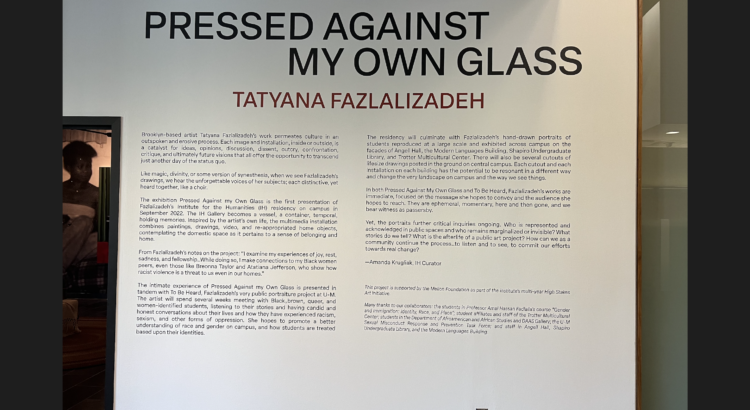
REVIEW: Pressed Against My Own Glass


Entering the exhibit felt like walking into a home. In the doorway, I paused and thought, should I take my shoes off? 

I walked in to look at the first painting, and backed up a little seeing how big it was. Am I allowed to stand on this carpet? I wondered. Knowing the reappropriated furniture had originally come from the artist’s own home, and being used to the etiquette of museums, Pressed Against My Own Glass was refreshing in its way of inviting you in to interact with the art. 

The first painting stares at you with a piercing gaze that scrutinizes you and feels alive. Looking into your soul without so much as a raised eyebrow or any tell of effort being put into making up their expression, makes the gaze all the more powerful and unnerving. So much that I forgot to photograph her. The subject is in an intimate space in the portrait, wearing just a shirt and no pants, sitting in an unmade bed. But I’m the one who feels stripped bare.

This theme of intimacy continued to bear itself through the rest of the room. There are diary entries on the wall on the same side as the door. Right away, you step into exclusive, individual territory. Anyone could have seen the murals, whether they wanted to or not, but those who have come to the exhibit have come by choice. Tatyana rewards and welcomes that. This sets the tone for the rest of the exhibit. 

To put your journal pages, scanned, then blown up on a wall is incredibly brave, I thought.

There were entries about accomplishments, revelations, longings, growing. I shared sentiments with all of them, but the final one I read in the bottom right corner is a moment I feel most women are familiar with. The chastising, the incredulity at our own selves, our own hearts. I’ve had the same feelings over feeling so much about a silly little man, so much that I write about them, and now it’s tucked in the pages here for anyone to read, forever. 

The cracked lampshade, the laminate album of rusted ink photographs; I was really coming into a home. How she could lay down something so personal in a public space, give it up for an exhibition, baffled me. I would want to keep those artifacts close, not letting them leave my bedroom bookshelf. Not even laying the photo album open on a table, only taking it out to indulge myself once a year or so. Tatyana’s courage to lay down so much of herself for others to view inspired me immensely to take more risks in my own art.


Something that especially delighted me was the writing. Since I was expecting pure visual art, I loved the poetry and journal entries and letters. Tatyana collages together a photo, mirror, sketch, earrings, and poetry on the second wall. I love the expression of the girl in the photograph because in its position of covering the poem’s body, her face says, I know you want to read this poem, but hahaha you can’t!

Following right after was the mirror where I fixed my headband. It surprised me to see myself while forgetting my existence, after a few minutes of just perusing through Tatyana’s world.

Just when I thought it couldn’t get more personal, I was brought to tears by Tatyana’s letter to her lifelong (lives long) friend who had passed away. It was while I was reading the letter that I ignored a call from my sister (probably exactly what Tatyana would have discouraged) because I was halfway through and wanted to see it to the end without interruption.

On the fourth wall, was a video projected over a large body of text. The audio included mellow and haunting hummings, the repeated chant of “I made / met peace up in my home,” and a woman in tears singing, “when I think of home, I think of a place where love overflows…”

The clips were calm moving stills. They displayed the motions within a home, like rolling over in bed, humming amidst housework. There were also home videos, facetime clips, a mother getting interviewed with a baby in her lap.

Beneath the projection, the piece reads, “despite the brutal reality of racial apartheid, of domination, one’s homeplace was the one site where one could freely confront the issue of humanization, where one could resist. Black women resisted by making homes where all black people could strive to be subjects, not objects, where we could be affirmed in our minds and hearts despite poverty, hardship, and deprivation, where we could restore to ourselves the dignity denied us on the outside in the public space of the world.” Put in context with the mural project, this exhibit demonstrated exactly that. The murals – all black and white, words bolded and illustrations blown up – were plastered high on buildings, yet, one could pass them without a glance. They resided in the outside world, where the weather’s starting to get colder, people are starting to rush, no time to take their time. The exhibit on the other hand, was lively with personality, colorful, secluded. A distinct sense of home: the oil paintings, personal artifacts, private words and stories. This is how it looks to see the full picture (even if we only uncover a small sense of a part of that person), while I understood the murals as how minorities are often perceived from the outside, paid attention to by onlookers: unsmiling, blunt, general statements, all grouped together. This makes spaces outside of the domestic household hard to feel truly like that of home, a sense of ease and comfort, “a small bit of earth where one rests.” Tatyana addresses this later in the passage: “An effective means of white subjugation of black people globally has been the perpetual construction of economic and social structures that deprive many folks of the means to make a homeplace.” The art was deeply personal and held many sentiments of loneliness, loss, and anguish, and yet, it definitely felt like a place of stillness, of silence, where one could “return for renewal and self-recovery, where we can heal our wounds and become whole.”