PREVIEW: Department of Jazz Showcase

Tired of the relentless droning on of the work week? Can’t quite wait for the weekend to release yourself from monotony’s cruel grip?

Then head on down to the Blue Llama Jazz Club tomorrow, Thursday, November 7, at 7-10pm to witness a spectacular performance by Michigan students and faculty of the Department of Jazz and Contemporary Improvisation! The group will be showcasing both their own compositions and classic jazz songs by some of the old greats.

The cover is free with the purchase of food or drink, though there will be a spot on the check for you to offer a tip for the night’s entertainers. Show up when the mood strikes, or stay for the whole evening. Due to the popularity of the establishment, it is recommended that you make a reservation ahead of time, which can be done here: https://www.bluellamaclub.com/event/u-m-school-of-music-jazz-showcase-2?fbclid=IwAR1Wo3BvqFEDqP5g_F6bYudYogisFpNsWsv9ET2nayrF5ZudCzUwTdZeLLQ

Hope to see you there!

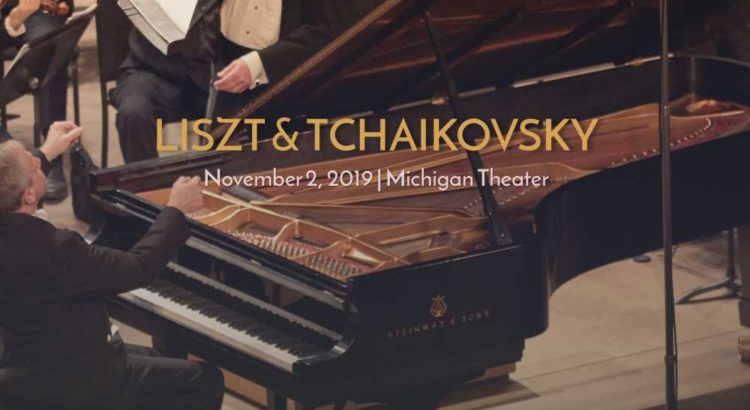
REVIEW: Ann Arbor Symphony – Liszt & Tchaikovsky

The Ann Arbor Symphony Orchestra’s Saturday evening performance at the Michigan Theater was a musical tour de force showcasing a variety of styles and textures.

The concert opened with Wang Jie’s Symphonic Overture on “America, the Beautiful.”  A fugue on the iconic patriotic song that evokes “spacious skies,” “amber waves of grain,” and “purple mountains majesty,” Ms. Jie’s rendition is fittingly also inspired by Pike’s Peak. This mountain in the Rocky Mountains of Colorado is the location that inspired Katharine Lee Bates to write the poem that would be set to the tune we know as “America, the Beautiful”. However, Ms. Jie’s composition was quite a contrast from the style of the original tune that was written in 1882 by Samuel A. Ward. It was dynamic, fresh, and very much alive. Although it was short in length, it managed to get a lot across in that short span of time, and as a listener, I enjoyed every minute and was not ready for it to end when it did. Even more of a treat was the fact that Wang Jie was present in the audience, and when she came onstage at the end of the piece, the audience received her with enthusiastic applause.

In the second piece on the program, Liszt’s Piano Concerto No. 2, soloist Anton Nel dazzled the audience, even garnering calls for an encore, which he obliged to. His playing, which was light and technically brilliant, drew me out of my seat in the hall and into the world of the music for the duration of the piece.

Last on the program was Tchaikovsky’s Symphony No. 5 in E minor, Op. 64. The orchestra overall was excellent, but it was the solo players that shone through in this piece. I was especially impressed by the clarinets at the very beginning of movement 1, the Andante – although they were playing as a pair for most of the time, their blend was such that they sounded like a single instrument. Furthermore, the solo horn in the second movement was exquisite.

The Ann Arbor Symphony’s concert, entitled “Liszt and Tchaikovsky,” was one not to be missed. At the end of a stressful week, it was the musical escape that I needed

REVIEW: Artist Spotlight: Ordinary Elephant

Ordinary Elephant is a folk duo comprising of married couple Pete and Crystal Damore who, for the past five years, have been traveling together in their RV with their three dogs around the United States. The crowd for this music set was small, but as far as The Ark is concerned, this condition always lends itself towards the Ark’s most charming atmosphere: a simple stage setting with a cluster of audience members crowding the stage, setting up an intimate space for music, storytelling, and community building.


The music of Ordinary Elephant is subtle, earnest, and would accompany one nicely on a late-autumn afternoon. Crystal provides strong and vulnerable leading vocals alongside her acoustic guitar, and Pete contributes a strong harmony and proficient technique on his octave mandolin and banjo. I found my favorite moments of the evening captured in the interludes of songs during Pete’s instrumental solos. The chemistry of the two on stage proved to be rather striking: quite present was a gentle acceptance and mutual appreciation for the other that I hope to emulate in my own relationships.

Ordinary Elephant’s storytelling encapsulates a deep and grounded honor for family. Often before each new piece Crystal would breathily whisper into the microphone—as though telling us secrets—about the inspiration for their next song. The great majority of their work seemed to come from stories of her life in Lafayette, Louisiana: her activities of leisure, memories of her grandmother, and warm devotion to her father. Another great delight to share in were the readings of Crystal’s imagist-like poetry with precise words and  thoughtful delivery that seized me. I found myself struck with wonder as we, the audience, were invited into a reflection on the value of the simple and the good.

Crystal most certainly proves to be a competent leader for this duo, but I would have loved more space to get to know her husband through the music. Raised in Austin, Texas, Pete has a charming style and seems to be a gentle, good-hearted man. His harmonies complemented his wife’s so well, and often  helped make the presented lyrics more clear. There were times the words were muddled from a less-than-articulate delivery, yet this commonplace practice is not unusual in the folk genre. What could, I believe, move this group forward is the building of distinguishing dynamics; while their musical style and content reflects deep sentimentality and timeless values, there were moments I had hoped they would expand their reach and deliver some more punch and pulse to their set.

I hope that Ordinary Elephant passes through these parts again some day: every time I sit through a group’s set at The Ark I feel like I’m saying goodbye to an old friend when it’s time to go.

Ordinary Elephant is on Spotify and just released their third album, “Honest,” on May 3rd, 2019. I’ve included their link below, and I encourage you to invest in the music of this delightful duo.



PREVIEW: Westbound Situation Album Release @ the Ark

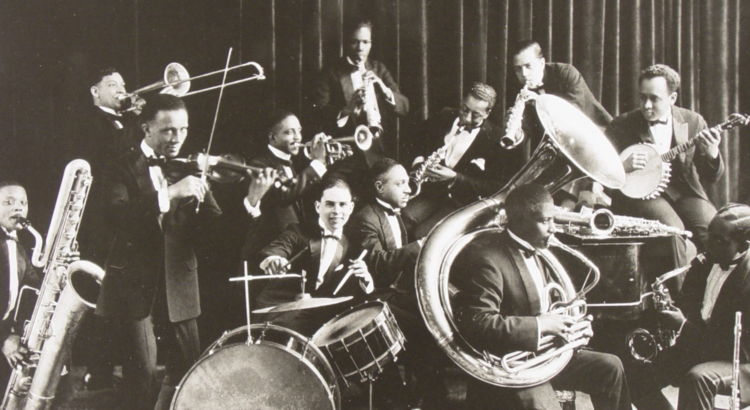
This Monday, November 4th, Westbound Situation will be releasing their debut album titled “Pilot” at the Ark. The group defines themselves as a “chambergrass” ensemble, blending jazz, classical, bluegrass and other folk music. The quartet, comprised of Grant Flick, fiddle, Matt Davis, banjo, Zach Brown, cello, and Jacob Warren, bass, mixes composition and improvisation seamlessly into their entirely memorized arrangements. Their music spans multiple genres and is fun to listen to especially since the group is mainly composed of current UofM students and alums. Whether it is new compositions or arrangements of existing tunes, Westbound has a special way of drawing the audience into the music, and I am excited to hear their new work. 


Details: 

Nov 04, 8:00 PM

The Ark, 316 S Main St, Ann Arbor, MI 48104, USA

Tickets are 15$. 

https://theark.org/shows-events/2019/nov/04/westbound-situation

PREVIEW: Ann Arbor Symphony – Liszt & Tchaikovsky

On Saturday, November 2 at 8pm, the Ann Arbor Symphony will be presenting a concert at the Michigan Theater. While the headline pieces on the program are Lizst’s Piano Concerto No. 2 and Tchaikovsky’s Symphony No. 5, I’m actually most excited for Wang Jie’s Symphonic Overture on “America the Beautiful. On their website, the A2SO invites audience members to “soar through the Rocky Mountains to the Garden of Gods and atop Pikes Peak” in this piece. It combines a “majestic fugue which traces the silhouette of this prominent peak with faint echos of the familiar patriotic song written atop the same mountain.”  While there aren’t any mountains to visit in Ann Arbor, musical evocations of them might be the next best thing!

This event is on the Passport to the Arts, so pick up a voucher for a free ticket on the night of the concert! Alternatively, tickets can be purchased online on the A2SO’s website.

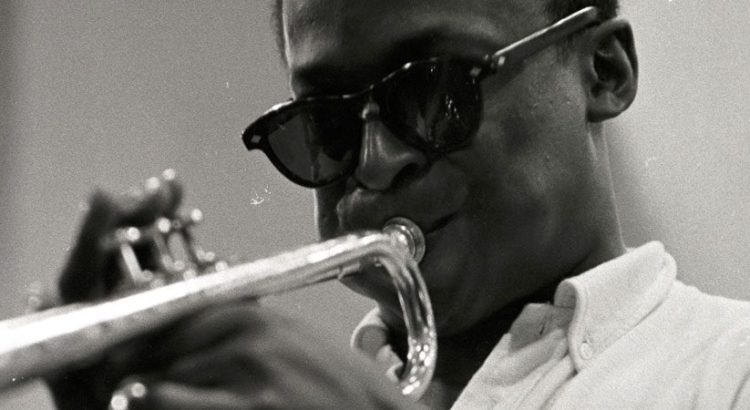
REVIEW: Miles Davis: Birth of the Cool

Before seeing the documentary Miles Davis: Birth of the Cool, I was familiar with some of Miles Davis’s most iconic music (like his album Kind of Blue), but I didn’t know very much about him outside of these recordings. That said, this film, which shares its name with Davis’s 1957 compilation album and is directed by Stanley Nelson, offers a deeper look into the many years of his career, as well into him as a person.

The film went through his life in chronological order, and since he was born in 1926, there is not a lot in the way of video of the early years of his career. However, the documentary deftly handled this, and still managed to be quite engaging. As black-and-white archival images panned across the screen (a classic move from a PBS documentary), Miles Davis’s own words (many of which were from his autobiography, Miles: The Autobiography) were read by actor Carl Lumbly. The film additionally features interviews with scholars and some of Davis’s closest colleagues.

While Miles Davis is certainly one of the giants of jazz, the documentary also does a remarkable job of showing the complexity and flaws behinds the star. He was not a warm personality. Despite his capacity for beautiful music, he was an abusive husband, which is revealed in the film during interviews with his late first wife, Francis Davis (who is featured on the cover of Miles’s album Someday My Prince Will Come). In one perhaps telling (and mildly humorous) anecdote, a colleague recalls asking Miles how he was going to drive his family in his Ferrari. Reportedly, he responded that his kids could call a taxi. He struggled for years with alcohol and cocaine, and the film does not sugarcoat this.

In fact, it was in part due to his struggles with addiction that Miles did not pick up the trumpet for over five years. Between 1975 and 1980, his career was virtually on hold, and many doubted that he would ever return to music. However, he made an incredible comeback, and in my opinion, this was one of the most compelling storylines of the documentary. Not only did he return to the stage, but rather than pushing back on the changing tastes in music, Miles embraced it and adapted, pushing the conventional boundaries of genre.

Miles Davis: Birth of the Cool is now showing at the Michigan Theater. If you are interested in learning more about the jazz legend, I strongly recommend it!