REVIEW: Las Cafeteras

Having looked forward to this event for the entire week prior, I was thoroughly pleased by the impressive performance given by Las Cafeteras during the middle of last week. What I thought would be essentially another Latin pop performance was much more than that. The group experimented with vibrant, modern sounds while maintaining a traditional essence, and the aspect of their performance that was most meaningful to me was the social commentary that was emotionally striking throughout. After experiencing this performance, I couldn’t wait to write this piece and to explain how Las Cafeteras would give us a reason to listen to their music long after the curtains closed.

The style of their music was a perfect blend of modern sounds and a traditional essence. In other words, many of their songs gave a traditional Latin impression in terms of having upbeat tempos, uniform time counts, and classic instrumentation. In addition to these components, the group instilled some of their own personal flares into their songs that gave a revolutionized impression, such as rapping in some verses, filling up the auditorium with the hard and fast strumming of their guitars or ukuleles, or showcasing the baseline beat given by a full drum set. While these aspects of music composition may be more often seen in the rock genre, the group was able to utilize these techniques in their genre to make their music all the more well-rounded, far-reaching, and complete.

Part of what captivated me the most about the performance by Las Cafeteras were the personas of its members. Aside from being musicians, the three main performers were able to show us just how personable they were, expressing their vulnerability during songs about injustice or hard times and their utmost passion during songs about enjoying life and loving your family. When Hector Flores entered the stage, I immediately felt uplifted and attentive; he was the driving force behind the audience’s involvement in their performance. As Denise Carlos bellowed each song, she seemed to sing in a difficult range with ease, allowing us to feel like she could just be a passerby singing down the street. When Daniel French contributed to verses by rapping, he gave an impression that he could be my cousin or brother, writing and singing to address common social issues among our Latin community.

The most important aspect of their performance were the underlying messages in each of their songs. It was emotionally jarring when they talked about the hardships of immigration, the acceptance of diversified communities, and corruption in our nation’s highest influential powers. I believe that their attempt to bring light upon these issue was successful in the sense that everyone left the performance on the same page and forward in the same direction. In the end, what I left the performance with was a drive to achieve purpose in life. Throughout their songs, they continually asked us, “What would you do? Who are you? What are you here for?” and I will continue to support the idea that whatever we choose to pursue in life, it will only be worth doing if we make it meaningful to us.
REVIEW: Benjamin Britten’s War Requiem

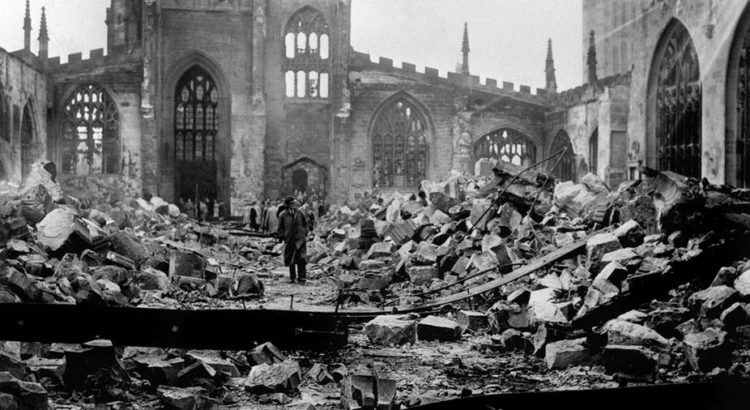
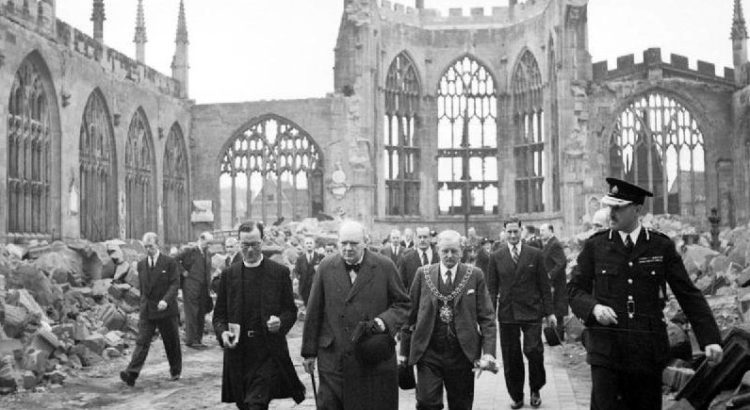
Commissioned by the Coventry Cathedral Festival for the 1962 re-consecration of the Coventry Cathedral, which was destroyed by Nazi bombings during World War II, Benjamin Britten’s War Requiem is a truly haunting piece. Undoubtedly his masterpiece, it combines the Latin liturgy of the Mass for the Dead, sung by soprano and the chorus, and children’s chorus, with the English language war poems of Wilfred Owen, sung by tenor and baritone. The piece was performed this past Saturday by the Ann Arbor Symphony, UMS Choral Union, and Ann Arbor Youth Choral, under the baton of Mr. Scott Hanoian.

The work is chilling from the beginning, and it opens with the tolling of chimes and the chorus quietly chanting “Requiem.” The music is simultaneously very much in the 20th-century style, while also clearly drawing from and referencing much earlier works, and it similarly blends modern poetry with centuries-old liturgy. In some ways, this parallels the old and new cathedrals – the old cathedral was built in the 14th and 15th centuries, and the decision to rebuild it was made the morning after its destruction at the hands of the Luftwaffe.

Shortly after the destruction, the cathedral stonemason, Jock Forbes, noticed that two of the charred medieval roof timbers had fallen in the shape of a cross. He set them up in the ruins where they were later placed on an altar of rubble with the moving words ‘Father Forgive’ inscribed on the Sanctuary wall. Another cross was fashioned from three medieval nails by local priest, the Revd Arthur Wales. The Cross of Nails has become the symbol of Coventry’s ministry of reconciliation.

Her Majesty the Queen laid the foundation stone on 23 March 1956 and the building was consecrated on 25 May 1962, in her presence. The ruins remain hallowed ground and together the two create one living Cathedral.

Source: http://www.coventrycathedral.org.uk/wpsite/our-history/

The Ann Arbor Youth Chorale, which sang the part of the children’s chorus, was seated in the balcony, which was a decision that I thought added to the drama of the piece. The Youth Chorale only sings four times in entire eighty-minute work, and because I couldn’t see them from my seat, their entrances were (almost, if it were not for the translations in the program) unexpected. Furthermore, their position above and away from the rest of the performers and the audience gave a feeling of otherworldliness and innocence.

Also strategically positioned on stage was Ms. Tatiana Pavlovskaya, soprano. Rather than being at the front of the stage with Mr. Anthony Dean Griffey, tenor, and Mr. Stephen Powell, baritone, Ms. Pavlovskaya stood in the midst of the orchestra. I think that this probably enhanced the blend between her exquisite voice and the orchestra, and it also was a fascinating artistic decision – in her black gown, she faded into the background of the orchestra, rather than stand out as a soloist.

The cathedral today, old alongside new.

I did appreciate that the words of all parts, as well as the translations of the Latin liturgy, were included in the program so that the audience could follow along for the duration of the work. Simple efforts such as this greatly increase the piece’s accessibility, since most audience members are not fluent in Latin, and sometimes even the words of English pieces are sung too quickly to digest.

At the conclusion of Benjamin Britten’s War Requiem, the audience sat in weighted silence for a lengthy period, which I think is a testament to the piece’s lasting impact.

REVIEW: Benjamin Britten’s War Requiem

Benjamin Britten’s War Requiem was commissioned for the re-consecration of Britain’s Coventry Cathedral, a beautiful church tragically destroyed in a World War II bombing. Britten himself was a staunch pacifist who had registered as a conscientious objector during the war, and the unique combination of these two elements gave birth to a piece that cuts through the gloss of glorified war stories into the more complex, tragic truth of the raw destruction of war. The text of the 80-minute choral piece is assembled from the Latin Mass for the Dead and the poems of Wilfred Owen, a World War I soldier who was killed just a week before the armistice at the young age of 25. Owen’s poetry is plainly anti-war, and the first of his lines in the piece is the chilling “What passing bells for these who die as cattle?”.


The requiem was presented as the collaboration between the Ann Arbor Symphony Orchestra, the UMS Choral Union, the Ann Arbor Youth Chorale, as well as three vocal soloists. The addition of the children’s chorale as specified by the original work adds a uniquely haunting aspect to the piece, a reminder that war ultimately results in a great deal of innocence lost, and the sacrifice of young lives with full futures ahead. Britten alternates between dissonant chanting mixed with layers of percussion and smooth, lyrical passages as the piece glides from movement to movement. Yet throughout the entire piece, the atmosphere is solemn, almost haunting. Britten refuses to let the audience forget why the piece was conceived, as a response to a tragedy brought about by the senselessness of war. It is impossible to hear the words of Owen echo through the auditorium in the rich tenor of soloist Anthony Dean Griffey without feeling an acute sense of what we have lost to the cruelty of war. Owen himself was a poet who garnered an abundance of post-humous acclaim despite his short career and the few poems he wrote; his career was brought to an abrupt end by a premature death on the battlefield.


Owen is merely one of many young talents, or simply young people, or people in general, whose lives were stolen from them by the merciless combat between sides. War Requiemserves as a haunting reminder that war is not a necessary evil, nor is it one we can afford to distance ourselves from. In the United States, it is perilously easy to turn a blind eye to those suffering from wartime brutality in other countries and in the modern age it is perilously easy to designate war as a “necessary evil”, a tragic yet inevitable byproduct of civilization. Yet as Britten wants us to remember, in a society as advanced as ours, the fact that we have accepted senseless violence over superficial causes as the price of civilization ought to haunt us, and we ought to remember that we have more power over our fates than we like to admit.

REVIEW: Frances Luke Accord and The Western Den

As I entered the building on Main Street after a long day of academic obligations, I rushed in to escape the wintry air, feeling hesitant to enter completely as I was surrounded by scaffolding. After learning that the Ark was having construction done on its box office, I understood why I was greeted upstairs by a polite woman who was a designated volunteer for the event. Despite the initial impression of it being run-down and unprofessional, I was quickly reassured that this was a venue for legends as I walked down the long hallway that was at the top of the stairs, gazing at the professional photos taken of every musician that had performed there. After buying concessions, I took my seat in the dark performance room; the room housed a small stage that was glowing in violet lights and seats for the public at tables near the stage and in rows throughout the room. This was the Ark, and I couldn’t wait for the intimate performance to begin.

The night began with an opening by The Western Den, a contemporary folk group based in Massachusetts whose first collaborative performance with the main musical act had been that night, I would come to learn. She was a singer and keyboardist, he was a singer and guitarist, she was a violinist and bassist, he was a trumpeter, and he was a drummer. I failed to remember their names, but I remembered their images, their personas. All five members of the group suited the instruments they played strikingly well, and I was emotionally intact with the way they had orchestrated themselves even before they started playing. The music they shared was eccentric and refreshing; they played unpopular chords almost in a melancholic way, but with a rich tone and heavy bearing that came off as passionate rather than temperamental. I was completely relaxed during their performance, taken aback by the impressive compositions that this small, relatively unknown group had to offer.

This performance was followed by a short intermission, during which I acquired more tea from the concessions, and then the main musical act. Unlike how the name suggests, Frances Luke Accord is a group of two men; however, they were able to convey a solitary essence as they merely used their voices and a few of their instruments to create their music. Both of the men transitioned between their several acoustic guitars between their songs, all while using their sole two voices to successfully create vocal layerings that are more often achieved by groups with several members. Since we were able to focus only on their voices and their guitars, I was able to follow the mood that they wanted to convey for each of their songs. I noticed when they would play more percussively to portray a chorus or other musical release, when they would take long strums of their guitars to fill up the room, and when they would quietly pluck the guitar strings to create a soft, mellow mood as the end. I was on edge throughout most of the performance, eager to see what new direction they would take us in with each second that passed.

Overall, I left this event very pleased and I felt like I wanted to stay in the Ark forever. While I was unsure what the outcome of my experience at this event would be, I am happy to say that I can trust my curiosity in new experiences to lead me towards the things in life that bring me true joy.

REVIEW: Israel Philharmonic Orchestra

It’s been some time since I last attended a Western classical music concert. I was excited to see the programme, which included a Concertino for Strings, Schubert’s Symphony No. 3, and Tchaikovsky’s Symphony 6, Pathetique. The Concertino I thought was a pleasing piece but lacked a storyline to give the music direction. I wasn’t too familiar with Schubert beforehand, so I enjoyed hearing his 3rd symphony, finding it more elegant and a little less thunderous than Beethoven. Being a fan of Sleeping Beauty and Swan Lake, however, I was most excited to hear Pathetique for the first time. I am not a particularly emotional or vividly imaginative thinker, so I was surprised to find myself with incredibly clear mental images for each movement of the symphony. The first movement, for example, evoked the feeling of someone in such deep despair that they were almost angry, and even I found it incredibly moving.

I knew the Israel Philharmonic would be good, but I was completely unprepared for how good. Even their tuning sounded like music. I loved watching the musicians move; in the first piece particularly, the orchestra was so in tune with each other that their instruments and bodies moved not just at the same times but at the same angles. While this is something that does occur in other professional orchestras I’ve seen perform, the synchrony was especially marked here. And, of course, they were perfectly aurally synchronized as well. I’ve been told before that when instruments are perfectly in tune with each other, you can hear the note vibrating in your ear. That comment referred to instruments playing the same note. The Israel Philharmonic, meanwhile, at one point played a set of different notes that were so perfectly dissonant it caused my ear to thrum in an oddly comforting way. I was floored. The musicians created a more nuanced interpretation of the music than I’ve ever heard. For example, Pathetique began with the double basses fading in, and ended with the double basses fading out. Normally, it’s easy to tell when instruments stop and start, since it’s almost impossible to go from the absence of sound to sound without that transition being obvious, but the Israel Philharmonic managed this almost-impossible feat with deceptive ease.

And then came the encores. I was almost disappointed when Yoel Levi, the conductor, stepped back onto his podium, because how could anything be adequate to follow Tchaikovsky? And then they began to play a piece I didn’t recognize (I later learned it was Elgar’s Nimrod), and I immediately realized they’d found something that was not only adequate but perfect to follow Tchaikovsky. I look forward to listening to Nimrod again soon, but I’m afraid a recording of the piece will not do it the justice that the Israel Philharmonic did. And then Levi came out for a second encore, and I was again disappointed, but once again, that disappointment dissipated into a sort of melting sensation as they began to play the waltz from Swan Lake. Gazing at Hill Auditorium’s intricate ceiling as one of my favorite pieces of music washed through me, I wondered why I had bothered to wear makeup that night, as this music was bringing all my usually-docile emotions and stirring them up, leaving me feeling exposed in a way no makeup could adequately cover.

REVIEW: Swaranjali

This year, Swaranjali was a little more limited in scope than it has been in the past – I believe there were fewer performances than I’ve seen in previous years. However, the performances were, as always, of excellent caliber. Every time I attend a Sahana concert, I find something different to consider as I watch the performance. This time, there were two things that struck me.

First, one of the performances was a Kathak piece, Kathak being one of India’s classical dances. About 15 years ago, I used to take lessons in Bharatanatyam, another Indian classical dance. I’ve seen multiple performances of both styles of dance and others before, yet it was only last night that I consciously registered that there is a difference in the way Bharatanatyam and Kathak dancers hold their hands. The way you hold yourself – what I know from partner dancing as ‘frame’ – is incredibly telling about the feel of a dance. I’m amazed it took me this long to see the distinction, but after having realized this, it was interesting to think that to experienced performers, the difference, of course, must be a night-and-day contrast.  And yet Sahana often does performances that blend different styles of music and/or dance, and the way they navigate that blend has never been jarring. I think their performances are stronger for it, and in fact, that was the theme of another dance piece at Swaranjali. This one was first danced in Bharatanatyam, then in Odissi (a third classical dance), and then in a combination of the two. It was incredibly intriguing to see two dancers, each experienced in one style, try the other’s style and manage to put their own spin on it. The performance worked very well, showing that interdisciplinary work often produces the most innovative results.

The second thing that struck me as a result of Swaranjali was the very different air around performances of classical music. In India, classical music seems to flow much more freely between improvisational and structured music. It also seems to have a much more collaborative air (although, not having attended very many jazz concerts, I can’t make an authoritative comparison to jazz). When listening to Indian classical music it always seems like a team effort even if there’s only one person playing at the moment – I think it might come from a general sense on my end that the musicians are all very attuned to each other, and that the music they’re improvising is still stylistically cohesive with the piece they’re playing, both of which I find don’t always happen in other improvisations.

And, of course, there’s a certain joie de vivre about an Indian performance that I’ve never experienced elsewhere. Sahana’s performances always evoke for me that sense of tight-knit belonging, humor, and pride that I feel when I am surrounded by my cultural heritage.