REVIEW: The How and the Why

Was it worth it?

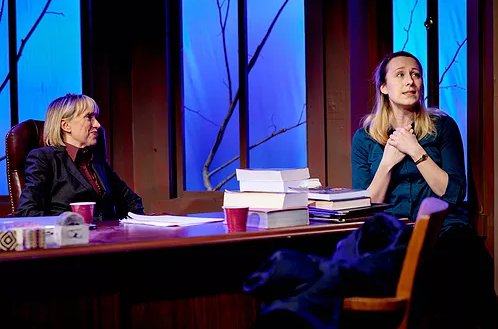
Zelda, an award-winning evolutionary biologist for her work on the ‘grandmother hypothesis’ (which suggests that grandmothers improve their grandchildren’s initial chances of survival, hence giving a reason for grandmothers’ survival past menopause), meets her daughter Rachel, a PhD student in the same field with a new hypothesis on the reason for female menstruation (as a defense against the toxicity of sperm), for the first time in The How and the Why. As they discuss their ideas, as they share with each other their past experiences, this question of worth, in a variety of ways, becomes a focal point.

Is love worth it? Zelda, direct as ever, says it’s just stress. What does it feel like? she asks Rachel at one point. As a scientist in and out, this question is one I think about often. But despite the question, it becomes clear Zelda loves deeply, and, I think, understands the sentiment more fully than Rachel, who believes that when you love someone you always put them first but hasn’t quite figured out yet how to do that while maintaining one’s own self-worth.

This juxtaposition of Zelda and Rachel is an interesting one, of maturity and youth, levelheadedness and emotional volatility, professionally experienced and just beginning a career. I think that the overall result of this is that everyone can relate to one of the two women; the downside is that because of the play’s context, Rachel was usually the one learning, not providing the answers. Zelda, as mentioned, provides answers and advice that Rachel, with the hotheadedness of youth, freely disregards. I enjoyed Zelda’s character very much, partly because it mirrored my own: scientific and logical, she encourages Rachel to pursue her hypothesis even though it ostensibly contradicts Zelda’s own.

It was impressive that this play was so accurate with its scientific details – Is it worth it? comes up again as Zelda and Rachel discuss whether the benefits in their theories (cleaning out the uterus, for example) outweigh the risks (expending energy on creating a new uterine lining every month). Yet somehow the play still had so much time to delve into its characters’ personal issues. It is a rare breed of artwork that manages to give equal weight to both science and people, and Sarah Treem, the playwright, managed this extraordinarily well.

I thought a lot during the play about how resilient women are. Towards the end, Zelda has just revealed some very personal details and is, naturally, somewhat shaken up as a result. However, Rachel then begins to get anxious about something, so Zelda composes herself and puts her armor back to help Rachel. I see this tendency in real life, in the women around me and in myself, to make ourselves available for those we love even when we are facing our own difficulties. Similarly, we don’t let our difficulties break us; we always find a way to bend with them and then move forward. Whether it’s a less-than-perfect presentation or that messy thing called love, Rachel and Zelda do the same, emerging as stronger scientists and more complex people as a result.

Was it worth it? Some days yes; some days no.

REVIEW: Love and Information

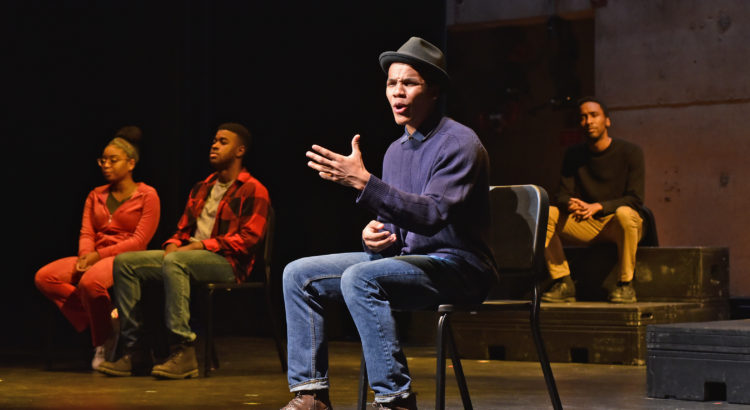
Like how the actors were bombarded with information, I feel bombarded by the number of vignettes I saw. I am not sure what to make of them. I feel as if I have just read an elusive poem and can not go back to reread it. I recognized that the color scheme of the actors’ clothes were possibly coordinated with different themes. Some of the colors were orange, red, green, and yellow(?). And I noticed some themes that perhaps went with the colors: youth, death/grief, betrayal.

There were some scenes that were incredibly random and just made me laugh. At times, the play felt like an arbitrarily-pieced-together quilt. There were scenes about secrets, schizophrenia, suicide, being a recluse, research on chickens, dance, playing the violin, knowing fear, not knowing remorse, being a mother, infidelity, insomnia, “dog” (this one was random and made me laugh), grief, spies, torture, etc (there were a total of 57 or 60 vignettes). Can you tell why I felt overwhelmed?   

There were several scenes that were particularly memorable to me. In one scene, one of the actors asked if sex was just information. Asexual organisms make duplicates of themselves; sexual organisms exchange genetic information to create a being that (hopefully) has a greater chance of survival. Genetic code is information, so is sex just an exchange of information? Weird.  

Two of my favorite vignettes were about “the kid” who didn’t know pain or fear. How does one explain an innate experience? I remember one of the actors, in an effort to explain pain, said something along the lines of: “It’s like unhappiness in your skin.” It made me laugh, because it’s true! Pain’s unpleasant; it makes you avoid the action or event that causes it. How do you explain such a sensation to someone who does not feel it? In the vignette about fear, a kindergarten teacher sat all the students down and read them a story book. I can’t remember the last time someone read a book to me. The scene was nostalgic and endearing. Kindergarten was so long ago, and yet not that long ago at all—for any of us really. The kid in the book who didn’t know fear was not afraid to spend the entire night in a haunted house. He was incredibly brave. His friends tried to explain to him what fear was. But in the final page of the book, he encountered a lion and got eaten. The vignette ended with the kindergarten teacher abruptly announcing the kid had gotten devoured and slamming the book shut. It was an ironic, grim, and rational story of the consequences of not having the helpful emotion of fear.

Regarding the title of the play, every vignette conveyed “information,” but “love”’s role in the play was more ambiguous to me. The play seemed to interpret “love” as meaning human connection in the broadest sense. Merriam Webster says that “love” is:

  • affection based on admiration, benevolence, or common interests
  • an assurance of affection
  • to feel affection or experience desire
  • warm attachment, enthusiasm, or devotion
  • unselfish loyal and benevolent concern for the good of another
  • to cherish

Personally, I think “love” is much stronger than “affection.” But the definition of “love”  encompasses so much, perhaps it can mean simply, “to care.” Love and Information. Affection and Information. To care about information. How information informs affection: deepening it, lessening it, complicating it.

The play ended with actors taking selfies with audience members. I wonder if my picture got posted somewhere, or if it’s lost to the cloud…of information. Should I even care? Was this an intentional part of the play? Was the play purposefully enticing me to reach out to cast members—to care about talking to someone on the search for information?


*Photos by Peter Smith Photography


REVIEW: The Exonerated

The Exonerated was a well-written and evocative play. The six stories were effectively interwoven with smooth transitions, and the music segwayed well between scenes. The unfolding of events was compelling and heartbreaking. To balance out the anger, grief, and hopelessness, the play also utilized elements of religion or the divine to bring hope. I walked away with so many emotions and was unsure of what to do. What can I do to advocate for people who have been wrongfully accused of a crime and imprisoned? I don’t know.

Each storyline had possible “reasons” for why someone was wrongfully accused (because as an audience, consumer of stories, and general human beings we are inclined to look for reason and logic, and the playwrights acknowledged this). In three of the six stories, it was “because of” the person’s race. Most, if not all, of the stories took place in the 1970s (Not to say that racism no longer exists, but blatant racism was more prevalent during that decade.) Even when there was no evidence—or even more despicably, when there was evidence that indicated that they were innocent—they were tried and convicted.

The other two stories were about white men. One man’s parents were brutally murdered, he was convicted, and years later someone found out the murderer(s) were actually members of a gang. The other man was accused of being a “perverted, bloodthirsty homosexual” who took out his anger by murdering a woman. The play did not go into detail about his sexuality; later on, he married a woman, so he may have been straight or bisexual. But his sexuality was not relevant. What was relevant, was the label of being “gay” was put on him to convince people in the court that he was guilty (Remember that the conversion therapy [a recognized form of torture] trend started in the 1970s. It’s still legal in some states, and gay marriage only became legal in 2015). News of his presumptive sexuality was broadcasted on television and he was raped in prison. His perpetrators carved profanity into his skin, so deep that plastic surgery could not repair the damage. Awful, awful stuff.  


The remaining story was about a woman who, even after someone else admitted to committing the murder, was left in prison for another sixteen years. She was the first woman to ever be put on death row.

The “reasons” why the latter three people were falsely convicted were less clear. Perhaps because we do not (I did not) generally think of white people being cheated by the justice system (unless they are a female in the context of sexual assault), and the narrative of the illy treated African American is so disgustingly common.

The most important thing I want to point out is that even now, people are wrongfully convicted all the time. This narrative is not unique to the 1970s. Being a victim of systematic injustice does not just happen to African Americans, or women who are sexually abused, or gay white men. It is not unique to a certain race or social class. Plenty of children of all races and social class are under the guardianship of caregivers who abuse them, sometimes for decades, even when Child Protective Services has already been called numerous times.

Of course, being wrongfully convicted is more common for certain demographics because our justice system favors the economically well off (if you don’t have the means to hire a lawyer, you may be assigned one who is overworked, underpaid, unexperienced, or has no intention of looking out for your best interest. It happens all the time.) Or, being of a privileged social status may decrease your chances of becoming a victim. But it does not prevent it. What I have learned throughout the years, is that the court system is all about connections and social status.

Why, when two people commit murder, one is put on death row and the other is sentenced ten years in prison, and then gets out in three? Where is the logic? What do we do in a society that wrongfully convicts the innocent and acquits the guilty? That’s not to say there aren’t any success stories. But I often wonder, do we have a justice system? Or do we have a system that places blame? Personally, I believe it is the latter.

For the unlucky ones—when you come out of prison, you have to learn how to feel again. If you didn’t have problems with mental health before prison, you most likely will have them after being in that kind of an environment.

I feel compelled into action. But I don’t know what to do. The only bandage I can think of for this enormous wound is compassion. Believe someone. Being wronged by the justice system does not automatically mean you lied or did something wrong. Sometimes, the most damaging experience isn’t the traumatic incident itself, but afterwards, when people don’t believe you. Or when your credibility is scrutinized in court. Or when you have to recount every traumatic moment in excruciating detail while prosecutors cross-examine you and question why your description of the events was not precisely the same as the testimony you gave six months or two years ago. Because yes, court cases do get dragged on for that long, and often much longer.

Be aware of our unjust “justice” system. We may not be able to eradicate the unfair and immoral. But we can listen.


*photos by Peter Smith Photography

PREVIEW: Merrily We Roll Along

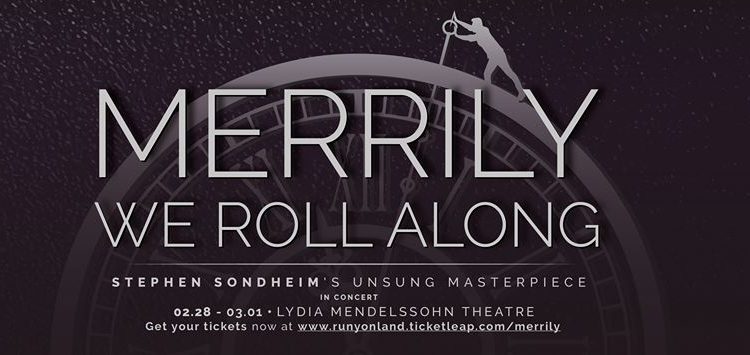
Runyonland Productions, Ann Arbor’s new theater company, is bringing Sondheim’s iconic Merrily We Roll Along to the Lydia Mendelssohn Theater as a staged concert production. The musical revolves around Franklin Shepard, starting with the peak of his songwriting career and moving backwards in time to show the big moments of his life and the choices he and his friends made that led to the present. Showtimes are February 28 and March 1 at 7:30 PM and tickets can be bought online at https://runyonland.ticketleap.com/merrily/.

REVIEW: Love and Information

What’s the purpose of life if not to find love and learn information? “Love and Information” features many short vignettes of everyday life, showing scenes everyone can relate with to some extent. With the anonymous characters running around onstage, there is a universality of the scenes that makes everything connect. The play explores different variances of love and methods of information as the characters struggle to gain information and connect with others.

The title of each vignette aptly described the main point of a scene. Words such as “secret”, “remote”, “silence”, “dream”, “privacy”, “children”, and “facts” convey the information within that scene in a succinct way, while giving some frame of reference so the audience isn’t completely lost. The reoccurrence of certain themes, such as the child who didn’t know certain emotions, brought an underlying thread between these vignettes that might otherwise be hard to connect.

The 18-person SMTD cast embodied all the characters wonderfully, slipping into one persona only to run offstage and return as someone completely different, though the intrinsic drives of that person remain the same. This show, written in 2012, remains completely contemporary, featuring the latest dance moves and songs and all the current trends. The presence of screens on cell phones and televisions is also prominent, a modern source of constant information, one that can invade our privacy and also steal our attention.

The stark contrasts of some of the scenes leave a stronger resonance. One character has perfect memory and can recall any detail of any date, while another character can no longer recognize his own wife. One character suddenly and happily remembers a vivid memory of his dad during a memory game, while another character is traumatized by a flashback they wish they never remembered. Information is fleeting, and it can also be absolute.

The same can be said of love. Affairs can mean the end of something great, or the start of something better. As one vignette points out, sex is a way of transferring and creating information through an act of love, connecting the title of this play neatly.

The play ponders the question of science, philosophy, religion, mathematics, politics, and humanity — everything that gives us thought, forms our personalities, and makes us human. The characters range from children to elders, and it also touches on mental illnesses, such as schizophrenia and attempted suicides.

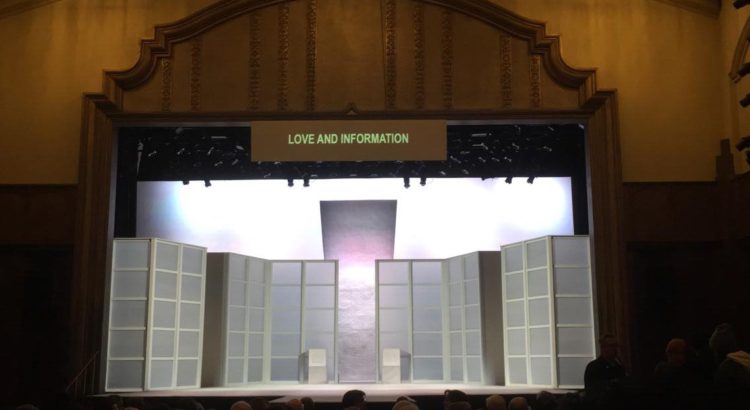
One of the most appealing aspects of the play was the scenery, set designs, and costumes. Each separate scene was distinguished by its color, and all the props and clothing accessories that appeared in the scene emphasized this distinct feature. With a chilling white backdrop surrounded by white boxes and actors in all white clothing to start with, the evolving and uniforming color schemes around this base neutral color brought life to this play.

Love and information can bring great joy and meaning to our lives. However, loss and pain are also facets of love, just as information can be painful and lost just as easily. This play leaves us trying to make sense of the universe, our existence, our relationships, and our daily lives.

PREVIEW: Love and Information

Are you doing anything tonight? Because Love and Information is going on at 7:30pm. The play features 57 hilarious vignettes that explore human connections affected by the bombardment of information from the internet and social media. I don’t know about you, but I could use a good laugh now during the busy semester.

The play is written by Caryl Churchill who is considered England’s best living playwrights, and she’s famous for her provocative and relevant plays. So not only will the play address important social issues but it will also be framed in a humorous way.

(Photo credit to Peter Smith Photography)

Aside from Love and Information, other works by Churchill will also be performed during the Caryl Churchill Festival. See below for more information.

Caryl Churchill Festival: a weekend of free staged readings and lectures celebrating the 80th birthday of this important playwright.

Schedule:

Friday, February 22

  • Newman Studio, Walgreen Drama Center, at 7pm
    • Student reading of Top Girls, directed by Bruna d’Avila,
    • Short intermission
    • Student reading of The Skriker, directed by Skylar Siben

Saturday, February 23

  • 3pm at Lydia Mendelssohn Theatre
    • Faculty stage reading of Escaped Alone, directed by John Neville-Andrews with Priscilla Lindsay, Janet Maylie, Gillian Eaton, and Pamela Lewis.
    • Tea served by Friends of Theatre
  • 4pm at Lydia Mendelssohn Theatre
    • “Caryl Churchill at 80” lecture by Professor Leigh Woods
  • 7pm at Newman Studio, Walgreen Drama Center
    • Student reading directed by Maggie Shea
    • Short intermission
    • Student reading of Cloud Nine, directed by Marty McGuire

Student readings are courtesy of Basement Arts