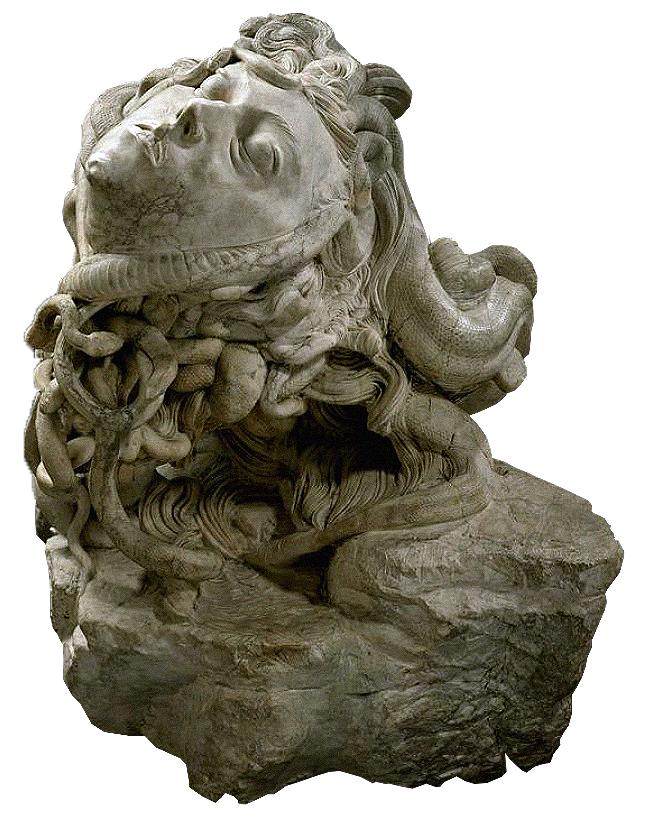
PREVIEW: Here Be Sirens

Were you the weird kid in middle school who was obsessed with Greek mythology? Can’t believe that anyone hasn’t seen the Percy Jackson movies? Love listening to people scream-singing while wearing large wigs and formal clothing?

If you answered “yes” to any of these questions, you’ll just love Here Be Sirens, an opera telling the tale of the lives of a trio of sirens. Oftentimes, these creatures are made out to be one-dimensional monsters, evilness being their only characteristic. Composer, performer, and playwright Kate Soper approaches her main characters with a more open mind, giving them internal desires and dreams that conflict with the caricature that outsiders typically see.

Come on down to the Kerrytown Concert House this Thursday, November 29 at 8 PM to experience Soper’s masterpiece. Tickets are absolutely FREE with your passport to the arts ticket, or $10-35 if you are PTTA-less.

REVIEW: Thus Spoke AnnArbor Fall 2018 Performance

I had been made extremely curious about this semester’s performance by “安娜说 / Thus spoke Ann Arbor” from viewing the gorgeously illustrated posters brightening up campus in the weeks leading up to the show.  While I had been aware of the group for several years now, I finally decided to attend their performance for the first time, and after seeing it I can confidently say that I couldn’t have made a better decision.  After arriving early to make sure to get seats near the front of Lydia Mendelssohn Theater, we were informed that it would be a full house, which hardly came as a surprise at that point due to the fact there was only a few empty seats in sight and the noise level had grown to a nonstop roar.

One of the elements I appreciated the most about the show was the choice to divide the performance up into three shorter plays. It gave many more of the club’s members time to shine in a leading role than if they had just done one play, and the group was also able to challenge themselves to perform three distinctly different styles of play, suiting different members individual strengths.

The first play was a comedic romp titled “黑暗中的喜剧 / Comedy in the Dark.”  The play used physical and situational comedy as characters unveiled hidden secrets in a darkened apartment after a freak power outage. The second play, “人质 / Hostage“ was the shortest of the three, and featured a very limited cast and set. Instead it was more figurative dark comedy to the first play’s quite literal one, with two thieves mistakenly taking a suicidal girl hostage in an attempt to escape the police hot on their trail, and the intense interplay that followed.  The third and last play was “立秋 / The Start of Autumn” set around a century ago in China.  This was by far the most serious of the lot, and told the story of several families internal drama as well a competition between tradition and newly adopted Western ideals.  

The transitions from play to play were quick and painless, with crew members scurrying about to clear the relatively complex set up of the first play for the instead very minimal one of the second.  Considering how long the night was already, nearly reaching a full three hours, I appreciate the brevity in these areas.

The one drawback to the set up was that by the time the third play began most of the audience, myself included, seemed to be getting restless.  With no intermission, the last play with its distinct five chapters and several scenes basically revolving around intense discussions about banking and finance, I’m not proud to say that I was more than a little glazed over myself.  But the fact that the group did manage to hold the audience in rapt attention for the nearly two and a half hour run of the show is impressive in and of itself. 

Additionally, while there were undoubtedly a few intentionally humorous moments in the second two plays, especially the second one, because the audience had been primed to laugh in the over-the-top comedy of the first play, I noticed that the audience, myself included, began to burst into laughter even in otherwise inappropriate moments.  

While the group could have easily put on the play without adding subtitles on projections on either side of the stage for the very small percentage of the audience with less than fluent Mandarin, I appreciated the extra effort put in to make the performances accessible. As a member of that small percentage myself, I definitely found myself referring to to the subtitles frequently throughout the night, especially if a character was talking quietly and I was struggling to hear what they were saying in the first place.

That being said, with so much physical comedy getting the most laughs in the first play, and the more subtle acting in the second two, the experience was definitely better when ignoring the subtitles and instead focusing on all that activity on stage. The actors and actresses couldn’t have done a finer job, and I didn’t catch a single slip up as they all seemed to have prepared their lines to perfection. There was one humorous moment in the first play, however, when one of the sofas being used as props collapsed to the floor.  But like true professionals the actors and actresses continued undeterred, even finding time to prop the sofa back up, resulting in another wave of laughter. I was impressed by the professionalism of cast and crew alike, with the obvious hard work preparing for the show paying off.  I definitely plan on keeping an eye out for their performances in the future, and attending all that I can.

REVIEW: Cabaret

Life is a cabaret. And MUSKET delivered a show set in Nazi Germany that made stark connections to America today. It was hard to walk away from the Power Center without realizing the many parallels that are still present, almost a century later, and it was certainly unsettling, which means these artists succeeded in delivering their message through an exceptional performance.

Wilson Plonk was a wonderful Emcee, setting the stage with the Kit Kat Klub girls and boys with many dance moves. The Emcee and Sally Bowles provided insightful commentaries as they performed at the club, the most striking number for me being “Money.” The Emcee started out as purely entertaining, being humorously risqué and joyously but as he became more distressed and terrified throughout the show, that unsettling fear about the actions underlying the show became more stark and drastic. When the Emcee held up the phonograph that played the recording of “Tomorrow Belongs to Me”, with a solemnly grim and pained look on his face, my stomach dropped, but that was only the beginning. As Fräulein Kost and Ernst Ludwig sang the reprise with a haunting pride, Clifford Bradshaw’s horrified face explained it all. Later, the scene with the Gorilla in “If You Could See Her” was shocking and impactful in how ridiculous it appears and how implicit we all are in its perceived ridiculousness.

Caroline Glazier delivered stunning performances as Sally Bowles, not just in the Kit Kat Klub with the rest of her girls, but particularly “Maybe This Time” and the iconic “Cabaret,” where she was shaking with anguish as she belted out these words. Samantha Buyers and Aaron Robinson portrayed Fräulein Schneider and Herr Schultz very realistically, and their duets, “It Couldn’t Please Me More” and “Married” were very moving. I think their performances were the most exceptional and compelling, since these college students brought the pains of old age and young hopes very much alive.

The director Isabel K. Olson made an interesting choice with the ending, having the characters step forward and say the line that embodies their way of approaching and handling and going through life. In the program, she said it beautifully: “are we the audience to injustice or active participants working against it?” As Sally Bowles shrugs aside politics and chooses to live in ignorant bliss, Herr Schultz desperately claims that everything will be okay because he is a German and Fräulein Schneider laments that she has no other choice. As the Emcee reveals his concentration camp outfit, strobe lights go off and all the actors jolt in a horrifying final moment before the ghost light is brought onstage and the actors take a single bow, leaving the light, and its impact, behind.

REVIEW: An Evening with Audra McDonald

The queen of musical theatre graced our presence in Hill Auditorium on Saturday, and I am left speechless. Of course, Audra McDonald blew everyone’s mind with her performances of both classic and lesser-known pieces, all with a meaningful message behind them, with her iconic soprano voice that has won six Tony awards.

She started the night with “I Am What I Am” from La Cage aux Folles and its powerful message of being who you are authentically and unapologetically. Then, she sang a selection from Jason Robert Brown’s Song for a New World, showcasing her amazing ability to storytell with “Stars and the Moon.” Also, it is noteworthy that even someone like Audra, who has performed this tour many times and sang hundreds of songs in her entire career, can forget the first words to a song. Nobody is perfect, not even someone as perfect as Audra McDonald, who had to ask her wonderful music director Andy Einhorn on the piano for the beginning to the song. Audra later sang a grand little snippet of “Being Alive” from Company, giving us plenty to think about when it comes to love and what one truly wants.

Before many of the songs, Audra provided the context surrounding the song she was about to sing, or gave a fun little anecdote about it. In the case of “Simple Little Things” from 110 in the Shade, she continued her theme of dreams after telling us about the Golden Fleece and big dreams that the main character Lizzy just simply didn’t want. Later, she also provided an entertaining performance of “Vanilla Ice Cream” from She Loves Me, which would have been hard to follow if she hadn’t given any context. Additionally, it comes as no surprise that Audra was dominating solo show choir competitions in high school, and she sang the song that won her first place one time, even if her 13-year-old self did not truly understand what “Cornet Man” from Funny Girl was all about.

Audra McDonald reluctantly sang a song that she believes is over-sung, performing her unique take on “I Could Have Danced All Night” while gradually bringing the key up, showing off her impressive soprano range, and also getting everyone to sing along since it is a fairly well-known theatre piece. She also paid tribute to her dear friend, Barbara Cook, by singing the song, “Chain of Love,” in the musical The Grass Harp. Audra then blessed us with a couple mesmerizing lullabies, including “Moonshine Lullaby” from Annie Get Your Gun (which featured her talented band), “Summertime” from Porgy and Bess, and “I Won’t Mind” from The Other Franklin. She sang a chilling mashup of “Children Will Listen” and “You’ve Got to be Carefully Taught” by the musical geniuses Sondheim and Hammerstein, followed by a heartfelt message about the importance of crafting a new generation that can mend all the present pains lingering in the air.

In the second half of her program, she sang more contemporary songs from rising composers. Her humorous performance of “Facebook Song” by Kate Miller Heidke was certainly relatable and enjoyable. Audra also performed “I’ll Be Here,” a piece by Adam Gwon, a Fred Ebb award recipient, who wrote Ordinary Days, a touching musical about New York that references 9/11, a moment that continues to be relevant even today. In response to “I’ll Be Here” and the question of how to live life when so much is happening around us, she shared her mantra with us by singing “Make Someone Happy,” which was especially moving due to the thoughtful selection and timing of the pieces she chose to sang.

The Evening with Audra McDonald had a theme connecting every song, which was very characteristic of her loving and strong nature. She urged everyone to find dreams worth dreaming, to fight for what’s right, and to hold onto our humanity. Fitting right into that theme, her last song on the program was “Climb Ev’ry Mountain,” which was spectacular in every sense. After a thundering applause and standing ovation, Audra came back out and sang “Somewhere Over the Rainbow.” As expected, it was absolutely beautiful and stunning, a phenomenal performance that finished the night filled with sparks of inspiration with style. After bringing us through some of the gems of musical theatre, she left the stage like the queen she is with some words of wisdom that everyone should hold close to their heart: “Dream big. Love bigger.”

REVIEW: Passing Strange

The lights dimmed in the Arthur Miller Theater. Before I knew it, someone ran up to me offering me a lollipop, surprising me yet bringing me a giddy joy. The contagious energy of the cast started from the very first second and continued all the way to the end. Passing Strange was a very contemporary musical. Actors took turn acting as props, the stage was very open with a lot of objects being thrown around onstage and falling from the ceiling, and all the actors remained on the stage the entire time, sitting on the sides and being engaged throughout.

We follow the story of the Youth, played magnificently by Liam Allen, a young musician who discovers a newfound revelation and, under the guidance of his closeted gay choir director, turns to marijuana and rock and roll. He decides to leave his mother behind in Los Angeles and travels to Europe, seeking musical inspiration and a life worth living and writing about. However, after he spends some time with free-spirited artists in Amsterdam, getting high and making love every day, he claims that he must leave because everything is too good in paradise and there is nothing to fuel his music. Paradise doesn’t allow for pain and suffering, a very real and natural thing to experience. Without the ability to create art, he runs away. Though he is trying to find something real, he builds a fake persona in Berlin in order to be accepted by the Nowhaus artists with his Blackness. The Youth struggles to understand what life and love is about, and as he faces grief near the end, clings to art to resurrect the only real thing in his life. Finally, the Narrator, who turns out to be an older and more mature Youth self-reflecting on his life’s journey, realizes that love is more powerful than “the real.”

The loud rock & roll and punk rock music of this musical was compelling and performed brilliantly, and the directing was absolutely phenomenal. There were plenty of comedic moments, and the underlying seriousness of the musical really came alive in its final moments, all of which were delivered in an enjoyable yet thought-provoking way. The final scene with everyone standing in a line shining a light let the artistic message of this coming-of-age and self-discovery story linger.

Mr. Venus’ Riot Cabaret contained some striking lines that Matthew Sanguine delivered in a brilliant performance. Though it is supposed to come across as avant-garde and over the top, there is an existentialist truth to this little show that resonates in the heart and mind. He sings over and over: “Ideas are dependable there’s a new one every week / Emotions are expendable because they aren’t unique / Culture is cosmetic / What’s inside is just a lie.”

The fourth wall was nonexistent in this show. As the Narrator, Justin Showell provided striking commentary throughout the show, interacting with the actors occasionally and even talking directly to the audience. In a meta story about the Pretzel Man, the Narrator reveals that the Youth was trying to find something “real” in art that could only be found in art. Passing Strange was deeply moving and provoked a lot of self-reflection about the purpose of life that will change how I interact with myself and others as I strive to find my own version of love and “the real.”

REVIEW: Weaving

It all started with a quote.

“I said to the sun, ‘Tell me about the big bang.’ The sun said, ‘it hurts to become.’” -Andrea Gibson

This quote actually embodies the theme of the play “Weaving” quite beautifully and fittingly, a story about becoming one’s true self and finding a place of belonging as that acceptance starts to settle in.

Vero and Bastion are two best friends in high school, both struggling to accept an identity that is true yet scary. Avery starts talking to Vero, lending her many books. Dominic and Bastion have been friends for a while, playing basketball every so often, but as Dominic is in his senior year of high school and Bastion is a year younger, confusing tensions and dynamics start to flare up.

In this play, Vero and Bastion were experiencing similar journeys in their denial and reluctant acceptance of their sexuality. However, they both couldn’t bring themselves to admit this to each other, showing how isolating such a revelation can be. It can be hard to admit something that the government and society has deemed as a sin or a vice or an indecent and inhumane act, whether it’s to yourself or your closest friend or your potential love interest that has sparked this all within you.

Bastion delivered a moving soliloquy during his history presentation, using prohibition as a metaphor for the LGBT community. The government can try to restrict people with all its power and the law, but the people will always persevere and push back. There was a rhythm and emotion to this speech, giving it a slam poetry-esque vibe that Sébastian Butler nailed with every trembling word and frantic pace.

Books played an important part of this play, with Avery giving Vero many books as her way of dropping a hint. For her paper, Vero wrote a literary criticism from a feminist lense, and while her teacher failed to appreciate what she had to say since she didn’t follow the prompt and quickly dismissed her objections to the heavily male-dominated curriculum in literature, Vero expressed the frustrations and the desire for recognition that many women feel today.

Hodges Adams wrote a chillingly realistic play of the everyday life of high schoolers in a town they couldn’t stand any longer. Every character in this story had some struggles. No one’s life is perfect, not the bullies or the happy, supportive friend. Natasha felt the pressures of applying to colleges and a suffocating grandfather. Though Marcus beat up Bastion in an act of homophobic violence, he was struggling with a substance-abusive family, having his own powerful take on prohibition. While this doesn’t excuse his intolerable behavior, it just shows that everyone is dealing with something under the surface others can’t see, accurately capturing the complexity of life and people.

I am incredibly grateful that Hodges Adams wrote this important piece of art and that they got to see it come alive in the Keene Theater by the RC Players. This play was incredibly moving and difficult to watch, precisely because it portrays the hard and strong life people of the LGBT community have to live to survive within themselves and within society.