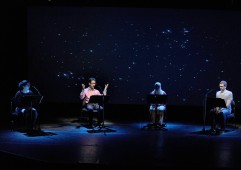
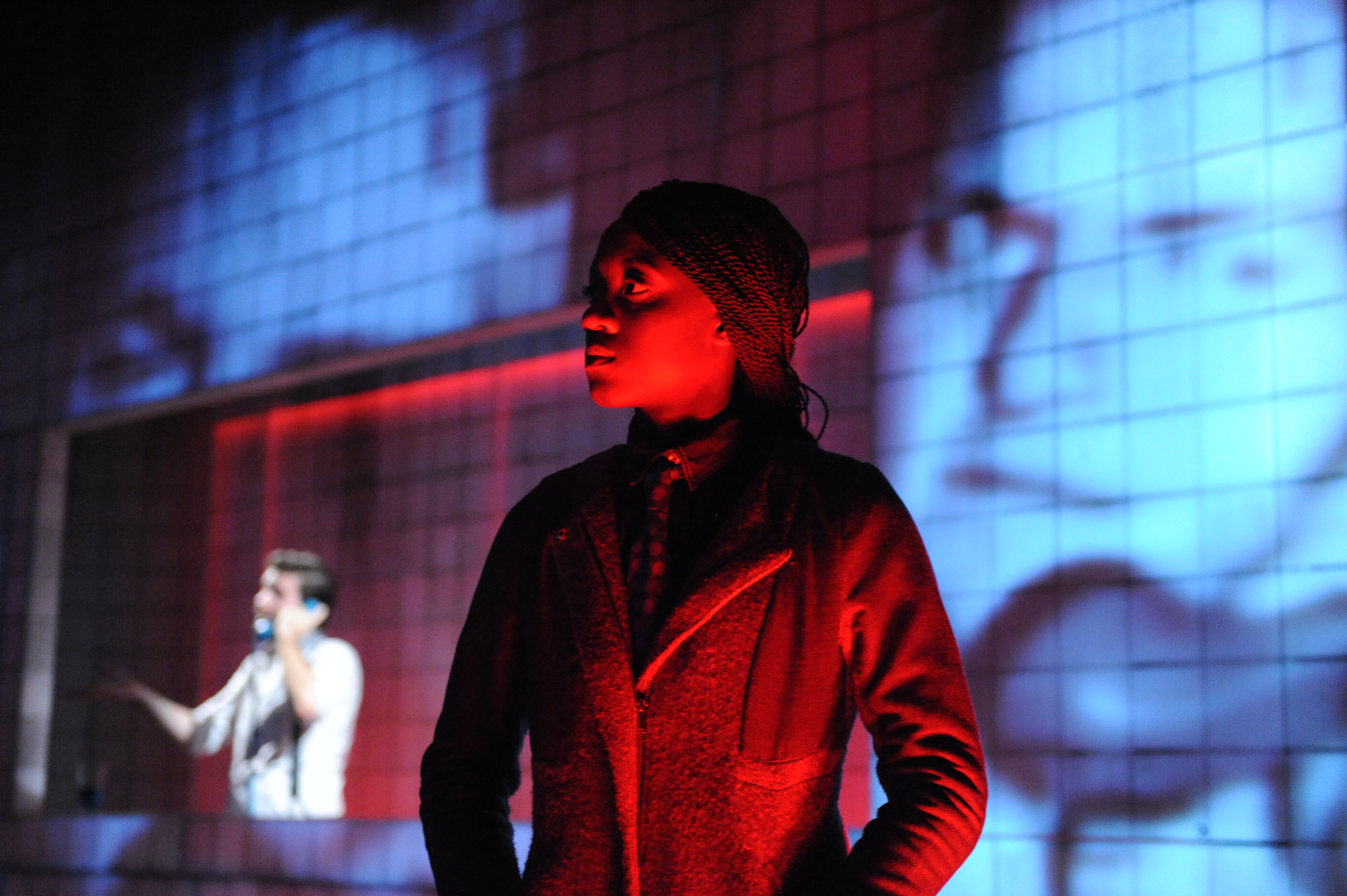
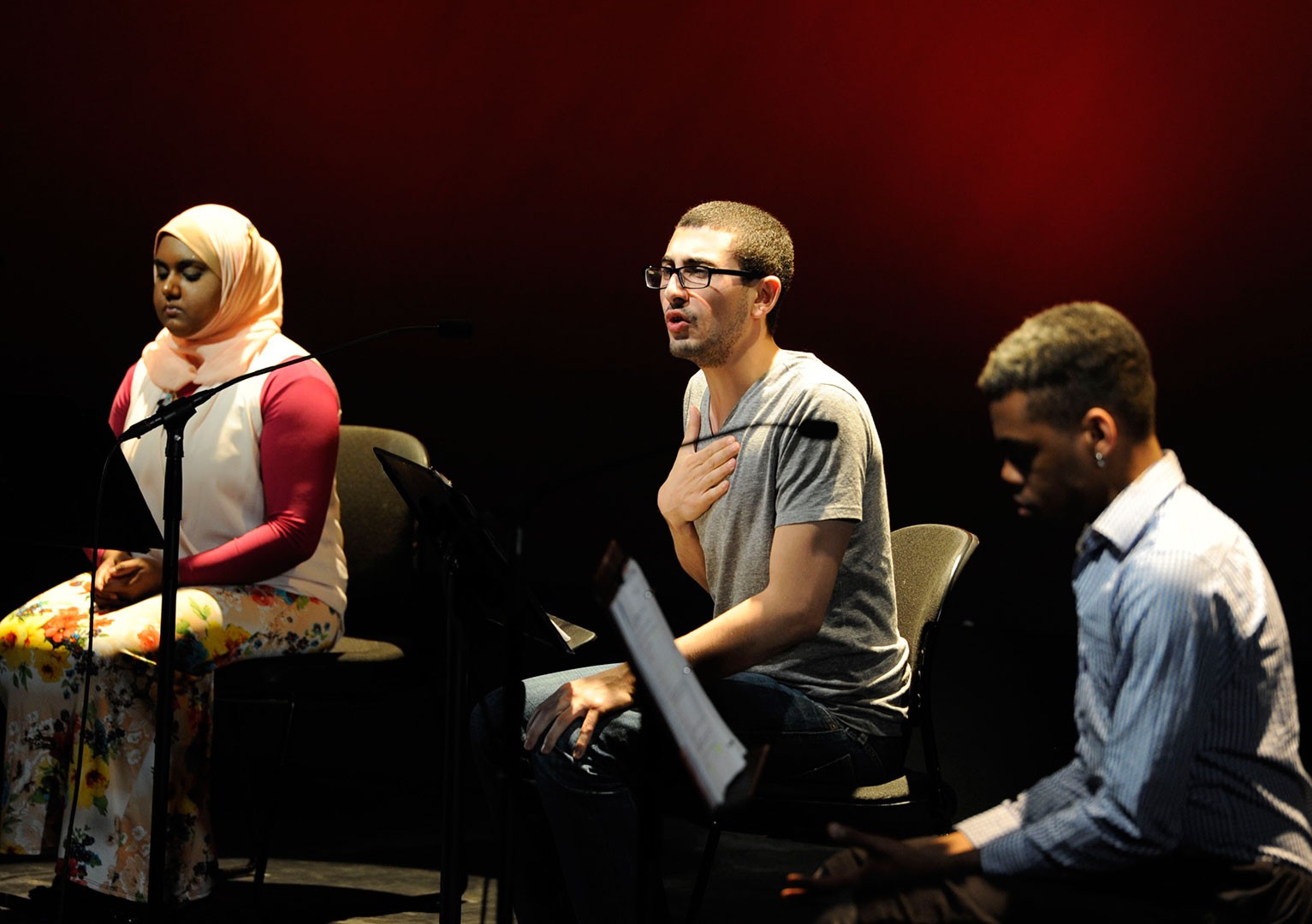
“Beyond Sacred: Voices of Muslim Identity Ping Chong + Company” features a foundation of interviews, telling the stories of young Muslim New Yorkers post-9/11. UMS states that this piece “work[s] toward greater communication and understanding between Muslim and non-Muslim communities”. In our changing and uncertain world, fostering dialogue and offering platforms for often unheard voices has never been more important.
Ping Chong + Company will be at the Power Center with this amazingly moving work for one day only. This is an event not to be missed! There will be a post-performance Q&A as well.
Details
When: Feb. 18th, 8pm
Where: Power Center
Tickets: Passport to the Arts
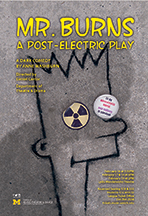
Do you love The Simpsons? The game telephone? Enjoy tales with an apocalyptic setting? Then Mr. Burns, a Post-Electric Play by Anne Washburn is just the thing to see this weekend as we prepare for the onslaught of midterms.
Though we all love our electronics, this dark comedy of a play being put on by the Department of Theatre and Drama takes place in a world without electricity. Absolutely none. I know. But in this world, theater and The Simpsons are the height of art. The audience is witness to the transformation of familiar tales as time progresses in the play, leaving the world of electricity further and further in the past.
Sound like a head-spinning time or a good study break? Come support your fellow students! Here are the details:
When: Feb. 16-19
Where: Lydia Mendelssohn Theatre
Tickets: Link Here OR (pssss- this is a Passport to the Arts event)
Ping Chong is a contemporary theater director, choreographer, and visual artist who has amassed many awards and fellowships across his career. Many of his pieces focus on culture and cultural identity. In total, he has created over 90 different productions, with one of his most recent ones, Beyond Sacred: Voices of Muslim Identity, currently touring. Join Stamps for a special peek into Chong’s artistic process, perspective, and inspirations, and gain new insight into Beyond Sacred, which will be making it’s stop in Ann Arbor this weekend.
Ping Chong’s UMS performance Beyond Sacred, will be held in the Power Center on Saturday, February 18th at 8PM. This event will be included on the most recent passport to the arts, but the voucher must be redeemed in advance.
This talk will be held on Thursday, February 16th, at the Michigan Theater at 5:10 PM. Like all of the lectures in the Stamps Speaker Series, this one will be freeand open to the public. Arrive there 10-15 minutes early for prime seating. Immediately following the talk there will be a Q&A section for those interested.
Ping Chong + Company is a New York-based theater company that is putting on an interview-based theater production centering around Muslim-American identities in our post-9/11 world.
Below is a preview of the one-day event coming up this Saturday:
“Participants come from a range of cultural and ethnic backgrounds and include young men and women who reflect a range of Muslim identities…Beyond Sacred illuminates the daily lives of Muslim Americans in an effort to work toward greater communication and understanding between Muslim and non-Muslim communities.”
A Dangerous Experiment, apart of U-M’s Bicentennial Semester, follows the college careers of the fictional first class of women at Michigan, beginning in 1871 and concluding in 1875. It tells of their trials, triumphs, and the different paths they choose to take. All the women choose a varying way, emphasizing the factions within one movement. Imbued with school spirit, it took a different form than the usual maize and blue rally cry, acknowledging both the strengths and pitfalls of the University’s history.
As I waited in line for the doors of the Keene Theater to open, I looked around and realized the awaiting audience – including myself – was 95% female. While it was not entirely unexpected, being a play about women, it always strikes me that this seems to be the theme in contemporary culture: if the plot is composed of women, it is likely the audience will too.
Emma McGlashen, a U-M student as well as the writer and director, proved to write a script that featured the female-empowering speeches I want to wake up to and drink my coffee over, steeping myself in the fierce words of other women. The play opened to a stage full of men, unintelligibly rumbling about the future of women – not so different than what our country looks like today. As I talked with my friends over intermission, we had to keep reminding ourselves that this was taking place 150 years ago, butalso only 150 years ago. It sometimes seems as though the extent of our progress surpasses the decade and half timeline, yet the dialogue was simultaneously present and poignant. One of the points emphasized in the play was that these women, fighting for the right to study alongside men at the University of Michigan, were not only fighting for themselves, but for the women who would come after them. The play’s sharp and timely dialogue hit the center of an ongoing injustice against women; the statements were composed of a century-plus discussion without being trite.
Walking out of the theater, I realized that almost three hours had passed, and yet it felt as though we had just begun to hear this history. I suppose I’m just a sucker for any story about women supporting women. Within the main female characters, I saw the same fears and determination of female students I know today. This play only reaffirmed my love for portraying a female-studded history within the arts.
While it confirmed that I have no wish to return to the roots of Michigan, where women are subject to wearing corsets and attending class behind a curtain, I discovered a nostalgia for one aspect of the past: petitioning every male on campus to return to wearing suits and ascots to class. This, though, is a one-sided street; I will continue to wear pants.
If you get the chance, I could not recommend going to see this show more. If you’ve missed both Friday and Saturday nights’ showings, there is one more performance on Sunday afternoon!
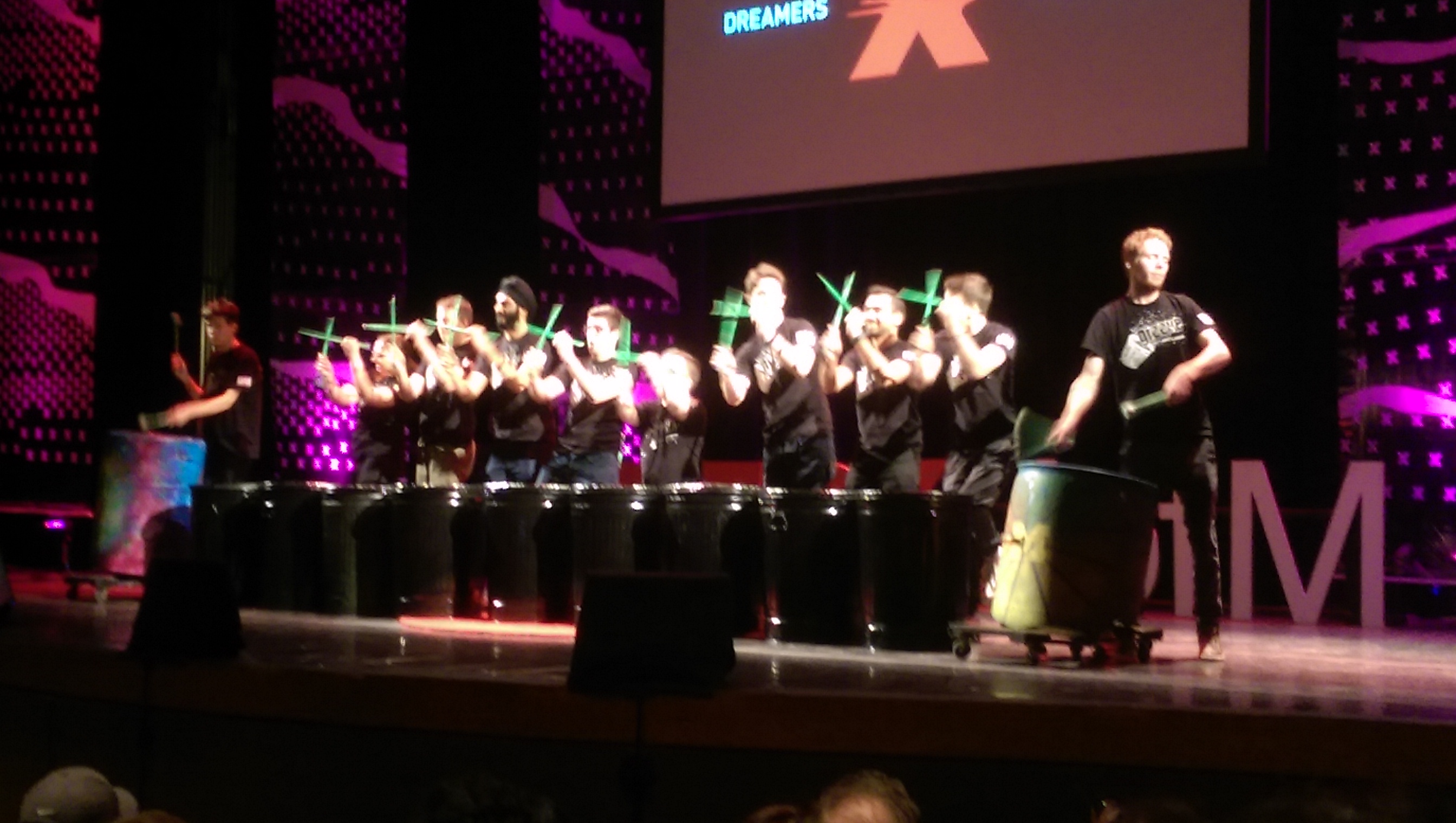
TEDx UofM 2017 was as busy as ever, adding to the disruption part of this year’s theme: Dreamer’s and Disruptors. The army of volunteers running the independent conference have by now created a finely-tuned machine with the perfect mix of emotional roller-coaster, thought-provoking ideas, and blissful entertainment.
The student group Groove = bliss
A student jazz band played in the minutes before the conference started. Their grooving, polished performance was a reminder that so many students at this university are talented and sound like professionals even before they’ve graduated.
Then the first speaker took the stage. Koen Vanmechelen came all the way from Belgium to talk about chickens. Specifically, about how breeding various species of chickens can be used to teach us important lessons about human nature.
Next was Sophia Brueckner, a brilliant woman who was a preeminent software engineer at Google until she suffered an injury that prevented her from using computers for two years. She argued that we as a society have developed a dichotomy of looking at technology as either a complete disaster, or as completely awesome. Instead, she asserted, we need to approach technology with critical optimism.
Ironically, Sophia Brueckner pointed out that making an app to solve all our problems is a fallacious idea, but the 2017 TEDx prize went to a student that developed an app called FoodFind. Meant for low income families to find free food, you have to wonder how many families can actually afford and use the smartphones that the app runs on.
Caitlin Holman proposed three things we need to learn: autonomy, competency, and belonging. Videogames, she suggested, provide all of this. With that in mind, she founded GradeCraft with the purpose of making learning more “gameful.”
Erika Newman–a pediatric surgeon–talked about both clinical and personal experiences with cancer. She was introduced to the lack of information on neuroblastoma when one of her patients asked her about the disease and she realized how she didn’t have any answers. The only surprise here was that she was having trouble getting funding from the NIH to treat the cancer using DNA repair mechanisms.
Rollie Tussing and the Midwest Territory Band played during the break. Although they were a stereotypical band you’d hear in Ann Arbor (at least one instance of well-manicured beard, a cello, and music reminiscent of vintage records), they were entertaining. Their sound was both stripped down and full, and antique without feeling archaic.
Next was Abdul El-Sayed, the current Executive Director of the Detroit Health
Department. In case that didn’t already tell you what a monumental task that entails, he cited several facts about the city of 600,000+ people such as a life expectancy of 70, an asthma rate of three times that of the rest of the country, and vision and other problems that far surpass the rest of Michigan. His argument was to think about pathophysiology in the social realm so that we can help people prevent health problems from developing. Abdul was also one of the best speakers of the night and I highly recommend watching his talk at least.
Next was Jeffrey Veidlinger, a historian who went to Eastern Europe to interview survivors of the Holocaust as a way of preserving their culture via understanding Yiddish. He challenged the audience to “Ask your loved ones about their life. Ask them about their dreams. Ask them about what they cherish.”
The most heart-wrenching talk of the night came from Scott Matzka, who was a talented athlete and is now a husband and father battling ALS. This is another talk to watch, and to check out his organization MyTurn.
Documentary filmmaker Sophia Kruz was the last speaker of the evening. Showing clips from her latest documentary Little Stones, she showed how sharing individual stories is important, as well as using culture to address problems in society.