At the downtown Ann Arbor District Library, Tiny Expo will hold their annual fair with 45 vendors of artists and crafters, as well as free opportunities for guests to craft. There will be a variety of vibrant handmade art to see, offering a great opportunity for holiday shoppers and to support local artists (which is awesome!) The fair is a part of the Winter Art Tour, which supports ten art shows in Ann Arbor and Ypsilanti during the second weekend in December.
Check out the holiday fair on Saturday, December 9th, at the downtown Ann Arbor District Library, from 11:30am-5:30pm. Coffee from Sweetwaters will be provided, and from 1-4pm, free opportunities for guests to craft will be happening in the library’s Secret Lab.
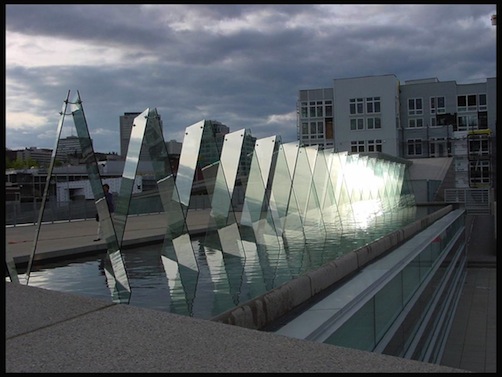
An alum of UM and native Michigander, Buster Simpson is a renowned artist who works in architecture, sculpture focusing on creating art in public spaces.
He’s been actively creating art since the late 1960s, with socially and environmentally focused pieces that predated the more recent trends in relational aesthetics and “green art.” He’s received a number of awards and recognitions for his work including UM Distinguished Alumni Award in Architecture and Design, two National Endowment for the Arts fellowships, and the Americans for the Arts Artist of the Year Award. His work is featured in public spaces across the country and has been exhibited in at The New Museum, MoMA PS1, Seattle ArtMuseum, The Hirshhorn Museum, Capp Street Project, International Glass Museum, and the Frye Art Museum. Check out his body of work on his official website, http://www.bustersimpson.net/.
Like all of the other lectures in the Stamps speaker series, this one is FREE to the public and will take place at 5:10 at the Michigan theater. This will be the last talk in a long series of fascinating and successful lectures so be sure to stop on by. If you miss the event there will be a review of the lecture here on art[seen], and be sure to look out for the winter speaker series once its announced!
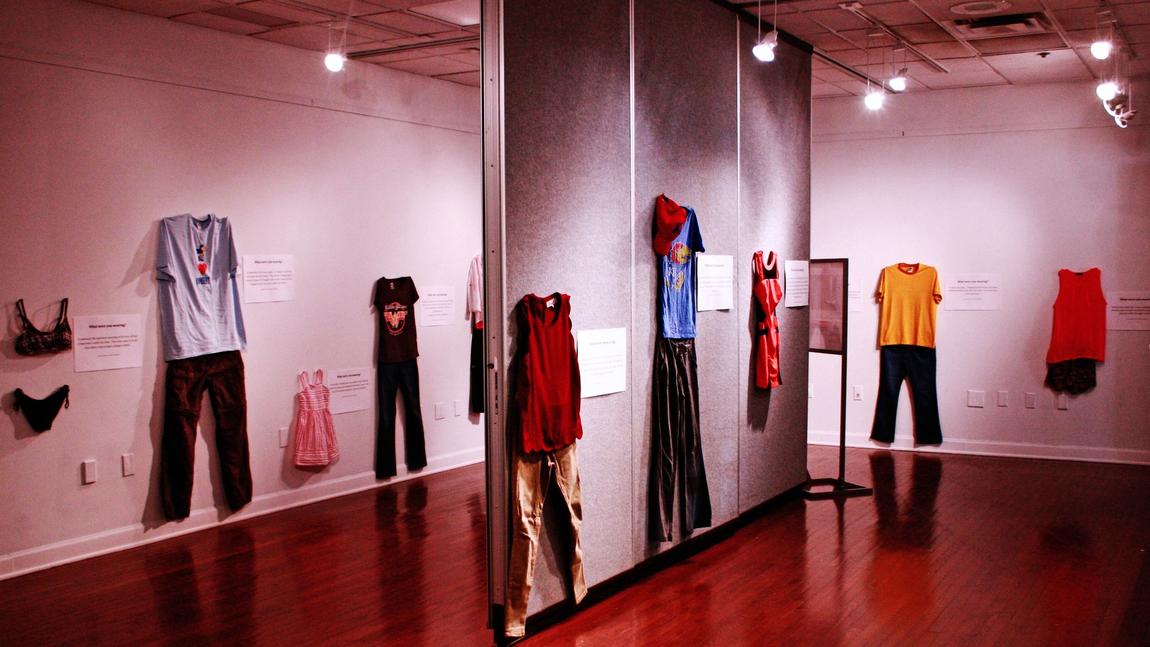
Displayed previously at the University of Kansas, this thought-provoking exhibit is stopping here at the University for just one day, so be sure to check it out. Featuring 18 stories of sexual assault , the exhibit hopes to challenge victim blaming and the idea that sexual assault survivors are ever to be held responsible for the crimes of others. This event was organized by HeforShe and should be an important step in promoting both reflection and conversation here on campus.
This exhibit will be housed in the commons of the UMMA this coming Monday, Dec 4th, from 5:30-8:30. The exhibit is FREE to all and there will be desserts and refreshments provided by zingermans so be sure to stop by and check it out!
“In the ’80s we were talking about gay people, but we were talking about White gay people.”
This line from the documentary short DiAna’s Hair Ego REMIX (dir. Cheryl Dunye and Ellen Spiro, 2017) encapsulates the mission of last Friday’s World AIDS Day event at the University of Michigan Museum of Art. UMMA was one of hundreds of museums nationwide presenting ALTERNATE ENDINGS, RADICAL BEGINNINGS, a program of seven video artworks curated by Visual AIDS, an arts nonprofit now entering its 30th year of supporting HIV+ artists.
Featured films ranged from traditional narrative and documentary shorts to experimental video artworks. The event centered Black experiences of HIV/AIDS and queer and trans life through its directors’ intimate projects.
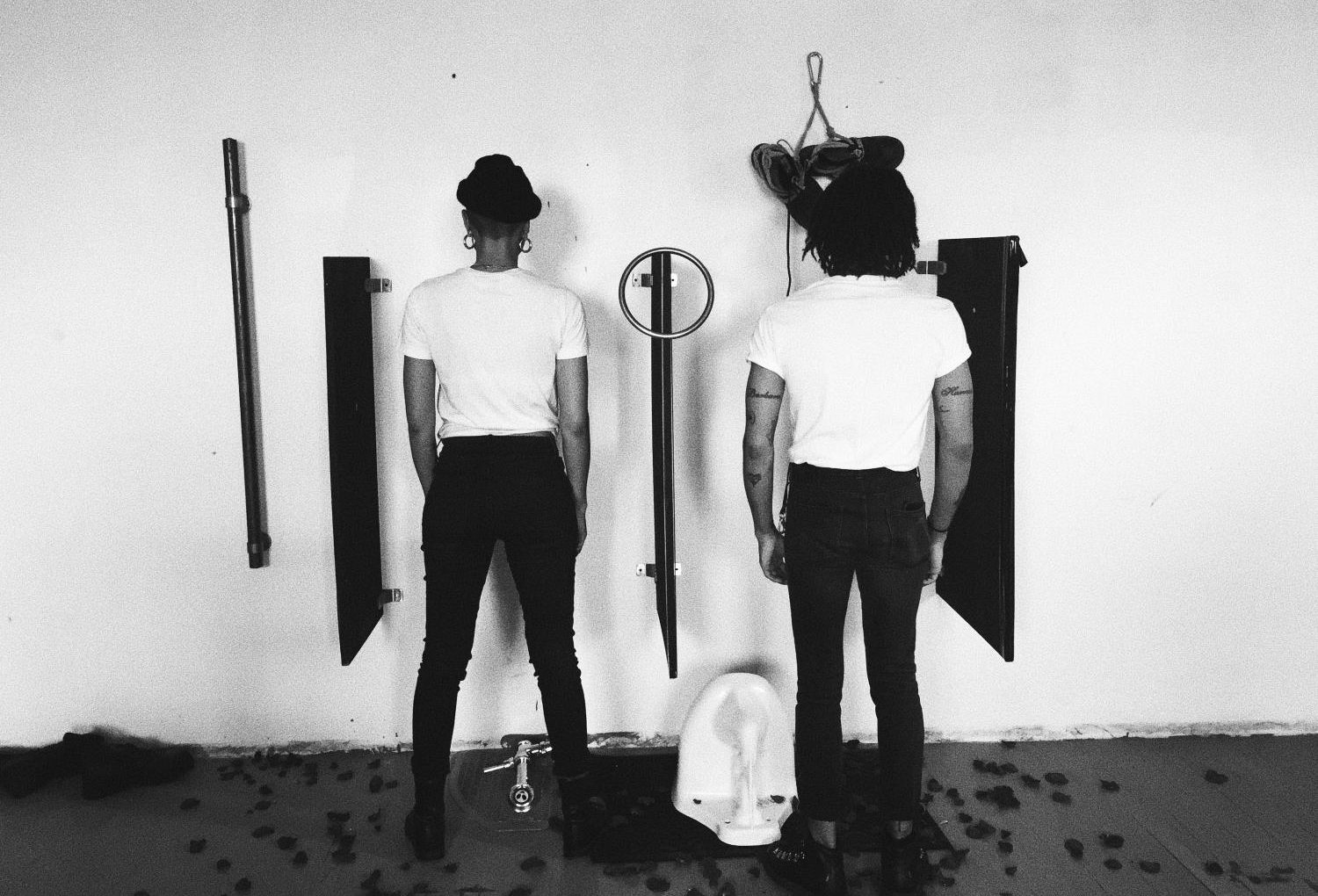
Two films from the event stood out in particular for their aesthetic distinctiveness. Atlantic is a Sea of Bones (dir. Reina Gossett, 2017) envelops its audience in swirling soapy water and colored lights as a drag queen reflects on her past from atop the Whitney Museum balcony. The short ruminates on Black queerness and its history (particularly in New York City), much like The Labyrinth 1.0 (dir. Tiona Nekkia McClodden, 2017), which uses assorted 16mm same-sex pornographic footage shot in bathrooms during the ’70s.
Featured together, these seven films screened at UMMA help reimagine what it means to be Black and living with HIV/AIDS today.
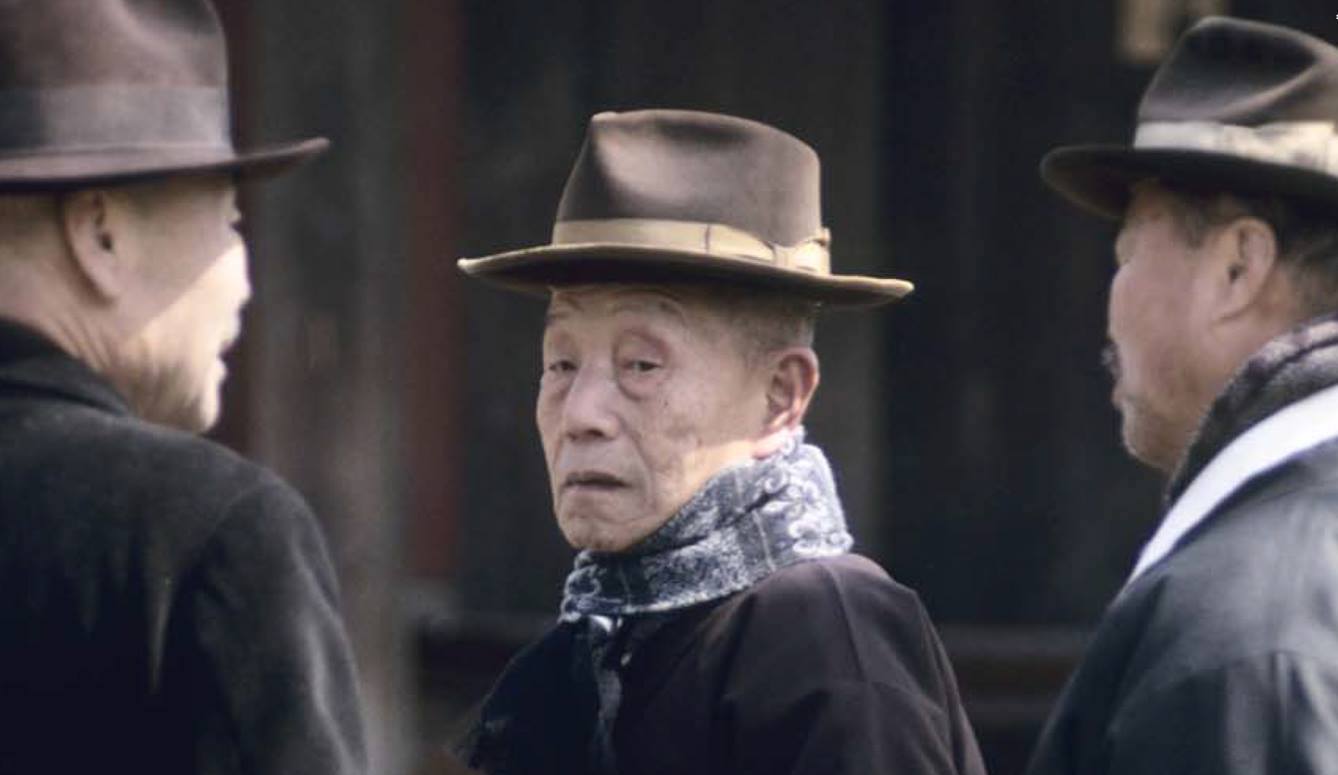
Stationed in Seoul as a member of the Peace Corps in 1969, U-M alumna Dr. Margaret Condon Taylor was a witness to monumental shifts in South Korean society. Accidental Photographer: Seoul1969 opens at the Institute for the Humanities this week, and presents her color snapshots of the city for the first time in nearly 50 years.
On view December 7th – Jan 12th at the Institute for Humanities Osterman Common Room (202 S. Thayer St).
Opening reception, lecture by Assistant Professor Se-Mi Oh (Asian Languages & Cultures), and Q&A with Dr. Taylor on December 8th from 12-1 PM.
Presented by the Institute for Humanities and the Nam Center for Korean Studies. Curated by Associate Professor Youngju Ryu (Asian Languages and Cultures) and Professor David Chung (Penny W. Stamps School of Art & Design).
Student galleries feel variegated, if there’s a single word for it. Like leaves that grow into different colours and shapes, it’s an exhibition that doesn’t know what it wants to be yet, a showcase that simply brings the best of undergraduate work into the spotlight.
With whatever two cents I have on institutional theories of art and the artworld – I like these spaces, maybe more than museums because of the modernity, the messiness, the fact that I could probably say ten years down the line “oh yeah, I know that guy – we went to school together. I saw his early work way before he became famous.”
The Creative Body
This was the thought, the primary impression that reverberated while visiting the Stamps gallery downtown, the glowing letters looking sunny off South Division Street through the rain of an Ann Arbor November: this is the future of art right here, in progress, developing, new.
With expansive media use, the content of the artworks are even more diverse, with much of the form and the subject focused with a modern-day lens and astute freshness. Here, the exhibition highlights a kind of innovation in art by Stamps students, ideas shaped by a digital revolution and the shifting notation that this digitalization is beautiful. The interdisciplinary quality, refined by technology, is seen in Audio Reflection by Maddi Lelli, a sound installation coded in TouchDesigner that forms a hypnotic circle that moves with the inflection of a voice, and The Creative Body by Camille Johnson, a paper maché puppet that uses projections and soundscapes to tell its stories, exhibited before in Detroit and Ypsilanti events.
Glacial Archi-Structure
Glacial Archi-Structure by Juan Marco uses collections of data of topographical structures on glacial recession to create beautiful, geometric representations of information. And Lazy Susan by Rachel Krasnick is a laser-cut and digitally fabricated sculpture, forming a delicate spiral of plywood that doubles up as a turntable.
Glacial Archi-Structure
Many of the pieces also reflect current social climates and the stresses of a particular generation, including artworks such as Tortured Housewife by Beth Reeck, which digitally collages 50s advertisement-esque pictures to explore the constrictiveness of societal gender norms, and Finding Peace by Gillian Yerington, a landscape constructed out of recycled wrappers, so that the viewer is quite literally looking at nature that has been shaped by our waste.
Finding Peace
Conversely, much of the art also finds itself in organic expressions, universal sentiments. Others expand the limits of form and material. From Broken Compass by Kara Calvert, which opens up feelings of alienation and emptiness across a cotton fabric canvas of batik dye, to Fold and sew by Grace Guevara, folding and sewing copper metal like fabric, expanding the definition of what fiber could be.
Fold and sew
In the end, there’s a lot of interesting work in the exhibition by some incredible students (and many more not mentioned in the review) – innovative, smart, socially-conscious, or even terribly funny – variegated remains the only word I can think of to describe it, a gallery poised on the precipice of change, of what’s new and contemporary, of students still growing and creating. So be sure to check out the Undergraduate Juried Exhibition before December 16th!