REVIEW: Moxie

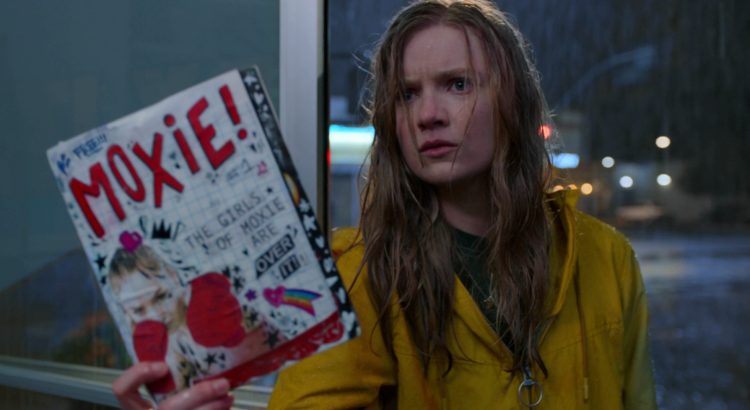
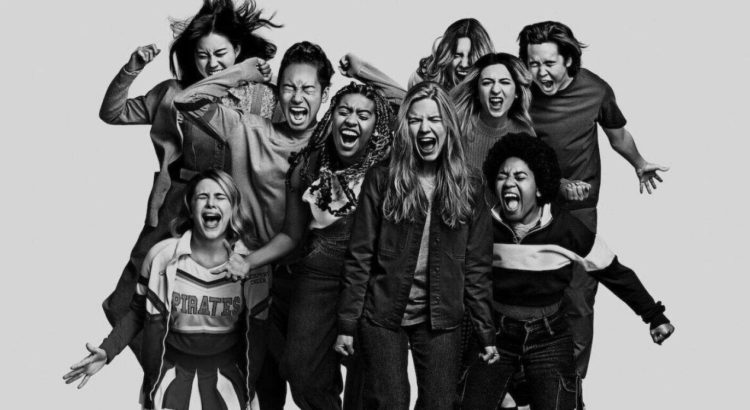
Moxie, directed by Amy Poehler, is a Netflix film about 16-year-old Vivian and her feminist awakening when she opens her eyes to the misogynistic culture of her high school. Vivian finds her mom’s old collection of ‘90s feminist punk zines and decides to make her own, anonymously printing copies and putting them in the school bathrooms. A cult following then amasses–a small group of girls get together to start taking larger action against sexism and gender inequality at their school.

I may have came in expecting too much from the film. I’ll try my best to judge it as the lighthearted teen dramedy it was meant to be, but I have to criticize Moxie for its ambitiousness and subsequent shortcomings.

Overall, Moxie felt like it was trying too hard to be too many things, and the end result was a messy and underwhelming teen rom-com. Too often I felt the issues being touched on in the film were important, but not given enough attention or screen time. Moxie tries to cover heavy topics like sexism, racism, transgender issues, sexual assault, and immigrant issues, along with mother-daughter conflict and healthy teenage relationships, all while tossing in a bit of barely-there LGBTQ+ representation and disability representation.

Vivan (left) and Lucy (right) in Moxie (2021)

While I’m happy that this film had representation of so many different identities and experiences, it was disappointing to see so many opportunities for nuanced coverage of these diverse topics disappear in the shadow of Vivian’s coming-of-age plot. As an important but unfortunate example, new student Lucy, a Black girl, is the one who inspires Vivian’s budding feminism by standing up against a sexist teacher and the aggressive school jock. However, Lucy and the other women of color in the Moxie group are basically relegated to the role of one-dimensional inspiration and backup for Vivian, while Vivan, a white girl, gets the privilege of a plot exploring the complexity of her budding political self, family life, young love, and teenage angst–which we don’t even truly get to invest in, because there’s simply not enough time to dive into character development with everything Moxie tried to squeeze into 2 hours.

Amy Poehler’s character, Vivian’s mom, makes a brief reference to the lack of intersectionality in the feminist movement back in her day as a ‘90s riot grrrl. Moxie also fails to fully be the feminism power statement it could be. I feel there simply wasn’t enough time in a feature film to cover intersectionality and discuss why and how misogyny affects women of color, or trans women, or disabled women, differently. And that there had seemingly been no push against the terribly misogynistic culture in the school before Vivian’s spontaneous feminist push is doubtful–but that’s all I’ll say about that.

As someone who was in the high school scene just a few years ago (though it seems longer), I will say I probably would have been inspired by this film as a 16-year-old. I saw some of my own Gen-Z high school struggles portrayed in Moxie, and I think Moxie is definitely more positive than other YA media that was being released in my teenage years (ex. 13 Reasons Why). I think Moxie was made in good intent, it just didn’t live up to its potential. Perhaps as a full Netflix series, Moxie could have been a lot more. 

Moxie was a cute modern-age girl-power flick, but it sure wasn’t anything groundbreaking or monumental. Worth the watch if you’re looking for something light–but don’t expect more than, as NYT’s Jeannette Catsoulis puts it, “a CliffsNotes guide to fighting the patriarchy.”
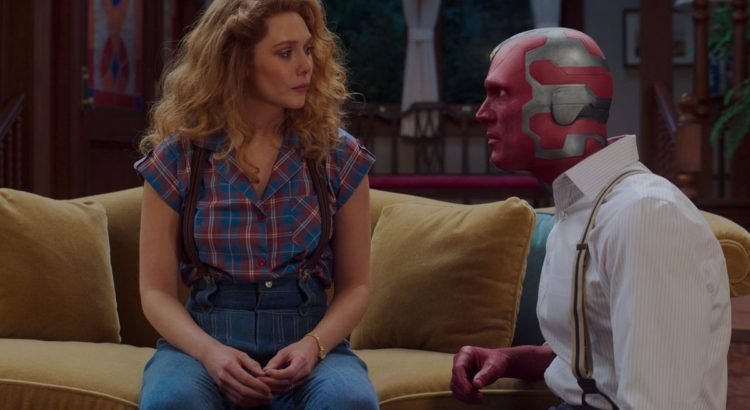
REVIEW: WandaVision

Is WandaVision the internet’s favorite TV show right now because it’s the best thing on TV, or is just the only thing on TV? WandaVision is a new Disney+ original series that follows the characters Wanda Maximoff and Vision, who had not been featured in their own solo MCU projects up until this point. Starring Elizabeth Olsen and Paul Bettany, the series riffs off of TV sitcoms through the decades, depicting Wanda and Vision trying to fit in with suburban life, only to discover that not everything is as it seems.

What makes the series so enticing is that it provides a much-needed release from the worn-out Marvel movie formula. WandaVision sticks out from the rest of the MCU stylistically, but it simultaneously patches up pre-existing plot holes in the MCU canon. The series explores some of the direct effects of the events of “The Blip” in Avengers: Infinity War and Avengers: Endgame, but mostly importantly, it proves Wanda and Visions’ each have a place in the MCU. Wanda and Vision have both been minor characters thus far, and their characters lacked personality and motivation as they were bounced around from director to director. I was excited when Wanda was first introduced as a new female character in Avengers: Age of Ultron, but she was subsequently pushed to the side and thrown into a seemingly rushed romance with Vision, who had just as little development. However, creator and head writer, Jac Schaeffer, has dug into the characters’ messy foundation, revealing their complexity and prepping them with compelling characterization for their future in the MCU.

Although Wanda and Vision are both fantastical individuals with extreme, otherworldly abilities, Schaeffer has highlighted their sense of humanity in this crazy fictional world by crafting a heart-breaking story about their bond. This transforms Wanda and Vision into characters that audiences can empathize with rather than dismiss as lovebirds that were thrown into the film franchise as an afterthought. Episode 8, “Previously On,” delves into Wanda’s past, explaining her choices that were previously glossed over, and provides context for her connection to Vision. The episode is seemingly specific to Wanda and the toll Vision’s death in Infinity War took on her, but the episode also acts as a general representation of grief. The episode is timely, showing that even something as silly as a sitcom can provide some sense of comfort during troubling times.

That being said, the penultimate episode of a miniseries is a strange place to insert a backstory episode. If the episode had not been so beautifully written or if it had not provided the much-needed backstory for the series’ titular characters, I would have been more upset with the pacing of the show. The show’s plot is rather slow most of the time with a sudden cliffhanger at the end of each episode. This has been upsetting for some fans, who have spent the past seven weeks developing elaborate theories, only to be underwhelmed by the show’s conclusion. However, I have come around to the way the series progressed – but only after I realized exactly what the show was about. The show is about wise Vision, who is an android created with artificial intelligence, yet he is the character who best understands human emotion and empathy. And it is about loving Wanda, who is not an object in need of protection, but someone who discovers strength in emotion.

PREVIEW: Raya and the Last Dragon

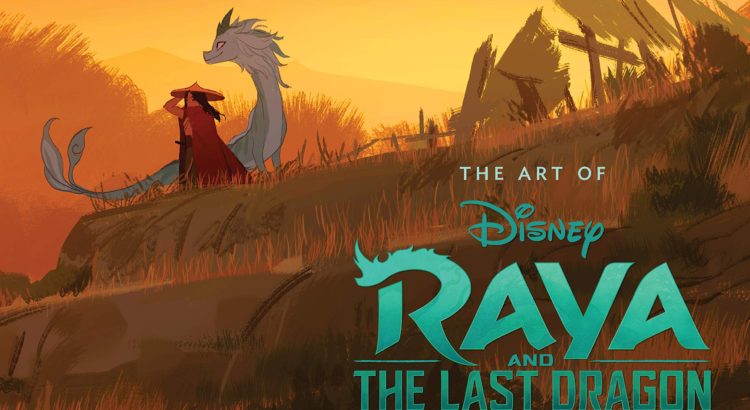
Raya and the Last Dragon is Disney’s newest film, set to drop on Disney+ Premier Access tomorrow, March 5th. The film has been marketed as inspired by Southeast Asian culture, and stars Star Wars’ Kelly Marie Tran.

Raya’s story takes place in the fictional world Kumandra, a land where dragons used to roam and live in harmony with humans. 500 years later, Raya is tasked with tracking down the last dragon to stop the sinister monsters that wiped out the dragons in the first place.

I’m excited to see that this film is based on a culture Disney has not explored yet, but I am wary they are just checking off a box on their diversity quota list. The voice cast is primarily East Asian, which is disappointing given that Southeast Asian actors have been presented with fewer opportunities than East Asians actors in Hollywood. That being said, I have seen a lot of positive buzz and excitement towards the character designs in the film, and I’m generally glad Disney is making some sort of an effort to represent more of its audience.

Raya and the Last Dragon will be available to stream to those with a Disney+ subscription for an additional $29.99.

PREVIEW: Moxie

Netflix’s new film release, Moxie, directed by Amy Poehler and based off of a book by Jennifer Mathieu, has been all over the news for me lately. Netflix even sent me an email, saying “We think you might like this! Coming in early March.” I’m excited to see what Amy Poehler brings to this story.

Described as a “sweet, clear-eyed Gen-Z female empowerment story,” the film follows 16-year-old Vivian as she and other girls at her school push back against the misogynistic culture of their educational institution and eventually create the titular underground zine, “Moxie.”

I’m excited to see how this film handles feminism and politics in the high school setting of Gen Z. While I’ve heard the film does its best to be intersectional and inclusive of many different identities, I have read that the film’s shortcomings in this area can be distracting and disappointing.

Tina Fey’s Mean Girls, arguably the most well-known and iconic female-driven high school movie of my generation, came out in 2004. Even though I’m in college now, I think it’s time for a new girl-power film anthem, one that’s updated to better fit the high school experience of Gen Z and include broader representation.

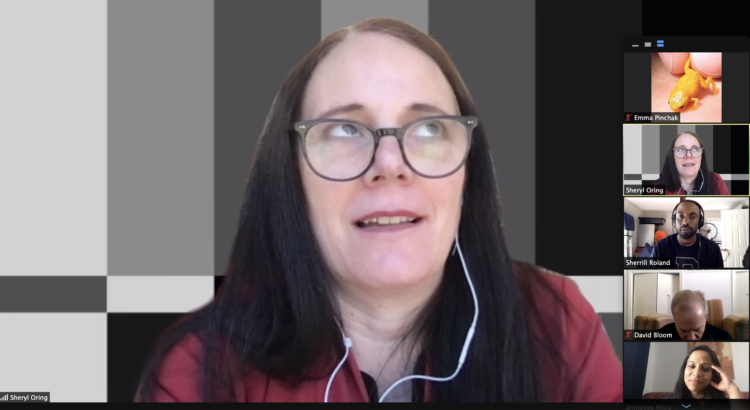
REVIEW: Radical Acts: A conversation with Sheryl Oring and Sherrill Roland

While perhaps not as informative about their collaborative work as I had hoped, this discussion provided some valuable background and behind the scenes information on Oring and Roland’s individual projects.

Roland was more reserved in talking about The Jumpsuit Project than Oring about I Wish To Say, not surprising given the length of time Oring has spent developing and connecting with her work, which has required a different kind of personal conversation to its audience members. As Roland reflected, in-person commentary to his work has mostly involved either an effort to shape the design of the project (campus and local police, university faculty, professors) or a rather momentary response (students commenting on it while studying at the library, passersby snapping a quick photo). Starting as a thesis project for his MFA, it makes sense: he faced pressures to appeal to a great deal of people, or if not to appeal, then to specifically give a message to many, all at once. There were his thesis advisors, people on the street, people on his campus, the institution that had held him despite his innocence, the entire country’s network of incarceration and justice systems.

While also incredibly impactful, Oring’s project has something to say rather than something to prove. That’s an oversimplified statement, but it compares the current evolutionary state of the two projects in broad terms. Oring, in contrast, speaks to her audience one-on-one as well as peripheral members of her audience (observers by the typewriter stations, people reading about her work online), making space for the content of their letters in an overwhelmingly impersonal world. In the nearly two decades since she began the project (as well as her previous years as a journalist), she has honed her ability to speak simultaneously to an individual subject (an interviewee) and a wider audience (readers).

Both styles of performance art serve a purpose within the political moments in which they exist: Roland seeks to expose widespread flaws in the criminal justice system through bringing his own experience to many in a particularly conspicuous way, contrasting how systemic injustice is often kept away from the public eye. These systems are represented as old, unchangeable institutions central to the function of our society, despite the reality that prisons are an industry, a pipeline, a cyclical system with rehabilitation far from a main focus. Oring, by working one-and-one and over a long period, has allowed citizens to individually be vocal. It’s especially important as polarization and whipsawing between recent presidential administrations causes significant frustration and disillusionment amongst the public.

Future events put on by the Stamps Gallery can be found here, including episodes of the Penny Stamps speaker series and other talks with artists. There are also some upcoming gallery exhibitions as MFA students showcase their theses; do note that entrance into the gallery requires an Mcard.

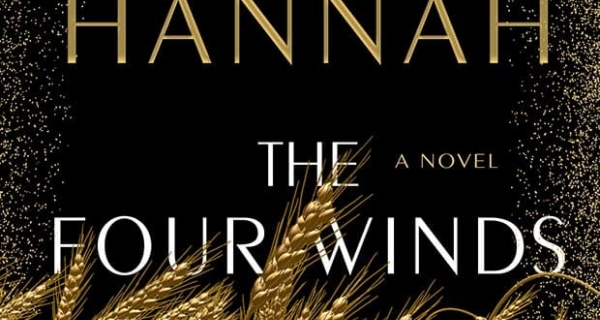
PREVIEW: The Four Winds by Kristin Hannah

Newly released this year, Kristin Hannah’s novel The Four Winds has already garnered critical acclaim and a place on bestseller lists. It is a story of the Great Depression and the Dust Bowl, and of America and difficult choices. I am particularly excited to read this new book because I enjoy a good historical fiction novel.

Check out The Four Winds from your local library, or if you would like to purchase a copy, visit your local book store. In Ann Arbor, The Four Winds can be found at Literati Bookstore (where it recently earned the distinction of Staff Pick).

Happy reading!