
REVIEW: Another Round

In the world of film, nearly every drug and substance has had its day in court. Entire films and TV shows berate a single drug that ruins our protagonists’ lives, be it meth in Breaking Bad or heroin in Requiem for a Dream. And despite how difficult to watch these stories are, they are utterly believable—even for the majority of viewers who haven’t touched anything stronger than that one time at a college party when they did cocaine and woke up with the worst hangover they’d ever had. For the outsider looking into the world of drug addiction, it just feels obvious that “hard drugs” would lead to these downward-spiraling narratives of crippling addiction, broken homes, and dead friends. But where is alcohol in the canon of addiction stories?


In Danish director Thomas Vinterberg’s latest film, Another Round, Mads Mikkelsen (of Hannibal fame) plays Martin, a depressed high-school teacher who bands together with three of his similarly unfulfilled and aging teaching buddies to test out a radical new theory: that human beings were born with a blood-alcohol content 0.05% too low. Thus, achieving a constant state of 0.05% BAC will lead to increased stimulation, happiness, and ultimately purpose. So, the gang begins the experiment and starts drinking at work, pushing the limits of their alcohol tolerance as well as their ability to maintain a professional and social life.


The film opens with a scene featuring Martin’s students participating in a high school drinking game. The setting is a beautiful summer lakeside and everyone is very happy, carefree, and young—really, it feels more like summer camp than teenage debauchery. For the rest of the film, we watch as Martin and his very not happy, not carefree friends try to find more purpose in their jobs by drinking alcohol. It’s an asinine plan that the viewer knows will only end in misery, but we watch them try anyway because there’s a bit of humor to it, and, I think, we want them to find more meaning in their lives. 


As Martin starts to rekindle his relationship with his wife, we cheer him on when the screen cuts to black and proclaims his BAC: 0.00%. We hope for the very best, that Martin can get what he wants from his job and from his marriage, and can still get put down the bottle. It seems obvious that alcohol can only do so much for his very cold relationship with his wife, yet when things between them explode and Martin retreats to a messy, ugly drinking session with the gang (who have all similarly screwed something up), we too feel defeated, messy, and ugly. Things look very grim in the film’s third act, and it’s hard to see any light at the end of the tunnel.

Luckily, the film ends with Martin’s renewed hope to restore his marriage, and he breaks out into dance with his newly-graduated students, impressing them with his passionate, skillful interpretations of jazz ballet. He drinks a beer, but so are all of his students and thus feels casual. Besides, his focus seems much more so on dancing than his bottle. Purpose, for Martin—via the students that love him, the prospect of getting his wife back, and his old passion for dancing—seems to not require alcohol. Though in the film it doesn’t play out in a way that sounds this wholesome and corny, love and passion are what seems to save Martin from addiction. We can only hope that these newfound purposes are enough.


As expected, Martin and his friends’ experiment ends in disaster and most of them lose huge pieces of themselves in the process, be it their job, their spouse, or their life. In that way, this addiction story is no different than Requiem for a Dream or (in more recent years) Beautiful Boy. Where this film stands out, then, is in its exploration of the interplay between society and alcohol, and how one is able to go from healthy-enough social drinking to alcoholism. The happy-go-lucky drinking of the teenagers in Martin’s class is depicted as a goal that becomes further and further from the reach of the gang’s experiment. As they withdraw further from society—and each other—into drinking, it becomes clear what Vinterberg is trying to tell us about alcohol: that the more we lose purpose and disconnect from our fellow human beings, the less healthy drinking becomes. Martin’s hope for the future at the end of the film is thus to reconnect with those who give him purpose, those who inspire him to dance more than he drinks.


Enjoy responsibly—together.


Another Round (2020) is available to rent on Youtube and Amazon Prime.


REVIEW: New Red Order – Crimes Against Reality

What does it mean to commit a crime against reality? How is this realness defined through actions to capture and liberate it through additive transformations? What can experimental approaches to using technology do to construct alternative realities advocating for Indigenous futures? New Red Order (NRO) explores these issues in their first solo exhibition, Crimes Against Reality, at the Museum of Contemporary Art Detroit (MOCAD), which runs from October 1, 2020 until January 10, 2021. Amidst increasingly publicized conversations about race, nationhood, and equity worldwide, and particularly in the United States, New Red Order’s exhibition is showcased to the public during a time of long overdue reflection and gradual unlearning among the most privileged.

Crimes Against Reality exhibition view at MOCAD

The “public secret society,” a spinoff of the Improved Order of Red Men, an all white fraternal organization established in 1834 in response to desires to “play native,” was created in 2016 by core members Zach and Adam Khalil, of the Ojibwe tribe in Sault Ste. Marie, and Jackson Polys, of the Tlingit tribe in Alaska. By identifying as such, it classification exists in relation to anthropologist Michael Taussig’s concept of a “public secret,” developed in his book Defacement (1999), and described in depth in Kenneth Surin’s article, “The Sovereign Individual and Michael Taussig’s Politics of Defacement” as “among other things the creation of social subjects who ‘know what not to know,’ thereby instituting a pervasive ‘epistemic murk’ whose core is an ‘uncanny’ dialectic of concealment and revelation, though the secret revealed in this case is, qua public secret, not really a secret (49)” (206, 2001). NRO works to “confront” and “rechannel,” two words used by Jackson Polys, long standing and overlooked desires for indigeneity that lie at the core of our national identity as a way of clearing the murk.


New Red Order is future oriented and committed to expanding Indigenous agency, as stated within their “who are we” portion of their website, https://www.newredorder.org.  Approaching the 3 Cs – contract, concealment, and capture – as a methodology to create successful informants, another reference to anthropology, among non-Indigenous allies, this society fosters growth of decolonial perspectives, in physical and virtual realities. The films, Culture Capture: Terminal Addition (2019) and Never Settle (2020), their dark humor filled recruitment video, illuminate the process of building a virtual repository of monuments and museum artifacts, or the stolen collectibles framed as such. These rendered models, generated from differently angled captured photographs, are then mutated via a glitch, or series of phase changes, that transforms them. This glitch, or interruption of normalcy, calls for a reevaluation of hegemonic relations that we refer to as reality. Applying computer technology in investigational ways,  New Red Order succeeds in conducting “a small speculative step toward rectifying the violence committed by museum archives and the settler colonial icons that guard them.” (Never Settle, 2020) “The society of statues is mortal. One day their faces of stone crumble and fall to earth. This botany of death is what we call culture. And this is how we capture it.” (Culture Capture: Terminal Addition, 2019) 


New Red Order, Culture Capture: Terminal Addition, HD video, 2019, Photo: Courtesy of the artists

This day is among us. Now how do we, as settler colonial Americans, foster important discussions about overshadowed cultural issues, or culture as it was defined above, to devise a better and ultimately decolonial society? New Red Order: Crimes Against Reality is on display alongside two additional Detroit-based artists’ solo exhibitions, Conrad Egyir: Terra Nullius and Peter Williams: Black Universe. All three exhibitions close on January 10, 2021 so make sure you visit MOCAD, now open Thursday through Sunday, this weekend or late next week! 


You can find more information about the exhibition here: https://mocadetroit.org/event/the-new-red-order-crimes-against-reality/


Supplemental work of New Red Order can be found here: https://vimeo.com/adamkhalil


REVIEW: Soul

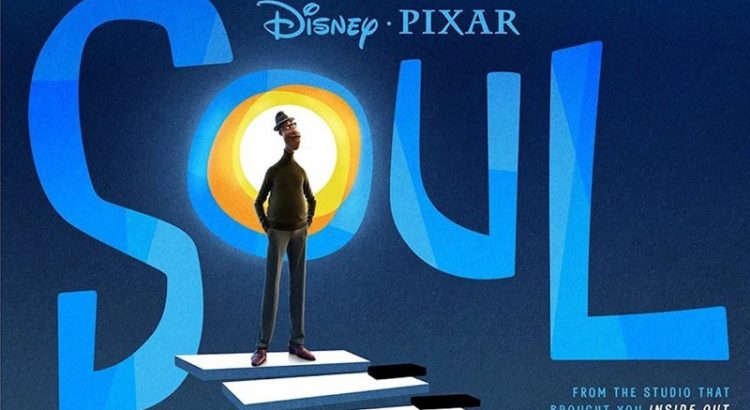
Soul, released on December 25th, is the newest movie by Disney-Pixar, available exclusively on the Disney Plus platform. Unfortunately, I do not think it lived up to the Pixar standard, and was much more sub-par than most Pixar films.

While I didn’t think it was that superb of a movie, Soul definitely had its shining moments. I loved the interesting and clever representation of the Great Beyond (and Great Before), and I thought the all-powerful “beings” that controlled the after/before life that were so cute and well-designed. In fact, I think one of the movie’s strongest elements was its animation design. The characters were so richly different, when black cartoon characters are often overlooked or stereotypical. I loved all the different face shapes, hair, bodies, and voices, and I loved that basically the entire human cast was black, and the movie was not centered around their blackness in any way. That is not something you often get from a movie-making monopoly like Disney. Also, the design of the afterworld and the afterworld beings were awesome, especially the “god” figures, who were made up of abstract lines, and could travel along the lines of other things, which was so clever. And the unborn souls were basically little blobs that bounced around everywhere, so the element of adorable that is a key part of any Disney movie was kept intact.

In Disney and Pixar’s “Soul,” Joe Gardner (voice of Jamie Foxx), a middle-school band teacher in New York City, makes one small misstep and ends up in The Great Before, a fantastical place where new souls get their personalities, quirks and interests before they go to Earth. There, he meets Terry (voice of Rachel House), who is charged with the singular duty of keeping track of the entrants to The Great Beyond. Determined to return to his life, Joe teams up with a precocious soul, 22 (voice of Tina Fey) to show her what’s great about living. Directed by Academy Award® winner Pete Docter, co-directed by Kemp Powers and produced by Academy Award® nominee Dana Murray, p.g.a., “Soul” will debut exclusively on Disney+ (where Disney+ is available) on December 25, 2020. ©2020 Disney/Pixar. All rights reserved.

However, I definitely think the movie had several flaws. For one, I was left with quite a bit of confusion and questions about the theme of the movie when it was over. The movie’s climax is when the main character differentiates between his “spark” and his “purpose”, which is never really elaborated on enough to be clear to viewers. They sort of make this differentiation at the end of the movie, but it is very much glossed over. I feel like if I had trouble understanding the main theme and point of the movie, then it is going to go right over the heads of the intended audience, mainly young children. While the movie was definitely adorable, I did not find that it had much meaning when it boiled down to the storyline and overall message. I know it was a Disney movie, but I feel like they usually have a bit more substance and meaning than this one did. I also thought the movie had such a good opportunity to display some fantastic jazz, and while they did have some, I thought it was a mediocre amount and quality. The movie could have had a ton more music, and they could have used recognizable tunes to make it more broadly relatable as well.

In conclusion, I thought the movie was cute and clever, but the plot line and theme were a little weak. I would recommend if you really enjoy Disney movies and were probably going to watch it anyway, but I would definitely not place this up there with some of the much better Pixar movies that have been released in the past.

REVIEW: Wolfwalkers

There is a certain kind of beauty to animated films, especially hand-drawn ones. The world-building is always extremely extensive, as they are not restricted to practical effects and sets, and whatever the latest advancement in CGI may be. One animation studio that has excelled in the hand-drawn art department – both in terms of backgrounds and character designs – is Irish studio Cartoon Saloon. They are responsible for films such as The Secret of Kells, Song of the Sea, and The Breadwinner. All of these films are illustrated in a unique, very 2D and flat style, which makes up for its lack of dimension with detail and color palettes. The studio’s art style is reminiscent of what you would find in a children’s book. The studio never fails to create beautifully animated fantasy worlds with fun characters, and their newest film showcases how much the studio’s art style has advanced since 2009.


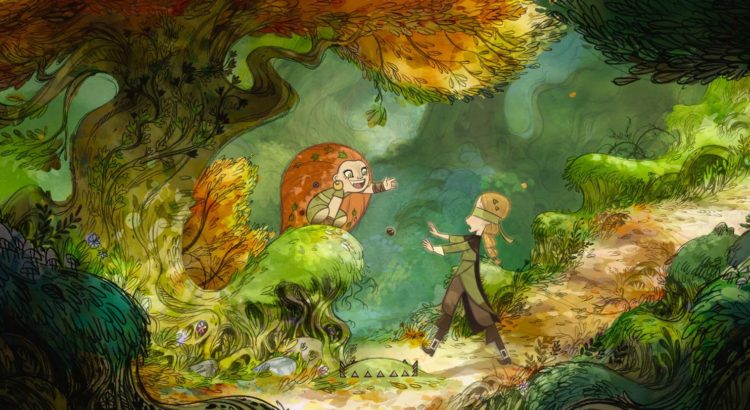
Wolfwalkers is Cartoon Saloon’s newest film, which follows a young girl named Robyn, who has recently moved to Ireland with her father, who has been tasked with wiping out the last pack of wolves. Robyn believes she is capable of helping her father and she feels restricted by the town’s rules and Lord Protector. After sneaking outside of the town walls, she meets Mebh, whose mother is the leader of the pack of wolves. She soon discovers that Mebh is a Wolfwalker, a human who turns into a wolf when she sleeps. The film is directed by Tomm Moore and Ross Steward, and the duo has drawn inspiration from Irish folklore in most of their feature films. Additionally, Wolfwalkers touches on the environment and extinction, and the history of the English invasion of Ireland in the 1600s. The film is set during this time, and addresses the divide between Catholics and Protestants, as well as the history behind how the English worked to rid Ireland of its wolves.

These themes are expressed not only through the story itself and the characters’ motivations – there’s Robyn who is forced to be a scullery maid by her protective father who fears the Lord Protector, all contrasted by the wild and carefree Mebh – but also through the animation. As Robyn’s world becomes more intertwined with Mebh’s, her character design evolves to resemble that of Mebh and the wolves. The character design of the townspeople is very clean and precise. On the other hand, Mebh and the wolves are designed to be more sketch-like, as the initial sketches are visible underneath outlines. The film represents magic as it has in the studio’s past films, with beautiful sequences illuminated by more abstract figures.

I would say more about the story, but due to the nature of a film that geared towards kids, I would cross into spoiler territory very quickly. However, I will say that although this is a film for kids, it’s still a beautifully animated movie that addresses themes of family that can be appreciated by audiences of all ages. The film has been well-received by critics, and I’m excited to see how it will perform during awards season.


Wolfwalkers is now streaming on Apple TV+.

PREVIEW: Soul

Soul is the newest movie from Disney-Pixar, and came out on December 25th on Disney Plus. The cast is stacked, including Daveed Diggs, Jamie Foxx, and Tina Fey. The movie stars a middle-school band teacher who is still searching for his purpose concerning jazz music, which is his true passion and talent. But when he travels to another realm to help someone else with their passion, he finds himself along the way. Probably. This is a Disney movie after all.

If there is no singing in this movie by Daveed Diggs I think you all know what my review will look like, because that would be a waste of his talent. Otherwise, I am very excited to see how this much-anticipated movie turns out!

Watch it on Disney Plus here: https://movies.disney.com/soul

REVIEW: Big Mouth Season 4

From the beginning of the show, I feel as though Big Mouth has had an important balance of comedy and real-ness. I think they have done a great job tackling some important topics that apply to kids in middle school, but also beyond middle school, especially in this new season.

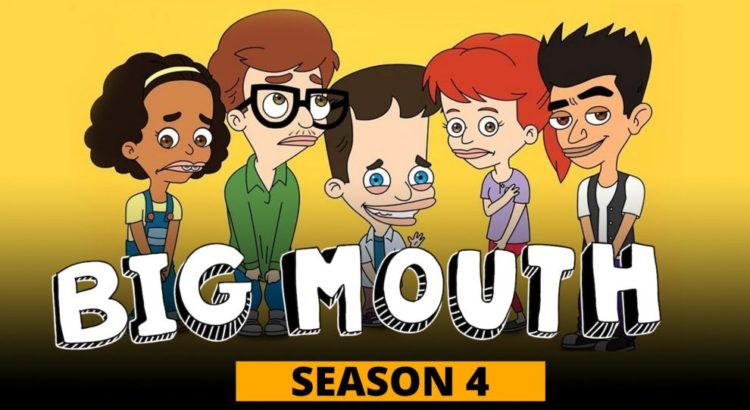
This new season integrates a few more monsters like the anxiety mosquito, the recurrence of the depression kitty, and the gratitude toad. I loved this transition to more monsters and consequently more emotional difficulties, as the show becomes more complex. The writers did a great job of portraying the different monsters accurately as well, which I very much appreciated. The anxiety mosquito was horribly accurate, and I really related to each character as they were overtaken by its thoughts. I thought it was so clever that they had the depression kitty and anxiety mosquito work together too, as it is so true that depression and anxiety go hand in hand. But my favorite new monster was definitely the grati-toad, who helped several of the main characters, especially Jessie, to see what they were grateful for in their lives. I was  so excited to see a more positive “monster”, especially one that could possibly provide insight to viewers as well.

I also enjoyed the students being in different locations other than school this season. I think a lot of new interesting characters were introduced when the core cast went to sleep away camp, and through that medium were able to cover such important topics like transgender issues, more interesting problems with friends, and getting a period for the first time. Missy also had a huge transformation, and learned to embrace her blackness, which was an issue that I really didn’t know more about and loved watching.

I did, however, notice much less of the parents in this season, which I thought was disappointing as they were all very fun characters. I also wish there was more of Coach Steve. Well, I always want there to be more of Coach Steve. Another thing that I did not love was that there was more singing, and it wasn’t particularly funny or good. It was almost like they were trying too hard to make them sound like real songs, so that people would enjoy them, but by doing so actually made them less interesting, even if they were more “real” sounding. But I would say that was really the only thing that got worse in this season. I didn’t even like the inclusion of songs in the first place, so that was a bit disappointing, but the fact that everything else was great made the songs more bearable.

Overall, I think the new season did very well at building upon the show and continuing to be fresh, raunchy, and poignant. I cannot wait to see what other misadventures the Big Mouth crew has in the next season, and I think I’ve been inspired to watch the whole show over again!