REVIEW: The Haunting of Bly Manor

The Haunting of Bly Manor is the latest installment in The Haunting anthology created by Mike Flanagan for Netflix. The series consists of nine episodes, and follows the story of an au pair who arrives at the haunted estate of Bly Manor.

The series uses horror elements in a very understated way; it elects to hide ghosts in the background that often go unseen rather than to have jumpscare after jumpscare. It has an overall eerie tone – a large, old house and two children who advise their governess not to roam the grounds after dark – but it is very slow burn, which becomes one of its faults. The series takes several episodes before a cohesive storyline begins to unfold, but once the inklings of an intriguing plot emerge, it becomes too complicated. Bly Manor has a massive cast: the au pair, the two children, their uncle, the housekeeper, the gardener, the cook, the dead parents, the previous governess, and many other characters introduced through flashbacks. What Bly Manor does well is showcase the talent of the many actors, however it fails to set up a clear, main storyline supported by the side characters. Instead, it gives each character a subplot and while all of the characters are genuinely well-written and interesting, the show does not give itself enough time to fully flesh out each subplot and tie them each into the main storyline.

The second-to-last episode, “The Romance of Certain Old Clothes,” is the weakest episode even though it is supposed to serve as the explanation as to why the estate of Bly Manor is haunted, what happened to the current governess’s predecessor, and why any of this is relevant to the current staff of Bly Manor. It comes across as a filler or even throw-away episode, and it adds another layer of confusion to the story. I understand that Flanagan wants to retain an air of mystery to keep the audience engaged, however when the story is so confusing for so many episodes, it becomes frustrating to watch. Ultimately, the series wastes a decent amount of time keeping the audience in the dark, resulting in a rushed conclusion of the ghost story before moving on to conclude the ongoing story of love and loss. That being said, one thing that Flanagan does well is create a bittersweet ending that emulates the central theme that to truly love someone is to accept that loving them is worth the risk and pain of losing them. However, though the last 15 minutes of the final episode carry the entire show, it cannot be ignored that the majority of the show is too slow, and that Flanagan adds another subplot in the second-to-last episode that only opens up more plot holes.

Finally, I cannot review Bly Manor without discussing its predecessor, The Haunting of Hill House. Hill House is overall a tighter and cleaner story that does a better job of balancing horror and very human themes – grief and guilt, in this case. Flanagan ties in fear as a projection of guilt and trauma in this series – rather than a separate and debatably related aspect – with a satisfying conclusion addressing family and forgiveness. However, Hill House also falls into a lull with the two episodes before the finale, but those episodes act more as a set-up for the finale rather than an entirely new addition to the story like in Bly Manor.

Overall, I expected both series to come to a huge, dramatic, maybe even disturbing conclusion, but what Flanagan choses to do instead is to subvert expectations and craft two conclusions that that are empathetic and wistful. The last fifteen minutes of Bly Manor and the finale of Hill House showcase Flanagan’s ability to depict compelling stories of human relationships, which is ultimately what draws a large fanbase to the two shows.

REVIEW: The Trial of the Chicago 7

Spoilers ahead, but this film is based on a historical event so…


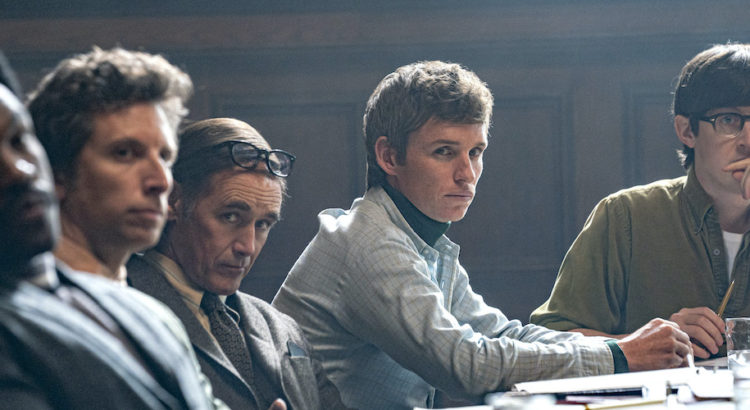
The Trial of the Chicago 7, written and directed by Aaron Sorkin, follows the court case in which eight, later seven, defendants were accused of conspiracy during the summer of 1968. The defendants were accused of inciting riots during the Democratic National Convention which took place during a particularly turbulent time of anti-Vietnam War and counterculture protests and the civil rights movement. The film stars Sacha Baron Cohen, Eddie Redmayne, Joseph Gordon-Levitt, Yahya Abdul-Mateen II, Jeremy Strong, Mark Rylance, and Michael Keaton.

The film, overall, is fine. The acting is quite good – Sacha Baron Cohen proves he can take on a dramatic role; Jeremy Strong proves he can take on a comedic role; Eddie Redmayne, Joseph Gordon-Levitt, Yahya Abdul-Mateen II, Mark Rylance, and Michael Keaton all prove that they still know how to act. Aaron Sorkin proves, once again, that he is capable of writing snappy dialogue, and also that maybe he should leave the directing to someone else. The film has been executed in the same manner as The Social Network – written by Sorkin, directed by David Fincher – with its fast-speaking actors and more light-hearted, generally goofier dramatization of a legal case. However, this kind of style seems better-suited to lawsuits involving Mark Zuckerberg and the events of his college days rather than a court case addressing antiwar protests and racial tensions.

The film is not insensitive. That sentence is not meant as a litotes – I am not trying to say that the film is not not insensitive. I just left the film confused about how I was supposed to feel. The film includes lines such as “Who started the riots?” and “the police don’t start riots,” and it ends with defendant Tom Hayden reading off the names of Americans who had died in Vietnam as Judge Hoffman demands that there be order in the court. The film also depicts Judge Julius Hoffman ordering that the eighth defendant, Black Panther Party co-founder Bobby Seale, be bound, gagged, and chained to his chair for disrupting the court, despite his fellow white defendants being equally, if not more, disruptive. Seale was ultimately severed from the case – this is what makes it the Trial of the Chicago 7, not 8 – and the case was inherently about the Vietnam War rather than civil rights, however it is impossible to watch this film about protests, rioting, and police brutality in 2020 without drawing connections to race and racism. There was no way for Sorkin to predict the political climate of summer 2020, but “here is a film about some things that happened during the summer of 1968” comes across as a little lackluster. Sorkin does not take the police brutality, Vietnam death toll, or blatant racism against Seale lightly, but after having seen films that successfully balance humor and a modern political perspective on historical events – Blackkklansman comes to mind – The Trial of the Chicago 7 just falls a little flat.

Perhaps it is just simply disheartening to see the evolution of racism and police brutality since 1968. And it is a little bizarre to see this timely film take on the same tone as a film where Andrew Garfield and Jesse Eisenberg argue about feeding chicken nuggets to a chicken. That being said, The Trial of the Chicago 7 may not be revolutionary, but that does not mean it is inherently a bad film.


The Trial of the Chicago 7 is now streaming on Netflix.

REVIEW: Takács Quartet (UMS Digital Presentation)

This past Friday I chose to stream the Takács Quartet’s digital presentation from the comfort of my room. As live concerts are not currently an option, musicians have had to become crafty media producers, recorders and videographers, and I was impressed with the decisions the quartet made. This program, spanning a little over an hour, was charming, and told a story weaved through one piece to the next.

Instead of playing a typical program of 2-3 full string quartet works, the group decided to select movements from Mozart, Price, Bartók, Coleridge-Taylor and Debussy string quartets and character pieces. Each player offered a snippet of information about the movement to be played, and what made it fun to play as a quartet. As a listener I got a taste of more music spanning from classical to modern, which I typically would not get from a live performance. I do miss being in the room, hearing the musicians breath and move together, but I appreciated the quality and care that was put into this digital presentation.

This concert, in conjunction with the pre-concert talk with professor Kira Thurman, featured works not programmed and performed often including Florence Price’s String Quartet in A minor and Coleridge-Taylor’s Five Fantasiestücke, Op. 5. I thought it was important to take away from the conversation and performance that these works are not hard to get our hands on. They are ready and available, but were not accepted as part of the “classical music canon”. As a musician, I appreciated the call for performing artists to recognize how we can do more to play these works because they are beautiful and were pushed away for so long.

One of my favorite pieces on the program was Price’s String Quartet, the Andante movement. Set in the middle of the program, the piece served as a point of reflection. The melody reminded me of spirituals, much like the music Dvorak also drew from in composing his music. It was serene and drew me in *even through the computer:)* I was also drawn to the second violinist Harumi Rhodes’s playing. Her tone was warm and she played with palpable intensity that made me wish I was in the Chautauqua auditorium in Boulder with them.

I really enjoyed this presentation and if you would like to check out more online events that UMS is hosting throughout the rest of 2020, I have attached the link below!

Season

Review: Borat Subsequent Moviefilm

Sacha Baron Cohen has done it again! Almost. If I had not seen the first Borat, I would have said that this move was just phenomenal. However, my roommates and I decided to watch the first movie after we finished the second, and I had forgotten how hilarious it was.

Borat Subsequent Moviefilm follows a Kazakhstanian reporter who must redeem his transgressions from the last movie (where he mostly just embarrassed his country) by bringing a gift to some of Trump’s closest supporters in order to gain his favor and put Kazakhstan on the in with the world’s most powerful leaders. When his original plan does not work out, he must try and offer his own daughter as this gift.

The Borat in this film seemed to have a lot more heart (and a more cohesive storyline) than the original. We actually do see some genuine moments between him and his daughter, and the movie is less focused on Borat’s shenanigans and more on following a plot line. I liked this aspect, however it felt much less like a mockumentary as it did an actual movie, and that was not exactly what I had sat down expecting to watch.

I did particularly enjoy the role of his daughter, and I would say that she was possibly as funny if not funnier than Sacha Baron Cohen. The two of them worked well together and had great chemistry when improvising the different scenes, and I liked how she made him seem more human. I also thought she did some great and hilarious acting on her own as well, and it was nice to have more of a variety of scenes than just Borat making a fool of himself. She had a nice character arc, and I do think she brought the movie up from being just average to pretty good, because another movie of just Borat may have seemed repetitive or uninteresting.

I also had forgotten how incredibly raunchy and offensive Borat is, and it really made me laugh to see him in Texas, asking for horrible things from people and them not blinking an eye. My roommates and I kept having to remind ourselves that other than Borat and his daughter, these were not paid actors, just people who had signed a contract and agreed to be in something that they had no idea what it was. I really enjoyed watching him make fun of pro-choice people, those who believe Coronavirus hoaxes, and just Trump supporters in general. It was also definitely a bit scary seeing how many people did not even seem fazed when Borat said something horribly offensive or wrong, because they truly believed it. Especially when he stopped at a Trump rally, and we saw people heil Hitler, sing about killing various types of people, and generally be incredibly offensive.

Overall, I would say the movie was good, but not even close in caliber to the original. But I definitely thoroughly enjoyed it, and I would recommend for anyone who has a thick skin and doesn’t get easily uncomfortable! It is currently available on Amazon Prime Video.

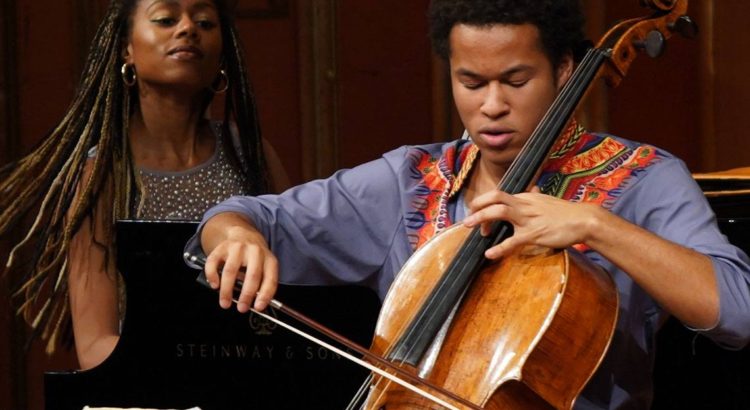
PREVIEW: Sheku and Isata Kanneh-Mason Digital Recital

Watch sibling duo Sheku (cello) and Isata (piano) Kanneh-Mason perform in a special digital recital that will be streaming on the UMS website from 2 pm on October 25 through November 4! I am especially excited to watch this after seeing Sheku Kanneh-Mason’s performance of Camille Saint-Saëns’s Cello Concerto in A Minor as part of the City of Birmingham Symphony Orchestra’s 100th Birthday Celebration.

The digital recital, which was filmed specifically for UMS audiences from the Kanneh-Mason’s home in Nottingham, UK, will include an excerpt from Beethoven’s Cello Sonata in C Major and Rachmaninoff’s Cello Sonata. On Wednesday, October 28 at 8pm, there will be a watch party for University of Michigan Students on Facebook.

Visit the UMS website starting October 25 at 2 pm to stream the recital!

Sheku Kanneh-Mason and Isata Kanneh-Mason (UMS Digital Presentation)


Review: Takás Quartet

As soon as the music started, I suddenly remembered how much I love classical music, and how much I miss seeing it live. A literal pang went through me- how cheesy, right?? But I do miss live theater and live music. However, this digital presentation was certainly still very enjoyable and I especially liked how different the pieces were from each other. I also really appreciated how many pieces they did, as a quartet doesn’t usually do 5 pieces in the same show!

I particularly enjoyed the two pieces by Coleridge-Taylor, Five Fantasiestücke, Op. 5 (Mvts. i, iii). They both sounded so different than pieces I have heard before, with so much more intricate tunes and a ton of interesting chords as well. The first movement I loved, and it was so rich and deep. Such a contrast to the Mozart piece that they had played before it, which sounded similar to the music I would typically expect from a string quartet. The third movement was also very unique, and I loved the way the different instruments played off of each other, creating different tunes that sounded so nice together. It also had such a beautiful contrast between slower, sweeter parts and high, excited ones. I love when a piece can bring together two very different paces of music and still make them sound like such a coherent work.

I also especially liked the Debussy piece, Quartet (Mvts. iii, iv), as I always enjoy pieces written by him. I really like impressionist composers, and his music is very familiar to me. Many people know him for Clair De Lune, but he has several other pretty famous pieces as well. The interaction of the different instruments really made the music interesting, especially in the start of the third movement, which was so languorous and gentle. It made me imagine sitting on the front porch after a long day, watching the sun set with a cup of tea in your hand and your dog at your feet- that is to say, very peaceful. The fourth movement was so powerful and quick-moving, and you could even see this in the physical movements of the players as they moved their whole bodies with the music. I loved as the instruments separated into their own parts, and then came back together in unison several times to form such beautiful harmonies. The swell at the ending of the fourth movement into its finale was probably my favorite part of the performance.

Overall, this was a gorgeous set done by the Takás Quartet. Each was so unique and distinct, and I love when a group does many shorter pieces so I get to experience more artists and works of music. The digital presentation is streaming through Saturday October 24, so go watch it if you see this in time!

Link to the presentation: https://ums.org/digital-presentations/