PREVIEW: Mary Poppins

Whether you’re five or 95, Mary Poppins is an absolute delight.

The Burns Park Players present a special, family-oriented production of the Disney classic this week, intent on bringing all of Ann Arbor the joy and wonder of the nanny we all wanted for ourselves.

Since its 2013 departure from Broadway, productions of the play can be hard to find. Luckily the talented actors of this local troupe are doing us this service. Plus, the proceeds from ticket sales goes toward funding the arts in schools around town!

Showtimes are:

February 27, 7:30 PM

February 28, 7:30 PM

February 29, 2:00 PM

March 1, 2:00 PM

All at the Power Center, 121 Fletcher St.

Ticket prices range from $15-25, with special student pricing of $5 off when you apply discount code SPRINGBREAK at checkout.

Get your tickets here or at the door.

REVIEW: Joe Henry


What else is Joe Henry but a gentle-voiced being…I say that because from what I now know about him,–the way he thinks about circumstance and relationships with people and places–he would probably offer no lengthier description of himself.

“I don’t mind a reasonable amount of trouble,” he says, after composing a metaphor equating stage 4 prostate cancer to worrying about an infestation of ants in the house. He addresses the experience with honest humility, but reminds us exactly how much he doesn’t care to split the disease from himself; well-meaning fan mail referencing the cancer-as-battle trope were grating rather than inspiring. Fighting his own body is an illogical concept to him. Instead, he sees a reconfigurations of his total identity into another form, one that is not assignably positive or negative.

But he swings through this part of his between-songs soliloquy comparatively quickly to what he prefers to focus on: the etymological history of his music. Sure, the influence of his illness bleeds into his most recent album (The Gospel According to Water), but there is not notably more soulful reflection now than compared to his earlier works. He has always been an introspective character, aspiring to make music that sounds like poetry. There is heavy use of similes and metaphors, comparing distant emotional environments and objects rather than pointing out differences.

What has changed is his dedication to unclenching his grip on control. A quick perusal of his older music shows lyrics rooted in emotions a little more vicious in nature, and a little more certain in his knowledge:

“Notice how I vanish
And your world remains,
You show your head above it
For spite, nothing more,
Like you thought just living
Was somehow its own reward.” (From “Mean Flower” off his 2001 album Scar.)

Even his album titles have gotten progressively gentler, from titles like Fuse and Scar to Shine a Light and Thrum. He has grown not exactly passive, but more understanding of the connection between himself and the other floating things of the world. He rejects distinct separation in favor of greater fluidity. I would argue still that this is not simply an effect of being faced with a likely, rapid death; he is not old, but he is not so young–staring down one’s mortality whether it be through a violent illness or passing painlessly is a strongly altering experience.

IMG_0034 (1)

He’s kind of the love child of Alex Turner and Leonard Cohen, soft in tone but can sometimes border on over-stylized. He has an electric voice but one that’s well-insulted by a cocoon of soft rubber. Usually he deals in the lower pitches, which works well for those whose youth is becoming a memory. He doesn’t try for any falsetto nonsense, which almost never works out well for men of a certain age. This decision aligns with his philosophies, in which he prioritizes acceptance rather than making things a fight. I was coming from church before the show, the sermon about giving into thine enemies, turning the other cheek and whatnot. Given his own dedication to Christianity, it makes sense that he would draw upon such readings to form the basis for his newest tunes.

I encourage you to go through his discography for yourself on his Spotify page, and to peruse his website to learn more about what he’s been up to.

Note: photo credit for featured image is:

Hamilton, Jacob. Mlive.com, MLive, Ann Arbor, 21 Feb. 2020, https://www.mlive.com/news/j66j-2020/02/dfc471b5873850/harry-potter-and-storytelling-festival-5-things-to-do-in-ann-arbor-feb-2123.html.


PREVIEW: Mike Marshall & Darol Anger with opener Westbound Situation

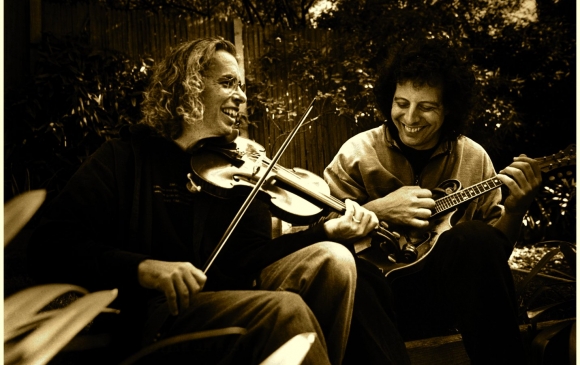
On Thursday February 27, Mike Marshall, mandolin, guitar and fiddle, and Darol Anger, fiddle, are playing the Ark with opener Westbound situation. The duo continues to push boundaries in the genre of American acoustic music for stringed instruments and erase the boundaries that separate bluegrass and traditional American string music from jazz, world music, and the avant garde. Westbound situation, made up of past and current UofM students will open for the duo, bringing back their chambergrass music to the stage of the Ark for the second time this season.


Details: 

Thursday February 27, 8:00 PM 

The Ark, 316 S Main St, Ann Arbor, MI 48104, USA

Tickets are 30$. 

https://www.theark.org/shows-events/2020/feb/27/mike-marshall-darol-anger

REVIEW: Bolshoi Theater Live: Giselle

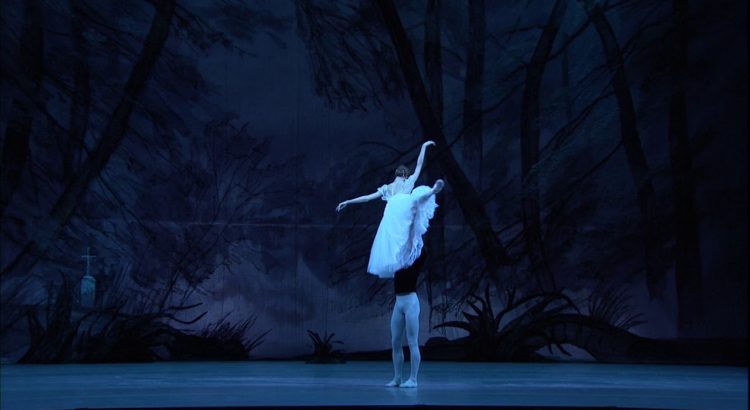
As always, I really enjoy live screenings of real theater performances, because of the quality of the show combined with the cheap tickets for a great experience! This show in particular was a rendition of the classical ballet Giselle, and it incorporated the choreography of several different productions in the past into one cohesive performance. As a huge fan (and admirer) of ballet, I most enjoyed the group dances, the costumes, and the storytelling.

With the advantage of watching through a screen, we got to see all of the best angles of the actors and formations. This was particularly cool when there was a large group of ballerinas dancing on stage together, doing identical movements. The camera showed more of a bird’s eye view, and the precision of the group moving together was absolutely breathtaking. It always blows my mind how precise ballet is, and how they can all be so perfectly together with every move, so that not even one girl stands out as a better dancer than the one next to her. And from above, it was even more impressive to see them moving as if they were a single unit being operated in an almost inhuman way. I love the movements of ballet in general, because they are so graceful and so smooth. It always impresses me when ballerinas go on pointe, as I have had friends lament to me how difficult that is. I also admired the pairs dancing, as the movements of two people together were so in sync. The lifts and twirls that can only be done when a couple dances together were so beautiful.

The costumes were also gorgeous, with only simple alterations to show which members were principal dancers (the main roles). Most of them were simple, except for the costumes of the royal family and their court, which were lavish and glittery. They were 19th century style, and it was gorgeous to see all of the colors. I particularly liked the costumes in the second act of the vengeful spirit women, which were basically plain white shifts with some adornment on the bodice and sleeves, and tulle skirts. It felt very classic ballet to me, and made the movements more beautiful as the dancers kicked up their skirts in unison. The principal dancer for the group also had flowers running down from the chest to the skirt, and Giselle had a shinier version of the top and her skirt had a bit more tulle to differentiate. I loved the way the bodice was fitted but the sleeves sort of fell off the shoulders and were not holding up the dress. I wish they sold them to the public! Although I’m not sure what I would wear it for.

The way the dance incorporated the storytelling also was an impressive part of the show. I really liked the way the same gestures were used at different moments to help the audience understand the important plot points. These gestures were also, at times, part of the dancing, and it was very cool to see them both on their own and included in the choreography.

Overall, I very much enjoyed this ballet experience. It wasn’t a standout as an amazing performance over others that I have seen, but I appreciated the simplicity of Giselle, and I was very impressed by the skill of the dancers.

REVIEW: Eric Schroeder, euphonium

So as it turns out, I was the only one in the audience who was not a close friend or family of Eric. Luckily I only caught a few confused glances from his family, and his speech at the end thanking everyone for coming reduced the awkwardness. He offered the whole crowd a fabulous post-performance spread of cheeses and cookies, and he had done such a good job making me, the sole stranger, feel welcome that I felt comfortable taking a frosted eighth note on my way out.

This boy is certainly great at composing an atmosphere. Maybe he wasn’t the one who decided his performance location, but by the way he worked with the space it seemed he had. The whole room was gilded as if painted with liquid gold: the shine of the brass winking at me from the stage, the microphones ablaze in the light, the glowing reflection of the spotlights onto the walls was like being put inside a gleaming set of Saturn’s rings. The instrument’s mouth looked like a bowl full of tiny suns; the whole time I felt sleepily otherworldly.

Besides the environment though, his playing was enchanting. A novice to this type of brass, I was struck by how much the euphonium is like a human voice singing along the higher pitches. Many of the ending notes to sections of music are low, guttural, the periods between dainty and soulful. Schroeder worked this contrast well, keeping the tone rich and avoiding abrasion all too easy to involve when such sharp contrasts are at play. That being said, I would recommend he practice some breathing exercises to mitigate the audible jaggedness that sometimes crept into his performance.

Though Schroeder is still very young, he has the beginnings of worldliness about him already. He exhibits a confidence far beyond his few decades on the planet, a key quality necessary for any performer. His finger work is amazingly precise, and he shows great promise in his control of softness; the notes held out are clear and true (for a little proof, click this link: IMG_0029).

Eric is close to graduating, but like us all he will continue to learn for years to come. Whether his direction is to perform or teach (or both), he will have success, even if (as he says) the euphonium is a lot less employable than piano. He’ll learn more about stage presence, which is the only thing he really lacked. It isn’t necessary to remain stationary, even when playing a tremendous instrument; he could have kept the beat with a little dance, or done some interpretive work when there was a piano solo. It is understandable when one is so focused in performance–especially in your senior recital–that showmanship falls by the wayside. However, as a musician, Schroeder surely knows that performance is a dynamic conglomeration that demands precision in both each musical note and fostering an artist-audience relationship. Schroeder must find his style to establish himself as an individual in an overflowing industry.

Congrats grad!


REVIEW: Don’t Let the Pigeon Drive the Bus!

Truth be told, across all societal provocations, nothing makes me want to take flight faster than a sniffly horde of fruit-juice-charged youth excitedly tugging at their weary caretakers’ outwear. Yet for the sake of reviewing Don’t Let the Pigeon Drive the Bus! (The Musical!) from the most irrelevant age bracket’s perspective, I was ready to face even the most high fructose children of Ann Arbor.

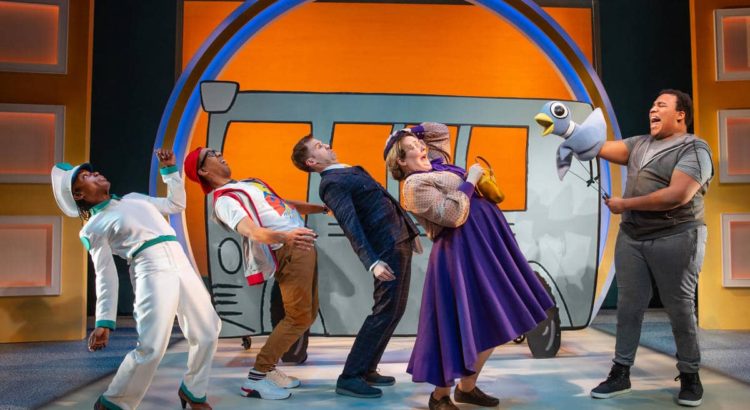
Family engagement is a major part of most forms of educational entertainment fed to American children, and this show was no exception. Prior to the show, the Michigan Theater compiled a fun guide to facilitate viewers’ interaction during the performance that included detachable finger puppets and a musical cues document. Also, before the puppets took the stage by storm, an enthusiastic man led the audience in a collective warm up dance that had entire families jumping up and down in anticipation for the pigeon-ness that was to follow.

Mo Willems’ original children’s book series for Don’t Let the Pigeon Drive the Bus! has a minimalist aesthetic – most pages consist of one subject, most memorably the blue feathered protagonist, and a stylized speech bubble containing expressive text. However, director Jerry Whiddon and the show’s set designers went beyond Willems’ original minimalist aesthetic and transformed the stage into a colorful and flashy puppet world in which the sounds of a bus sputtering are personified into 30-second-long gibberish monologues. My favorite set elements were the two dynamic mini doors framing the main scene; actors would occasionally pop out of its segments to deliver funny additions to the musical number. Besides the wonderful gibberish bits and intense hot-dog eating noises, the performers shone with Jessica Hartman’s playful choreography with each musical number.

As far as the narrative goes, little bits and pieces of the performance triggered vague memories from my childhood experience with Willems’ works. In the original picture books, the Pigeon puts forth countless attempts to convince the reader to let them drive the bus. This component is often credited as a great introduction to teaching kids philosophical topics like the moral implications of giving into persuasion or viewing punishment and disappointment through new perspectives. In comparison, the musical adaptation seemed to capitalize on the concept of ‘finding oneself’, or one’s purpose, and the overall process of growing up – as told through the perspective of a wide-eyed periwinkle-colored pigeon. Indeed, Willems’ writing even suggested that the Pigeon was undergoing an existential crisis, which would shed light on much of the erratic behavior exhibited by the main puppet. The Pigeon’s bumpy journey from under-appreciated bird to important bus-driver’s assistant is reminiscent of many cartoonish underdog characters who discover their purpose within the universe’s workings near the story’s resolution, like Rudolph, Wilbur the pig, or James and his giant peach. Because it is a universally ideal human experience, especially for children and confused adolescents, this approach comes across as heartfelt and fulfilling in ending.