REVIEW: The Believers Are But Brothers

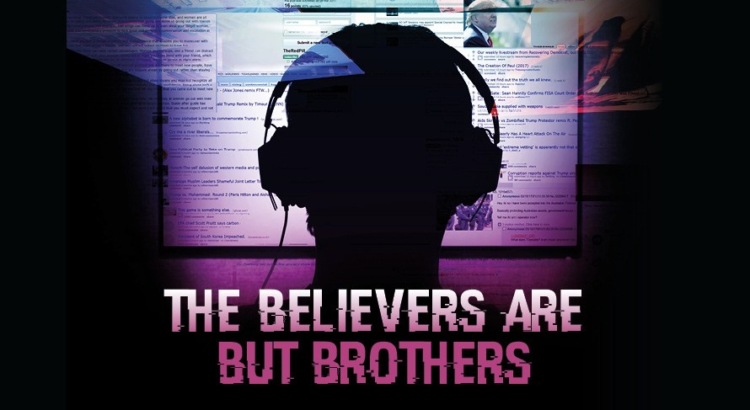
The Believers Are But Brothers was a theatrical experience I’m glad to have taken a part of. And I do feel as though I took part in it, as the show felt sort of like a conversation between performer Javaad Alipoor and the audience. The fact that a WhatsApp group of the audience was constantly ringing in my hands was also a pretty big part of this feeling.


And I know everyone wants to talk about what it means to have a communal theater experience via our phones and the interest of this choice is obvious. But I’m still going to talk about it too.


I’ve been to a handful of UMS and SMTD performances, and the age disparity has always been there. Can I say it’s surprising that the majority of attendees at these shows are much older? No, to be quite honest it’s hard to get student foot traffic to go anywhere if free food isn’t offered. I found this imbalance to be really clear during the show, though, and really intriguing. At the beginning of the show, a large group of older attendees leaned over to ask what everyone was doing on their phones–they didn’t have the app and throughout the show leaned to watch the conversation (I guess that’s the word for it?) on my phone or the person’s in front of them. I’m sure this experience was equally meaningful, though, as it most likely mirrored the disconnect they have towards the darker parts of the internet.


And that’s a lot of this show; Alipoor would describe internet phenomena that I’m sure was new to plenty of the audience, and then offer narratives of young men taking part in and affected by such concepts. I found the rhythm of the show to be really engaging, as it alternates between the unfolding of intense, affecting stories and more casual audience interaction.


This show feels like a piece of a puzzle. These concepts are monumental and I realized that there are so many connecting pieces and stories that I left The Believers Are But Brothers wanting to see more. I wanted to understand Alipoor’s more complete idea of this whirlwind of a decade (that is definitely kind of impossible to do, but I digress). Turns out, there is a sequel: Rich Kids: A History of Shopping Malls in Tehran, and ultimately Alipoor is making a trilogy. Here’s hoping that we have the chance to see his work again soon.
PREVIEW: Les Misérables

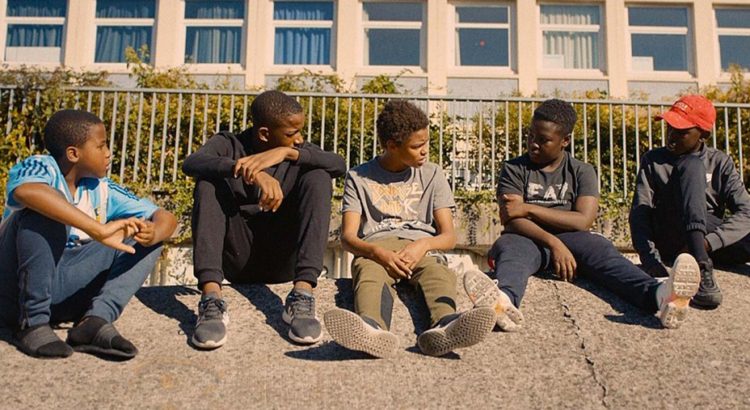
No, the 2019 film Les Misérables isn’t a musical. It’s a French drama detailing unrest in the Parisian suburbs as police brutality fuels rioting. Inspired by a short film from the same director, Ladj Ly, this gritty drama is sure to provoke thought and make us reconsider the power structures in place at home and abroad.


Descriptions of the film have added the word “Thriller” to its genre description. Though political unrest is tense and in some ways scary, I’m really interested to see the angle this film took that caused it to pick up that label. A drama with thriller elements that also has real-life source material could go many different directions; I look forward to seeing it.


Les Misérables is playing at the State Theater, student tickets are $8.50.

REVIEW: The Believers are But Brothers

So, I decided to go into this play blind. No previous research, I didn’t watch any trailers, I just showed up for the show. And what a surprise it was! A politically focused, media infused, continuous stream of information that both baffled and intrigued me.

To give a little bit of context, the show concentrated around one man, the show’s creator, telling us the stories of how several different people across the world were influenced by online media to join ISIS. He narrated the entire time, and was joined on stage by one other person who never spoke or interacted with the audience at all. I’m not sure exactly what the other man’s role was, but the show definitely centered on the narrator as he told several individual’s stories and gave information on the rise of movements like ISIS through media and websites online.

The first aspect I need to discuss is the use of a WhatsApp group chat as a supplement to what was going on onstage. Everyone who was in the audience had a chance to download the app and was added to the group, so as to receive messages from the show itself, interact with other audience members, and show how one aspect of social media can be used to spread political ideologies. This was a good idea in theory, and I liked the uniqueness it added to the show. However, there was a lot of white noise, aka people just adding random messages on the app, that kept distracting me from what was actually happening on stage. I was very torn between wanting to check the messages and wanting to pay attention to the show, since it was very fast-paced. However, the app did do its job of helping to understand messaging’s media impact, and it was cool how sometimes the narrator could send out messages or photos instead of speaking to the audience to get his message across. This was especially impactful when the images conveyed a lot more looking at them on your own screen than on a big screen on stage. It meant you were not influenced by the reactions of the people around you, and you could privately interact with the messages and pictures the way you wanted to. I also liked how the messaging app gave the audience a way to join the show that was less chaotic than shouting out loud. Sometimes there were questions posed to the audience that could be answered in the app, and people were much more honest than they might have been if they were saying the answers out loud.

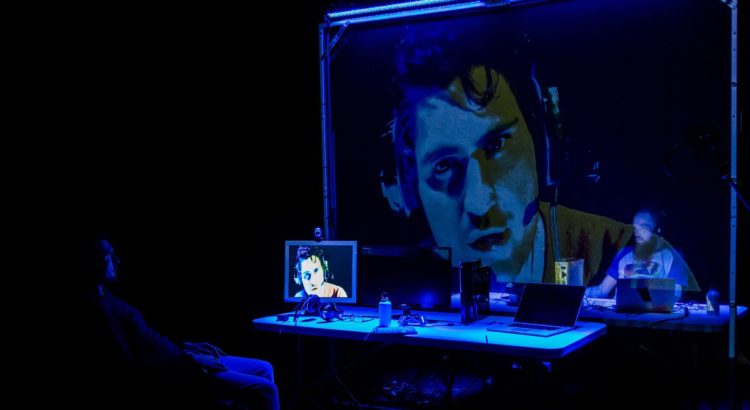
Another aspect of the show that I did enjoy was the use of several types of media to display different stories that were concurrent. The narrator used an old fashioned microphone for two of the stories (which were made distinct by lighting), he sat in a chair on the opposite side of the stage for another, he streamed a video of himself speaking onto a big screen for another, and stood center stage and broke the fourth wall for the last one. He also used the big screen to display pictures and videos that helped supplement whatever he was discussing in that moment. I think a lot of shows do not take advantage of the technology we have today, and the way this show used it made it certainly an new experience.

There were a few things about the show I did not like. First, the main actor had a very strong accent (I know, not his fault) and he spoke very fast, too fast for me to sometimes understand what he was trying to say. I also have only bare knowledge of the terrorist organizations in the Middle East and their timeline of attacks, so when he assumed a lot of this information was common knowledge, I got lost pretty easily. It was also difficult to keep all of the different stories straight, or to understand how they were related, so that definitely made the show less enjoyable for me.

Overall, I would not recommend this show, but I also thought it was a cool media experience if you are very interested or invested in Middle Eastern politics. But I do commend the narrator for talking almost constantly for an hour without missing a beat!

REVIEW: Trash Empire

Most of us would likely blanch at the thought of sorting through ambiguous public trash bags for a midday snack, not to mention actually consuming a box of salvaged strawberries. Yet in his 2017 documentary short, Trash Empire, filmmaker William Reid does exactly this and more – consuming exclusively food scraps and dumpster-salvaged foods over the span of 2 years. Before you question his sanity, here are the fast facts and food for thought: In the U.S, 40% of food produced each year is wasted. ‘Best by’ date labels are selected solely by manufacturers’ discretion. And yes, diving into publicly accessible dumpsters is, for the most part, legal in the U.S.

Reid’s documentary, which also functioned as his graduate thesis project at American University, is daring in its investigations, speckled with awkward humor, and, above all, informatively absurd. Through his ambitious trash diet, Reid strives to deconstruct the root cause of America’s silently raging food waste issue – his main target is not to vilify the consumer, because the crux of the problem can ultimately be traced back to government, industry, and the overproduction of food. Reid interviews an array of researchers and policymakers, all of whom share common ground in possessing greater insight on food waste and its contributing factors than the average American. Though many have the commonsensical awareness that food companies profit off of consumer misunderstandings, I was stunned with the sheer extent of day-to-day misinformation that we as consumers generally assume to be true and in our self-interest. Take the illusion of ‘best by’, ‘sell by’, or ‘use by’ dates; though we naturally assume that they are printed in order to prevent food poisoning, etc, these dates actually are not ‘science-based’, but rather craftily decided by manufacturers. Not only do these manufacturer-enforced food standards affect the frequency and quantity of ditching perfectly good food; they also penetrate grocery sellers’ practices. Reid emphasizes this endlessly through montages of extensive dumpster findings – boxes of juice, crated lettuce heads, bags upon bags of mini carrots – many of which are found in their original, unopened packaging, yet hastily discarded.

Another severely overlooked issue that Reid brings to light is that of food donations, in particular, that of unhealthy, empty-calorie foods composed of government subsidized crops: corn, wheat, and soy. Reid explains that in most cases, attractive tax incentives that fail to distinguish the value of fresh produce donations from unhealthy food donations lead to an excess of junk and snack foods in food banks. The flawed policies that fuel such skewed donations not only aggravate the health of food donation recipients but also fuel the vicious cycle of agricultural overproduction, junk food overflow, and food banks’ rejection of said junk food, resulting in even more wasted food.

I would highly recommend attending any future screenings of this eye-opening documentary! The Food Recovery Network at the University of Michigan did a great job in organizing this screening; listening to William Reid speak, in person, about his passion to fight against our ongoing ‘trash empire’ was a truly engaging experience.

REVIEW: It’s TAPpening

RhythM Tap Ensemble and Groove perform together Friday night

Students dressed as construction workers banged on trash cans. Then, the dancing began.

A lot of student org shows I’ve seen have invited Groove to do a guest performance. Groove, a high-energy music group that uses non-traditional percussion instruments, is popular for a reason. But I’ve never seen a guest performer incorporated into the headliner’s act the way RhythM Tap Ensemble performed to a soundtrack of Groove percussion in their showcase, “It’s TAPpening,” on Friday.

In a piece choreographed by Jack Randel and Katie Reid, RhythM seamlessly incorporated Groove’s funky percussion with the syncopation of tap dancing. At one point, each of the dancers laid on the ground, legs in the air, as Groove members used their tap shoes as an instrument.

The number, which was the second-half opener of “It’s TAPpening,” was a showstopper. I came into the show expecting something unique, and it still provided me with the unexpected.

RhythM, which choreographs all its own dances, showcased a variety of different styles even within the tap genre. Before I saw a RhythM show, I thought of tap dancing as something very specific: done to jazz standards, theatrical but without much substance. However, in this show, as with the show I saw of theirs two years ago, RhythM broke through that misconception. Dancing to pop, R&B, electronic, jazz, disco and gospel music, RhythM also incorporated elements of jazz and musical theatre for a well-rounded and highly entertaining performance.

In the adorable “Season 2 Episode 3,” choreographed by Liberty Woodside, RhythM proved that just like ballet and contemporary, tap dancing can tell a story. The piece transported me back to childhood, playing clapping games with my sister (the choreography incorporated an actual clapping game, which was clever) and living a somewhat carefree lifestyle.

A few songs later, RhythM tackled “Hot Honey Rag” from the musical Chicago and gave it their best Broadway flair. Choreographed by Erica Pinto, the dance had brilliant staging, beginning with the curtain partway up so only the feet were visible. It was, in a way, exactly what you’d expect from a tap number set to music from Chicago, but that’s what made it the perfect Act I finale. Act II brought a music selection much more heavily skewed towards pop, highlighted by “Nostalgia,” complete with retro bomber jackets.

Every piece was well rehearsed and I was impressed by the technique and, well, rhythm the dancers brought, and I enjoyed the diverse styles and music selections the company used. Still, the number with Groove, “Metal Workin’ Foot Workers” was the highlight for me and displayed the group’s creativity in all the right ways.

“It’s TAPpening” also featured four guest performances — from contemporary ballet company Salto, a cappella group Amazin’ Blue, jazz and contemporary company Impact Dance and hip-hop troupe FunKtion. While I enjoyed all the performances, I thought there were a few too many of them, and their placing within the program — Salto’s performance was the second number of the entire show — sometimes detracted from the overall effect.

I came into the show Friday night with high expectations. I saw RhythM two years ago and loved them. They were just as enjoyable the second time around and still brought something new to the table.

As Groove pattered their drumsticks effortlessly on the bottom of RhythM’s tap shoes, Michigan’s only tap group proved once again that in tap, if you’re only thinking about it one way, you’re doing it wrong.

A snippet from RhythM’s program, which showcased all its members’ personalities before they even took the stage.

PREVIEW: Callisto presented by Pure Dance

At a school with a plethora of contemporary and jazz dance groups, Pure Dance sets itself apart in a completely different way: its inclusivity.

“We recognize that the world of dance is often extremely demanding, both mentally and physically, and we strive to provide a safe environment where our members can express themselves without the pressure of conforming to the ‘ideal dancer’ archetype,” its Maize Pages description reads.

Rather than focusing strictly on its dancing as most dance-related student orgs do, Pure’s writeup highlights its commitment to a close-knit community, non-discrimination policy and the fact that it doesn’t charge dues to allow students of all socio-economic backgrounds to join.

Of course, like all other student dance groups, Pure works hard throughout the semester and choreographs its own pieces, culminating in a winter show, this year called Callisto.

According to the event’s Facebook page, Callisto will feature nine jazz and contemporary pieces from Pure as well as several guest performances.

While I’ve seen several other student dance groups on campus, I’ve never seen Pure. But I’m a huge fan of contemporary dance and I like what I’ve seen from other groups, so I’m excited to see what this one has to offer.

“Pure Dance Presents: Callisto” will be on Sunday, Jan. 26 at 7 p.m. at the Mendelssohn Theatre of the Michigan League. Tickets are free with a Passport to the Arts.