REVIEW: Chamber Music Society of Lincoln Center

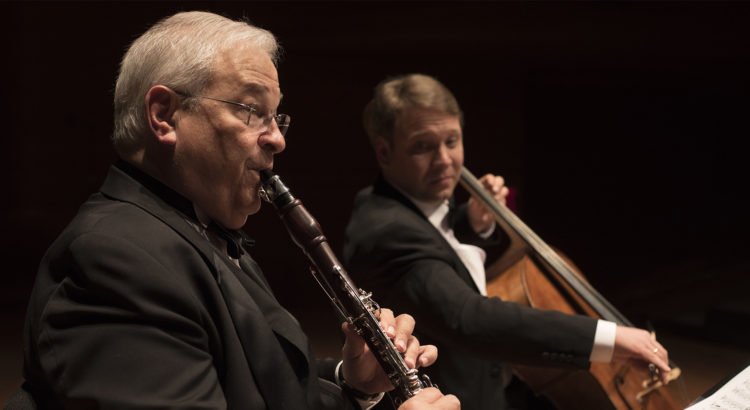
Once again, the Chamber Music Society of Lincoln Center did not disappoint. It is a joy to witness performances where those onstage are truly enjoying themselves, and this was one. The thirteen performers, in different combinations of instrumentation for each of the four pieces on the program, managed to effortlessly convey the character and emotions of the music, allowing the audience to get lost from reality outside the walls of Rackham Auditorium.

The first piece on the program was Henry T. Burleigh’s Southland Sketches for Violin and Piano, with Mr. Chad Hoopes on violin and Ms. Gloria Chien on piano. The piece was at times whimsical, serious, or soulful, and I was captivated by Mr. Hoopes’s ability to (seemingly effortlessly) draw a matching range of sound colors from his violin. His sound and his playing were flexible in a way that allowed the audience to experience the full range of the piece, and for this reason it was one of my favorites on the program.

Next up was Antonín Dvořák’s Quintet in E-flat Major for Two Violins, Two Violas, and Cello, Op. 9, followed by Leonard Bernstein’s Sonata for Clarinet and Piano. Both were flawlessly executed, and the Bernstein Sonata was fascinating in that is was his first published piece.

That said, for me, the real culmination of the evening was the final piece: Appalachian Spring Suite for Ensemble by Aaron Copland. Often hailed as one of the most quintessential works by an American composer, Copland in fact won the 1945 Pulitzer Prize for his efforts. While Appalachian Spring was originally premiered in 1944 as a ballet commissioned for Martha Graham scored for thirteen instruments, Copland wrote an orchestral suite version the following year, removing about eight minutes of the original music. The version performed by the Chamber Music Society of Lincoln Center was completed by Copland in 1958, and it is an arrangement of the 1945 orchestral suite, but with the original instrumentation. For me, it was particularly interesting to hear this version after the Ann Arbor Symphony’s recent performance of the orchestral version, because I somehow expected that orchestration in my head. Instead, each entrance was a new surprise. I especially enjoyed the chords in piano during the opening of the first movement, and how it fit with the scoring of the chamber version. Although it is not Copland’s original version, this 1958 version gives a sense of how the music must have sounded when the ballet premiered at the Library of Congress. For me, it is impossible to hear Appalachian Spring (in any version) without conjuring images of frosted landscapes, sunrises over the mountains, and running streams. It is a true musical escape, just like the Chamber Music Society of Lincoln Center’s Friday evening performance of it.
REVIEW: Out There: A Performance by art duo Princess

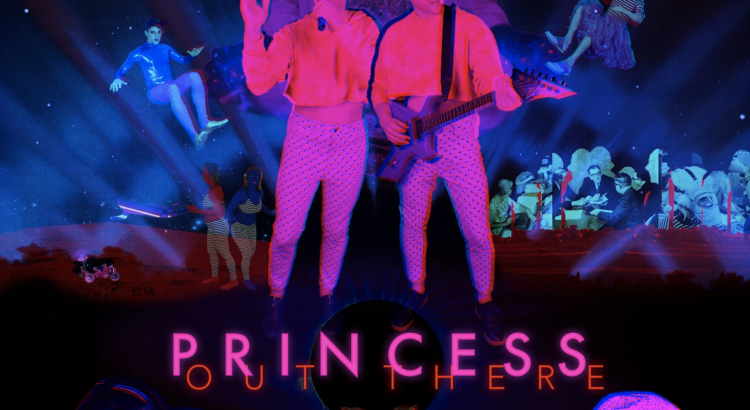
There is a distinct difference between natural weirdness and the sort that is manufactured. Entitling an album “Out There” is far too self-realizing a move to truly belong to the former distinction. Things can be disastrous in cases like these, and unfortunately Princess’ performance veered quite drastically into the side of inorganic. This is not to say that there was no value in their work; quite the opposite, the intentional obscurity of meaning, though cringeworthy, was useful in forcing me to figure my own ideas about what I was seeing and hearing.

A concept album seems perhaps the wrong medium for what these two are doing. There is simply a lot going on, and their work suffers as a result.  They have a good sense of rhythm and tune (especially the flow of the rapping sections), but whatever their flat choreography was supposed to be doing was not being accomplished. The lyrics were often impossible to glean much meaning from. Most notably, the “party-party-party” song, most of whose words were about as inspired as you might imagine. I could speculate on what the song’s purpose is, perhaps some link to the procedural, routine nature of party culture, and the poisons that hide within its mindlessly indulgent atmosphere–the sexual harassment and assault, the brainwashing of men to be hunters who deserve prey, of women to bat their eyelashes and be a thing to desire. But to expect an audience to leap this far to make any conclusion of meaning is a bit much.

A bit too dark to see, but they are currently on the ground in anatomical position.

The space travel motif’s linkage to the album’s purpose was unclear. And though it was often visually striking, I found it relied too heavily on a single type of color scheme (red/blue combination and the vibrant, neon flat coloring of random objects). Also, the repetitive, jerky movements of the characters and objects in the video got old about halfway through the act. However, it still must be noted that the complex layering technique of visual artist Jennifer Meridian was impressive, if at times monotonous. Her work might perhaps be more suited for shorter videos and advertisements that demand the sense of excitement her design provides so well.

Mostly what I find fault with in the performance was its over-the-top brashness. I find it distracts from an audience’s ability to gather meaning from what they are experiencing. It’s more closely related to modern art than an exploration of misogyny in society. In all its spectacular glory I feel they are unable to develop their ideas into anything beyond the surface level. This is a shame, because the two clearly have an enormous creative capacity. I feel that, if they used their potential differently, they could have great success in creating thoughtful, deep, provocative art. While I and others in the audience can certainly derive our own meaning from the performance, the chasm over which we must stretch to get there is too wide. Perhaps this is the result of too many strongly creative people collaborating on a single project–in the process it became too much of a conglomeration than a precise piece of art.

If you’d like to check out the album for yourself, it’s currently available for preorder at their website bandofprincess.com. There you can witness one of their songs under the “videos” tab, and find other information about the band, including tour dates and background on the duo’s origins.


PREVIEW: Isango Ensemble: The Magic Flute

In its UMS debut, the Isango Ensemble, a South African theatre company, will be presenting three performances of a re-imagined look at Wolfgang Amadeus Mozart’s captivating score, transcribed for an orchestra of marimbas. This production provides a familiar and classical background alongside a vibrantly-contrasted foreground of a South African township setting.

This show will be playing October 16th, 17th, and 19th at the Power Center. I’ve been anticipating this performance for as long as I have known about it, for alongside being captivated by the works of Mozart, the Isango Ensemble’s work has been highly praised for its inventiveness and captivating performance! Be sure not to miss the Isango Ensemble this week!

Isango Ensemble: The Magic Flute

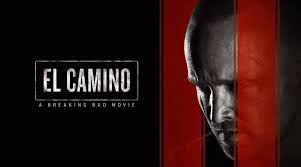
REVIEW: El Camino: A Breaking Bad Movie

The original Breaking Bad TV series had a certain appeal to it. I think it was a combination of a lot of things that made me fall in love with two crazy meth cooks some 6 years ago: The amazing plot, the pacing and tension, the perfect cinematography, the powerful acting, the list goes on. As for El Camino, I think that Vince Gilligan and Netflix hit the nail on the head.

There was no driving event to the plot, no crazy twist that happens at the beginning of the movie to motivate Jesse’s next actions. This is perfect because one wasn’t necessary. The end of Breaking Bad was poetic, and tied up all of it’s loose ends- except Jesse. Anything that needed to motivate him- to fuel some intense plot- had already occurred in the past. Which is why at the beginning of the movie, he is driving away from a meth lab in a stolen El Camino, ducking to avoid the cops who are on their way to find Jesse’s partner, along with several others, dead. It is also why, at the end of the movie, he is a new man- Mr. Driscoll- ready to start life again in Alaska.

The movie, for being two plus hours (as most movies are these days), certainly went by quickly. This is good, because it meant I was captivated by the story, but of course bad because I never really wanted it to end. The way events in the present were often preceded by flashbacks from the past really added an intensity to each moment, while also paying homage to the original series. While there was no big climactic event, each separate scene had its own climax- each one built up to perfectly. Most notable is the wild-west-style duel in the warehouse. That moment was so beautifully set up, and I was shaking in my seat waiting to see what was going to happen.

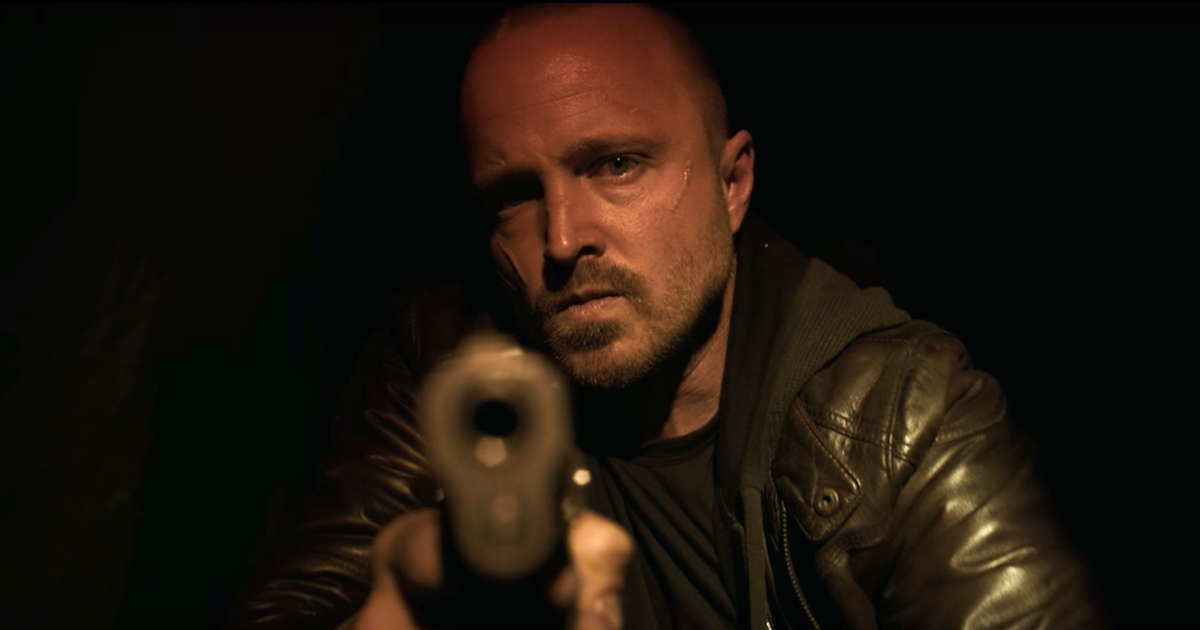
The cinematography in Breaking Bad has always been masterful. Hell, one episode was told almost exclusively from the perspective of a fly (one of my favorite episodes, really). El Camino was just as good with it’s visuals. So many scenes were really amplified by the use of camera focus and angle. Image result for el camino scenesFresh on my mind is the shot of the card at the very end, where the camera focuses in to confirm what we all suspected: that letter was for his parents. Another great example is when he is hiding behind the mattresses in his previous captor’s home, hiding from who he thinks are cops. The way the camera zooms in through the dark to focus on Jesse there with his gun (right) amplifies the intensity of the scene.
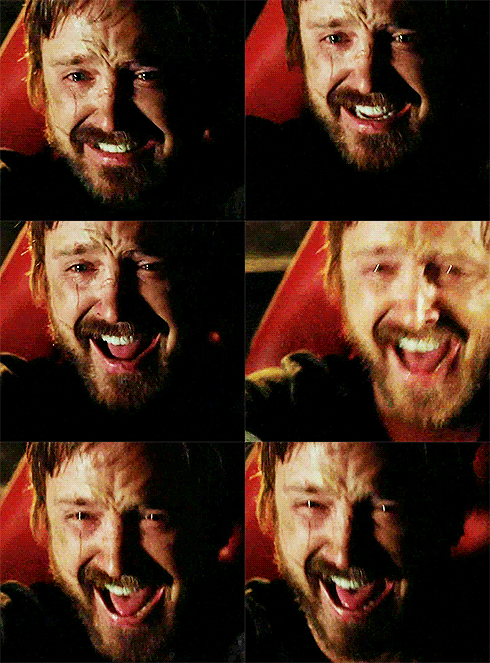
Acting was something I was confident this movie would do well, since many characters had been in the original series. Even with that being said, I feel Aaron Paul’s performance deserves special attention. He always played Jesse so well, but it was different in this movie. More like a traumatized version of Jesse that he had to pull off; a test rat just let out of its cage. I think he portrayed it perfectly. More than reading the emotions on his face, I could feel them inside of me, somewhere deep in my gut.

Certainly a success for El Camino; everything I wanted it to be and more. A worthy sequel to the amazing work that is Breaking Bad. If you missed it this weekend, don’t worry! El Camino is also on Netflix for anyone to watch!

Related image


REVIEW: The Goldfinch

I fell in love with The Goldfinch by Donna Tartt this summer. I’ve said this many times after reading her first and cult favorite novel, The Secret History: that I am convinced Donna Tartt is the best novelist of our time, if not only my favorite. The intricacy of her genius is mind-blowing. The Goldfinch has every Fareah-esque theme a book could possibly have: large, sprawling, ambitious plots, a character we see grow and mature and break, glittering prose, an attention to the everyday, philosophical underpinnings, an incredible (!) best friend figure, unrequited love (not essential, but definitely a perk). I love The Goldfinch so much. I’ve reread some of the passages religiously. 

The story follows Theo, a bright and thoughtful young boy who loses his mother to an attack in an art museum in New York City. In his fervor, he takes a painting with him: Fabritius’ The Goldfinch. We follow him throughout his life, the secret possession of this painting threading its way through every milestone. The story is about a lot of things: love for objects, for art, for people; a search for meaning and value, and sometimes the crushing absence of meaning and value. It is a stirring and riveting story.

The narrative of the book is inexplicably tied with words, with prose, with life given form by language. It’s essentially part of the logic of the story, the central thrumming aesthetic question. Without the craft of language, the narrative seems lacking. I used to be a book purist– someone who believed that books were always better than their movie counterparts. I don’t believe this anymore, because I think that movies and books are two essentially different modes of storytelling, and so a movie adaption must be judged differently than the book. This being said, however, my heart still flinches at the injustice inflicted upon many a good book by horrific and painfully bad movie adaptations. The fact that The Goldfinch relied on language as an essential part of the structure of the narrative and in the history of Hollywood movies with bestsellers, I was incredibly weary of the film adaption. This, I believed, was one of the kinds of stories that movies could not capture. 

I went to the film with my friend who had not read the book. It was a nearly three-hour movie, dense and rich with images and motivations, trying too hard to encapsulate the plot of intricately woven nearly thousand-page novel. It is almost adorably endearing to me that any filmmaker would even attempt to grapple with the magnitude of this novel. It’s uncontainable! I wonder how Donna Tartt does it herself! Three hours is not enough! The psychologies of the characters are too complex, the relationship too deep, the philosophical underpinnings too expansive to capture in the form of film. Perhaps it is unfair of me to say this, and perhaps I am being unfair to the form itself, but they were much too ambitious. I think the film would have worked much better if they had focused on a particular aspect of Theo’s life and developed that carefully rather than trying to explain his relationship with Pippa, and Boris, and Hobie, and Mrs. Barbour, and Kitsey, and drugs, and artwork, and depression, etc etc. Choose one! You don’t have enough time!

Thus, in my opinion, the movie feels like a dilution of plot points, racing to the end. I cannot imagine the movie being successful as a standalone; without the book, it withers. Moreover, the images feel artificial to me, too constructed, and obviously symbolic– all in the varnish of a blockbuster-type style with oversaturated gray skies and all-brown and gray tones. I’m not entirely sure how to explain this, probably because I don’t have the proper film vocabulary, but it felt to me like the images were trying too hard to mean something. I would have liked it to all be scaled back, broken down into the elements of its true nature; not glamorized and made larger-than-life. I felt like I was watching a fantasy, like Harry Potter– and this was, intuitively, the wrong feeling for the story. 

My friend, who had not read the book, loved the movie very much, so perhaps this review is irrevocably restrained by my opinion. However, I did love that the movie reminded me more of my love for the book; when I got home, I sat down on the floor of my apartment with our dim lights while my roommates slept and re-read my favorite passages. If it could do that– spark joy and love, and remind me of what I loved– I am still grateful.

REVIEW: Gala Mukomolova Poetry Reading and Book Signing

In the first reading of the Helen Zell Visiting Writers series, I sat excited and enthralled to witness the arrival of poet Gala Mukomolova. It was lovely being back in the UMMA Auditorium for the 2019 inception of the series, with the warm light suspended by translucent threads, giving it the quality of floating Hogwarts candles; the dimness of the room lulling me into a kind of aesthetic trance; poetry washing onto the shores of my mind. And so entered Mukomolova’s work into one of my beloved programs at Michigan. 

In her reading, Mukomalova read from her debut poetry collection Without Protection. Mukomolova has many identities she explores in her work. She is Russian, Jewish, refugee, New Yorker, lesbian. These intersecting identities ground her work into her own universe, and she enters this space she has invented with the agency, authority, and recognition of her own power. I am currently unraveling what it means to write about your identity in your work– how much of it seems like “material” you’re performing, and how much is actually authentic. I haven’t read Mukomolova’s work in full and am only acquainted with the work she read to us, but it seems to me that she enters her poetry as her own creation. When she writes in Russian, or explains deeply personal situations, she seems to explain the narrative not for us, but for herself; the work, in some ways, seems to be the many aspects of her identity in conversation with the other parts in one place. To me, this seems wildly liberating, not the puppeteeting that might structure other inauthentic works. 

Mukomalova’s poetry collection explores the story of the old Russian fable about the young girl named Vasilyssa trying to escape from the witch Baba Yaga. Her power, bravery, and divine feminine energy guide her to enter Baba Yaga’s home Without Protection. The collection includes a multiplicity of narratives colasing into one, delicately woven together, the old and new and personal and universal all in conversation. One sentence will be about the story of Baba Yaga, the next an anecdote from Mukomalova’s life, another an advertisement on Craigslist. It’s a brilliant tapestry of multiplicity and power that Mukomolova crafts in her poetry. 

There is, moreover, a definite belief in the power of women, and more specifically, in the sexuality of women. Mukomalova writes:


I want everything. I want to be fucked like the wife who waited

for her soldier’s return, fucked: the island, the sand, the nymph, 

the lust that strands him. Fucked: the witch’s sword against his dick before she 

opens. Ill deep throat, I’m sayin’

it’s April, 72 degrees, I’m in love and wearing platforms. This song is just like 

my first years in America, the jump off. What I mean is reckless, performing 

a kind of hope.


Mukomalova’s poetry is unabashed about desire, about the complex highs and lows of wanting and not having, or wanting and having and being a woman. There is an erotic energy weaved into her poetry that gives it power and shamelessness, an unapologetic ode to her womanhood and sexuality. 

Overall, I enjoyed the reading very much. Rereading some of her poetry here to write this blogpost reminded me how thrilling it is to read it, and I have to admit that I enjoyed reading it more than I did hearing it. In any case, I think this makes it easier for you, dear reader of this blog post, to go out and read Gala Mukomalova’s stunning and multi-layered debut poetry collection Without Protection

Sources: https://coffeehousepress.org/products/without-protection, poetry except from https://pen.org/four-poems-by-gala-mukomolova/