PREVIEW: Sweeney Todd

One of my regrets from High School was not seeing my school’s production of Sweeney Todd, but thanks to the department of musical theater I have been granted an opportunity to fulfill a past mistake. I am not a fan of anything scary, I have never seen a real horror movie because I can’t even make it through most commercials. I am making an exception for this show because I know it is going to be fantastic.  Sweeney Todd is about a barber who uses his barbershop to get revenge on the world. This musical has been on Broadway, won multiple awards including Tony awards, and has been critically acclaimed.

You can see this show Thusday (4/18) at 7:30pm, Friday and Saturday (4/19-4/20) at 8pm or the Sunday matinee show at 2pm.

Review: The Lute

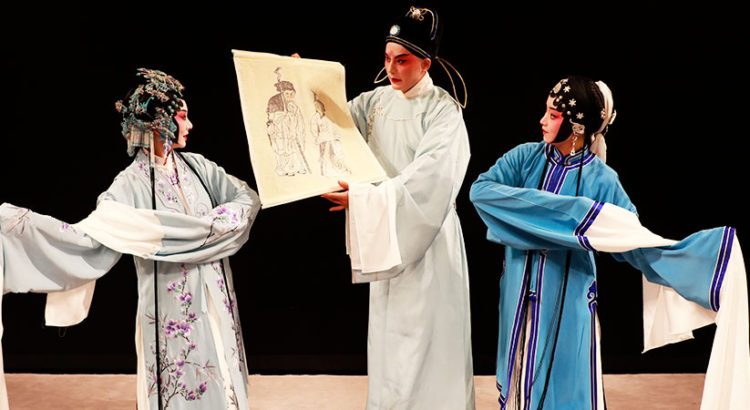
It is so cool that the Chinese opera came to Ann Arbor this past weekend and, while I don’t think I’ll become an avid fan of the art form, I’m really glad that I can say I’ve had the experience. I didn’t realize that this performance is in honor of the Confucius Institute ending its ten year contract with Umich. Apparently the University is planning on better incorporating the study of Chinese culture and history into its academics in lieu of a continued partnership with the Institute. However, I find it hard to believe that the University will be able to do so to the extent of the Confucius Institute and its programming, such as going to Chinese Americans’ homes for traditional cooking and cultural exchange. The director also stressed the difficulty in planning the opera’s visit to Ann Arbor during opening remarks Saturday night which makes me wonder if the current state of US-Chinese politics has something to do with it.
The performance itself was vibrant and expressive. While the singing wasn’t quite my cup of tea, I loved the costumes made of beautiful mixes of bright and pastel silk, interesting hats, and jewel encrusted headdresses. I especially appreciated that the performance featured a translation which was projected onto the back wall of the stage throughout the show. In my experiences with European opera you’re usually expected to know the German/Italian or just follow along based on the acting and music.
My expectation that the storyline would feel different from the typical European opera was correct. When I read the description of the story before seeing the performance I expected the opera to follow Cai Bojie’s trip to the capital and his first wife’s struggle to care for his parents then end with their reunion. Instead, the performance started with Cai Bojie finding his wife’s painting of his parents in the temple and focused mainly on hum reuniting with his first wife and the second wife coming to terms with the situation. While it felt a bit abrupt, like we had started in the middle of a story, it tracks with what I’ve been told and experienced in non-western storytelling as this opera focused on the human relationships and emotions rather than a grand quest.

Image courtesy of the Michigan Theater.

REVIEW: The Public

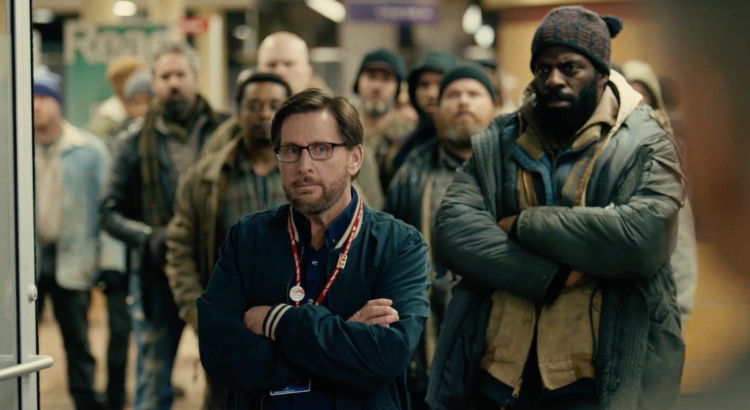
What an interesting movie. It managed to tackle some of the hardest social issues that we are facing today, but it was also comical and uplifting. The movie felt real. The cinematography almost felt like it was from a high quality documentary and the movie didn’t feel overly polished or perfect. It was perfectly down to earth and genuine. The many actors and extras playing homeless men throughout the film felt authentic and even led me to question if the production included current or former homeless folks in the cast or as extras. The movie wasn’t perfect. The female characters in particular felt a bit off. The female librarian and main character’s love interest felt like caricatures of real women with the first being the stereotype of a social justice warrior hipster while the second was kind of like a manic pixie dream girl, taking manic to the max. Despite this lack in character development, the script treated its homeless characters well. It didn’t try to romanticize the homeless or show them as perfect; it showed the mental illness and drug and alcohol addiction that plagues the community. However, it also showed their humanity and background. We learned that many of them were veterans, came from families, had lives in the past. We learned about camaraderie that exists within this community. The audience also got to see that homelessness is not permanent. There are people like the main character who turn their lives around. Meanwhile, we also got quite a few laughs and left with a general feeling of joy and promise. The entire theater burst out in laughter when 100 men came out of the library completely naked singing in unison. However, that amusement was tinged with just a bit of sadness when one character said “they’ll never forget this” and the audience knew that this story would be like any in the world today where the forgotten and oppressed continue to be forgotten and oppressed.

Image courtesy of medium.com.

REVIEW: Abstraction, Color, and Politics in the 1970s

The title of this exhibit has more words than the exhibit has paintings. With such a long, dramatic title, I have to admit that I was expecting more. The room where the exhibit is featured isn’t really a room. It looks like the entrance to a much bigger gallery, and it is, but the rest of the gallery is full of other exhibits. The room is more of an entrance way, which is appropriate for its four art pieces. The first piece that you see is the pink and orange draped canvas featured in my preview. A painting hangs on the wall to the right depicting a sunset in a similar family of colors. Look to the left and things make a bit less sense when you see the geometric array of color blocked canvases fitting together to create what looks like an optical illusion. The last piece is entirely made of black, painted wood. It reminded me of a collage in that it felt like a collection of unrelated wooden objects brought together and placed on shelves. I simply could not figure out what made these pieces political, and I can make just about anything political. I see the abstraction and color but I struggle to understand what meanings these pieces represent or the messages they meant to convey. The titles weren’t much help with this either as they were equally vague and abstract. I can appreciate abstract art, but this kind of abstraction from a period when it wasn’t quite new enough to be considered rebellious, just isn’t political in my eyes.

PREVIEW: The Dreams The Dreamers Dreamed

The Dreams the Dreamers Dreamed is an exhibit in GalleryDAAS. GalleryDAAS is a gallery space in Mason Hall between the posting wall and SSD sponsored by the Department of African and Afro-American Studies. This gallery was established in 2010 with its first exhibit being a collection of paintings by artist and DAAS lecturer, Jon Onye Lockard. The space features two contemporary Black visual art exhibits per school year, one in each semester. GalleryDAAS is open 10am-4pm Monday through Friday. The current exhibit will be available through this Friday April 19th.

REVIEW: Mazel Tov, John Lennon

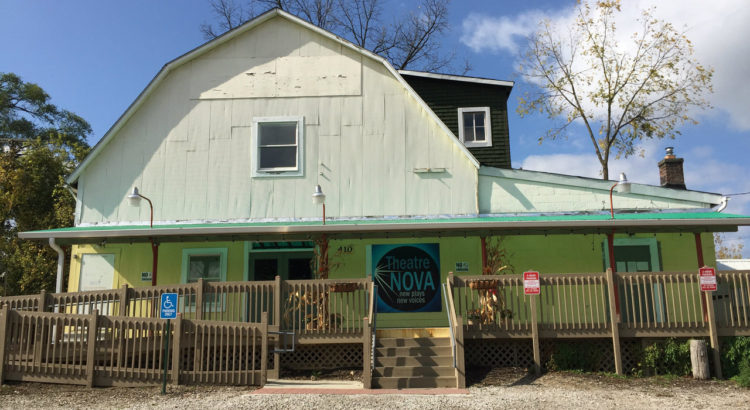
Theatre Nova is a cute little spot in Ann Arbor. It’s basically a house that has devoted the living room to being a theatre room. There are only around 30 seats in the audience, and the room is so small that I was able to sit three feet from the mainstage. The intimate environment and the ability to see the actors facial expressions and eyes so closely made the viewing experience really unique.

This play was extremely well-written. It was ironic that I decided to see it with an expert in law, because I am an expert on The Beatles, and that is what this whole play was; John Lennon and a lawyer discussing how he is going to fight being deported and stay in the U.S. As a Beatles expert I was able to appreciate how accurately the writer portrayed John Lennon and captured John Lennon’s essence. This is difficult because John Lennon has an interesting personality; he is simultaneously laid-back and anxious. The author did a great job showing John Lennon’s humor while also showing his deep philosophical curiosity and capacity to be poetic. My friend confirmed that all the legal terminology was accurate and creatively put together. I assume the writer had legal expert help. I want to shake the writer’s hand for writing such a fantastic script.

There were some great plot points that kept the play interesting and engaging. It was very comical having a lawyer who did not recognize John Lennon was or any of his music. This made for some great wordplay.  I also enjoyed scenes that had characters looking directly into the audience, the great use vietnam war radio casts, and the historical accuracy of the play, even with the small details.

The dynamic relationship between the lawyer, who was a total square, and John Lennon was fantastic. Not only did they become close friends, but they were also able to teach each other. The lawyer taught John the importance of being a family man and John showed the square that the government is not infallible and righteous.

I also learned a lot as an audience member. Historically war has been sold like a product. John Lennon wanted to sell peace like a product. Conservatives and radicals are evolutionarily advantageous for the human race. The constant struggle between those trying to change things and those afraid of change is somehow what moves us forward as a whole. Actions can be significant from intangible actions. Changing the world can be done in intangible steps. Woodstock was amazing just because it happened, it doesn’t matter what tangible actions happened afterwards.

The end of the play had the most emotional scene as the square lawyer, for the first time, lost his temper. He ranted in a state of befuddlement and fury how disgusting it was for the U.S. to use immigration law as a political pawn.