REVIEW: Climax.

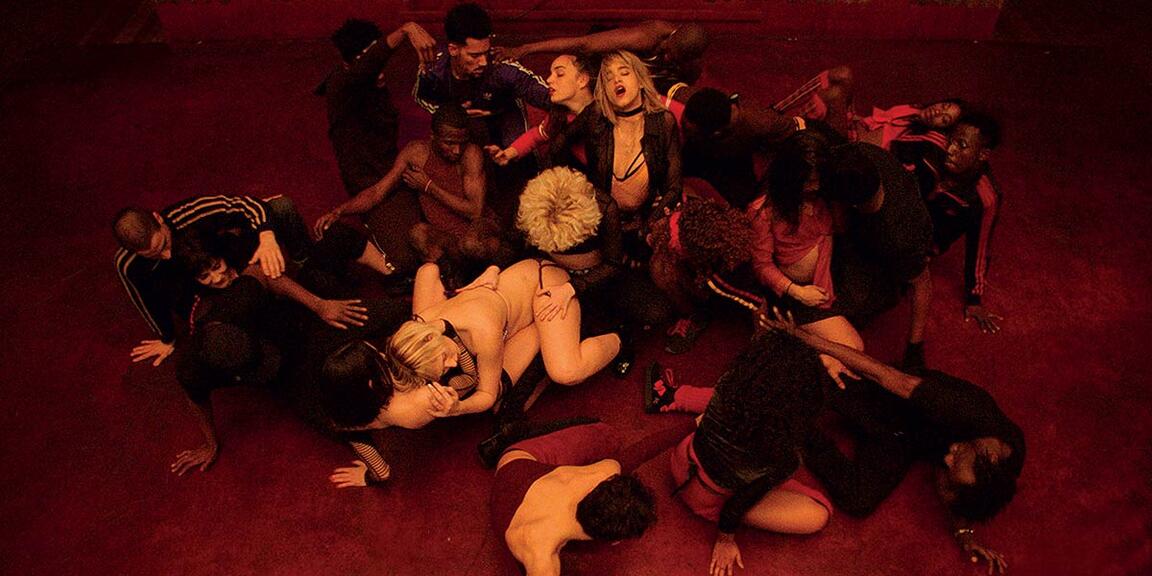
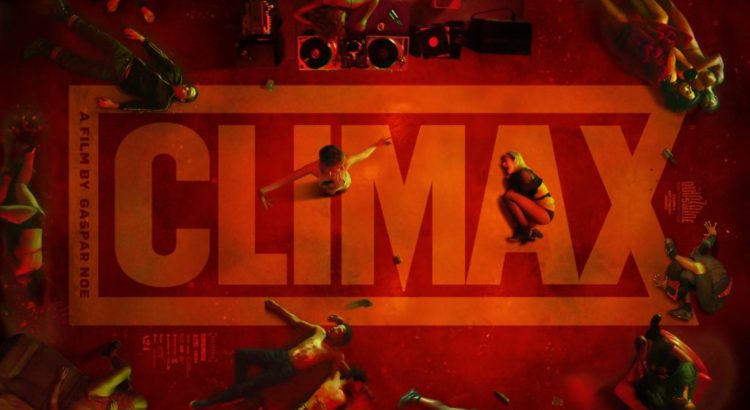
With films like Black Swan, Suspiria, and now Climax, dance is a staple in horror, both sublime and dangerous. Some kind of magnetism exists to the art, an incredible fascination with the primal power behind the lofty, elegant institutions of dance. Climax is already a bit stripped down in this sense – there is no renowned ballet school, no classical compositions to be centered around. Instead, the film is focused on a diverse dance troupe, and the pace is set from the first major dance sequence to be erotic, sensual, and chaotic.

Climax feels like an amalgamation of limbs and sound, as if it were a strange animal pulsating with bass and red lights, with a feral energy that doesn’t stop until the party’s over. There isn’t really a script, and it was noted by the director Gaspard Noé that most of the scenes were improvised, shot linearly, over the course of only a few days. It feels organic and crude, surreal in some ways and too real in others.

The cinematography is unusual, with brutally long takes, and the camera primarily focused on the mesmerizing choreography and disorientating scenes that almost seem to amount to nothing. If there is supposed to be a story line, a significance behind everything that unfolds over the course of the movie – then it’s lost to a special echelon of hell that spills across the screen.

At first, the film starts off like any other onscreen party: a bit hedonistic, a bit messy, full of drama and gossip and dancing. The audience is exposed to the private problems and personal relationships between the members of the troupes through cuts towards the different characters at different points during the party.

Things are amplified when the group realizes that their sangria had been spiked with LSD, and all pleasures and desires reach unthinkable magnitudes before turning dangerous. Dance is melded with violence and paranoia, and the scenes turn into an unending, bizarre, sensory surge. While this feeling is nearly normalized by the end of the movie, a few scenes we see through the eyes of some of the only coherent characters are the realizations of the nightmarish reality.

Climax is a polarizing film, strange in composition and delivery, but undoubtedly powerful. It’s a movie that is difficult to make sense of with the traditional parameters of good film-making, and is probably most aptly described as a bad trip – perfectly filmed as such, and unforgiving in how far it takes the viewer down a path of indistinguishable pleasures and pains. The ending reveal almost feels insignificant in comparison to the trauma of the rest of the movie.

While beautifully shot and unmistakably special, Climax is difficult to watch and reads more like an abstract exploration of the moraless, raw side of the human condition than an actual plot. It’s interesting, it’s an experience, and it’s probably a masterpiece in its own genre, but it is definitely not for everyone – maybe not even for most people.

REVIEW: The 39 Steps

When an evening at the theater goes horribly awry, Richard Hannay finds himself on the run from the law, and before long in the depths of an international conspiracy which he must uncover in order to clear his own name. Needless to say, hilarity ensues.

***

Some things in life are deceptively simple. For example, figuring out whether or not “deceptively simple” is the appropriate term to apply to the thing you are about to describe, because “deceptively” is a terrible adverb that you should never use as long as you’re trying to communicate clearly and unambiguously. (“Clearly” and “unambiguously,” on the other hand, are both model adverbs.)

Another thing that is deceptively simple — that is — appears to be simpler than it actually is, is Patrick Barlow’s The 39 Steps. This not to be confused with Alfred Hitchcock’s The 39 Steps, or, god forbid, John Buchan’s The 39 Steps. Patrick Barlow’s The 39 Steps is a reworking of Simon Corble and Nobby Dimon’s The 39 Steps, itself an adaptation of Hitchcock’s, in turn based on Buchan’s. I cannot speak to Corble and Dimon’s interpretation, but Barlow’s interpretation of their interpretation is a Monty Python-esque reimagining of Hitchcock’s spy thriller, which calls for four skilled actors, and not much else. Sets are kept minimal by necessity, as the play changes location on a dime, and and costumes are sometimes limited to an array of jackets and hats, as they need to be changed even faster. It is a play which practically seems designed for small-scale community theater, due to its lighthearted nature and apparently low technical demands. But this is by no means easy, and retelling an entire adventure novel with just four people can leave one short of breath.

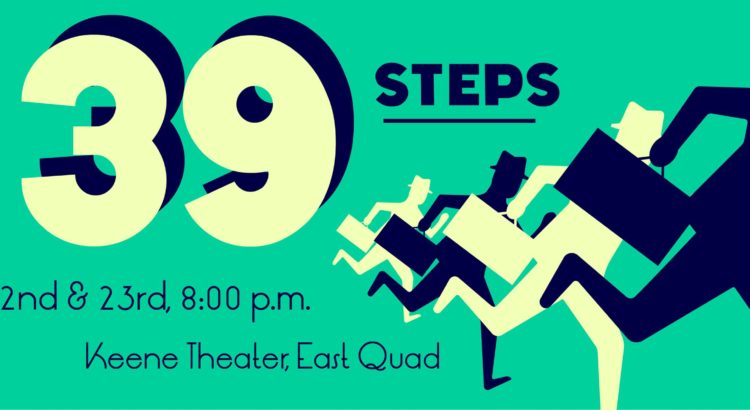
The RC Players, whose production of The 39 Steps opens March 22nd at the Keene Theater in East Quad, have assembled the requisite cast of four funny people. Sushrut Athavale leads the cast as the pencil-moustached Richard Hannay, cool and quippy, though not himself immune to comic outbursts, Hannay is the perennial leading man, and, to this end, Athavale is the only actor who plays just one role through the entire performance. In a farce, it is easy to forget about the straight man, who acts to ground the antics of the more absurd characters, but the role is one essential to the genre, and requires a comic talent of its own which Athavale certainly possesses. He is opposite Maria LoCicero, who first appears as inciting-incident-on-feet Annabella Schmidt. Once Schmidt’s plot utility is exhausted, LoCicero portrays two other characters, the Scottish Margaret, who, like Ms. Schmidt, is something of a one-scene wonder, and Pamela Edwards, the persona in which the actress spends most of her time on stage. Still, all three characters fall under scrutiny, and LoCicero does a marvelous job portraying each as distinct and uniquely entertaining.

Athavale and LoCicero are joined by JD Benison and Nicholas Megahan as the two aptly-named Clowns, who portray between them literally every other character in the play. They change their voices and costumes seemingly every sixty seconds, sometimes more, sometimes even handing characters off from one to the other in a daisy chain of hat and jacket switching. They certainly have the flashiest parts of the play, and the quick-paced broad comedy that characterizes many scenes rests squarely on their shoulders.

There is one element inherent to farce which I cannot review for myself, and that is how live comedy feeds on the audience. The broader the comedy, the more it feeds. To that end, the cast in a farce must always be on alert, careful to time their jokes to the tempo of the audience they have any given night. Thus a farce will always be continuing to find its shape, and the actors must be up to the task. Without seeing every performance in this run, I cannot say whether they are or not, but my strong suspicion is that they absolutely are.

The 39 Steps has a metatheatrical element to its comedy as well, which was splendidly executed throughout. Director Sam Allen has done some wonderful space work, which was perhaps most notable in a scene set on a moving train. I do not wish to go too far into it lest I give anything away, but let it be said that both the interior and exterior of the train were perfectly embodied and practically visible in what was, in fact, empty space, which had an exhilaratingly comic effect. In some ways, the less-furnished scenes were more impressive than the scenes that had a full contingent of chairs, tables, windows and doors, because the less that is literally portrayed, the more the cast and creative team have to come up with inventive and humorous ways to convey the same information to the audience. Suffice it to say that the bits of comedy which leaned on the fourth wall were, I thought, the most humorous moments. One moment which was very funny, but which I wish had been leaned into even more, was a moment near the end of the play where even the actors playing the characters seem to get in on the comedy, the actors themselves becoming characters, bringing us to almost Brechtian levels of verfremdungseffekt.

Speaking of meta-comedy, if I can make one nerdy nitpick, it is that the references to other Hitchcock films which litter the play (for instance, one character refers to the “Rear Window” of a house) were, with the exception of one, entirely played down, unemphasized, and, if I recall correctly, in one instance cut altogether. Now, I will be the first to say that the exclusion of reference humor is hardly something that should hamper one’s enjoyment of the play. I have myself criticized plays for relying too much on reference humor, which is exceedingly audience-dependent and often awkward to pull off. At the same time, given the abundance of jokes of all sort in The 39 Steps, (if you don’t get one joke, there’ll be four more in thirty seconds one of which you will) I don’t think the relatively small amount of reference humor works against it, and I don’t think it hurts to lean into it in this instance. On the other hand, this is a very minor nitpick, and will also only be noticed by the extreme Hitchcock geeks in the audience who also happen to have seen or read this play before. Which, for this production (though I haven’t done the demographic surveys) is probably a relatively small percentage.

In short, if you enjoy the movies of Alfred Hitchcock, and/or the comedy of Monty Python, and/or just want to enjoy a fun evening at the theater that doesn’t take itself too seriously, The 39 Steps is a brilliantly-written farce, very well executed by the RC Players. (In fact, it is all those things even if you don’t like Hitchcock/Python/fun evenings at the theater. But I don’t see why you wouldn’t.)

PREVIEW: Secret Love in Peach Blossom Land Film Screening

The CHOP Film series presented by the U-M China Ongoing Perspectives programs is presenting a viewing of Secret Love in Peach Blossom Land  (暗戀桃花源) with special guest, direct and writer Stan Lai. The warmly received movie was an adaption from Lai’s self-penned play of the same name, and was the Taiwanese Oscar submission in 1992. The comedy features a unique mix of tones and themes as it features on a single theater that is housing two different plays, both a modern romantic tragedy (Secret Love) and a historical comedy (The Peach Blossom Land.)  

Following the film will be a Q&A session with Stan Lai, who is one of the most prominent and acclaimed playwrights in Asia.  He was the first to receive the highest degree of Art Award in Taiwan, the National Arts Award, two times in 1988 and 2001 respectively.

The event will be hosted at the State Theater, Tuesday, March 16th at 7:00 PM.  It’s completely free and open to the public, so if you’re interested you have nothing to lose!

As a note- the event is titled “Secret Love in Peach Blossom Land,”  However the movie is also sometimes translated as “Secret Love for the Peach Blossom Spring.”

Preview: David Wilcox & Beth Nielsen Chapman

This show is at The Ark (316 S. Main Street), which is one of the best music venues in Ann Arbor. It is a small, intimate location that still attracts big names. Also, the Ark is non-profit, which is always respectable. This show is March 28th (Next Thursday) at 8pm.   Tickets are $20.

I’m super excited for this show because it combines pop and country music. These artists don’t have a history of performing with each other, which will make an interesting dynamic on stage.

Beth Nielsen Chapman is an accomplished musician in the Songwriters hall of fame with seven number hits. David Wilcox has been producing albums and writing music for movies since the 1980’s. Whereas Beth Nielsen Chapman is a country and pop artist, David Wilcox focuses on folk music.

Here is a song by each artist to check out:

REVIEW: How to Train Your Dragon 3: The Hidden World

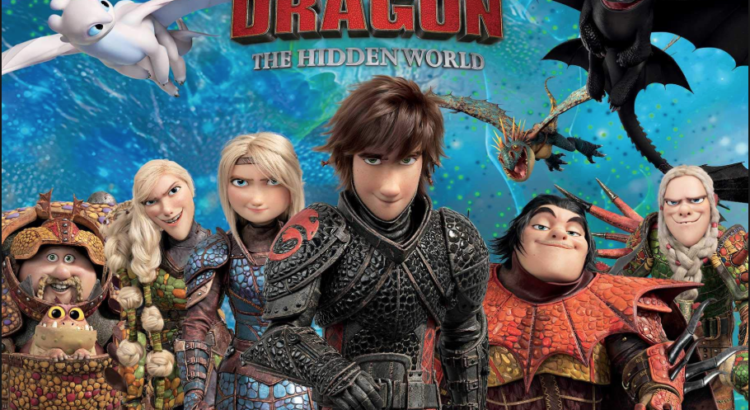
 I had mixed feelings about the third movie in the trilogy. On the one hand, there were many elements that I enjoyed. For one, I loved the soundtrack. Two, the animation was amazing. The Hidden World was creatively imagined, and I really enjoyed seeing new species of dragons that hadn’t appeared in the previous two movies.


I could also tell that the animators did research on birds and other biological organisms in order to display a diversity of dragon species and behaviors. Toothless’s mating dance was clearly based on mating dances of birds of paradise. Lastly, I thought the themes explored were substantive and intriguing. Hiccup’s coming of age story was heartfelt; he eventually found his sense of self and established self-confidence, even without Toothless. Flashbacks to Hiccup’s childhood were emotional and vulnerable. Toothless and Hiccup’s relationship also demonstrated the important lesson of how love and loss comes hand in hand.

The weaknesses in the film, I thought, were generally in the plot. At times, it was rushed and sloppy: there were unanswered questions in the narrative, levels of threat posed in the story were either exaggerated or understated, illogical choices were made by Hiccup as a leader, and the main villain was unconvincing.

Loose threads/unanswered questions: What happened to the warlords (secondary antagonists) in the story? After Grimmel (primary antagonist) was defeated, the warlords just dropped out of the narrative, which was odd given their massive army, resources, and ambition to conquer the world. The narrative could have been stronger, arguably, if they were taken out of the story completely.

Plot points that don’t make sense: Why would the Vikings of Berk abandon their home without a concrete plan? Yes, Hiccup’s thinking and style of leadership is unconventional, but their village has hundreds(?) of people from an older generation accustomed to combat and warfare. It would make more sense for them to hunker down and fight Grimmel, meanwhile sending out people in search of the Hidden World so they can move there later (once they’re sure the place even exists).

Exaggerated and understated levels of threat: (1)Grimmel had six Deathgrippers, versus the hundreds/thousands of dragons on the island of Berk. Hiccup’s forces significantly outnumbered Grimmel’s forces. Why would the people of Berk feel threatened enough to flee their island they’ve populated for seven generations? (2)Near the end of the movie, Hiccup’s crew attacked a massive fleet of ships in order to save Toothless and the Light Fury. They were outnumbered—possibly 1000:1. However, only two or three ships attacked them and were then easily defeated. There were no cannons fired, no arrows shot, no naval tactics were employed. What??? If only ten or fifteen ships were present in the scene, I would have been less confused and unsatisfied by the enigmatic ease with which Hiccup’s crew defeated the antagonists.  

Regarding the antagonist: I thought Grimmel was an unconvincing villain because he didn’t possess strong intrinsic motivations. Why did he target Night Furies? Why didn’t he want to train Toothless into being his servant instead of killing him? Why didn’t he kill Toothless, given the many chances that he had, if that was his ultimate goal? The movie briefly tried to answer some of these questions during Grimmel’s few monologues and encounters with Hiccup, but I just wasn’t convinced. Perhaps if the movie included a couple of flashbacks from Grimmel’s past, it would have shed more light on his hate of dragons and ambition to hunt Night Furies specifically.

An Aside: Strangely, Astrid felt like a different character in the third movie. I’m not able to pinpoint why, but I think it may be because she had a more masculine role in the first movie (engaging in combat, being jealous of Hiccup, picking a fight with him, being rash(?)), and in the third, she took on a more feminine role (pacifying Hiccup, being the voice of reason, etc). Just the way she talked felt different for me.

Agree or disagree—what are your thoughts on the film?

PREVIEW: Yoni Ki Baat

Yoni Ki Baat– which loosely translates from Hindi as “Talks of the Vagina”– is a show that centers around women of color.

Inspired by The Vagina Monologues, YKB started off for South Asian women. At the University of Michigan branch, the organization expanded to a larger array of diverse performers. Here is a student performance from 2018, to see a sample of what YKB has to offer.

YKB’s spring show is this Friday. You can RSVP here– it’s free. 

Check out their Instagram here and learn more about this year’s speakers.