REVIEW: Handel’s Messiah

The moment that I entered Hill Auditorium for the Ann Arbor Symphony and UMS Choral Union’s performance of George Frideric Handel’s Messiah, the festive and joyful mood was evident. A double-layered border of beautiful poinsettias graced the front of the stage, and a large festive wreath seemed to float in midair in front of the pipe organ. The orchestra and Choral Union filled the stage, and anyone there could sense that it was going to be a night of merry music-making. Soprano Yulia Van Doren, countertenor John Holiday, tenor Miles Mykkanen, and bass Alex Rosen joined the ensemble as soloists.

I have listened to recordings and even live radio broadcasts of Handel’s famous oratorio, but this was the first time that I have ever been present during a live performance of it, and it certainly did not disappoint. For one thing, the performers were of very high caliber – Scott Hanoian, the director of the UMS Choral Union is the former assistant organist and music director of the National Cathedral, and several of the soloists will be performing Messiah with the likes of the Saint Louis Symphony and the National Symphony Orchestra.  Additionally, a nearly three-hour work written 300 years ago, it is impressively engaging. The audience was silent throughout, only to erupt in applause, cheers, and whistles at its conclusion.

One of the most moving moments of the performance was the famous “Hallelujah Chorus.” Ushers distributed sheet music prior to the performance, and when the most well-known composition of Messiah was reached, Mr. Hanoian turned out from the stage and conducted the entirety of Hill Auditorium as the audience stood and joined the Choral Union in singing. I remember looking around during this and being overtaken by the sheer number of people singing around me and above me in the mezzanine and balcony. Centuries after it was composed, this music still has immense power to bring people together, and I honestly had chills during the chorus. It reminded me of why I love music so much, and of its most essential purposes.

I also greatly enjoyed hearing the organ of Hill Auditorium in action. Normally the pipes are merely a backdrop for other performers, but during Messiah they came to life. For most of the piece, I was aware that the organ was playing, but it was on stops that blended with the orchestra and the vocalists. However, at the very conclusion of the work, all of the stops were quite literally pulled out, and I almost jumped in my chair out of surprise! The organ’s rich sound filled the entire hall, and its grand, majestic timbre is not something that I will forget in the near future.

The Ann Arbor Symphony and the UMS Choral Union’s undertaking of Handel’s Messiah was an experience that has made me love and appreciate the work even more fully. Even if you are not typically into classical music, the melodies of the “Hallelujah Chorus” and “For unto Us a Child is Born” will stay in your head for days after. In my opinion, the chance to hear Hill Auditorium’s organ was worth it in itself!

REVIEW: Contemporary Directions Ensemble

The Contemporary Direction Ensemble’s Friday performance was emotionally powerful and also a challenge to conventional norms.

Their performance of “Die Schönste Zeit des Lebens,” or “The Most Beautiful Time of Life,” was breathtaking and haunting. The manuscript of this piece, a popular foxtrot of the 1940s, was recently discovered at the Auschwitz-Birkenau Museum by University of Michigan Professor Dr. Patricia Hall. Arranged by prisoners at Auschwitz for one of the camp’s orchestras, it was likely performed for Sunday concerts for the S.S.

As the ensemble performed this piece, the first time it has been heard in 75 years, images of Auschwitz were projected on the wall behind. The contrasts between the lighthearted music being played and the dark realities of the Holocaust in these images were stark, and for me, this highlighted the power of music and the strength of the human spirit. How could something so beautiful exist in a place of so much death? The melody, which out of the context that this arrangement was created from is carefree, took on a much more emotionally raw and evocative quality that stayed with me for long after the piece was over.

The final piece of the evening, which was vastly different from how the concert began, was the U.S. premiere of George Lewis’s P. Multitudinis. This piece, which was of “situational” form, consisted of several instrumental groups, a traveling percussionist and traveling conductor, and the “multitude.” Rather than playing music written out exactly as it is to be played on the page, the musicians reacted to what was going on around them and responded with their instruments accordingly. It was a very intriguing piece, more rhythmic and innovative than melodic, and it was fascinating to try to follow how the members of the ensemble communicated with each other throughout the piece. Music such as P. Multitudinus challenges the audience to be fully present in the moment, because the performance unfolds uniquely in a way that cannot be predicted, and it is a living, breathing form of art. Typical conventions of music performance were broken – at one point a trombone player borrowed a reed and bocal (the metal tube to which the reed is attached) from a bassoon and put it on the trombone. At other times, kazoo-like instruments were used. The piece was truly a broadening of creative boundaries.

I greatly enjoyed the Contemporary Direction Ensemble’s performance because it made me pause and really think about music and its roles in a way that more traditional concerts do not. The concert exemplified music as an interactive art form and as a means of communication.

PREVIEW: The 25th Annual Putnam County Spelling Bee

Get ready for the most ridiculous and entertaining spelling bee yet! Putnam County has some interesting characters in it, and its 25th annual spelling bee follows the lives of 6 special contestants who, while trying to spell long hard words, struggle with their personal lives in finding love and connections. Watch these quirky kids try to win The Bee, and in life, in this wonderfully hilarious musical at the Arthur Miller Theatre December 7 at 8pm and December 8 at 1pm and 8pm. Tickets are only $3 and are available at the door or online.

REVIEW: The Room

Where do I even begin with this movie?

Image result for i did naht gif

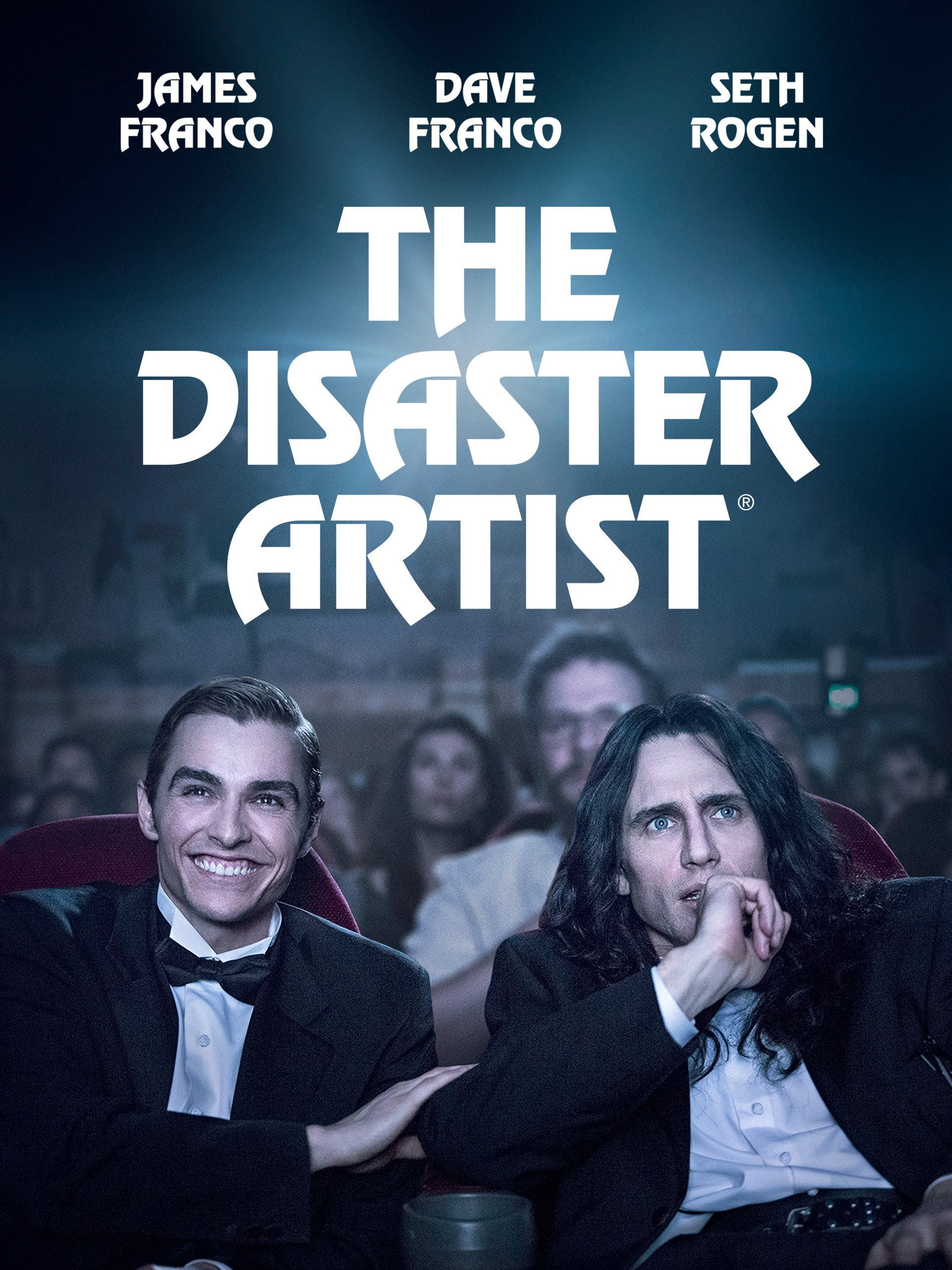
I’d heard it called “the worst movie ever made,” but this fails to capture everything horrible about director (and writer, and producer, and star) Tommy Wiseau’s work. Perhaps some numbers will help: Wiseau spent $6 million to create this disaster, while collecting only $1800 in ticket sales, as it played in a few select theaters in California when it was released in 2003. The man behind this blasphemy is as bizzare as his movie, keeping so quiet about his personal life that no one is sure of his birthplace beyond that it is somewhere in Europe. After he immigrated to the United States, he worked his way up from bus boy to movie star, becoming independently wealthy by unclear means. Since The Room, he has landed a few roles in television and film, not to mention receiving some sort of praise from James Franco’s 2017 movie The Disaster Artist, in which James and his brother play Wiseau and friend/colleague/costar Greg Sistero, telling the story of The Room’s disastrous making.

Image result for disaster artist

Basically, this movie was a meme before modern memes existed. The actors perform expressionlessly, their voices flatly reciting a poorly-written script. Scenes fail to fit together in any continuous, logical manner, creating unrelated and unfinished plotlines. The opening music is somewhere between the background to an old anime, a made-for-tv movie, and a documentary about King Arthur. Where there is dialouge, there is often no background noise at all, creating an unsettling feeling for the viewer. There is so much wrong with the layout and execution of this movie it would be possible to go on about it for several eternities; the whole thing is simply bizarre.

In my eyes, Wiseau is very earnestly aspiring to something that isn’t worth aspiring to; he strives to imitate the worst facet of American film, throwing together a love triangle, a splash of ganster violence, sex scenes, cancer drama, a near-fatal football-related accident, a suprise party, state-of-the-art recording equipment, an ending that is the exact opposite of an unexpected twist…etcetera, etcetera. All of this comes together to form what is for the most part an especially awful Lifetime movie. And yet, I and millions of others around the world somehow love this movie. Given the distorted sense of humor the Internet has cultivated in us all, had The Room been made in 2018, I could see it being quite a success. In fact, it has become more successful since its release, playing periodically in theaters everywhere. Wiseau himself has attended some of these events, given to arriving via limosine and sitting in the front row. His immortal confidence in his work is truly something every artist should aspire to.

Image result for the room

Tommy Wiseau has a website! If you’re interested in purchasing The Room merchandise or some of his self-designed underwear, he’s put almost everything on sale for the holiday season. One of his jackets (with a free copy of The Room and a “dogeee” stuffed animal) would make a great gift for your grandmother, perhaps. And if you haven’t yet seen this work of art, I urge you to find a showing in a theater near you!

REVIEW: Big Band Holidays Jazz at Lincoln Center with Wynton Marsalis

Big Band Holidays Jazz at Lincoln Center with Wynton Marsalis was a great performance including a variety of festive classics, and it allowed me to escape, if only for an hour and twenty minutes, the stress of end-of-semester reality.

From the very first tune, which was “Jingle Bells,” the ensemble established a high standard. Various members soloed during that first piece, and audience members applauded and cheered after each, as is traditional for jazz.  One of the first soloists was Wynton Marsalis, and I have to say that his prowess on trumpet is clear in even just a few measures of improvisation. At one point during the concert, he played for an extended period in a range so high that I was sure he could break glass with his trumpet. And yet, for the majority of the concert, he was the modest MC of the night, announcing the program and various humorous anecdotes from the stage, playing trumpet in the back row, and applauding his colleagues.

Also impressive was the range of talent possessed by each and every member of the ensemble. Most of the woodwind players played as many as three instruments over the course of the evening. For example, one soloed on E flat clarinet, saxophone, and bass clarinet. The brass players had at least five different types of mutes each. Furthermore, the band’s performance of “What Child is This” began with a small group singing a capella alongside vocalist Vuyo Sotashe, and it was clear that those musicians could sing as well as excel on their instrument! Virtually all of the sets played were arranged by members of the ensemble, and each was innovative with its own personality. The closing song of Big Band Holidays was a jazzy version of “Silent Night,” which was intriguing and enjoyable for its contrast to how the song is traditionally interpreted, albeit it was amped a little too loudly for my own taste and eardrums. Another entertaining tune was “You’re a Mean One, Mr. Grinch,” featuring baritone saxophone and bass clarinet playing the almost humorous melody. Some of my other favorites included “The Christmas Song” (which I learned from Wynton Marsalis’s introduction was ironically written in the middle of a July heatwave), “Dreidel Dreidel Dreidel”, and “Walking in a Winter Wonderland.”

My favorite song of the entire night, however, was Jazz at Lincoln Center’s incredible rendition of “Christmas Time is Here.” Joined by exceptional vocalist Veronica Swift, it was cool and quiet, in contrast to most of the other pieces performed, and it seemed to capture the mood of this time of year. Ms. Swift’s voice was smooth and warm and for the duration of the song, it drew me in and transported me to a place of holiday cheer and happy memories. The tune conjured simultaneous images of Snoopy skating among the snowflakes, cozy nights spent in the glow of a Christmas tree, and cheerful times with family and friends. I did not want the song to ever end!

The only letdown of the entire night was the fact that the audience did not call for an encore. I was surprised when the audience, which had been enthusiastic and engaged for the span of the concert, collectively got up, put their coats on, and left at the conclusion of the final piece. I, for one, certainly would have loved to have the privilege of hearing another song performed by Jazz at Lincoln Center with Wynton Marsalis!

REVIEW: Ralph Breaks the Internet

This was one of my favorite animated movies since Tangled, which was released in 2010. The characters and themes were very relatable. The movie started with Ralph and Vanellope talking about what they wanted out of life. The conversation involved topics like monotony regarding one’s job, wanting variety and excitement, following one’s dreams, and wanting stability and how that can mean having to sacrifice certain things. I thought this struggle with stability versus variety is very applicable to people’s lives nowadays.

There were other elements in the movie that resonated with me: Vanellope’s glitching was analogous to anxiety which I thought was helpful and educational in terms of explaining mental health to children. Ralph started out being really clingy but eventually learned that he needed to give Vanellope space in order for them to have a healthy friendship. The big take-home message at the end of the movie was that healthy friendships don’t end even with physical distance.

I also liked the fact that the movie taught people that your biggest enemy is yourself and your insecurities. Vanellope’s insecurities temporarily broke the game Slaughter Race. Ralph’s insecurities created a horrifying monster which broke the internet.

Above all, I loved that other Disney characters showed up in the movie: all the princesses, Eeyore from Winnie the Pooh, Stormtroopers from Star Wars, etc. The scene when Vanellope met all the princesses and got interrogated was one of my favorites. To figure out if Vanellope is a true princess, the other princesses asked her if she had been cursed, kidnapped, poisoned, or if she had any magical animal companions— which all the traditional princesses had.

The movie parodied the Disney princess trope and even pointed out elements that I have never noticed. For example, I never realized that most of the princesses stare at some body of water while singing about their hopes and dreams: Moana stares at the ocean, Mulan stares at a water trough, Cinderella stares into a well, etc. In a later scene, Vanellope stared into a puddle created from a spilled beverage while deciding what she wanted out of her life. And since each Disney princess had their own song, Vanellope had to sing a song too: A Place Called Slaughter Race. Her dream of living in the game Slaughter Race was very unconventional for a princess. The place had a high crime rate, and it was dirty and terrifying. But it was everything Vanellope wanted because of her desire to race and to have a sense of variety in her life.

There was another scene with the princesses that I enjoyed. At one point, they all get into more comfortable and modern clothes. Each of their outfits and the quote on their t-shirts reflected their characteristics which I thought was super clever. I really enjoyed seeing each of the princesses in a unique context but still maintained their personalities.

And since I can’t resist sharing, my favorite character was Knowsmore, who is the personification of a search engine. His mannerisms were simply hilarious.

My favorite scene (technically not in the movie, but included in the ending credits): https://www.youtube.com/watch?v=MiQUxkCeoVM