PREVIEW: Red Circle: Designing Japan in Contemporary Posters

Explore the 1980s work of three Japanese artists who shifted outside opinions of their country with their striking graphic designs. Red Circle: Designing Japan in Contemporary Posters presents the pioneering joint efforts of Ikko Tanaka, Shigeo Fukuda, and Kazumasa Nagai.

On view January 6th – May 6th in the Jan and David Brandon Family Bridge at the University of Michigan Museum of Art (525 S. State St).

Presented by the E. Rhodes and Leona B. Carpenter Foundation and the University of Michigan Center for Japanese Studies.

PREVIEW: The Shape of Water

Guillermo del Toro has the knack of tackling unsettling subjects. Whether it be depicting the Spanish Civil War through the lens of a twisted fairy tale in Pan’s Labyrinth or a bleeding, haunted house in Crimson Peak, del Toro has never shied away from showing the beauty within the ugliness. It certainly seems as if he has done so again in his newest film, The Shape of Water. The Shape of Water puts del Toro’s skills to good use, by focusing the story around a mute cleaning-woman named Elisa who discovers the existence of a mysterious aquatic, human-like creature from South America. Her friendship with him is quickly endangered by emerging threats from the government and the science lab that houses him. I am looking forward to yet another del Toro film that centers around a woman. He does an exceptional job depicting characters that are often marginalized or unheard. With del Toro, it is just another stale romance. It is always something different and decidedly strange. The Shape of Water is currently showing at the Michigan Theater. Purchase tickets ($8 for students with ID), online at the Michigan Theater website or at the box office.

REVIEW: Pitch Perfect 3

Objectively, Pitch Perfect 3 was not a good movie. Several plot choices were odd and unnecessary (especially for the best musical comedy trilogy since High School Musical; no need to deviate from the formula that worked). The character development was uneven, especially when it came to Emily.

But a movie doesn’t have to be good to be entertaining. Pitch Perfect 3, despite its cringe-worthy moments, was a ton of fun. It’s a movie I wouldn’t watch again, but at the same time I’m glad I saw it.

What Pitch Perfect 3 did best was the way it seemed to not take itself too seriously. At times the writers almost seemed to be making fun of themselves. One of the best parts of the movie was the running joke regarding Jessica and Ashley, two members of the Bellas who were introduced in the first movie but seemed to disappear. Jessica and Ashley’s amazement at Fat Amy’s acknowledgement of them is the writers poking fun of themselves for essentially forgetting their characters, and as a comedic device it completely works.

It wouldn’t be a Pitch Perfect movie without a riff-off, and this one follows the trend. The riff-off is altogether unrealistic and doesn’t do a lot to advance the plot of the movie, but then, the same was true of the riff-offs in the other movies and I loved them anyway. The riff-off is a pure joy to watch, and this time it comes with a new twist that throws a wrench into the Bellas’ plans.

Much of the plot, in which the Bellas travel overseas to compete for the opportunity to open for DJ Khaled on a USO tour, feels contrived. Some of the subplots, especially the quasi-action movie one with Fat Amy and her father, felt like they belonged in a cartoon.

The subplot with DJ Khaled and his decision on which of the groups to choose was also ridiculous and contrived, but I enjoyed it. Khaled played himself perfectly, poking fun at the lavish and eccentric celebrity lifestyle. Many of his parts were hilarious and the humor was enough to make me forget about the writers’ other questionable choice.

However, at its heart, Pitch Perfect 3 is about all the same things the first two movies were: the desire to belong, balancing personal desires with others’ expectations, and above all staying true to oneself. And despite the odd plot choices, those themes were as relatable as ever.

In one of my favorite exchanges, Chloe strikes up a conversation with a soldier named Chicago. She begins by asking about the Bulls and Cubs before realizing that he’s not even from Chicago and had no idea what she was referencing. I laughed out loud at that moment because it felt so much like something I would do.

Throughout, the Bellas struggle with finding their people and their passion now that they have to move on from college and the a cappella group that shaped them. Each character realizes how to do what she loves while still maintaining an upward trajectory in her life. As someone who has struggled with many of the same feelings, I found that part of the movie relatable and I appreciated how the writers handled it with both humor and heart.

I wish that this struggle had taken more of a main role in the movie’s plot; I think it could have done just as well as a movie about the Bellas coming together one last time to do what they loved, finding themselves in the process, without the Fat Amy action-movie subplot.

The movie culminated in a perfectly cheesy Pitch Perfect sort of way: with a musical number that pulled together all the loose ends. (I also appreciated Beca using live looping onstage.)

And in the movie’s very last scene, the sexist commentator John Smith gets absolutely owned by his female co-commentator Gail Abernathy-McKadden-Feinberger — a moment the entire series seemed to be building up to.

It was the perfect culmination to a film and series that was sometimes dumb, sometimes weird and sometimes hilarious, but always a lot of fun.

PREVIEW: Pitch Perfect 3

There were only a few weeks left until I started high school, and the first thing on my to-do list was to see a movie.

Everyone at camp that summer had been talking about this film, making jokes and references and telling me I just HAD to see it.

That movie was Pitch Perfect.

Soon, it became one of my favorite movies. I learned the cup song, incorporated “aca” into my vocabulary, and recreated the audition scene every time “Since U Been Gone” came on the radio. It was like High School Musical but for teenagers, before we realized that no dorm room looked like Beca’s (I wish) and that college parties didn’t actually contain riff-offs.

Now I’m actually in college, and I know these things. I’m morally opposed to sequels and (especially) trilogies. And yet, despite all those things, I’m going to see Pitch Perfect 3 because of the nostalgia, yes, but also because I know that regardless of whether it’s a good movie in the critical sense, I’ll laugh. I know there will be catchy songs involved. And I know that I’ll be entertained.

In the first movie, Beca, an aspiring DJ, is a freshman in college and in the second, she’s a senior with a slightly different group of girls around her. The third movie chronicles their adult lives out of college and what happens when the OG Barden Bellas reunite for one last time.

Pitch Perfect 3 is the final movie in its namesake musical comedy trilogy. It is rated PG-13 and playing in theaters nationwide.

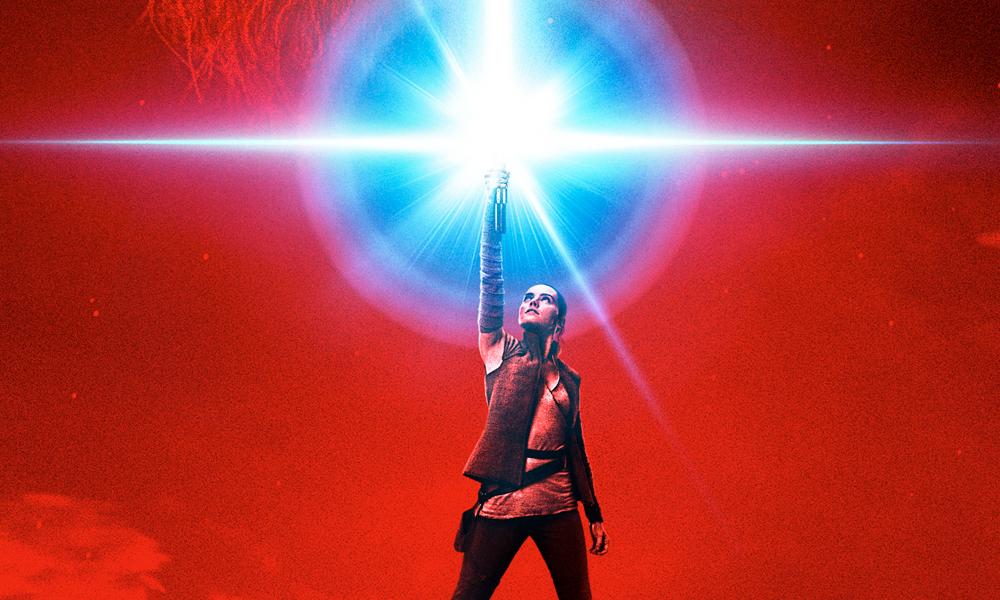
REVIEW: Star Wars: The Last Jedi

There are certain things that make me really glad that I’m alive at the point in history that I am. I’m glad to have grown up with Harry Potter, for instance, and to be alive at the same time as Paul McCartney. One of these things is that I’m glad to be able to go and see Star Wars movies in theaters.

Seeing a Star Wars movie in theaters is, I think, a great experience no matter which movie it is. There’s the wave of almost tangible happiness that washes over everybody with the opening notes of the theme song, and the yellow letters beginning to scroll out backwards through space. There’s the clapping and cheering whenever familiar characters like Leia (Carrie Fisher) and Luke Skywalker (Mark Hamill) show up onscreen.

Star Wars: The Last Jedi, the eighth episode overall and the second installment in the latest trilogy, delivered in pretty much every major way. We got to see interesting developments in terms of the characters that we already know and their relationships with each other, and we also received the pleasure of being introduced to new characters and new relationships.

One of the definite highlights of The Last Jedi was the addition of Rose (Kelly Marie Tran), who teams up with Finn (John Boyega) to try to sabotage an enemy ship that has the ability to track the rebel forces through light speed. Rose was charming and relatable (even fangirling over Finn’s hero status when we first meet her), and she’s also gritty and layered. She’s not afraid to let images get in the way of the way she sees things, and we actually get to see some of her backstory up close with the death of her sister, Paige (Veronica Ngo). She also acts as our introduction to one of the previously un-glimpsed sides of Star Wars: the back characters. Rose is a technician, normally a behind-the-scenes role in the Star Wars universe. For this reason, it makes a lot of sense in this movie to pair her with Finn, who was a background Stormtrooper before he joined the rebellion in The Force Awakens.

To me, The Last Jedi felt overall like an embrace of the idea that anybody can be a hero. Rose, for one thing, was brought to the forefront. Rey’s (Daisy Ridley) parentage, a lingering question for fans, was largely dismissed, which was a fresh turn in a franchise that has long been preoccupied with the power-infused lineage of Darth Vader’s family. Wealthy circles of society were outright criticized for their reliance upon forced labor, exploitation, and war profiteering. The film also ended with a glimpse of a young peasant boy using the Force to grab a broom, then looking up to the stars with a close-up of the Resistance insignia on his ring.

Finally, when Rey claims that the Force is “a power that Jedi have,” Luke Skywalker himself tells her that that is completely wrong. The Force is not exclusive to Jedi and Sith; it’s the balance between all things and all people. By removing the Force’s explicit attachment to the Jedi, and by showcasing heroes from all backgrounds and walks of life, The Last Jedi comes closer than any previous Star Wars movie to espousing what the series is all about: that anybody can be a hero if they decide to choose good over evil. Obviously, the Force doesn’t appear everywhere, but this movie shows us clearly that it can come from anywhere.

There are almost too many good things in The Last Jedi to count: the performances of newcomers Laura Dern, Kelly Marie Tran, and Benicio del Toro; the development of Kylo Ren (Adam Driver) as a villain and of his terrifically interesting relationship with Rey; the immortal strength of Leia and of Carrie Fisher. There’s the fun cameo from the eternally awesome Maz Kanata (Lupita Nyong’o), and the affection between pilot Poe Dameron (Oscar Isaac) and his droid BB-8, and the chemistry shared between pretty much every single character onscreen.

In short, Star Wars: The Last Jedi is doing pretty much everything right. It is a more than worthy follow-up to The Force Awakens and to the rest of the Star Wars franchise, and hopefully a very good indication of things to come.

REVIEW: Murder on the Orient Express

As an Agatha Christie fan, I have to discuss this film in two parts: as a standalone work and as an adaptation of the book.

As a standalone film, Murder on the Orient Express was really good. The cinematography was beautiful, crystal clear with lush colors, elegant and enhancing the 1930s feel of the movie. I always appreciate it when a movie is well-lit: while darkness may add to the effect, I do prefer to be able to see what is happening onscreen. The use of light here was impeccable.

The acting was also very good, which is no surprise considering the film boasted quite a lineup of famed names: Judi Dench, Michelle Pfeiffer, Johnny Depp, Leslie Odom Jr. were just a few names among the star-studded cast.

the plot of this film is dependent on each person in the cast making their character a strong one; although it is a mystery starring Poirot, he is not the main character. With Agatha Christie’s style of writing, he never is. What I’ve always liked about her books is that her plots are really not about the murder at all. She gets the murder out of the way at the beginning of the novel, and then spends the rest of her time studying the people who are involved in the murder, slowly unraveling each one of their characters so that really the end result is a deeper understanding of people. So with this film I didn’t really like the way it made Poirot a focal character. On one hand, he was the outsider to this situation, and to have a consistent thread in a plot it helps to have a narrator or protagonist, and so perhaps it couldn’t be helped. But I felt that the characterization of the other people in this movie was somewhat lacking.

I also didn’t care for Branagh’s portrayal of Poirot. It’s a hard character, as Poirot is comic sometimes, and deadly serious at others. My first question was, why couldn’t someone who is actually Belgian (or at least French, although Poirot himself would probably hate that) play the role? I don’t know of any adaptations where Poirot has been played by a native French speaker – even David Suchet, who is probably the most famous Hercule Poirot, is English. That aside, I am not sure Branagh quite decided whether Poirot was to be amusing or dramatic, leading to a result that was an odd mix of both. In dramatic scenes, I personally much prefer if the actors almost whisper their lines instead of shouting them, as I find that far more intimidating. In the books, Poirot, while he can get worked up and raise his voice, is not really the kind of person I would expect to yell about something really serious. I wish Branagh had done that – it would have made the scene seem less like Poirot was flying off the handle, and more like Poirot was just barely keeping his anger on a leash. I will say, though, that his mustache was excellent. If you’re not familiar with Christie’s character, this may not seem like very important a point, but one of Poirot’s identifying attributes is his huge mustache, which David Suchet never really had. Also, Branagh did manage to bring out Poirot’s fastidious nature, which is another essential aspect of his character.

All in all, the movie was a really good one, if you didn’t compare it to the book. For that reason, I was wary of seeing it, but the fact that Judi Dench was in it convinced me otherwise (she, incidentally, does a magnificent job of adding a softer side to her character, the Princess Dragomiroff, than I thought existed in Christie’s portrayal). And there were no really major details changed, as far as I remember, though it has been a while since I last read the book. But if you did compare it to the novel, I think the nuances of Christie’s characters are perhaps explored more fully in the book, though the actors – I’m thinking of Michelle Pfeiffer and Judi Dench here – did a fine job of bringing out those nuances in the limited time they were given to do so.

I think the most perfect part was the opening song in the end credits. Sung by Michelle Pfeiffer, who plays a pivotal role in the cast,  was a beautiful fit, both by style and by lyrics – as such, it was almost haunting. Full of love, loss, and sorrow, it ended the movie on a fittingly melancholy note.