Well-dressed parents and friends entered the Lydia Mendelssohn Theatre, a somber atmosphere apt for an orchestra performance or Shakespeare performance. Biorhythms was nothing of the sort.
From the opening “Phlomax” to the sexually charged “Mance” performance at the end, the entirety of the show was full of energy, creativity, and enthusiasm. Unlike many companion pamphlets, the ones provided at this show had lyrics and descriptions that allowed the audience to follow allow with medical school-themed manipulations.
An altered rendition of OutKast’s “Ms. Jackson” begins “I’m sorry Ms. Rosen. I’m an M1. Never learned a single histo slide,” and in another instance the lyrics to Kanye West’s “All of the Lights” became “Cre-Lox. Post-docs. Primer stocks. Chalk Talks…”
As science major and possible pre-med student, I enjoyed the clever medical adaptations, as well as the plethora of creativity. One can only imagine the rigors of medical school without actually being in medical school, and consequently much of the show felt like an elaborate stress relief via performance. We watched Brazilian Samba, a Bollywood dance-off, flag dancing, a capella, and even an acoustic performer (Vince Pallazola).
Despite the diversity and talent throughout the show, there was a highly sexual aspect that detracted from its artistic merit. For every talented soloist, there was a group of young, half-naked bodies gyrating on the stage. At the risk of sounding like your conservative neighbor down the street, it was an awkward juxtaposition at times. Furthermore, since these were medical students putting on a show twice a year, the show had an overall feeling of a high school musical. The audience was dominated by friends and family, and most acts had a practiced but unpolished tone.
Overall, biorhythms was well worth the time. On a Sunday with not much else to do except study, the show was a welcome and entertaining distraction, and well worth seeing in the spring.
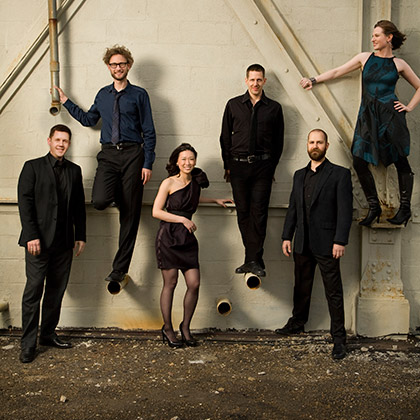
Image Courtesy via ums.org/performance/eighth-blackbird/
viii.
I know noble accents
And lucid, inescapable rhythms;
But I know, too,
That the blackbird is involved
In what I know.
Inspired by the eighth stanza of Wallace Stevens’ “Thirteen Ways of Looking at a Blackbird” – indeed the Chicago-based sextet picked up the evocative feel of the poem. But I know, too, that some other magical, indescribable element is involved to make eighth blackbird what it is: talent and innovation.
One major element of blackbird’s contemporary style is dissonance, that moment when two notes clash against each other and you find yourself cringing a little. But the beauty of dissonance is that it’s an effortless effort to make someone appreciate the following note that shifts seamlessly into harmony. Without the dissonance, would we notice the climactic, chord-changing note that sets it all right? It’s hard to say. But eighth blackbird calls our attention to it.
My favorite piece was an original composition by the ensemble’s pianist, Lisa Kaplan. Entitled “whirligig for piano four hands,” it centers around spinning, chaos, and the circular movement of change. Not only did I fall in love with the whimsical title, I was intrigued by the concept of “four hands,” which I soon discovered means that two people play side-by-side on the same piano. The piece was divided into three movements. The first, “off-kilter,” showed a playful fight for a space between musicians. The two pianists stretched their arms up and under each others to reach the key just beyond their reach, resulting in a hilarious theatrical spar. Until truly, the bench itself was off-kilter and one of the pianists proved victorious by taking command of the entire piano, leaving the other, with no space of her own, reluctantly getting up from the bench. This, of course, marked the end of the piece, because you can’t play a piece for four hands without four hands! The second movement, “merry-go-round,” tinkled with the wound-up gracefulness of a jewelry box. I found myself closing my eyes as I was gently lulled into the peaceful recurring theme. Around the carousel we went…with childlike nostalgia…back into time…with this lullaby as our road trip soundtrack. In complete contrast, the third movement, “boogie-woogie,” showcased the body’s innate desire to jive. This was the ultimate jazz piano piece with all kinds of movement – foot thumping, body-rocking, head-banging, and most unusually, elbow-playing! Using the flat part of their forearms, the two pianists smashed their arms down on the keys in syncopated rhythms. Contrary to the expected “bull in a china shop” result, these spontaneous bursts of sound energized the background melody in a surprisingly refreshing way. It just shows that perhaps a little chaos in our life keeps us, well, on our elbows!
The ensemble proved that they weren’t afraid to bend the rules of music. Another spectacular part of their show was their performance of “Counting Duets” by Tom Johnson. Using only their voices and clapping hands, the musicians used numbers as a lyrical conversation. For example, two voices approached each other and alternated with : “1.” “2, 3.” “4?” “2.” “6!” “6?” and so on. But the magnificence wasn’t in the numbers, it was in the inflections, the tones, the way that the voices put on a theatrical conversation without using any words at all. It made me start to think about what music is…was this music? Just a bunch of people manipulating the way their voices said numbers? And then I realized. Yes. It was. Music, after all, is the artistic culmination of science, physics, and math, in its basic counting form. To emphasize the musicality of numbers and counting, eighth blackbird alternated between these vocal counting duets and romantic instrumental etudes by Gyorgy Ligeti; in the end, they mastered both the external and internal counting machines of music. And, more importantly, they’ve mastered the blackbird.
A scene from “Oh Willy…” by Marc James Roels and Emma De Swaef. Image Courtesy via New York Times.com
Looking for thought-provoking animation that goes beyond Bob’s Burgers and Adult Swim? The Sundance Animated Shorts program is a “diverse compendium of eight short films culled from past festival lineups” (Jeanette Catsoulis of nytimes.com). The films vary in style, ranging from handmade drawing and painting to puppetry. But don’t assume that animation is substance-less juvenility. Many of the films explore heavy topics, such as death, bodily and psychological decline, as well as apocalyptic themes. It is sure to be a conversation starter and an eye dazzler of a night.
What: Sundance Animated Short Films
When: Two nights only – Sunday, February 1 at 4:30 and Tuesday, February 3 at 7
Where: Michigan Theater
How Much?: $12.80
And while you wait, watch the Sundance Animated Shorts trailer for a preview!
Selma (2014) is a very powerful movie that reminded me how deep-rooted the issues of racism is in the United States, and how brave leaders have emerged to tackle it. By focusing on one key event in civil rights movement among many others, the movie was able to give a very detailed picture for better historical accuracy.
In the movie, Martin Luther King. Jr., leads a demonstration with thousands of people — only Black locals at first, but adding in white allies after then — who marched from Selma to Montgomery in search for equal voting rights. It depicts Dr. King as he evaluates benefits and risks associated with the march, gets incarcerated, gets condemned for his inability to continue the march, makes a uniting speech, and finally makes worthwhile changes happen. As I study about community action and social change, I am inspired by his ability to evaluate the situation and decide what is the best, unafraid of attacks he may receive for his opinions or actions. Although Dr. King is not an easy character to be acted out, David Oyelowo played this role with much-needed dignity and determination. Other actors actors, including Carmen Ejogo, Oprah Winfrey, Keith Stanfield, E. Roger Mitchell, and many others as well as the hundreds of extras in the march scenes, really made the movie impactful.
There was a lot of depictions of violence, from people getting beaten up to police spraying tear gas all over. While these images can be triggering to some audience (I was surprised that it wasn’t rated R), I think it was necessary to include these. It is difficult, if not impossible, to talk about Black rights movement without mentioning multitudes of violence done on them.
Overall, I was very glad I watched this movie. Many friends of mine went as well, and I appreciated that we were able to spark a conversation on civil rights movement and racism based on the movie. If you have not been to Selma yet, I highly recommend it. You can find the showtimes at the State Theater here.
Biorhythms is an opportunity for graduate students to maintain an interest in the arts and perform on stage. The spring show is one of their two annual shows. Both shows are student-directed, produced, and performed.
When: Sunday, January 25th @ 7 PM
Where: Lydia Mendelssohn Theater (Michigan League)
Cost: $7 at the door (cheap!)
As t hey state on the web site: “This year’s lineup includes: Brazilian, Hip-Hop, classical Indian, Flags, Tahitian, singing, rapping, and Mance!”
What is Mance you ask? I don’t know either but I intend to find out.
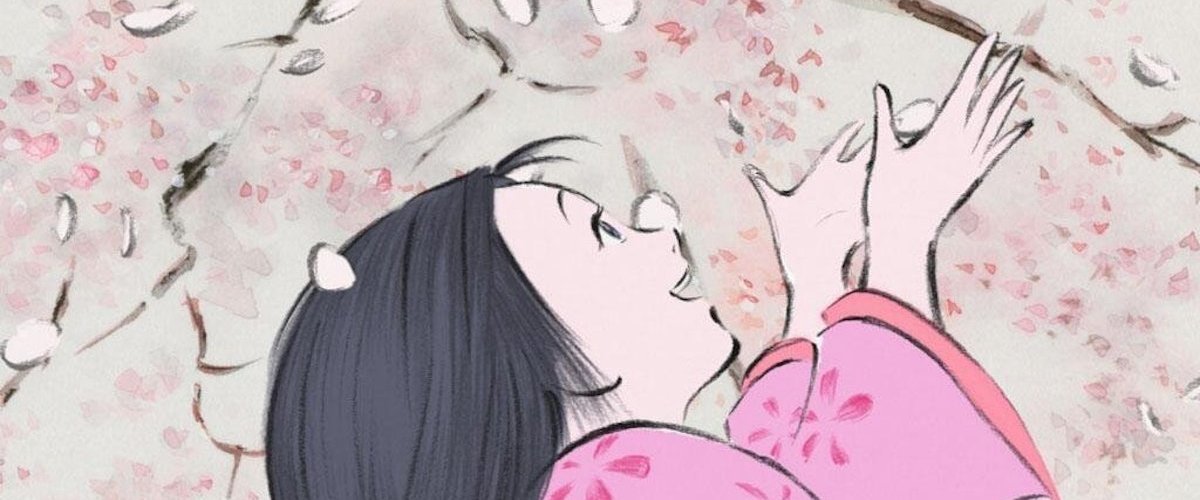
The Tale of the Princess Kaguya (2013)is an animated adaptation of a Japanese folktale The Tale of the Bamboo Cutter. It is the story of a magical girl born from a bamboo stalk. The film is directed by Isao Takahata and produced by Studio Ghibli.
Where: The Michigan Theater
When: Jan. 21 at 6:45 (subtitled) and 9:30 (dubbed)