Twice a year, the UMMA stays open late for visitors to explore the artwork After Hours. On Thursday March 14th, the spring celebration of the late night event will take place in the museum. There are a number of exquisite permanent collection pieces, as well as a series of visiting exhibits that are worth checking out by night. If you can’t find time during regular hours, this a great opportunity to get your art fix. In addition to the usual artwork, there will be live music performed by the Ingrid Racine Quartet, playing Jazz and Afro Pop tunes. From the UMMA’s site, After Hours is about:
Standing before the shimmering fields of color created by West African artist El Anatsui in the career retrospective El Anatsui: When I Last Wrote to You About Africa, taking a walk around London with the Queen of England’s guards in Francis Alÿs’s video work Guards, traveling to the Himalayas with Buddhist Thangkas and Treasures: The Walter Koelz Collection, Museum of Anthropology, and finding out what an architect does with Alice in Wonderland and Andy Warhol’s dessert recipes in Florencia Pita/FP mod. The
After Hours runs from 7-10 pm. Click here for more info. And for more updates about happenings at UMMA and around campus, check out the blog The Annex. See you there!
On Thursday the 28th, after a strenuous two weeks of rehearsals, the big list of hard-hitting repertoire was ready for show and the University Symphony Orchestra had an exciting concert in front of them.
The usual time. 8pm.
Beethoven’s Overture to the Consecration of the House, op.124, opened. A warming work until the conductor, Kenneth Kiesler became so entrenched in emotion that he knocked over the stand and off the music of the concertmasters! The second of the two first violinists, in shock, managed to catch the stand before it hit the ground yet the music drifted to the floor. Pause. What a moment of historically hierarchical tension: who would pick up the music sprawled across the stage floor? The concertmaster and elected leader of the Orchestra, the second concertmaster and leader of the second portion of the show, or the artistic head-honcho and man on the podium, the conductor who committed the act? With the gasp of tension evaporated, the conductor bent while trying to maintain the beat for the Orchestra and the second of the concertmasters bent to grab a sheet. The concertmaster played through the fiasco from memory, charging and digging in more, assuming full responsibility for the group. In a moment of blind luck, the two managed to pick up just the right sheets and the students were able to finish out the piece with the ink in front of them.
Schumann’s Cello Concerto in A Minor, op.129 was played magnificently by Nathaniel Pierce, the 2013 concerto competition winner and a graduating senior at the SMTD. Through the technical virtuosity required, he still managed to brandish his bow above his head like a sword upon the battlefield. In moments of rest, he’d lean down with his elbow on his knee, ducking his head – out of breath from the pace and the vigor of playing all from memory with ease. Resident cellists of the seats around me were in shock, holding their breath through muffled chuckles of delight.
Now, I hate to be the sour critic, but during the first movement of Stravinsky’s Rite of Spring aka Le Sacre du Printemps, and at many moments of climax, things simply weren’t feral or intense enough. It needed a higher decibel count. The id and rabid primal nature of Stravinsky’s writing seemed like it had been stuffed into foam, muffled from the audience. It never reached fever pitch. Anything short, in my book, is interpretively offensive. Never should a work of this stature be played like an audition excerpt. The piece asks the orchestra to channel an irreverence, a heathen-istic, and sacrificial ferocity similar to the naive audacity of the Sex Pistols.
It just felt too “inside”. By that I mean both not-outside as in the wild of nature, but also the metaphoric inside, the institution walls as opposed to the real world. The first movement was just over-thought, meta-cognitive, and drilled to a point of boredom. Just play the music, never mind the mistakes and let go, be free from performance anxiety and be open to wild abandon. Now, it is possible that I’m too much on the inside and that my ears have been temporarily deafened as well. But for a group this excellent in both accuracy and flare, they sure held back.
I give such harsh criticism because it was truly so close. The second movement – all its sections of quiet, or intentionally subdued intensity were spot on. To my ear, most were stylistically perfect. The solos were wonderfully thought out and executed. Fever pitch hit, and there were punches thrown leaving blood on the floor.
It’s odd but regardless of my qualms, my heart throbbed throughout. It’s a feeling I only get around the pieces for which I play music. I found myself foaming at the mouth not for the conductor, the soloists, or the interpretation, but for the ink, all on its own. And ya, that’s a not a common thing for me. I like to think and have often found myself asking if string players really feel this way for the ink of Mozart, Brahms, Haydn, and so on.
PRISON CREATIVE ARTS 18th ANNUAL EXHIBITION OF ART BY MICHIGAN PRISONERS
Every year for nearly two decades, the Prison Creative Arts Project (PCAP) holds an exhibition of artwork by Michigan Prisoners. The gallery features paintings, drawings, sculptures, collages, and more by incarcerated men and women across the state. Whether or not these artists have participated in PCAP creative workshops, they are eligible to submit their creations to be hung in the show. The curation process is very extensive; it involves trips across the Mitten to all of the correctional facilities where artists are incarcerated. After reviewing and collecting work for the show, PCAP members organize the gallery, hanging the art in honor of the voices who created such striking beauty.
The pieces are absolutely breathtaking. From past years, I recall images of anguish, longing, joy, desire, remorse, and forgiveness; of families torn apart, of the struggle to move forward, and of troubles forgetting the unforgettable. The artwork is so skillfully created that the technicality alone is impressive. But the images are powerful and memorable. They will move you in unforgettable ways.
In addition to the visual art show, PCAP will host several other events throughout the duration of the exhibit. These include a Keynote Address by Hasan Davis in The League, a discussion about incarcerated youth with juvenile correctional facility staff, a reading and release party of the Michigan Review of Prisoner Creative Writing, and panels featuring both the artists and the family members of those who are still incarcerated. These discussions, events, and forums are most important for bearing witness to the experiences of those who are imprisoned. For more details on all of the events listed above, click here.
The art exhibit runs from March 19th to April 3rd, 2013. An opening reception will be held in the Duderstadt Center Gallery on North Campus at 5:30 pm. Thereafter, gallery hours will be 10:00am to 7:00 pm. See you there!
Word of Mouth is back for our second event of 2013. Never been to our slams before? Audience members tell five-minute stories from their lives related to a theme. The friendly competition includes appetizers and live music courtesy ofThe Vail House Band.
In collaboration withThe Ginsberg Center, this month’s theme focuses on stories of Before and After. Having recently returned from their spring break service trips, students will be full of stories of how their expectations, impressions, or understanding of the places and people they’ve encountered have changed from Before to After.
But the slam is not just for students who went on ASB trips! If you have stories of service, transformation, change, or times passing, come share your tales of Before and After with us!
You should notice that we’ve moved! If you’re used to seeing us at Work Gallery on State Street, don’t fret. We are trying a new space. The Gallery Project on 4th Street is a gorgeous, not-for-profit art house that features contemporary art from local creators. Click herefor more info on the gallery and here for directions.
Can’t wait to see you there! In the meantime, check us out online:
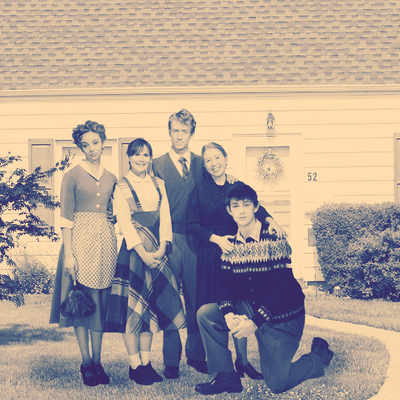
Hello all! I hope you had a wonderful weekend full of shows and company (pun intended)(this makes me wonder how I have friends). I went to a lot of shows during mine and I want to tell you about one I saw on Friday evening with a friend. By the Skin of Our Teeth, written by Thorton Wilder, won a Pulitzer Prize for Drama, but its greatness in the literary world means more than just dramatic genius. The play is confusing and strange while also being fantastic and eye opening. It is hard to describe, and hard not to… It’s just one big mess in my head, basically. But I loved it so much and all of the thoughts that it provokes.
By the Skin of Our Teeth takes a look at basic human natures and those characteristics that make us human. By dividing human identities amongst a family of four and a family friend, the author shows how humanity grows and changes throughout history, how we have the capacity to destroy and to rebuild. It displays the human condition through metaphors and mixed timelines, displaying both the complete loss of faith and the ability to regain it and find hope again. All of this you don’t really understand till the end though. I guess I should start from the beginning.
The show began in the stone age, or was it the 50’s? You can’t really tell. While Mr. Antrobus, head of the family is off at work, Mrs. Antrobus is home with the maid, making house and trying to raise two kids. But while this may seem like a regular American family at first, it follows that the husband is off discovering the wheel and the alphabet, a dinosaur is freezing outside as an ice age approaches, the maid is milking a mammoth, and the son is Cane, renamed after infamously murdering his brother. Historical figures, like Moses, Homer, and the nine Muses, find shelter in the Antrobus’ home while they all huddle together and try to survive the approaching wall of ice. The play focuses on the unconditional love, compassion, and duty displayed by a mother, the unrivaled anger, innovation, and passion of a father, the suffering and joy of children, and in the maid we see a woman’s ability to inspire and dream while also maintaining a sense of reason. Sabina, the maid, breaks the fourth wall the entire play, coming out of character to explain to the audience how strange a scene is, or how she is as lost as us. It’s hilariously relieving as an audience member and very clever of the author, as he tells us that the production is supposed to be this puzzling.
The second act places itself in Atlantic City on the boardwalk as Mr. Antrobus becomes president of the Ancient and Honorable Order of Mammals, Subdivision Humans. Though we find ourselves on a boardwalk full of performers, dancers, sailors, business men, etc, it is also obvious that the great flood is approaching. Other orders of animals are sending representatives in pairs, a modern day fortune teller is predicting the great deluge as a prophet would. Mr. Antrobus reflects Noah as he summons these animals and his family onto a boat to once again start anew, but he also represents a more modern issue of adultery as he once again cheats on his wife with Sabina. President with a beauty queen, breadwinner with the maid, these are both archetypes of adultery that warrant discussion in the play. Henry, formerly Cane, feels the angst of adolescent and attempts to run away while his sister experiments with new fashions disliked by her mother an unnoticed by her otherwise distracted father. The play questions modern family dynamics as much as it does humanities abilities to cope during disasters and traumas.
The last act of the play opens on the shell of the Antrobus home, darkened and destroyed by war. Sabina seeks them out with a flashlight, declaring the end of a war. This act describes war, pushing a WWII theme onto the stage with set, wardrobe, and writing. It illustrates the effect tragedy, chaos, and destruction that humanity has the capability to inflict upon one another. The act also shows us how even a family that has lasted for thousands of years, through flood, fire, and ice, can still give up and lose hope. Mr. Antrobus and Sabina both feel the weight of what the world has done, and it takes so much for them to believe again. Henry becomes the enemy once again, led by his false belief of the neglect of his family. We see them struggle and fight and then make up when his mother shows him the truth of a family’s love. Sabina, inspired, reignites that spark of invention and human preservation that has always kept Mr. Antrobus going. We feel revived with the sensation of renewal. The Antrobuses move forward to try again where humanity has failed so many times. And Mr. Antrobus recalls the figures in human history that have inspired the philosophies of man, including Socrates and the Bible, as hours in the night. They pass slowly throughout history, but for human kind, what is history but one night in all of destiny?
It is a difficult play to describe. Its poetic nature donates so much to discussion that I want to stop here and just say how absolutely wonderful the cast was. They took something very difficult and played it perfectly, managing to mix its comedies with its dramas so fluidly that the audience was surprised to be laughing one moment and then shocked the next. It was a beautiful performance I and find myself better to have [seen] it.
Thank you for reading,
As always,
This is Danny fob. Artist and art reviewer.
Saturday night, Hill Auditorium was absolutely packed. I don’t think I’ve ever seen the auditorium sold out before, but this was just about at peak capacity. And only after I’d finished appraising the crowd, everyone so nicely suited up, did I notice the orchestra was already tuning on stage. It was a smaller section of the orchestra that they used for the first two Mozart pieces, making up the first half of the concert. Regardless, their sound was more than impressive. From the moment the conductor walked on stage, I entirely forgot where I was until it all ended in a final, flourished wave of his arm.
The first piece, Mozart’s The Marriage of Figaro, K. 492 was absolutely staggering. Every turn of the music left me wondering, what’s coming next? As I sat their listening, I tried to imagine what I would be doing if I were in a silent film where this was the soundtrack. I imagined me dancing, then the floor gave out and I was falling, then I was laughing and flirting with a dashing gentleman, then he murders me! With every twist and lift of the synchronized first violinists, the attitude of the piece entirely shifted. As every overture should conclude, it was a valiant finish that left everyone squirming in their seats, wanting more.
Mozart’s Symphony No. 36 in C Major, K. 425 was the second piece and even more fantastic than its predecessor. Just as flourished albeit a little more charming and embellished with shadows of passion, this piece too was breathtakingly perfect.
That’s the other thing about the New York Philharmonic – I don’t think you can do it any better! Both their Mozart pieces and the Brahms were absolutely flawless. After the show, I had froyo with a friend of mine who attended the concert with me and I asked her, seeing as she is quite an esteemed musician herself, how do you do it better than that? She replied, simply, you don’t.
The Brahms piece they played was one that took Brahms nearly 11 years to compose. 11 years on the same symphony!? I can’t even imagine. I write short fiction as part of my creative writing major here and that would mean that I would have started a story back when I was nine if I were to write a story in the time it took Brahms to write his first symphony. What?! The piece was, of course, stellar. It said in the program that it was fairly lengthy compared to the average arrangement of the time, however, I swear it felt like I sat in my seat for not 10 minutes when it had actually been two hours for the whole concert. I couldn’t believe it had ended, and I was actually sort of upset I hadn’t seen it coming.
In conclusion to my rave review of the New York Phil, it was just so great. Peter Laki, UMS correspondent, wrote in the program book: “The classics provide us with much-needed emotional stability in these volatile and uncertain times, and we must make sure we bequeath our love of them to those coming after us, just as we inherited it from those who have been here before.” Truly, nothing is better than that.