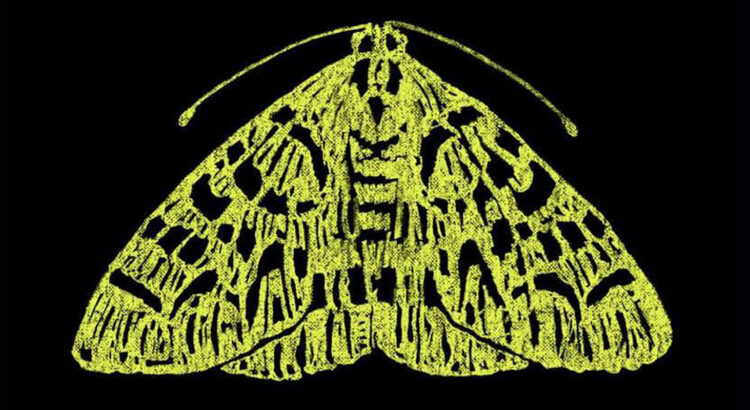
PREVIEW: COSTUMES – 2022 Fall Ann Arbor StorySLAMS at The Blind Pig

The Moth Radio Hour is coming to Ann Arbor for one night for their event, COSTUMES!

It is a StorySLAM where people are instructed to “prepare a five-minute story about playing the part. Holidays, parties or the school play. Stories of wearing the clothes to conform or stand out. Imposter syndrome or uniforms that itch. From ComiCon to Mardi Gras— Santa Clause to Spock, Teenage Mutant Ninja Turtle to Sexy Zombie Cat. Reveal yourself!”

My friend, who is a big fan of Moth, told me about this event and is SO excited that they’re coming to Ann Arbor. Another friend who used to review for [art]seen went to a Moth Radio event for her writing class, and said: “it was sm fun.” It will be a great opportunity to view writing performance, but also participate as a member of the audience! At least for me, it sounds like a great way to push myself out of my comfort zone and enjoy writing for fun and not for a grade for a night! I also haven’t seen a lot of events involved with the art of writing. As a writer, whose main form of art is writing, I’m excited for more events like these to be reviewed for [art]seen!

The event is on Tuesday, October 18th at the Blind Pig (doors open at 6:30 pm, stories begin at 7:30). General admission tickets are $17.50 and 18+. Come enjoy a night of writing and sharing to end your fall break!

View more details and purchase tickets for the event here!

https://themoth.org/events/ann-arbor-costumes
REVIEW: A Page of Madness

Thursday, October 13, 2022~

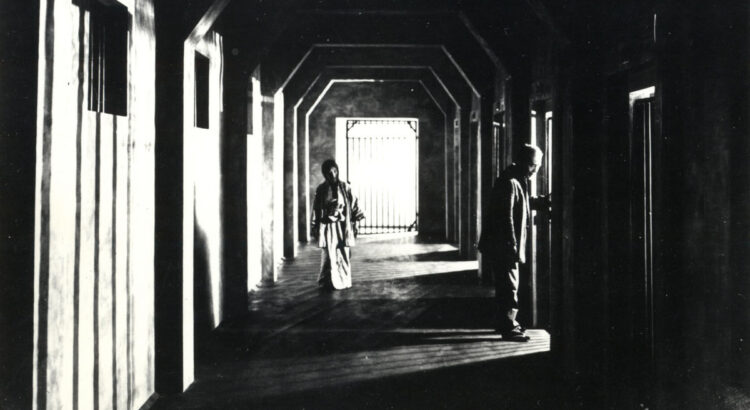
A Page of Madness (1926) is a Japanese silent horror film directed by Teinosuke Kinugasa. Just this past Thursday, the Center for Japanese studies hosted a free screening of it at the Michigan Theater.

I first heard about the event from my Japanese, and I thought that it would be the perfect opportunity to practice my listening skills. I also don’t have much experience with horror films, so this seemed like it would be a good experience.

The general plot follows a man, played by Masao Inoue, who took a job as a janitor at a mental asylum. He did so in an attempt to get closer to his wife, played by Yoshie Nakagawa, who was admitted there.

Unusually, this film did not have intertitles as I would have expected from a silent film; however, there was a benshi, a live performer who narrated silent films. Benshi were popular in Japan during the silent film era, and some say that they may have even extended the era for Japan. During the event’s introduction, they even mentioned that in later times people would turn off the sound for movies so that they could bring in a benshi. 

Nanako Yamauchi, a graduate of the oldest film school in Japan, Nihon University’s Film Department, was our benshi that day — and she was mesmerizing.

I admittedly didn’t catch much of the plot since there was no form of English translation and I’ve only been studying Japanese for a little more than a year. I understood some of the basic dialogue and a few phrases, but that’s all. However, as Yamauchi mentioned before the film began, it didn’t matter if we didn’t understand her. The emotion and drama in her voice were palpable, and you could easily recognize the emotional state of each character.

Additionally, the Detroit group Little Bang Theory (Frank Pahl, Terri Sarris, and Doug Shimmin), performed an original score that they played on toy and handmade instruments. Their music complimented Yamauchi’s narration and excellently set the film’s chilling mood.

While the film itself wasn’t too scary for me, nor did I find the plot anything extraordinary (probably because I didn’t understand it), the overall experience was valuable. After learning and witnessing firsthand the unique film culture of benshi narrations, I’m definitely intrigued to see more (maybe when I have a better grasp of the language).

This event was the first of CJS’s Japanese Film Series for the year. Their theme this time is Diamonds by the Decade, exploring different eras of Japanese movies. If you’re interested in that, I’d highly recommend checking out what other films they’ll be showing at the Michigan Theater!

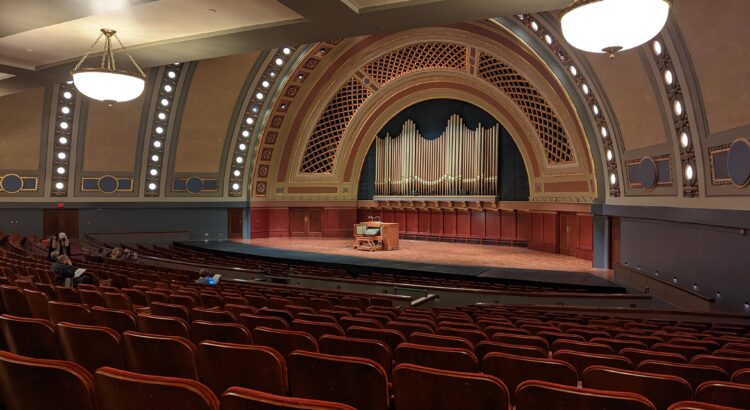
REVIEW: Faculty Recital: Jeremy David Tarrant, Organ

I was first introduced to the haunting melody of the organ through the film Interstellar, directed by Christopher Nolan. Not only did I fall in love with the film itself, but with the resounding brilliance of the organ that shone throughout the soundtrack. If you haven’t seen the film, I would highly recommend it; the soundtrack is very moving.

The organ is a fascinating instrument and a very difficult one to master as it requires great precision, technique, and coordination. There are multiple keyboards or “manuals” stacked on top of one another that an organists hands must move gracefully and deftly between. And at the same time, the organists feet are dancing along an array of foot pedals at the bottom of the instrument. I can imagine that playing the organ can be quite a work out. Jeremy David Tarrant, however, made it seem as though playing the organ was as simple as breathing. Of course, I’d expect no less. Tarrant’s resume is an impressive one. He is a Lecturer in Organ at the University of Michigan as well as an active concert organist. Tarrant has performed across the United States as well as abroad and has been featured on several records. It was an absolute joy to watch him perform. I knew the organ was a versatile instrument, but the way that Tarrant played opened my eyes to the countless ways organs can produce sound. There would be moments in the performance when the pipes would breathe so softly over the audience, only to explode in a thunderous wave that vibrated the seats. There would be moments  of whining sound that came close to hurting my ears as well as velvety tones that could put a baby to sleep. The sound was so much more than just loud and quiet, soft or hard. There were even moments where it seemed as though the music was coming from somewhere far beyond the confines of the stage as if in another room. The concert was an amazing experience and the music was superb. But what was also superb was the skills of the page turner that assisted Tarrant as he played. You can see the gentleman in question featured in the picture to the left. I found that he was creating his own performance alongside Tarrant. The gentlemen would wait patiently at Tarrant’s side; a single hand creeping up when he saw his moment approaching and then, with a swift flick of the wrist, the page would be turned, allowing Tarrant to continue his performance unfettered by the constraints of paper. I noticed that the rate of enthusiasm with which the page was turned was equal to the mood of the performance at that time. For example, if the page needed to be turned in the middle of a fast moving, sound swollen section, the gentleman’s whole arm would be involved in the turn of the page. It was a fast, sharp, extended motion. And when the page needed to be turned during a more soft spoken section, his actions would be soft spoken as well. It was a part of the performance that I found unexpectedly fascinating and very appreciative. I admire your talent unnamed page turner gentleman.

REVIEW: Trace Bundy

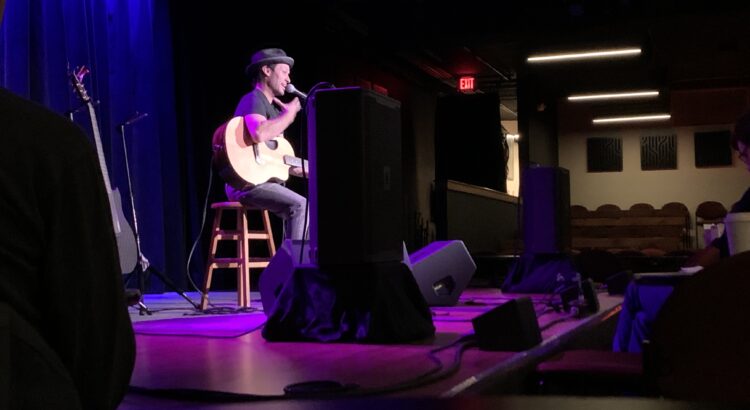
After an exam-dense week, Trace Bundy’s show was a breath of fresh air to end my Friday. On top of his flashy fingerstyle techniques, Bundy’s playful personality shined through. Maintaining a conversational tone throughout the performance, he truly created an environment that felt much like a laid-back living room jam session with friends.

Because it was my first time at The Ark, I did not know what to expect in terms of layout or general audience demographic. The venue seems to be run by volunteers who are all very passionate about sharing great music. I was pleasantly surprised by the casual seating around mini tables scattered across an open floor plan, so my friends and I grabbed a couple of hot chocolates from the stand and settled down in the front.

Bundy opened the show by giving a quick overview of the different fingerstyle techniques he typically incorporates into his compositions, including tapping, percussive thumping, and looping. This really set the stage for an ongoing discussion about the technical elements that were showcased throughout the set list, which was great if you like to geek out over that stuff (like me).

Each of the songs Bundy included in the set seemed to highlight a different concept, which kept the performance engaging and showcased his range. Here were some of my favorite bits:

  • Frankie Valli’s Can’t Take My Eyes Off You. Bundy introduced this as a recent project he took on inspired by the song’s ambiguous chord progressions, which he achieved using a myriad of customized capos (all at the same time, of course). Capos work by clipping to the neck of the guitar and pressing down across all the strings so that the resulting notes you play are shifted up by the same interval. However, by sawing the end off a capo or drilling a tunnel through, Bundy is able to only shift certain strings at a time.
  • Dueling Ninjas. This is one of Bundy’s original compositions from his Adapt album. Played entirely by finger tapping, he explained how each hand represented a ninja with a different personality.
  • Overtime. Bundy demonstrated how he used a delay pedal to create an underlying beat at one tempo and play in between at a slightly different tempo. This created an interesting rhythmical texture and hurt my head trying to grasp how he kept track of the beats.
  • Love Song. My personal favorite! Once again, Bundy brought out a handful of capos and somehow incorporated the procedure of clipping them on/off and sliding them around into the song like a choreographed dance.

I encourage everyone to keep Trace Bundy on their radar! I have a lot of respect for musicians who are not only eager to share their thought processes but are also able to present them in an accessible way to get everyone excited about something like music theory. Speaking to him after the show, I found that he is also just a kind and down-to-earth person. 

REVIEW: Navaratri Garba

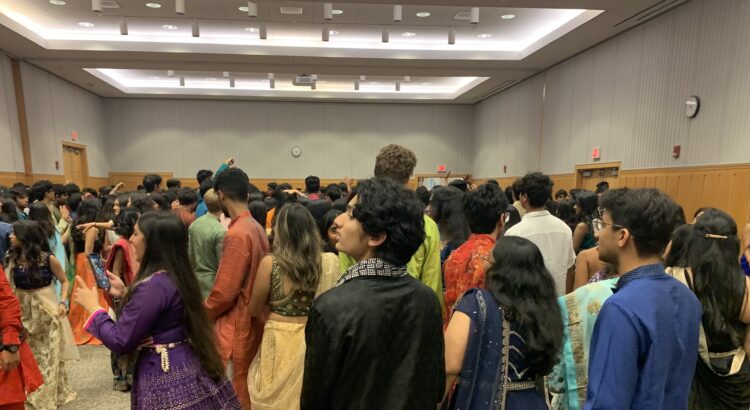
Although Navaratri was officially over by the time Wolverines gathered to celebrate last Friday, the festive vibe of the event was as strong as ever. Navaratri is a major holiday in the Hindu religion, usually taking place in the fall based on the lunar calendar. Navaratri takes place over the course of nine days and celebrates the goddess Durga’s triumphs over evils, as well as the victory from the Ramayana, an ancient epic. Garba is a form of dance that is practiced during this time, and originated in the state of Gujarat, though it has gained popularity in many other parts of India.

The campus event was hosted by Michigan Wolveraas, a competitive Raas-Garba dance team. By the time the event started, Palmer Commons was full of people wearing colorful and traditional clothes, all ready to start dancing. The night started with garba, as participants danced to popular Bollywood songs and some more traditional songs as well. Garba is performed in circles, each ring full of people doing variations of the same steps. I enjoyed being able to switch rings throughout the song and practicing different patterns. Having different circles at the same time also helped to include more people, both beginners and experts alike were able to find a rhythm they enjoyed by the end. The room was crowded, causing lots of people to bump into each other, but enjoyable nonetheless. The night then transitioned to Dandiya, a dance similar to Garba but involving sticks that people strike together. This portion of the event was definitely higher energy as the noise from the dandiya sticks built and caused commotion all around. I had a great time dancing with my friends and teaching them the steps to the dance.

Having the Navaratri Garba was a great way to bring students together to celebrate a common holiday with other people on campus. It truly felt like a welcoming environment, as some people brought their friends who had never danced or heard of the holiday before. For me, Garba holds a special place in my heart as I danced almost every year growing up, and I’m glad I was able to continue my tradition in college.

REVIEW: Superblue- Kurt Elling with Special Guests Huntertones Horns

What a night.

I can safely say that I’ve never enjoyed jazz music. The few times I’d been exposed to the genre, having stumbled across a jazz tune on Spotify or a video on Youtube, only served to cement my views on the subject: jazz was longwinded, jumbled, and didn’t make much sense. Let me now say that my past self was unequivocally wrong about jazz.

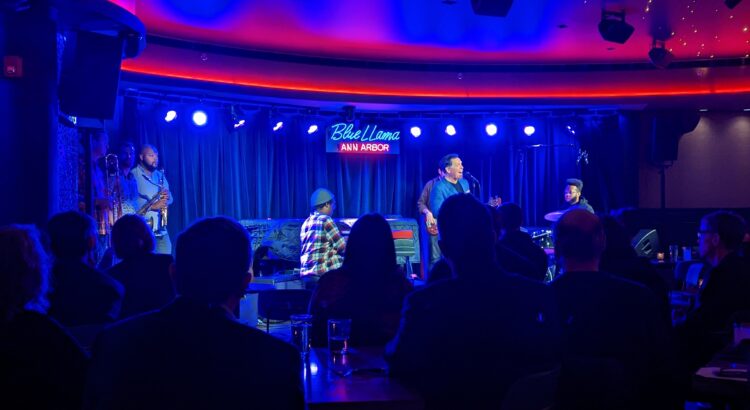
Stepping into the Blue Llama Jazz Club on a Saturday evening was like stepping into an alternate realm. The dark interior was dimly washed in hues of blue and orange light, highlighting the stage. Tiny pinpricks, akin to stars dotted the ceiling and each table had a single candle flickering in a bronze cocoon, beckoning us to our seats…And then the food began.

Right now you’re probably thinking to yourself: “Food? Isn’t this blog  post supposed to be about the jazz show??”

Yes, it is about the jazz show, but that will come in good time, because this show came with a meal, and by meal, I mean a seven course tasting menu sent from heaven. I, having the palette of a five year old child, had never imagined food could have so many flavors or textures. There wasn’t a single dish that wasn’t impeccably plated and served to perfection. As soon as we finished one dish, another would magically appear in front of us. I couldn’t understand half the words the server used to describe the delectable foodstuffs, but I was too focused on trying to keep from salivating to care much. I’ve attached some pictures of the meal for your enjoyment. The frozen grapes featured on the charcuterie board were a particular favorite of mine. We consumed a total of five tasting courses before the show began. At this point, I’d been enjoying the food so much that I couldn’t have believed that the night could become any more magical.

But then the band began to play. And Kurt Elling opened his mouth. And it was beautiful. And it was Jazz. There was this energy that was so potent at times that you could feel it raising the hair on the back of your neck. It wove its way through the crowd and up onto the stage, bouncing off each performer as they gifted their souls away to the river of sound powering into the room. I could feel the beat of the drum in my chest and the whine of the sax shivering down my spine.  You could see that they weren’t performing for us. Yes they were up on stage, yes we’d paid to see them, but they weren’t performing so much as giving in to the passion of the music.

I have never liked jazz music.

But, what a night. How could I not love Jazz music?