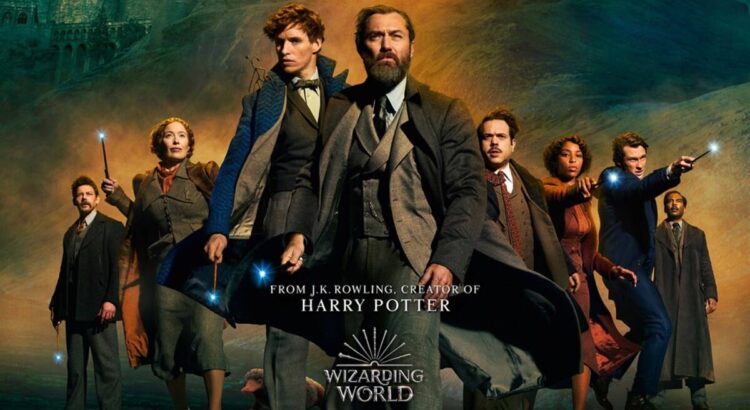
REVIEW: Fantastic Beasts: The Secrets of Dumbledore

It was an interesting take… but did it really do its job?

To long-time Harry Potter fans like myself, seeing the wizarding world on screen again is a big pleasure. Listening to the famous Harry Potter anthem always gives me the shivers, and it did so this time when the anthem was played in the new Fantastic Beasts series. The jolt is from the nostalgia of the story of the boy who lived; it is hard to separate the Harry Potter series from this new spin-off that takes place between. In this sense, this movie was highly interesting in showing diversity in characters and location. We have seen more racial diversity in roles not to mention the story happening outside the UK too, in contrast with the Harry Potter series where the wizarding world seemed to be centered around Hogwarts. The scene where the Manhatten bridge was emphasized in the background was not only pretty but symbolized this change. However, there are some points that did not seem right in consideration of the prior series:

  1. Would the wizards, who have their organized ministry, solely depend on an animal to choose their leader? I guess this was necessary to add a reason for Newt to join the adventure and focus more on Fantastic beasts as the title suggests, but this election process was even odder because the reason why the wizarding world is doing that is not fully explored but suggested abruptly. The audience hears that the animal would ‘bow’ to a great soul and thus is used to choose a leader. It sounds a bit weird, and no further details were given or world-building hadn’t been done to make the story more believable.
  2. The existence of an international wizarding organization and a leader seems to be a bit odd-if such a thing existed, why didn’t they intervene when Voldemort threatened peace?

Story-wise, there were also some issues. Firstly, the charm of the characters is weak because it is told, not shown; making it hard for the audience to resonate with them. For example, Albus Dumbledore suddenly praises Newt after he himself did a grand duel with Grindelwald, and says that he couldn’t have defeated Grindelwald if Newt haven’t helped. However, Newt’s brilliance was not shown in this film, except for the time when he danced to a herd of magical lobsters. The appraise seemed a bit sudden, and so was the headmaster’s praise of Mr. Kowalski. Albus Dumbledore insists that he has a good heart, but the audience has left a mystery about why it is so. In general, I feel that too many stories needed to be in the same movie that none of them was developed to a level that would be interesting. Many ideas, such as the wizarding election, Credence’s troubles, and Aberforth’s conflict with Albus were just briefly mentioned and not discussed thoroughly. Characters are suddenly thrown into the story, without any explanation on why they have to be there. However, the exploration is what makes the audience like the character and fall for the story. This movie, in that sense, did not do such a great job. We’ll see how the next episode of the series, which will be sure to be produced considering how the story ended, may try to improve the loose storyline.
Review: Upcycled Spring Flowers

As Earth day 2022 rolls in, with it comes the reminder that the Earth is in trouble. 


For my first two years at the University of Michigan, I’ve spent my time as a Program in the Environment major learning all about the overconsumption, the CO2 emissions, and the environmental harm that will lead to humanity’s strife and destruction. Since then, I have switched into Stamps School of Art and Design and have been looking for ways to incorporate sustainability into my art. 


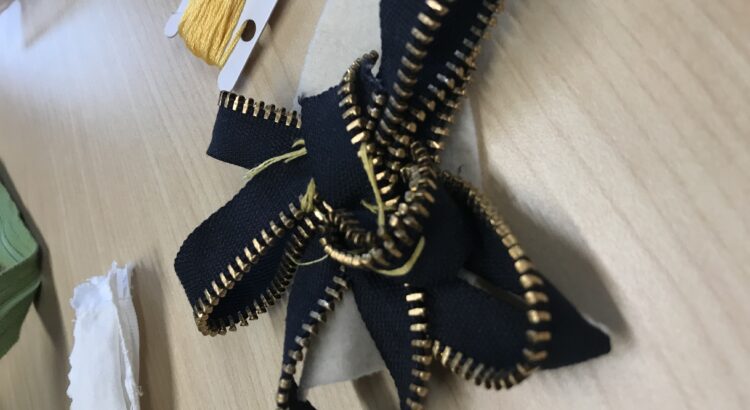
This past Wednesday, I attended a reuse craft session with the Planet Blue Student Leaders who were in partnership with Scrap Creative Reuse Center. Twenty other people and myself found ourselves in the Graham Sustainability Institute before the brunt of finals to make zipper flowers out of discarded zippers. It brought an hour of peace, fun, and a little bit of stress as I struggled to thread a needle. 


The process of the zipper flower making was simple and most people ended up with cool and sophisticated results. Though, my fumbling fingers did struggle a little with this new process of making. The first step of making the flowers was to split the zipper in half. From there you fold one of the sides into a ribbon in the same style as the breast cancer awareness ribbon. Then you sew where the zipper overlaps into a small felt piece and you continue to make these petal shapes from the remaining length of the zipper. You then incorporate the other half of the zipper into the work by following the same steps as the first zipper. This will result in a flower with a messy center. To cover the middle, you can roll some of the excess zipper into the center to create a rose like appearance. You can then hot glue the felt background of the flower to a button to create your own wearable zipper flower button.

While I made my flower, I admired the texture and contrast that the zipper had. The gold metal of the zipper created a harsh but shiny texture, which would be an interesting addition to a mixed medium 2-dimensional artwork or even a sculpture. Creating these flowers opened my eyes to the possibilities of new material to add into my art practice. 


I am glad that I attended this event because it was a reminder that as a creative person, I should continue to look to reuse more items in my practice. It also taught me about Scrap in Ann Arbor which collects donated craft materials in order for them to have a second life. Therefore putting less strain on the environment and letting you craft for cheaper.

PREVIEW: Home

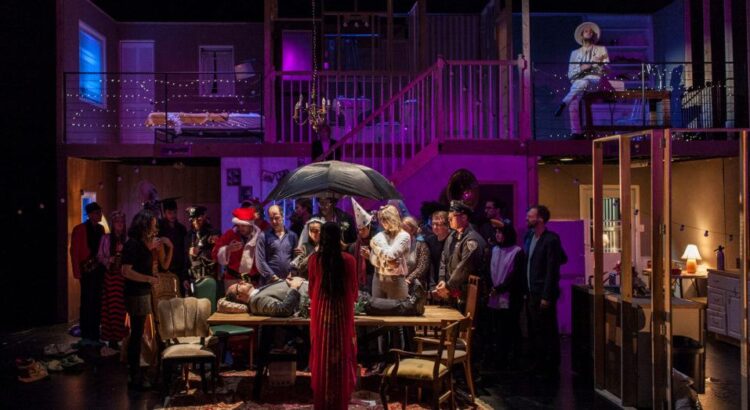
Come see the interesting and ambitious idea to build a house on stage. The advertisement that this play will feature the making of a real house on stage was enough to make me get the ticket. However, there’s a deeper intention behind why this is being done: the play is supposed to be a question about what makes our home.
A home is an interesting place: it’s people’s most intimate place to rest, yet it doesn’t have to be a fixated area – remember the strange feeling you felt when you haven’t been to a place long but felt so relaxed and comfortable when you’re there. It’s also a reflection of taste-imagine the diversity of dorm rooms. Also, it can be threatened as well, because of social, political reasons, gentrification, or various reasons. Musing about the idea of home shows that it’s an interesting concept with lots of debates to be done on it- come see it done on the stage this Friday and Saturday(April 22th, 23th), at the Power center.

More information about the tickets can be found here.

REVIEW: Somebody’s Children

Somebody’s Children, a tale of children who lives just next door to the land of the fairy tale, Disney land, but whose life isn’t so fairy-tale-like, asks the audience whether it’s really ok that some people are actually living in sucn unstable homes and clearly provides the answer-it’s not Ok. The play is written by José Casas, assistant professor at the University of Michigan, and the actors were consisted of students in SMTD. The setting takes place in a run-down motel just outside Disneyland, and while their personal stories are told in beautifully and powerfully written vignettes, the sorrows in characeters’ lives expands into a problem of social structure by the contrast of their unsafe living place and children who laughs happily in Disneyland, which is so close to where they are living. The stage design made this interesting setting even more clear – there was a huge and gorgeous sign that spells out ‘Disneyland’ on the right side of the stage. Glowing white, the sign had an aura that made sure that the audience was not missing it, but the actual shape of Disneyland was not shown; as if symbolizing that the real Disneyland did not existed to children living in the motel. With this direct contrast, the deprived feeling and anger that the characters are feeling is strongly delivered while raising the point that they could have also been the careless children who have a great time in Disneyland, and highlighting the brutallity of reality in which the children were pushed into. They were somebody’s ‘Children’. Their sorrow is valid and raw, but they are children, who should be kept away from those things. Who are to protect them? the play asks.

I want to highlight the actor’s amazing performances – as mentioned before, the play mainly consited of vignettes, so the lines were symbolic and poetic, rather than straight to the point. The actors expressed out the emotion that the children is reciting the vignette so well; the sad but happy, nostelgic look of a girl who danced with her imaginary quinceañera dress, how two boys exchanged roles to between a police man that stopped them on a night’s walk to get some ice and the boys who got pinned down even though they did nothing wrong swiftly was just awestrucking. Production was amazing as well – using sitting actors as poles to put up police line was not only visually intersting but also symbolized that the children in the motel were deeply embedded in all the tragedy happening in the place.

In all, Somebody’s Children was a beautiful and socially-conscious play that used experimental lines-vignettes-to deliver the theme and did it, not over-dramatically but emotionally affluently. Highly recommend to anyone looking for performances that speaks about the modern world.

REVIEW: A MoodSwing Reunion

I believe this is the first time I have been to a live jazz performance. It was AMAZING.

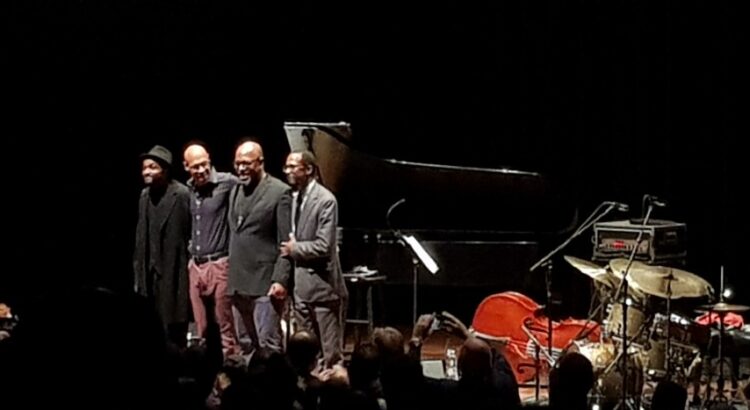
The jazz ride the MoodSwing took the audience at the hill auditorium was a one with graceful arches, twists and turns. The night’s performance starred Joshua Redman on Saxophones, Christian McBride on bass, Brian Blade on drums, and Sullivan Fortner on the piano. These four amazingly talented musicians did not let one theme restrict them for the 90-minute show. Each piece had different moods: the vibe of the music went from cheerful, dramatic, beautiful, to playful. I used to think that jazz has a lively, humorous vibe in the background as a default. However, tonight I heard a piece that was so graceful and beautiful that it felt as though the stars were shimmering down and a one that was really serious, dramatic, and heroic. It was a discovery of jazz’s diversity and now I’m eager to dive more into the genre. If you turn the most unpronounceable, subtle emotions to music, that would be jazz. It was amazing how the musicians expressed such different shades of atmosphere with the same instruments.

I also really loved how the leading role switched from Saxophones, drums, and pianos, to the bass. I really appreciated the moment when the bass was leading, because that does not happens a lot in modern pop or rock music. Christian McBride amazed the crowd with some playful but precise shreds(with the bass! yes!). While he was at it, Sullivan at the piano was observing him and chimed in with a few notes at the curves that supported the bass sound beautifully to make the music even fuller. It was so interesting to see how the musicians were interacting and compromising while the tune is going – the risk and impulse coming from the fact that the interaction was happening live definitely made the performance thrilling and attention-grabbing. Seeing the live chemistry between the musicians definitely made the 90-minute running time feel short. If you want to explore music without the lyrics but classic does not draw your attention just yet, try going to a jazz concert. Because the emotion in the performance is more dramatic and clearly spelled out in jazz compared to classic concerts, and also because you can easily notice the different phases of music with the shift of leadership and roles between the instruments, jazz will be an easier starting point to the love for instrumental music.

REVIEW: Hair

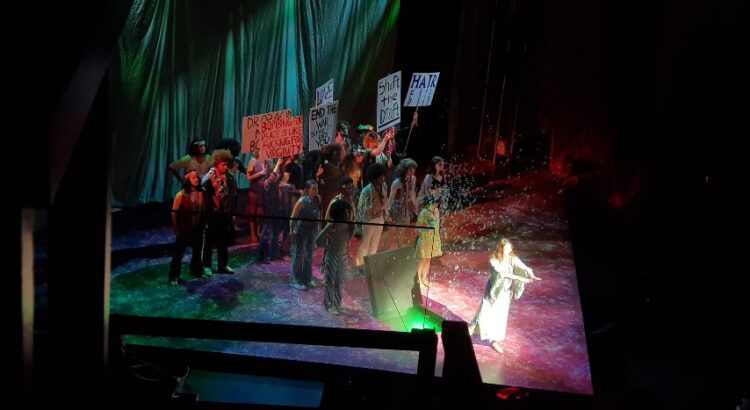
I love the musicals where the ensemble comes out to perform multiple numbers. ‘Hair’ was one of the musicals where they made fantastic use of the whole cast. Colorful, wild, and energetic, ‘Hair’ was an exciting and dramatic performance. The actors’ wide-ranged, fast movements that filled the stage throughout the whole performance created the vibrant, dizzy, and youthful vibe that the hippie community (“tribe”) was sharing.

I also want to applaud the stage design and the set. While the actor’s vibrant moves were supposed to be the main part of the show, the set was there to back the actors up and make their moves even more dramatic. The colorful lighting design and stage set design served different purposes depending on the scenes. The orange/green colored one with squiggly patterns added to the vibrant energy of the show, while the skeleton concrete building which was the main structure of the stage design shifted from imaginary homes to a spotlighted platform for people that needed emphasis by the spotlight during Claude’s hallucination where George Washington, Abraham Lincoln, Scarlett O’Hara were introduced. The concrete-looking structure was designed neutrally enough to be perceived as a different location in each scene. It was a marker of space separation, which was highly necessary for this musical where the focus had to shift from one actor to another in a quick beat, and imagination and real-life interacted in the same space.

The most interesting moment for me was when Claude expressed his dilemma between his hippie identity and the call of the military after his hallucination. After he went through the hallucination passively, he, for the first time in the performance, got rid of the confidence of his hippie self and showed his vulnerability by being torn between his faith and duty. The change was most dramatic when he listed all the ‘practical’ and ‘proper’ job names such as lawyers and dentists. This is the part where he connected to being a real person in the performance, not a single-sided hippie-persona who is mercifully away from all the worries and woes of living. The actor playing this part made the change very clear.

Another interesting feature was how every actor nailed the expression of excitement and jolliness but added so much diversity to it. The people on stage felt like real people, not just people pretending to be constantly happy, which is impossible. If I ever get to see this performance again, I’ll be focusing on the actor’s expressions to catch the details of their actions.

Lastly, about the message: I think this musical spoke about how the ‘normality’ appraised by society could be dangerous. Through the dramatic contrast between the Hippie “tribe” ’s life and the ‘normal’ life of the audience, ‘Hair’ is speaking about how the dangerous concepts and urges could be appraised by being framed as ‘normal’.