PREVIEW: DOGFIGHT

Although I’m typically not a fan of musicals, there’s something intriguing about DOGFIGHT. The admission is free, which already provides a decent incentive for college students lacking funds, but the premise of the musical is particularly interesting, and watching talented UMich students pour their hearts into a performance is guaranteed to be an awe-inspiring experience.

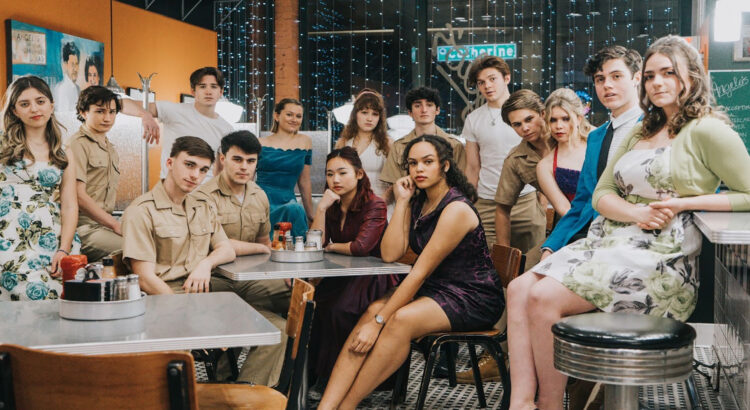
Based on a film, DOGFIGHT takes place in the 60s and follows the story of marines preparing to be sent across the sea. They celebrate their last night of freedom by placing bets on who can find the ugliest girl to bring to a party. Questionable and immoral, I know, but the plot focuses on one couple and has a romantic twist that brings out the soft side in us enemies-to-lovers trope enjoyers. The play examines old-fashioned beliefs, war, vulnerability, and how traumatic events can change our perspective on the world and ourselves.

The performance will be held at the Arthur Miller Theatre, a small and intimate venue. I’ve never attended an event at the venue, but I’m interested in how the small space will transform the experience. Witnessing the talent of fellow students with this degree of closeness is bound to be spark pride in my status as a Wolverine and elevate the emotionality of the performance exponentially.

Once again— tickets are free! Tomorrow is the third and final show, so show up early to support the performers of UMich and be part of a wild ride.
PREVIEW: Candlelight Concert

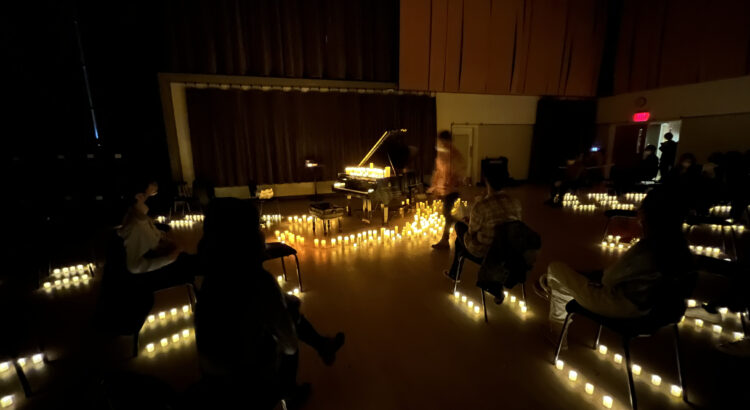
As the weather continues to treat us with frigid temperatures and icy gray slush, warm yourself up at the Candlelight Concert this Saturday at 8:00 PM in the Michigan Union Rogel Ballroom!

An entirely student-led event, the concert will feature 15 undergraduate pianists performing iconic classical and jazz music. According to organizer Jacob Wang, they have amassed around 750 LED candles that will decorate the piano and aisles to bring guests a cozy visual experience. Additionally, any extra profits from the event will go towards the piano department for scholarships, maintenance, and projects.

With a special focus on making the concert accessible to students and the general public, the program will incorporate a variety of genres and well-known pieces. I always get excited when I see Romantic composers on the list, but I also look forward to hearing Gershwin’s The Man I Love and I’ve Got a Crush on You, as well as Somewhere Over the Rainbow. Plus, tickets are free for UM students! What are you waiting for?

Event info: https://events.umich.edu/event/91755

REVIEW: Princess Mononoke

Princess Mononoke is a Studio Ghibli film written and directed by Hayao Miyazaki that follows a young man who searches for a forest spirit that can lift his curse, one that was inflicted upon him by a possessed demon boar. This is one of Miyazaki’s darker films, depicting the way in which human progress often comes at the expense of nature, as well as at the expense of other humans. 

The key players in this film and what make it worth watching are a young woman named San who was raised by wolves, and Lady Eboshi, the woman who runs a nearby town where her ironworks provide the primary source of income. Eboshi actively seeks to rid the forest of San and the wolves in order to expand her town and presence as a threat to other villages. The forest is represented by the Deer, Wolf, and Boar Gods, who seek to protect their home and clearly voice their hatred for humans. The way the relationship between humans and the environment is particularly compelling, with demons being created by the violence perpetrated by the humans of Irontown, and Eboshi justifying her actions as Irontown provides a safe space for sex workers and lepers. Eboshi is the clear antagonist of the film and is driven by greed, but I find it interesting that she also sees the forest as a source of evil, and believes San was corrupted by the animals in the forest. I always find it interesting when an antagonist is more interesting than the protagonist – Ashitaka is a little boring – and I also really enjoyed how the forest was essentially a living creature, represented by the Gods and San, all acting defensively with reason to hate the humans. 

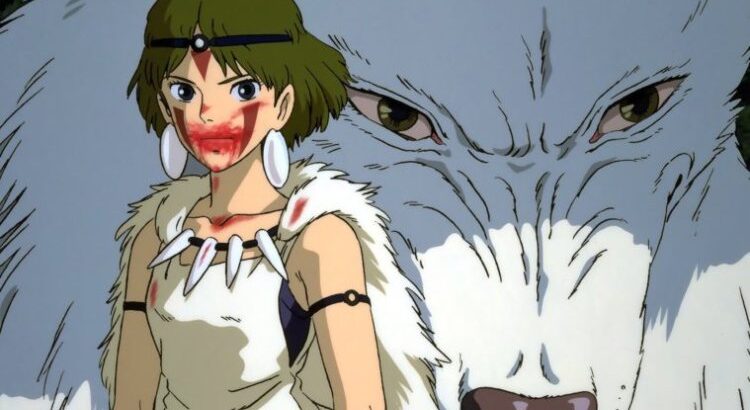
Another aspect of the film worth noting is the animation. Studio Ghibli is known for its whimsical background and character designs, and Princess Mononoke continues this trend, but also incorporates more violent imagery to go along with its themes. There are several fight sequences in this film, the best being a confrontation between Lady Eboshi and San early on. I particularly loved the animation for San’s movements, how quick and aggressive she ran and fought, and how acrobatic her technique was at the same time. One of my favorite shots from the film is in this scene: it is from San’s point of view as she charges head on at Eboshi, who remains centered in the frame as the townsfolk scatter out of the frame.

I also loved the design of the demon that Ashitaka fights in the beginning of the film and again, I love the movement. The way it crawls is terrifying and the tendrils coming out of its body are disgusting yet mesmerizing to watch (click the image to see for yourself). 

There is so much to appreciate about Princess Mononoke – its themes, characters, technical aspects, and more. It is one of my favorite Studio Ghibli films and perhaps one of their more underrated films – and I highly recommend it. 

PREVIEW: Princess Mononoke

Princess Mononoke is a 1997 Studio Ghibli film written and directed by Hayao Miyazaki. The film takes place somewhere between 1336-1573 AD, during Japan’s Muromachi period, but incorporates the fantasy elements Studio Ghibli is known for. Exploring themes of the environment – primarily humans’ relationship with and their dependency on nature – the film follows a prince who finds himself wrapped up in a conflict between the forest spirits and a nearby town. 

I have grown up watching Studio Ghibli films but was always afraid to watch Princess Mononoke because of the more violent imagery compared to that of My Neighbor Totoro and Kiki’s Delivery Service. While Miyazaki is known for these children’s films, he often touches on themes of war, such as in his film Porco Rosso. About making Princess Mononoke, Miyazaki has said: “I learned that mankind doesn’t learn. After [Porco Rosso], we couldn’t go back and make some film like Kiki’s Delivery Service. It felt like children were being born to this world without being blessed. How could we pretend to them that we’re happy?” I watched Princess Mononoke recently and loved how it touched on heavier topics, with a hopeful ending that at the same time is not escapist, and does not undo all of the strife that had been depicted throughout the film. I highly recommend watching this film, especially in theaters. 

Princess Mononoke will be playing on Friday, February 4 at 10pm as part of the Michigan Theater’s Late Nights series. 

REVIEW: Drive My Car

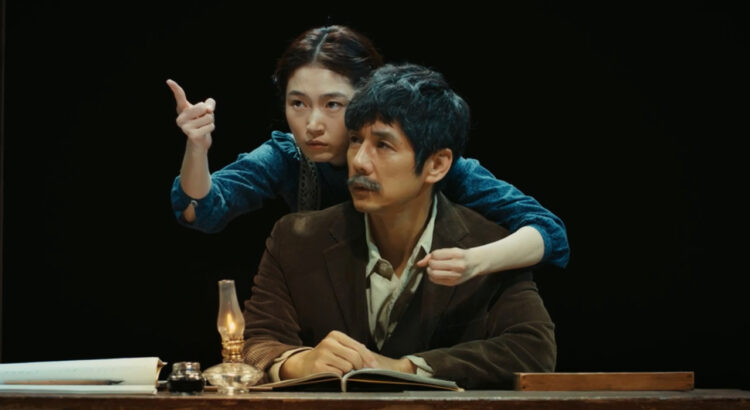
Drive My Car is a Japanese film based on a short story of the same name from Men Without Women, a collection of short stories by Haruki Murakami. The film follows theater actor Yūsuke Kafuku as he directs a production of Uncle Vanya by Chekhov two years after the death of his wife.

I have had some exposure to Murakami’s work, having previously seen the film Burning, which is based on another of Murakami’s short stories, and having read part of his novel The Wind-Up Bird Chronicle. I really enjoyed Burning, how slow and meandering it felt while building and maintaining a quiet sense of tension and mystery. I found out Burning was based on a Murakami story after I realized Drive My Car reminded me of it, in terms of pacing but also the way in which the female characters were perhaps quite evidently written by a man. I have only read part of The Wind-Up Bird Chronicle because I thought three manic pixie dream girls was maybe too many, but after watching the entirety of Drive My Car, I do want to return to the novel and see what Murakami has to say. 

It turns out that Murakami’s works are worth sticking out to the end – especially Drive My Car. Once we get past Murakami’s formulaic introductions of a lone, troubled male protagonist, and the sultry and promiscuous women in his life, we uncover a central theme of grief. Though this overall message of the film is not particularly revolutionary or unheard of, it is the way in which it is expressed that makes it worth noting. I ended up reading the short story after watching the film, and I really liked how writer-director Ryusuku Hamaguchi emulated the almost nonchalant delivery of the short story’s message. Though the film has more dramatic moments, it’s the slow buildup to get to these moments that feels faithful to the source material. The film feels like a natural development and continuation of Murakami’s original story. 

Furthermore, the film reminds us that when our words fail us, we can find and express ourselves through art. For Kafuku’s wife it is through her screenplays, and for Kafuku and his scene partners, it is through performance. And the film also reminds us that we can find solace in knowing we are not alone in our grief, even if it is through a temporary companionship. Drive My Car doesn’t move you to tears, but I like to think it doesn’t need to.

REVIEW: RCP Red Eye Winter 2022

Each semester, the RC Players hold their Red Eye Theatre, a spectacular event that is succinctly contained within the confines of a 24-hour period, starting on Friday evening and ending in a showcase performance on Saturday night. What happens in between?

Students audition to write, direct, and/or act in pieces that are concocted and created based on the group of performers present. The group comes together for the first time on Friday evening in East Quad, meeting each other briefly before teams split up to do their own work. While the actors sharpen their improv skills and bond with each other, the writers are banging out comedy skits for their assigned casts. 

Sometime in the early morning, the actors and directors finally receive their scripts, and from then on it’s a race against the clock to put it on the stage: fully blocked, set, costumed, memorized, and energized. This is all unseen to the audience, who roll in at about 8pm to witness the products of this bizarre sleep-deprivation process.


Before the Red Eye acts, there was a delightful performance by the Improfessionals—a UMich comedy improv group who set the stage for the wacky comedy ahead. 

The Red Eye acts did not disappoint. The first act took a “princess switch” approach to a prince who doesn’t want to get married (Kyle) and a lonely peasant who just wants a girlfriend (Mina). In a fantastic fairy tale ending, the prince follows his musical dreams and gives a concert for the kingdom, the queen falls in love with the Mina’s rock-eating mother, and Mina ends up with the princess Kyle was supposed to marry. The second act was a twisted play on Dora the Explorer: Boots is feeling like Dora doesn’t see him as an important part of the team anymore. As Backpack and Map are mysteriously murdered one after the other, it’s discovered that Boots will truly stop at nothing to get Dora’s attention. 

Broad summaries don’t do justice to the amount of comedic detail and timing put into the performances, a testament to the work put into these pieces over the span of just 24 hours. The actors brought full energy and action to the pieces, and it worked: even I, who had gotten a full 8 hours of sleep, found myself cackling at the delirious humor that had been created and performed as the result of a group collective all-nighter.

The next Red Eye won’t be until the Fall 2022 semester, but if you’re interested, keep an eye out for how to get involved. Or, if staying up all night isn’t your style, at least make sure to check it out next time it hits the stage.