PREVIEW: Survivors Saving Survivors: Photographing the Ukrainian Refugee Experience in Poland

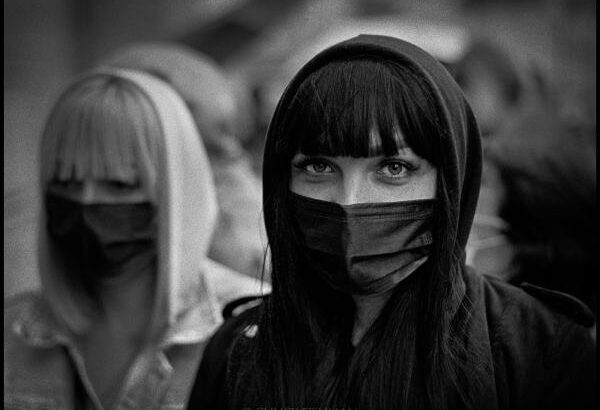
In 2022, photographer Chuck Fishman traveled to Poland to photograph the influx of refugees from Ukraine. He wasn’t capturing the devastation and agony of the war, but rather something optimistic: the power of humanity in healing and uplifting communities and the ability for different groups to band together in times of exhaustion and pain. The Copernicus Center for Polish Studies, or CCPS, is holding an exhibition of Fishman’s work, titled Survivors Saving Survivors: Photographing the Ukrainian Refugee Experience in Poland. Surprisingly accessible at 547 Weiser Hall, which is right next to the Central Campus Transit Center, this exhibition is a great opportunity for students to learn about global current events, empathize with victims of crisis and war, and view the extraordinary work of an acclaimed photographer.

As a traditional artist, photography hasn’t been within my range of intense interests, but recent coursework and experimentation has led me deeper into the realm of reportage photography. I find photojournalism that has an empathetic and humanitarian approach fascinating— when the photographer strives to portray the complicated humanity within global crises, the audience is shown something emotionally important that is not typically portrayed through unbiased journalism. Chuck Fishman is noted— and has received awards— for his often black-and-white portrait photography of social and political issues in particular. He initially photographed Jewish life in Poland since 1975, and has traveled around the world to capture everything from the energy of political figures to joyous cultural moments in jazz clubs. His photographs have appeared on the covers of Time, Life, Fortune, Newsweek, The London Sunday Times, The Economist, and many others. I am intrigued to see how Fishman has portrayed the current crisis. and what kind of narratives can be brought to the surface.

The exhibition runs through April 28th, and it’s smack in the middle of central campus, tucked where you wouldn’t even notice it. Head to the International Institute Gallery at 547 Weiser anytime between 8am and 5pm to see some incredible work from an experienced artist and learn more about the Ukrainian refugee experience in Poland.
REVIEW: Don Giovanni

8:00pm • Saturday, March 25, 2023 • Lydia Mendelssohn Theater

I was skeptical of all the articles I read before attending Don Giovanni that said it encapsulated “the full spectrum of human emotion.” I feel that when I attend live performances, I am easily impressed by talent in singing and dancing, but I’m rarely moved. However, this production of Don Giovanni was genuinely movingThe artists onstage deftly wove between moments of comedy and tragedy, creating an emotional journey that was surprisingly engaging.

Some of my favorite examples include Donna Anna’s reaction after the murder of her father and her duet, “Ah, vendicar, se il puoi, giura quel sangue ognor!” with Don Ottavio, which realistically captured her shock and grief and his devotion.  There were also laugh-out-loud moments, such as the opera’s first interaction between Don Giovanni, Leporello, and Donna Elvira and particularly “Madamina, il catalogo è questo” (although I must qualify that I was more entertained by the delivery of that aria than its contents). Throughout the performance, though her character was often used comedically, I was captivated by Donna Elvira’s complicated combination of longing, betrayal, rage and vengefulness, as well as her piety.

Because I love giving shout-outs to my favorite artists, for this production of Don Giovanni, I want to highlight Sitong Liu (Donna Anna) and Joshua Thomas (Il Commendatore), who had, in my opinion, the most beautiful voices of the evening. Liu’s regality and her icy grief were a stark contrast to some of the more comedic elements of the play, and her voice was breathtakingly clear. I regret that the character of the Commendatore has so few arias, because I would have enjoyed hearing quite a bit more of Thomas’s voice. Finally, my favorite all-around performance was probably from the aptly-named Aria Minasian (Donna Elvira) for her ability to embody both the humor and the darker, more painful emotions of the story. She really had the best facial expressions.

There’s so much to talk about with this opera, but I wanted also to note some dramaturgical choices which were made with this production. The program describes how the production crew wanted to be critical and careful of the themes of abuse and violence towards women, a mindset which I feel they executed well. I could see how they emphasized the relationships and support among community members which make accountability possible in the play, as well as realistically and sensitively portraying the impact of the traumas the female characters experience.

In conclusion, this production of Don Giovanni helped me appreciate opera on a new level. Even though the performance was over two and a half hours long, it remained engaging, and as I continue to reflect on the performance I can dive deeper and deeper into my admiration of the story and the art form.

REVIEW: The Canterville Ghost

Saturday, March 26, 2023—


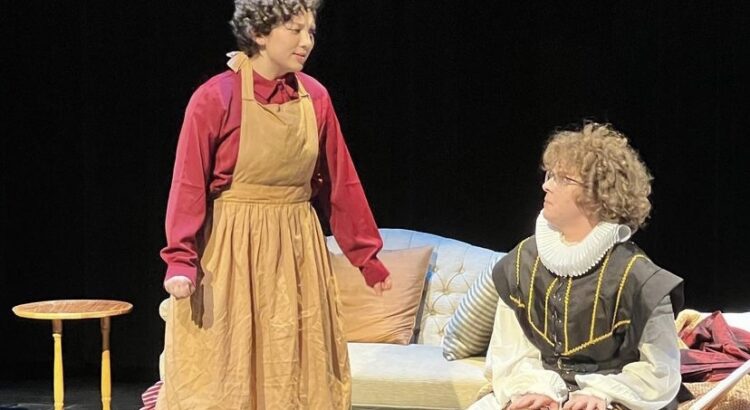
“The Canterville Ghost” is a short story by Oscar Wilde and was originally published on March 2nd, 1887. And this past weekend, the R.C. Players put on their own production of the humorous tale at East Quad’s Keene Theater. Sophomore Isabelle Zeaske wrote and directed the production and she did a fantastic job at it! In her director’s note, she says this about the original story: “The first of the two parts is a slapstick, and queercoded satire of both Americans and Brits” and she “wanted to create a new adaptation that honors the first chapter . . . but keeps the themes of life, love connection, and closetedness” from the latter part.


Before the show began, Lord Canterville (Maddie Nolen) and The Canterville Ghost (Will McClelland) roamed the isles and entertained the audience with in-character banter. They treated the whole theater as the Canterville Chase, delightfully immersing the audience into the story’s world.


Senior Will McClelland stole the show as the Canterville Ghost from the moment he stepped on stage. His voice had an impressive range, one moment portraying himself as evil and haunting, and the next as meek and pathetic. My personal favorite moment of his was when he took advice from the audience on how he should haunt the mansion’s new American residents. He ended up scooting across the floor like a worm, taking the word from a viewer to keep his “but up.” 


Another stand-out character was Washington Otis (senior Adrien Beyer), the oldest son of the American family that just moved in. His jealousy of his sister’s mysterious manly suitor was performed dramatically through anguished squeals and head motions that had the audience laughing heartily in response.


Speaking of the sister, Virginia Otis (junior Dax Sheedlo) held the heart of the story. She went through hoops and hoops to keep from her family her reluctance toward getting married, even employing help from the Canterville Ghost himself. The interactions between the two simultaneously brought much warmth and comedy to the story. My favorite moment between the two of them was when Virginia claimed that she just hasn’t “found any man that she likes” and the Ghost looks toward the audience with a face that knows exactly what her romance problem is, dramatically mouthing “Oh—that’s what it is.”


Other than the actors, I very much appreciated the costumes: from pristine suits to large and flowy dresses. They made the play feel that much more real. 


This was the last production for the R.C. Players for the semester, so I’m glad that they went out with a bang. I highly encourage everyone to keep an eye out during the coming semesters for more of their comedic and touching productions. 


You can learn more about them through their Instagram: @rc_players.


Header image from @cantervillercp on Instagram.

REVIEW: Blue Velvet

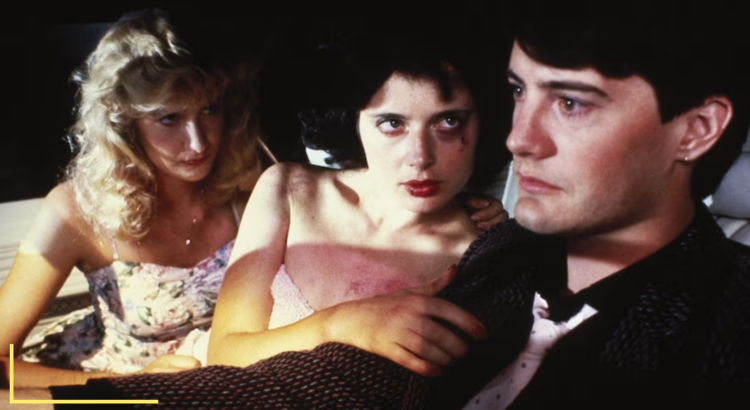
* Image taken from Turner Classic Movies (TCM)

Last night’s late night showing of Blue Velvet at the State Theater felt like watching a sex scene with your parents. That is, a two hour sex scene in a world where sexual blackmail prevails, women are held captive to masochistic, drug-addled perverts, and a young boy discovers his sexuality in a Freudian psychosexual nightmare. I don’t know how we watch it. Even less how it was made. 

Blue Velvet is the strangest coming-of-age tale ever created. Released in 1986 by the infamous director David Lynch, Blue Velvet was initially rejected by several studios based on its aggressive, sexual, and, frankly, perverted content. However, despite these initial trepidations, the film went on to achieve true cult classic status, with Lynch earning an Oscar nomination for best director. I first watched Blue Velvet when I was 14 years old, and was immediately transfixed by the opening scene. A camera travels down a royal blue sky dotted with fluffy white clouds, coming to rest on a white picket fence covered with luscious red roses. A smiling firefighter, a dalmatian by his side, waves at the camera from a slow-moving fire truck. This is a land of serenity: children safely cross the road, a man waters his green lawn, and a woman sips a cup of tea while watching TV. 

But things are not as they seem. Suddenly, the man falls into the mud, clutching his neck. Something terrible has happened. The hose comes to rest at the man’s groin, obscenely shooting water into his dog’s mouth. As he lies prone on the ground, the camera travels down into the underbelly of the world. This is no longer a place of roses and tea. We dig into the ground, where carnivorous spiders burrow into the dirt and ants bite chunks out of stringy brown leaves. This is the real world – a place of secrets, confined underground in the Earth’s bowels. 

I don’t really know how Blue Velvet is supposed to make me feel. Its content is so erotic, so charged, it feels almost like David Lynch is abusing the actors. Isabella Rossellini plays Dorothy, a battered woman who is being blackmailed into sexual slavery by the sadistic Frank (Dennis Hopper). Dorothy starts up an equivalent sado-masochistic relationship with the clean-cut Jeffrey (Kyle MacLachlan), who is ashamed of his feelings toward her but can’t control his urges. The scenes this trio – almost a love triangle – share are some of the most pornographic I have ever seen. 

Blue Velvet is a 20th century masterpiece. I don’t know who decided to play it at the State Theater, but that person is one sick bastard. 


PREVIEW: 17th Annual Multicultural Greek Exhibition

The Multicultural Greek Exhibition (MGX) hosted by Lambda Theta Alpha Latin Sorority, Incorporated is tomorrow: Saturday, March 25th at 7:00 PM in the Michigan Union Rogel Ballroom. This event will be a collaboration between various multicultural greek organizations on campus, where they’ll give all kinds of performances expressing their pride and showcasing their greek traditions.

Last semester I attended the Yardshow, a similar event hosted in the Diag by Sigma Lambda Beta International Fraternity, Incorporated. It was an indescribable experience and certainly a night to remember, with one of the largest and most supportive crowds I’ve ever been a part of. Not only did I witness great performances, I also had a valuable learning experience regarding what multicultural greek life entails and how it differentiates itself from other kinds of fraternities and sororities. Through powerful dances and facial expressions, they showed the audience the significance of their values and history.

I can’t wait to see what MGX has in store, as they promised on their instagram (@lta_betaomicron) a “night full of energy”. The event is free and open to the public; there will also be a chance to participate in mini-games and win prizes.

If you’re still curious as to what kind of experience it may be, I recommend checking out my previous review on the Yardshow (no promises as to how alike they are though). However, the best and most accurate way to find out is by attending yourself tomorrow night!

REVIEW: 27th Annual Exhibition of Artists in Michigan Prisons

Each year, the Prison Creative Arts Project (PCAP) at the University of Michigan organizes an annual exhibition to celebrate the 2D and 3D artwork of incarcerated individuals across the state. This year, the exhibition features works from 360 artists from 25 prisons, forming a stunning mosaic of 625 works— all with different stories to tell and drastically different mediums, but sharing a common passion for art as a mode of self-expression.

The work in the gallery is as diverse as you could imagine within a single gallery space, and far more diverse than you would expect from within prison walls. In terms of incarcerated artists’ resources, few are available; their small budget, when it fails, must be supplemented by any disposable material or item allotted to prisoners, such as toothpicks, tissue paper, ramen, and even blood, which are all used as mediums within this exhibition. The fragility of their resources doesn’t dampen the quality of the artwork but  rather imbues it with tenacity as well as a sense of masterful resourcefulness. This exhibition feels alive and buzzing with deep tension, each piece attesting to an emotionality that begs to be expressed even within despair and scarcity.

Condemned by M.J. Van Meter

When I stepped closer to a painting of a skeletal figure, one of many finely detailed works on a gallery wall, I realized that it was not a painting, but delicately carved bar soap with a layer of acrylic paint on top. I imagined all of the hours put into the construction of its curves, likely with a subpar or illegitimate carving tool. This painstaking work stands as evidence of the indomitable desire to create, and its transcendence beyond physical restraints; for incarcerated artists, art is both a beacon of hope and a weapon to break down the dehumanizing stereotypes surrounding imprisonment, rarely just a hobby.

Institutional Lobotomy by LIAM

Much of the art depicts the cruelties of the prison system— the separation of families, the bitter absence of human necessities, and the burden of emotional trauma. Many of the artists work in paint on canvas, although the two-dimensional art ranges from pen drawings to multimedia collages. The pieces most directly confronting incarceration are particularly colorful in their variety of expressions. Some artists took a surreal or even abstract route, inventing grotesque characters to represent their psyche; others pulled striking scenes straight out of reality, painting haunting memories with vivid oils. By contrast, a large portion of the works present placid and euphoric scenes— flowers pressed into ornate designs, loved ones with the sun beaming on their faces, three-dimensional log cabins made from scavenged materials— also expertly crafted. The passion poured into the more joyful work is just as evident as the passion put into the grim work, because, as a typical human response, hope is an essential component of resistance. By depicting some simple yet so out of reach, artists are reminiscing, or dreaming, or simply reclaiming their happiness from the oppressive grip of incarceration. Their labor-intensive work, done purely for the sake of it, is a slap in the face to a system that promotes and thrives off of the squashing of the human spirit. Art is resistance.


A Patient Man by Albert Krakosky

Much of the art is for sale, and some pieces cost as little as $10! The proceeds for sales will return to the artists so they may be used to purchase higher quality art materials. To learn more about PCAP, their mission, and to see (or buy!) the beautiful works of art in the exhibition, visit the gallery in the Duderstadt sometime before April 4th! The gallery is open Tuesday to Saturday from 10am to 7pm, and Saturday to Monday from 12pm to 6pm.

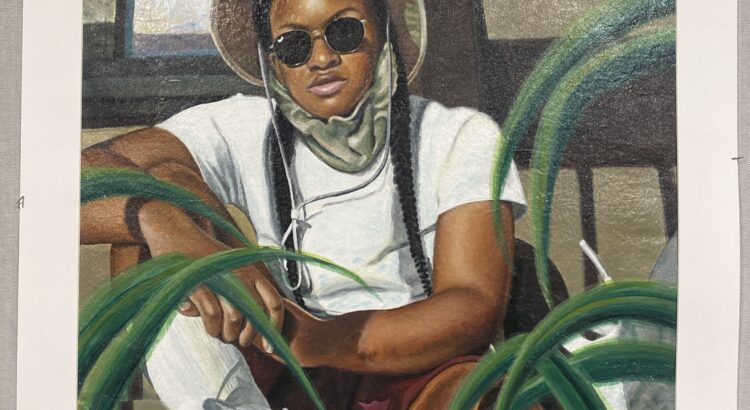
Featured Image: Portrait of Kamilla by Willie Anderson