

Hillbilly Elegy is a drama released on Netflix, that came out in the end of November. It is a 2 hour film, adapted from a book with the same name, that follows a Yale student who from a small Appalachian town that he has worked very hard to escape. When he finds out his mother is in the hospital, he returns to his town, and the movie follows his reflection on both his own history, his family’s past, and his future. The movie got a 27% on Rotten Tomatoes, so I am very excited to see how it turned out! I have a feeling I will have a lot to say. One disclaimer, I have never read the book, but I have heard very good things about that version of the story. The movie is available on Netflix now!
Category: Arts
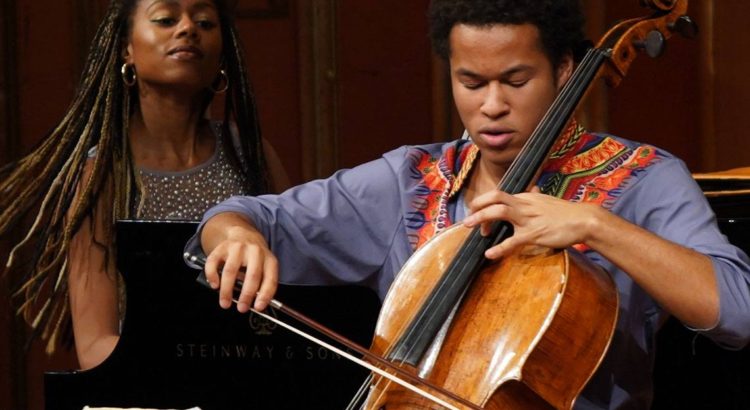
REVIEW: Sheku Kanneh-Mason & Isata Kanneh-Mason Digital Recital
Amid a crazy week, Sheku and Isata Kanneh-Mason’s joint recital was a respite from the turmoil of the news. Streamed especially for UMS audiences, the Kanneh-Mason siblings brought audience members into their Nottingham, U.K. home for an intimate and well-produced performance, and it gave me the opportunity to take time away from other distractions.
First, I was very impressed with the production of the recital. Though it was filmed from the Kanneh-Mason’s home, it still included multiple camera angles, allowing viewers a front-row seat to their superb technique. Unfortunately, video buffering (yay internet!) prevented me from enjoying the full experience, but I nevertheless was able to appreciate the camerawork.
When it came to the music, Sheku (cello) and Isata (piano) were even more impressive. Fortunately for me, the buffering on my computer did not affect the sound, and I was able to enjoy the rich sound of Sheku Kanneh-Mason’s cello entwined with Isata’s flexible and virtuosic piano playing without interruption. The recital program included two pieces: the first movement of Ludwig van Beethoven’s Cello Sonata No. 4 in C major, Op. 102, No. 1, followed by Sergei Rachmaninoff’s Sonata for Cello and Piano in g minor, Op. 19. Throughout both pieces, the musical connection between Sheku and Isata was evident, both visually and aurally. Their eye contact and movement were perfectly in sync as they took cues from one another, and this could be heard in the balance and interplay of their parts. The Beethoven caught my attention with its solo cello opening which melts into the piano part, and its boldness later in the movement. However, it was the Rachmaninoff Sonata for Cello and Piano that especially drew me. It has a wide emotional range, including an intensity that the Kanneh-Masons conveyed impeccably. I particularly enjoyed the final movement (Allegro Mosso) for its freedom – after the tension of the earlier movements, it feels like a celebration and a release, while also being tender and delicate at times. It was a fitting end to the program.
However, lucky for UMS audiences, it was not the end of the program – Sheku and Isata Kanneh-Mason also included an encore in their recital recording! Though some of the excitement of an encore is lost in a virtual setting (no thunderous applause echoing across the concert hall), the surprise of additional music was still very much enjoyable. For the encore, the Kanneh-Masons performed “The Swan” from Saint-Saëns’s The Carnival of the Animals. It was quite the contrast from the final movement of the Rachmaninoff, and I was able to revel in its peacefulness, made even better by Sheku’s and Isata’s gorgeous sound.
Even across the internet and the Atlantic Ocean, Sheku and Isata Kanneh-Mason’s artistry was not something to be missed.

Preview: The Queen’s Gambit
The Queen’s Gambit is a new miniseries on Netflix that came out on October 23rd and contains 7 episodes which are about 1 hour each. The series follows an orphaned girl named Beth who discovers prodigal skills in chess in the basement of her orphanage with the custodian. As she ages, she begins to gain notoriety in the chess world and improve her skills, while struggling with addiction and confusion about her place in the world and her connections to other people. The show is based on a book with the same name, and is unfortunately fiction. I am excited to watch this show because it stars a woman excelling in a man’s world, which is always empowering. I was also recommended to watch it by others, and I love to learn more about games and areas that I know nothing about (I have never played chess before!).
REVIEW: Sheku and Isata-Kanneh Mason UMS Digital Presentation
Last week I had the opportunity to watch Sheku and Isata-Kanneh Mason perform from their living room (while I sat in my dining room…!) Originally slated to come play with the City of Birmingham Orchestra, Sheku instead recorded a very intimate duo concert with his sister, specifically curated for UMS audiences. The show ran October 25th-November 4th. I chose to watch the concert in conjunction with a UMS student committee event: a “live” watch party for students that was a rerun of the concert through facebook. It was fun to have a specific time to tune into the performance, and to see people commenting and watching live with me.
The program performed was the first movement of Beethoven cell0 sonata no.4 in C major, op.102, and the entirety of Rachmaninoff’s cello sonata in g minor, op.19. The two pieces are so different and I thought it was very insightful that they chose to do only one movement of the Beethoven. The Beethoven served as an opener, a bright bubbly piece that set the tone for the rest of the performance. The Rachmaninoff was much more serious and lush and I thought it had a lot of darker moments in comparison. The duo played with passion and as an audience member I could tell that they had a deep connection as collaborators. Isata took the lead in many instances, controlling the color changes and tempos as they made their way through the piece.
I really enjoyed the encore they chose: The Swan from Saint-Saëns’ “Carnival of the Animals.” It was such a beautiful and sweet ending to the concert:) The duo has a new album along with the rest of the Kanneh-Mason’s called “Carnival,” that features this piece. Released on November 6, 2020, the album takes listeners through the entirety of Carnival of the animals, including narration from the family as well:) It is exciting for me to watch these two perform because as a musician, it is fun to see someone my own age performing and being recognized at such a high level. I am also amazed by how in sync the family plays together and the stories they tell through their music making.
Link to album on Spotify:
Apple Music:
https://music.apple.com/us/album/carnival/1529334526
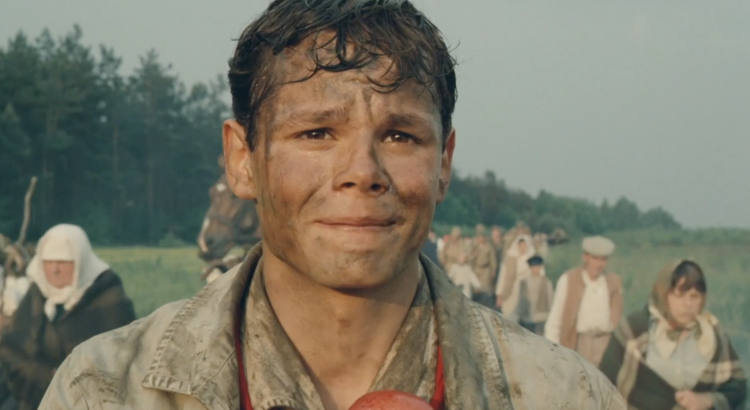
Review: Europa, Europa (1991)
Running time: 1h 47 min
Director: Agnieszka Holland
Countries: France, Germany, Poland
Genre: Drama, War, History
Rated R
The 27th Ann Arbor Polish Film Festival presents the recently restored version (2016) of Europa, Europa. I missed the big screen experience this year, but the stunning color and clarity impressed me from beginning to end. An adaptation of Solomon Perel’s autobiography, Europa, Europa tells the story of a Jewish boy trying to survive and at the same time trying to figure out his national, religious, and social identities during the Holocaust period. It was shot in 1989, another historically important period: the Berlin Wall fell in the same year and several communist countries in eastern Europe (Poland, East Germany, Czechoslovakia…) began to abandon the one-party rule. So, when the film crew was reenacting Nazi Germany history, history also unfolded before their eyes. The remarkable mixture of fiction and history in Europa, Europa can also be credited to director Agnieszka Holland’s sensitivity to historical incidents that she herself didn’t experience. It wouldn’t be too far-stretched to say that Holland’s own life trajectory left a mark on the film. Her father’s mysterious death was associated with the secret police. She studied film in Prague (FAMU) and was thrown in jail for her participation in political movements during the Prague Spring. Like Solomon, she was once an artist in exile, separated from her daughter. (More on Holland’s background; I recommend this Q&A with Holland on Europa, Europa. Her sense of humor is incredible!)
To me, the pacing feels fast and in a way parallel to the ideological polarization between Capitalism and Communism. Five minutes into the film, I already saw a brit milah, a nudity scene, and the tragic death of a girl. The storytelling is unconventional. For one thing, circumcision is an important thread in the plotline. There is a comic effect built into every turning point. Maybe absurd is a better word to describe my experience—I kind of just freeze at frightening moments, moments when Germans attacked the protagonist’s school, when his Jewish identity was exposed to his admirer, when he was pointed with a gun, etc. I can’t tell how the protagonist Solly will react. Sometimes he’s alert, but often sometimes his behavior calls attention to the fact that he’s just a teenager.


With a sense of whimsical unexpectedness, Europa, Europa is not a purely tragic story, but it’s certainly not childish neither. Holland does not fabricate victimhood and avoids any simplification of humanity. The protagonist is not a traditionally heroic figure, and the story is more about things that he has no control over happening to him. At the Russian orphanage, Solly betrays his religion and becomes a supporter of Stalinism. He is then taught to hate and to kill by the Nazis. He sees traumatic war-time cruelties and has to make moral compromises on the fly. With his friends dying in front of him, there isn’t much reason for him to anchor his identity in his near environment. Naturally, he feels guilty and hyper stressed; his complex inner feelings are expressed through his surreal dreams, where Stalin and Hitler dance in close embrace, and Hitler is indicated to be a Jew hidden in a closet.

Although Solly’s journey is jaw-dropping, he’s never been in the ghetto. His closest encounter with other Jews’ lives is when he bypasses the ghetto in a tram run by the Nazis. Similar to how Solly only has a few glimpses of the horrifying ghetto scenes, I think the film also keeps a distance from the history and nests safely in a youth’s narrative. (If you’re interested in watching authentic imageries of the Warsaw Ghetto, check out A Film Unfinished (2010))
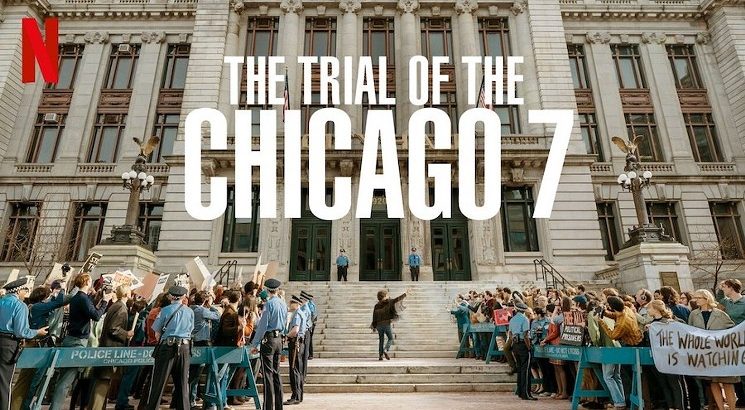
REVIEW: The Trial of the Chicago 7
To start out with, I do not like political movies, or tv shows, or Law and Order, or anything of that genre. However, this movie was so much more than just a political trial between the United States and its dissatisfied people, it was an inspiration. The movie follows a trial between the US government and the leaders of 7 different protest groups who were at the Democratic National Convention in Chicago in 1968 and engaged in violence with the police. The 7 defendants were charged with conspiracy (among other charges) between their groups that they went to the convention with the intention of causing violence, when in actuality they meant to protest peacefully.

First, the movie did require some background knowledge that I did not have, and I had to look up a bit about that time period and the people in the movie including political leaders and some unfamiliar jargon. So I would say the movie was not one hundred percent accessible to someone who is learning the history of the Vietnam protests for the first time through this movie. I also thought the pace of the storyline at the beginning was a bit fast, as they sped through the process of how the trial actually came to be and I was definitely confused right when the trial started about what exactly was going on.
Those critiques aside, everything else about the movie was just amazing. I could not believe it was a true story, and when looking up some facts afterward I found out that most of it is true, especially the courtroom difficulties with the judge. The cast was also absolutely stacked, and they played so well off of each other, especially Eddie Redmayne and Sacha Baron Cohen. I also really enjoyed the humor that Sacha Baron Cohen and Jeremy Strong brought to an otherwise very grim and serious plot line.

I really admired the style of how the movie transitioned between the present trial and its goings-on with the actual protests that had happened. Someone in the cast would say a specific sentence, or start describing something, and the audience was transported back in time to that event happening. They also mixed in what I think was actual footage from the protests with the movie version, which made it feel even more realistic and heart-wrenching when the protesters were being beat up by the police. It was actually a bit unnerving, because a lot of the protests and police brutality were similar to what is happening today and the protests that began this summer. I find it kind of depressing that 50 years later, we have to fight the same way to try and get our government to listen to us.
Overall, I would highly recommend this movie, for lovers of political drama and for those who just want to know more about our past. The movie is available on Netflix, and I think it is a great watch because of how relevant it is, with protests still going on over the Black Lives Matter Movement and other political issues today.

