PREVIEW: Vivaldi’s Four Seasons / Max Richter’s Vivaldi Recomposed

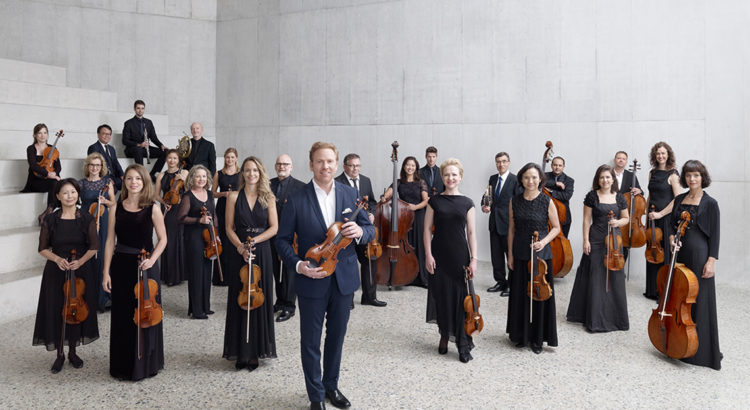
On Saturday, November 16, join the Zurich Chamber Orchestra for a performance of  Max Richter’s Vivaldi Recomposed, as well as the piece that inspired his composition, Antonio Vivaldi’s famous set of violin concerti The Four Seasons. Both of the pieces are iconic in their own right: The Four Seasons is the best known of Vivaldi’s works, and Max Richter’s Vivaldi Recomposed topped classical music charts in 22 countries when it was released in 2012.

The concert will take place at 8 pm at Hill Auditorium (note that the performance was originally scheduled to be at Rackham Auditorium, but was moved “due to extraordinary demand”). Tickets may be purchased online or at the Michigan League Ticket Office.

REVIEW: La Bohème

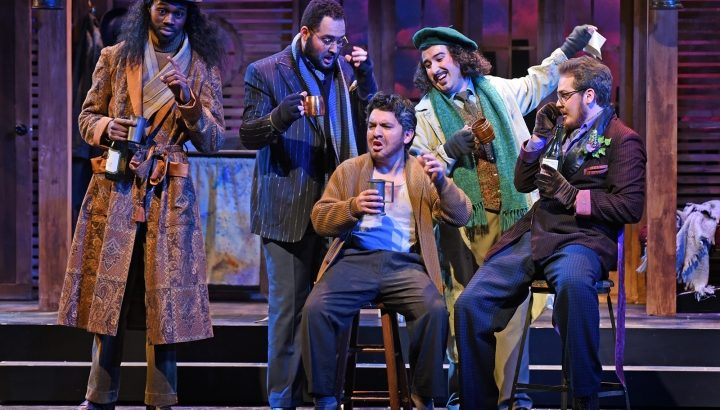
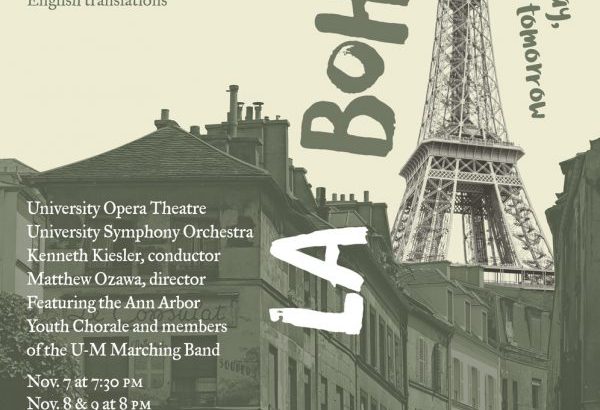
The School of Music, Theatre & Dance’s production of the opera La Bohème was certainly a treat. Featuring the University Opera Theatre and the University Symphony Orchestra, it was a chance to go to the opera without leaving campus!

Though La Bohème was first performed in 1896 (the music is by composer Giacomo Puccini, and the libretto, or words, is by Giuseppe Giacosa and Luigi Illica), this performance was set in the post-war era. This allowed for more modern costuming and set design, and in my opinion, it also made the entire storyline seem more relatable, as the characters were not in the distant past. The addition of English captions over the stage was also a welcome addition, since the entire opera is in Italian (which, unfortunately, I am not fluent in).

If you know the musical Rent, the plot of La Bohème will be familiar, as the musical is a modern adaptation of the opera. However, though the storyline contains themes of youth, romance, poverty, and realities of the “Bohemian” existence, the plot seemed rather underdeveloped to me. In particular, the ending seemed abrupt, and I would have liked more closure (though perhaps this serves to further the opera’s themes).

That said, the simplicity of the plot allows the opera’s music to shine through. The University Symphony Orchestra performed the score spectacularly, and the leads and the chorus were also wonderful. I enjoyed the fact that the design of the Power Center allows the orchestra to be largely visible, rather than hidden under the stage. Sometimes, however, this was to my detriment, as I was watching the orchestra and listening to the music rather than watching the on-stage action and reading the captions!

In the area of set design, the opera production was also stunning. There was a short intermission between each of the opera’s four acts to allow time for elaborate set changes, and they were certainly worth the wait. I can only imagine the time and effort that goes into designing and constructing the sets. My personal favorite was the set for Act II, which took place in Paris’s Latin Quarter on Christmas Eve. Featuring a nearly full-scale two-story building façade, streetlamps, and Christmas wreaths and garlands, it was a work of art. On a separate note, this scene also featured members of the University of Michigan Marching Band, as well as the Ann Arbor Youth Chorale! I also enjoyed the set for Act III, which featured falling snow and a moving train.

The School of Music, Theatre & Dance’s production of La Bohème was an excellent opportunity to see a high-quality performance right here in Ann Arbor, and I am glad that I had the chance to attend!

REVIEW: Department of Jazz Showcase

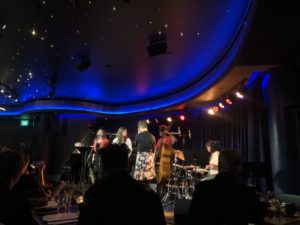
Perhaps it’s all in my head, but there seems to be some sort of hierarchy of warmth in music. Maybe it’s the key in which it’s written, or the tone of the singing, or the instruments used. Some genres seem to strive to chill to the bone, full of macabre lyrics and intense strings of guitar melodies. Others cradle you like a loving parent, soothing with soft singing and a smooth, slow tempo. Truly, the distinction between songs that are cool and warm is so defined it might be able to cause a tornado if two music pieces clash.

To me, jazz always oscillates between warm and hot. The smooth, subltler variety brings forth sweat on the brow, draws a low breathy sigh, and it condenses in the air around us. We are enveloped in a holy environment then, and we are contributors to the mood, just as members of a jazz ensemble each contribute their own emotion to a piece. A few of the groups tonight offered this style to us, dealing in low thrums of the upright bass, the curling upward tune of the saxophone, the smooth brassy sound of the trumpet. Most of these pieces were already composed, either by members of the groups or well-respected musicians of the past. The velvet lining of the chairs and the fanciness of the food combined with the music to make the room swell.

When it runs hot, the tempo quickens. The brass sings higher, every instrument finds a place to work inside this great machine. Dampeners are thrust aside in favor of fighting any tiny crack of silence, and chaos comes alive. New, short tunes spiral off from the main theme like grand handfuls of confetti. It’s exciting and exhausting in the best kind of way. Music of this sort invites crazy dancing, fancy clothes, glitter and sequins and jewel-toned heels.

I appreciated all the groups I saw that night, though I was most taken by the all-female group. They played many songs the members had composed themselves, and introduced them well. I could imagine how the meandering notes explored the themes of maternalism the pieces were about. It was useful to have some background to round out the experience. Also, I’d be a fool not to mention the amazing (freshman!) drummer who performed with several groups this evening. I tragically did not write his name down, but I will always remember him for his great sense of rhythm and attention to the pressure needed for each beat.

The Creative Orchestra group had a similar impact on me, though not quite so positive. The whole thing was improvised, which is impressive in itself, and hey started out well, trying out a haunting tune on the harmonium and mixing it with a disturbing vocal melody. The pianist went on with its own somber song. Soon, all the strings and brass and the toy piano joined in, but they did not blend as well as I would have liked. Unlike the other groups, the instruments did not inform each other; they clashed in tone and created a tuneless cacophony.

While I didn’t much like the direction the group ended up going, I cannot deny it had a certain effect on me. It ran hot as jazz does; it abruptly filled me with anxiety; it forced me to try and pick out some kind of order among the chaos. Regardless, the variation and improvisation exhibited throughout the night was a clear indication that jazz will have a healthy, vibrant future.

 

REVIEW: La Bohème

La Bohème is an opera full of comedy, tragedy, and singing. A lot of singing. Though I suppose that’s what an opera is, it was still a new format for me and therefore made for a really interesting experience. Drama and plays have always been up my alley, but to see dialogue converted to a consistently musical form definitely changed the way I watched this piece.  This is all to say, it was pretty fantastic. The micless performers blew me away with their performances, not only rivalling the pit in volume but delivering line after line beautifully. I found the climactic moments of multiple characters singing their own verses layered over each other especially enjoyable and impressive.

Another point that simply has to be mentioned is the set design for this production. Three intricate sets were used, each necessitating an intermission. The world-building done with tall storefronts, moving trains, and falling snow was so engaging and really added to the different moods of each of the four acts. The way characters were able to truly inhabit the stage really allowed the audience to be transported across the Atlantic to a chilly Parisian winter.


A critique I have of this work is one that has been leveled before towards it since its inception; it’s quite fluffy. The story focuses on the lives of bohemians surviving off of their artistic creation and free thought moreso than actual food, but yet the story only uses this concept for bare-bones plot developments. The bohemian lifestyle is represented through this opera with a funny opening number of burning the pages of one’s play to stay warm and a character feeling guilty for his lover’s decline in health due to his limited means. The latter plot point has some value to it, but it’s outweighed by the melodramatic romance and fun (but kind of just fun) comedic moments between characters. I don’t think there’s anything wrong with making an opera that has stellar performances and aesthetics with a more surface-level plot; I still found La Bohème to be a whole lot of fun and really a showcase of talent, but personally I’d rather see the time period of the piece used to its fullest potential thematically.


Ultimately, I’d love to go see more operatic performance through SMTD and I’d encourage anyone in the Ann Arbor area to make it out to a show. There’s a clear commitment to quality performance and theatrical design that makes these shows truly captivating.

PREVIEW: La Bohème

Don’t miss the School of Music, Theatre & Dance’s production of La Bohème, featuring the University Opera Theatre and the University Symphony Orchestra. The opera’s music is by Giacomo Puccini, and the libretto (words) are by Giuseppe Giacosa and Luigi Illica. The opera, which takes place in Paris and tells a story of youth and romance, enjoys enduring popularity despite the fact that it premiered over 100 years ago in 1896: The New York Times called La Bohème “the world’s most popular opera,” and the musical Rent is actually a modern reincarnation of Bohème.

The opera is running at the Power Center for the Performing Arts from November 7 – November 10. The November 9 show is at 8 pm, and the November 10 show is a matinee at 2 pm. Tickets, which are $13 with a student ID, may be purchased at the Michigan League Ticket Office, or online.

REVIEW: Westbound Situation Album Release

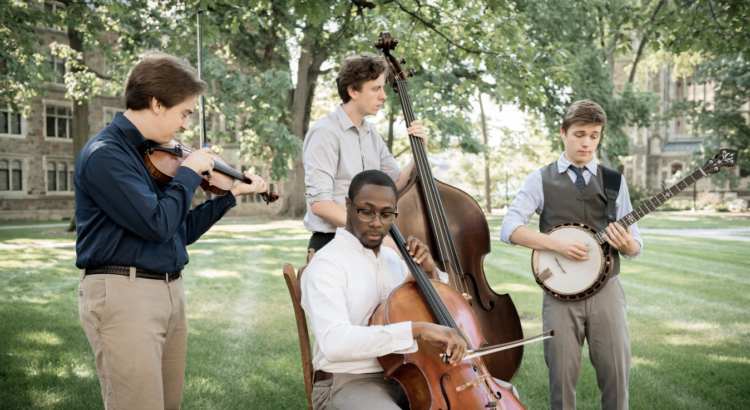
This past monday, the Ark stage was brought to life by a new, young chambergrass group called Westbound Situation. The quartet, comprised of Grant Flick on violin, viola, mandolin, and nyckelharpa (ooooh), Matt Davis on banjo, Zach Brown on cello and Jacob Warren on bass, released their first album titled “Pilot.” The eleven track album features ten new compositions and one cover, a jazz big band piece titled “Kogi.”

The band laid down the album for the first half of the show, starting with “Griffin,” one of Grant Flick’s compositions. I found myself grooving with the chops and I still have the opening melody stuck in my head (it also probably does not help that I have not been able to stop listening to this album since Monday). Their tunes were charming but full of layers that combined to create a full sound. There was not too much chatting between numbers, but Zach did elaborate on the story behind “Upstairs Coffee,” a tune inspired by poor insulation, buckets and friendship;) 

For the second half, the band played some new tunes they had recently worked up, and Grant brought out the nyckelharpa which he described as, “a viola… only not.” They also invited Kristen Engebretson, singer, to join them for a number on stage. Her voice was sultry and warm and balanced well with the band. After a standing ovation, the group came out for an encore. They chose “Nocturne,” one of the only slower tracks on the album. The contrast from the upbeat tunes beforehand made the concert that much more intimate and was a sweet send off.

Westbound charmed the audience with their natural charisma and stage presence. They are a group that truly enjoys themselves when they play. It was almost like they were in their own musical world, inviting us in for an hour or two to share the experience with them. The crowd, huddled into the middle of the seating area to get the best view of all four musicians, was very involved, cheering at tune changes and impressive improv (which there was a lot of!!!) It truly seemed like they were just friends making music for the fun of it, and as an audience member, I enjoyed watching them interact and perform. 


Westbound’s album is released and available for purchase on bandcamp as well as streamable on spotify.

Links are below:


Artist Website:

https://www.westboundsituation.com/

Artist Spotify:

https://open.spotify.com/artist/0UwUiw5AEUiYcB6ELJR025?si=EkRKfXLXSLaQ_rchWRoMbQ

Purchase Album:

https://westboundsituation.bandcamp.com/